
Burger Boat Company — What American Custom Yacht Building Looks Like at Its Highest Level
A look at one of the country's oldest yacht builders and what its work reveals about true bespoke construction

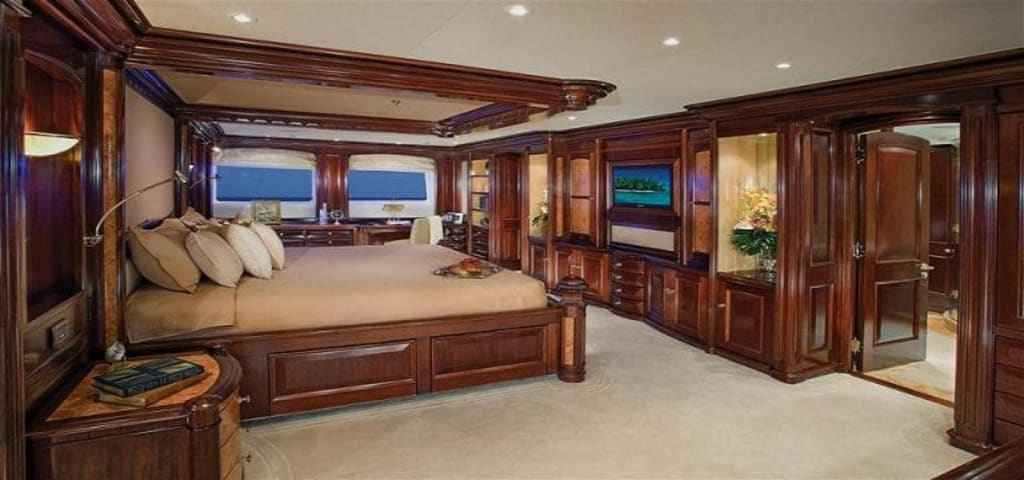
Within the world of custom yacht building, few American names carry the institutional weight of Burger Boat Company. While much of the contemporary yacht market is dominated by European and Middle Eastern builders producing large series-style vessels, Burger yachts occupy a different category entirely, one defined by fully custom construction, generational craftsmanship, and a client relationship that resembles architecture more than retail purchase.
Burger Boat Company is an American shipyard based in Manitowoc, Wisconsin, recognized for building fully custom motor yachts rather than production or semi-custom models. Each Burger yacht is designed and engineered individually for its owner, with construction methods, materials, and layout determined entirely by that owner's specifications rather than a standardized hull or interior platform.
That distinction, between custom and semi-custom, is often misunderstood outside specialist circles, and it is central to why Burger yachts hold the reputation they do among serious buyers, brokers, and naval architects.
A Shipyard With a Different Kind of History Than Most American Builders
Most yacht builders operating today, even those with long histories, eventually transitioned toward series production at some point in the twentieth century in order to scale output and reduce per-unit cost. Burger Boat Company took a different path. Its continued focus on one-off, fully engineered vessels rather than repeatable hull designs has kept the company's output relatively limited in volume but distinct in character, with each yacht functioning as an independent engineering project rather than a variation on an existing template.
This approach has positioned Burger within a small group of builders, mostly concentrated in the custom and superyacht segment, where the shipyard's role resembles that of a bespoke architecture firm rather than a manufacturer. Hull form, structural engineering, interior architecture, and mechanical systems are developed in tandem with the owner's intended use, cruising range, and aesthetic preferences, rather than selected from a pre-existing range of configurations. For buyers accustomed to production yachts, this process represents a meaningfully different relationship with the builder, one that extends over a multi-year construction timeline rather than a transactional purchase.
This continuity of operation also matters in an industry where shipyard ownership and facility investment change hands frequently. A builder capable of sustaining fully custom construction across multiple economic cycles, including periods when the broader luxury market contracted significantly, demonstrates an operational resilience that newer or more leveraged competitors often cannot match. Skilled tradespeople capable of executing one-off structural and finish work, including welders, shipwrights, and systems engineers experienced in custom rather than repeatable builds, represent institutional knowledge that takes years to develop and is difficult for a shipyard to rebuild once lost. Burger's longevity reflects, among other things, the retention of that specialized workforce across generations, which is itself a meaningful factor in why the shipyard continues to be trusted with complex, multi-year commissions.
What Sets True Custom Construction Apart From Semi-Custom Building
The yacht industry uses the word "custom" loosely, often applying it to vessels that are, in practice, semi-custom: built on a standardized hull with adjustable interior finishes and limited structural flexibility. Fully custom construction, the category in which Burger operates, involves engineering the hull, superstructure, and systems architecture specifically for each commission, with no underlying production hull shared across multiple builds.
This distinction has practical consequences for performance, longevity, and resale positioning. A fully custom hull can be engineered around a specific intended cruising profile, whether that means extended offshore range, shallow-draft coastal cruising, or a particular balance between speed and fuel efficiency, rather than compromising toward a generalized design suited to a broader buyer pool. It also allows structural and mechanical systems to be integrated more precisely, since engineers are not retrofitting custom requests into an existing platform's constraints.
Material selection illustrates this difference clearly. Production and semi-custom builders typically standardize hull material, usually fiberglass or a fixed aluminum specification, across an entire model line in order to control tooling costs and manufacturing repeatability. A fully custom builder can instead select hull material, plating thickness, and structural framing based on the specific vessel's intended use, owner priorities around weight and fuel efficiency, and long-term maintenance considerations. This flexibility extends to propulsion and systems integration as well, where a custom build can accommodate unconventional range requirements, specialized tender storage, or mechanical redundancy configurations that a standardized hull platform would struggle to support without significant compromise elsewhere in the design.
This is part of why Burger yachts maintain such a devoted following among a relatively narrow segment of American buyers, even as the brand's broader public recognition remains modest compared to higher-volume builders. Within the custom yacht community specifically, the distinction between true custom and semi-custom construction is well understood, and shipyards capable of executing the former at a high level are recognized accordingly, regardless of marketing visibility outside that circle.
The Role of Long-Term Client Relationships in Custom Yacht Building
Custom yacht construction depends on a different kind of client relationship than most luxury purchases, and this is particularly evident in how shipyards like Burger operate. A fully custom build typically begins with extensive consultation between the owner, naval architects, and interior designers, often spanning many months before construction even begins, followed by a multi-year build process during which the owner remains involved in decisions ranging from structural layout to material selection.
This extended collaboration means that custom builders are evaluated as much on process and communication as on the finished vessel itself. Reputation within this segment of the market is built cumulatively, through repeat clients, referrals among high-net-worth networks, and word-of-mouth assessment of how a shipyard managed the inevitable complexities of a long-term build. Builders like Burger, with decades of continuous operation, benefit from this accumulated trust in a way that newer entrants to the custom segment cannot easily replicate, regardless of capital or facility investment.
This relationship-driven model also explains why custom shipyards rarely compete on price in the way production builders do. Buyers entering this segment are typically not comparing custom builds against semi-custom or production alternatives on a cost basis; they are selecting a builder based on engineering reputation, design compatibility, and confidence in long-term execution, factors that matter more in a multi-year, multi-million-dollar commitment than incremental price differences.
The consultation phase itself functions as a screening process in both directions. Owners evaluate a shipyard's portfolio, engineering philosophy, and willingness to accommodate unconventional requests, while the shipyard assesses whether a prospective commission aligns with its capabilities, facility capacity, and construction timeline. This mutual evaluation distinguishes custom yacht building from most luxury transactions, where the seller's role typically ends once a buyer commits to a purchase. In custom construction, the relationship intensifies after commitment, as the owner and shipyard work through structural drawings, mechanical specifications, and interior finishes together over a build period that frequently extends beyond two years for larger commissions.
Why Miami Functions as the Commercial Center for Custom Yachts Built Elsewhere
Although Burger Boat Company's physical shipyard operates in the Midwest, far from the coastal markets typically associated with yacht culture, Miami plays an outsized role in how custom American yachts, including Burger yachts, are bought, sold, and serviced after launch. This reflects a broader pattern in the yacht industry: construction and commercial activity are frequently separated by geography, with shipyards located near specialized labor, supply chains, or historical industrial infrastructure, while sales, brokerage, and ownership transactions concentrate in major coastal hubs.
Miami's position as one of the largest yacht brokerage and service markets in the country makes it a natural center of gravity for custom vessels regardless of where they were built. The city's marina infrastructure, concentration of yacht brokers, and proximity to both Caribbean and transatlantic cruising routes mean that custom yachts built in Wisconsin frequently end up based, serviced, or eventually sold through South Florida once they enter the secondary market. Brokerages operating out of Fort Lauderdale and Miami regularly handle custom-built vessels from American shipyards, working alongside the original builder when warranty work, refits, or significant systems upgrades are required.
This dynamic also shapes how custom yacht reputations circulate within the broader market. Buyers in Miami's brokerage circles, surveyors, and yacht management companies form much of the informed opinion that determines how a builder like Burger is perceived among prospective owners, even though the actual construction takes place a thousand miles away. A shipyard's standing in this market depends heavily on how well its vessels perform, age, and hold value once they enter the hands of brokers and surveyors operating primarily out of South Florida.
Authority Within a Narrow Market Versus Broad Commercial Visibility
Burger Boat Company's position illustrates a pattern common among specialist manufacturers across many industries: deep authority within a defined community rather than broad public recognition. Outside custom yacht circles, the Burger name carries relatively limited search interest or general brand awareness, particularly compared to higher-volume luxury yacht brands with broader marketing reach. Within the custom yacht community itself, however, the brand carries substantial weight, reflecting decades of continuous operation, technical credibility among naval architects, and a track record that brokers and surveyors recognize even when the general public does not.
This pattern of authority without volume is common across true luxury and bespoke industries, where the relevant audience is small, informed, and resistant to conventional marketing influence. Decisions within this segment are driven by technical reputation, referral networks, and direct relationships rather than broad advertising, which means a shipyard's commercial success can remain entirely disconnected from its general public visibility. For Burger, this has meant sustaining a long, stable operating history by serving a narrow but consistent base of serious custom buyers rather than competing for broader market share against production-oriented competitors.
Comparable patterns appear in other bespoke fields, from custom homebuilding to private aviation, where the most respected practitioners are frequently unfamiliar names outside their specific industry, yet hold considerable influence within it. The relevant measure of success in these fields is not search volume or brand recall among a general population, but standing among the comparatively small group of professionals, brokers, and repeat buyers who transact within that market. Burger's position within American custom yacht building reflects this same dynamic, where decades of consistent execution have built a form of authority that operates largely outside conventional marketing metrics.
This also affects how the brand intersects with the secondary market. Because custom yachts built by shipyards like Burger are produced in limited numbers and tailored individually, each vessel entering the resale market carries a distinct history and specification set rather than a standardized comparison point. Brokers handling these listings, frequently based in Miami given the city's concentration of yacht sales activity, must evaluate each Burger yacht on its individual engineering, condition, and customization rather than against a catalog of comparable production models, a process that requires considerably more specialized knowledge than typical yacht brokerage.
What Burger's Approach Reveals About the Future of American Custom Building
Burger Boat Company's continued operation as a fully custom builder offers a useful lens for understanding where American yacht construction stands relative to global production trends. As much of the broader yacht industry has consolidated around larger production runs and semi-custom platforms to meet rising demand efficiently, the fully custom segment has remained comparatively small but resilient, sustained by a buyer base that values individualized engineering over scale or speed of delivery.
This resilience suggests that fully custom construction is unlikely to disappear, even as the broader market continues to favor faster production timelines. The buyers drawn to this category, often the same individuals and businesses eventually evaluating any yacht for sale in Miami's active brokerage market, tend to prioritize long-term engineering integrity, builder reputation, and design specificity over delivery speed, characteristics that custom shipyards like Burger are uniquely positioned to provide. As the secondary market for these vessels continues to flow through major brokerage centers such as Miami, the reputational groundwork built by shipyards over decades of custom construction remains one of the more durable forms of value within an otherwise fast-evolving industry.
About the Creator
Robert Lama
Robert Lama is a seasoned yacht broker with Miami International Yacht Sales, a reputable yacht brokerage company specializing in both used and new yachts. https://www.miamiinternationalyachtsales.com/
Enjoyed the story? Support the Creator.
Subscribe for free to receive all their stories in your feed.
Comments
There are no comments for this story
Be the first to respond and start the conversation.