
Benetti's Position in the Superyacht Market — Design Legacy, Build Range, and Buyer Profile
How Italy's oldest active yacht builder maintained its relevance across more than a century of changing tastes, technologies, and buyer expectations

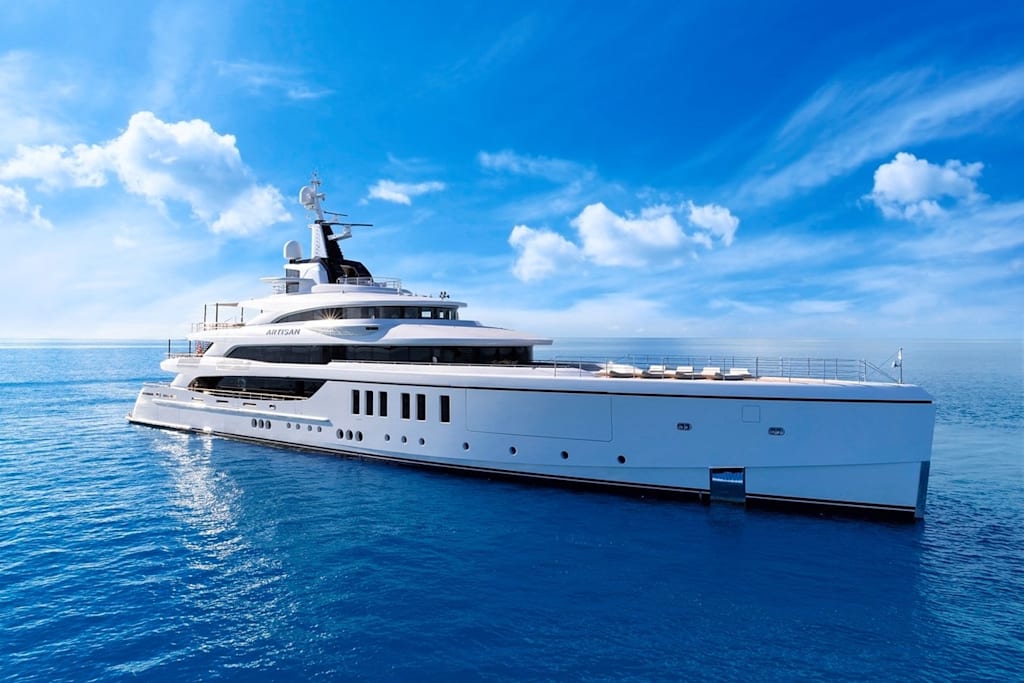
Few names in the superyacht world carry the accumulated weight of Benetti. Founded in Viareggio in 1873, the Italian shipyard has outlasted economic crises, two world wars, the collapse and rebirth of the global luxury market, and successive waves of technological transformation — emerging at each turn not merely intact but genuinely competitive. For anyone seriously exploring the upper end of the private yacht market, Benetti yachts represent one of the most coherent and historically grounded propositions available: a builder whose identity is rooted in Italian craftsmanship but whose current output reflects the full breadth of what contemporary superyacht design and engineering can achieve.
Benetti is an Italian superyacht builder headquartered in Viareggio, Tuscany, with additional facilities in Livorno and La Spezia. The yard produces semi-custom and fully custom yachts ranging from approximately 30 meters to well over 100 meters in length, across fiberglass, steel, and aluminum construction. It is widely recognized as one of the world's highest-volume builders at the superyacht scale and has consistently ranked among the top global yards by total delivered meterage.
A History That Informs Rather Than Constrains
The temptation, when discussing a yard as old as Benetti, is to treat its history as decoration — a legitimizing backstory attached to what is, in the end, a contemporary manufacturing enterprise. That framing misunderstands how deeply the yard's past shapes its present practice. Benetti did not survive 150 years by preserving its original methods. It survived by knowing which elements of its founding culture to protect and which to abandon as the market evolved.
The Viareggio tradition of wooden boat construction, which shaped the yard's first century, gave Benetti craftsmen an accumulated tactile understanding of material behavior — how surfaces respond to finishing, how joinery holds under the stresses of open-water use, how interior spaces must be proportioned to feel genuinely inhabitable rather than merely impressive. When the yard transitioned toward steel-hulled motor yachts in the mid-twentieth century and eventually into the fiberglass and composite materials that define much of its current production, those foundational instincts did not disappear. They migrated into new contexts.
The 1985 acquisition of Benetti by the Azimut group — forming what is now Azimut|Benetti — provided the financial architecture and industrial scale that allowed the yard to operate across a wider range of vessel sizes simultaneously. This structure distinguishes Benetti from smaller custom yards that produce a handful of vessels per year. The yard can carry multiple major projects in parallel, maintain a trained workforce of considerable size, and invest in design and engineering capabilities that would be economically unsustainable for a boutique operation. The consequence for buyers is a kind of institutional reliability that pure custom yards, however talented, sometimes struggle to match.
The Build Range and What It Represents
One of the most practically significant aspects of Benetti's market position is the deliberate breadth of its build range. Unlike yards that specialize narrowly — ultra-large custom vessels only, or production semi-custom in a specific size band — Benetti operates across a genuinely wide spectrum, from the 30-meter Oasis range at one end to fully custom displacement vessels exceeding 100 meters at the other.
This range is not simply a commercial strategy, though it serves commercial purposes effectively. It reflects a considered view about where the superyacht market actually generates demand at sustainable volumes. The yards that build exclusively at the 80-meter-and-above scale produce extraordinary vessels, but the market for those vessels is thin and cyclical. Benetti's decision to maintain competitive product lines across the 30 to 50-meter range — where the population of qualified buyers is meaningfully larger — gives the yard a volume base that cross-subsidizes its most ambitious custom work.
The Oasis series, introduced as a fiberglass semi-custom line, addressed a segment of the market that wanted Benetti's design DNA and construction quality without the lead times and cost commitments associated with a fully bespoke project. These are not entry-level vessels in any ordinary sense of the phrase — they represent serious, well-equipped yachts with genuine offshore capability — but they occupy a price and availability tier that opens the brand to buyers who might otherwise have looked at competing production yards.
At the other end of the range, Benetti's fully custom steel and aluminum projects — often developed in close collaboration with the world's leading exterior and naval architecture firms — represent the yard's most visible ambassadors in the international superyacht conversation. Vessels like Seasense, Lana, and the FB series have appeared consistently in the industry's most prominent rankings and have established Benetti as a credible executor of the most complex and large-scale private vessel projects undertaken anywhere in the world.
Design Identity and the Role of Collaboration
Italian design carries expectations, and Benetti has navigated the tension between those expectations and genuine contemporary relevance with more consistency than most of its domestic peers. The yard's aesthetic does not default to a single house style imposed uniformly across its output. Instead, Benetti functions more like a highly capable manufacturing platform that collaborates with external design talent — bringing in architects and designers whose sensibilities suit the specific ambitions of individual projects.
Frequent collaborators have included Stefano Righini, RWD, and the Benetti in-house team, among others. This approach produces a portfolio that is varied in visual character while remaining coherent in construction quality and fit-and-finish standards. A buyer reviewing Benetti's delivered projects over the past decade will encounter a range of exterior profiles — from the more traditional displacement silhouette to radically contemporary forms with expansive glass facades and blurred interior-exterior boundaries — that reflects the genuine plurality of taste at the top of the market.
Interior design has historically been one of Benetti's most commercially visible strengths. The yard's Viareggio workshops have produced furniture, joinery, and decorative detailing at a level of refinement that draws on the broader Italian furniture and artisan tradition. This is not merely a geographic coincidence. Viareggio and the surrounding region of Tuscany sit within reach of the craft clusters — in leather, textile, metalwork, and wood — that have supplied Italian luxury industries for generations. The proximity allows Benetti to source and integrate materials and craftsmanship that would require significantly longer supply chains for yards located outside Italy.
The Buyer Profile Across Different Size Segments
Understanding who actually purchases at the Benetti level, and why, reveals something meaningful about how the superyacht market functions as a category. The popular image of a superyacht buyer — a single archetype of ultra-high-net-worth individual motivated primarily by display — is a significant oversimplification of a genuinely varied population.
At the 30 to 50-meter range, Benetti's buyers tend to include successful entrepreneurs, senior executives, and established family wealth pools from Europe, the Americas, and increasingly the Middle East and Southeast Asia. Many in this segment are experienced recreational boaters who have moved through progressively larger vessels over years or decades and arrive at the Benetti scale with clear opinions about how they want to use the water, what range and sea-keeping characteristics matter to them, and what interior environments they find genuinely livable rather than merely impressive to photograph.
The fully custom segment draws a somewhat different profile — individuals and families whose financial resources place the acquisition cost itself as a secondary consideration relative to the quality and specificity of what is delivered. These buyers are often deeply engaged in the design process, collaborating with the yard and their chosen designers over multi-year timelines to develop vessels that reflect a coherent and personal vision. For this group, the choice of Benetti over a competing custom yard tends to rest on the yard's track record with vessels of comparable complexity, the depth of its engineering team, and its demonstrated ability to deliver large steel projects to a standard that holds up under extended operational use.
A third segment — perhaps less discussed but commercially significant — consists of buyers who acquire Benetti vessels not for personal primary use but as assets within the charter or investment fleet. The brand's recognition among affluent charter clients, combined with the resale characteristics of well-maintained Benetti hulls, makes the yard's output attractive to those approaching the acquisition with a more explicitly financial framework.
Construction Standards and What Differentiates Benetti Technically
The conversation about superyacht construction quality tends toward the impressionistic — references to craftsmanship, attention to detail, and finishing standards that are difficult to verify from outside the yard. Benetti's technical differentiation rests on more concrete foundations that are worth understanding directly.
The yard's steel displacement vessels are built to Lloyd's Register or Bureau Veritas classification standards, which impose external technical scrutiny on structural design, engineering systems, and construction methods throughout the build process. Classification is not a universal requirement in the private yacht market, but its presence at Benetti's scale of production provides a level of independent verification that matters to sophisticated buyers and, importantly, to the insurance and financing institutions that often participate in large yacht transactions.
Benetti's engineering capabilities in systems integration — propulsion, stabilization, dynamic positioning, hybrid and diesel-electric power plants — have evolved considerably over the past two decades, driven in part by increasing buyer interest in range extension, fuel efficiency, and reduced acoustic and environmental footprint. The yard has delivered vessels with AZP thruster systems, shaft generators, and battery hybrid configurations that reflect engagement with the technical frontier of marine engineering rather than reliance on established conventional systems.
Naval architecture on the larger projects is typically handled in collaboration with specialized firms — Mulder Design, Pierrejean Design, and others — whose hydrodynamic expertise is integrated into the hull design process from the earliest project stages. This collaborative model means that a Benetti hull's performance characteristics are the product of dedicated hydrodynamic analysis rather than adaptation of a generic platform.
What the Benetti Proposition Means in the Current Market
The superyacht market of the mid-2020s is a genuinely different environment from the one that shaped Benetti's recent growth cycle. Order books that expanded dramatically during the post-pandemic surge in large yacht interest are working through extended delivery pipelines. Buyers who entered the market with compressed timelines are now navigating a more deliberate landscape in which lead times, yard capacity, and the specifics of individual project agreements require more careful consideration than they did during peak demand.
In this environment, Benetti's institutional scale and operational depth represent real advantages. The yard's ability to maintain staffing levels, supply chain relationships, and design resources across market cycles — enabled by the Azimut|Benetti group structure — provides a degree of project continuity that smaller operations sometimes struggle to match when market conditions shift. For a buyer committing to a multi-year custom build, the confidence that the yard will remain financially and operationally stable throughout that timeline is not a trivial consideration.
Benetti yachts continue to occupy a distinctive position in the global superyacht landscape — not by virtue of heritage alone, but because the yard has consistently translated that heritage into contemporary product at a scale and quality level that few of its peers have matched with comparable consistency. The combination of design openness, construction range, Italian craft tradition, and industrial capability constitutes a proposition that the market has continued to find relevant across a remarkable span of time.
About the Creator
Robert Lama
Robert Lama is a seasoned yacht broker with Miami International Yacht Sales, a reputable yacht brokerage company specializing in both used and new yachts. https://www.miamiinternationalyachtsales.com/
Enjoyed the story? Support the Creator.
Subscribe for free to receive all their stories in your feed.
Comments
There are no comments for this story
Be the first to respond and start the conversation.