
Beijing’s Trees Are Draped in White Webs. Inside, Thousands of Caterpillars Are Eating Them Alive.
Fall webworm has hit its third generation. Here’s why the outbreak is so bad this year, what it does to trees, and how to stop it before spring.
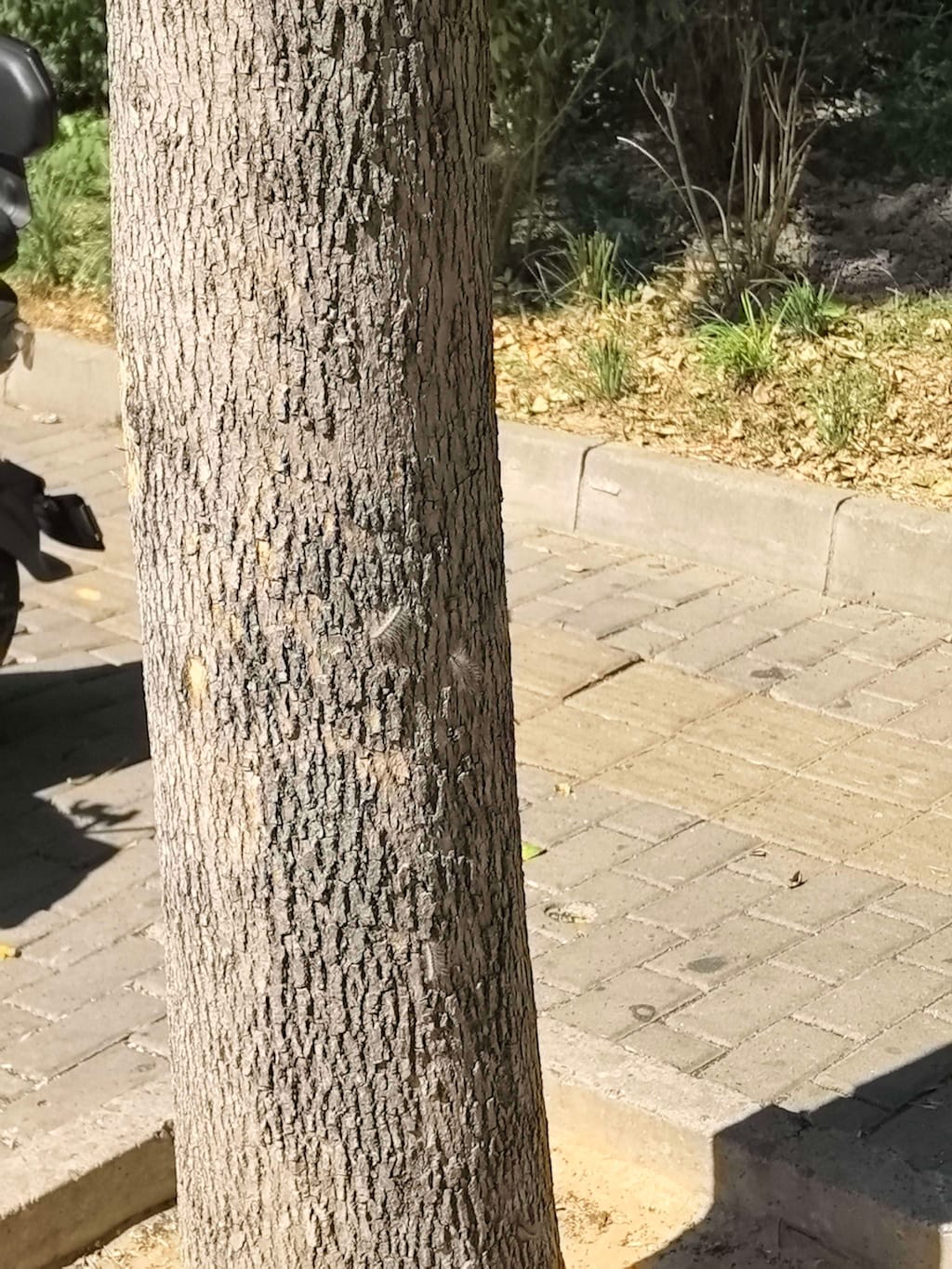
White nets in the trees: fall webworm in Beijing this autumn
In late September, a walk under the street trees can end with a white net hanging above your head. A spider did not build it. Fall webworm larvae did. Inside, dozens or hundreds of caterpillars move over stripped leaves. The leaves around the web are gone. Only veins remain. Then the veins go too.
The fall webworm (Hyphantria cunea), called the American white moth in China, is native to North America. It spread to Europe and Asia. In Beijing, it usually has three generations a year. The first appears from late May to June. The second from July to August. The third from September to October. Beijing’s control plan for this year lists the third generation’s web period as September 1 to October 20. The city is inside that window now.
This is not a small outbreak in one yard. By the third generation, the population is built on whatever survived the first two. If control failed in spring and summer, autumn shows the bill.
Why the numbers are high this year
Three things are happening at once.
First, carryover. A small number of first-generation larvae that escape treatment produce the second generation. The second produces the third. Hebei’s forestry and grassland bureau said before the third-generation campaign that some areas already had high larval densities after the first two generations. Miss the third-generation window, and the insects spread.
Second, weather. This summer was hot and wet in Beijing. Fall webworm develops faster and survives better in warm, humid conditions.
Third, overlapping generations. A warm winter raised the number of overwintering pupae. The life cycle became messy. Eggs, young larvae, older larvae, and pupae can appear at the same time. Spraying one stage leaves the others alive. Control becomes harder. The result is what people see now: whole branches wrapped in white silk, leaves eaten down to the stem.
Eat, breed, hide
The insect has three traits: it eats, it breeds, it hides.
It eats almost anything. Poplar, willow, mulberry, elm, maple, walnut, apple, pear, and more than 100 other species of trees, fruit trees, and crops. Young larvae chew the soft tissue between leaf veins. Older larvae eat the whole leaf. A heavy infestation can strip a tree bare. From a distance, the tree looks burned. The damage has a nickname: a fire without smoke.
It breeds fast. One female can lay hundreds of eggs. Beijing usually has three generations a year. With overlapping generations, numbers climb quickly.
It hides. The web starts small at a leaf tip. It grows as the larvae add silk. The larvae live inside it. The web is a dining room and a shelter. Spray droplets have trouble reaching the caterpillars inside. By the time the larvae are in their fourth instar, they break out of the web and spread across the tree. At that point, hand removal is much less effective.
What harm does it do?
The harm is mostly to plants. Fall webworm does not attack people. It does not bite. It does not carry disease. But the hairs on the larvae can cause skin irritation. If you brush against a web or a caterpillar, you may get red, itchy patches. Do not pick the caterpillars with bare hands. Do not rub your eyes after touching a web.
For trees, the damage is direct. Leaves are the factory. Remove the leaves, and the tree cannot make food. A single defoliation weakens it. Repeated defoliation can kill it. For fruit trees, lost leaves mean smaller fruit and lower yield. For street trees and parks, the webs turn green canopies into ragged, white-draped branches.
How to clear them
Timing matters. Cut the web before the larvae reach the fourth instar and break out.
Use a pole pruner. Cut the web together with the twig and a small piece of the branch. Do not just pull the leaves. The silk can hold the caterpillars together; tear the web, and some larvae drop to the ground. They will crawl back up the tree.
Put the web and the twig into a sealed plastic bag. Seal it at once. Then kill the larvae inside. You can leave the bag in direct sun, pour boiling water into it, or hand it to the property management or forestry staff for proper disposal.
Do not burn the web. Fire may not kill every caterpillar, and it can set the tree or nearby structures alight.
If you do the work yourself, wear gloves, a mask, long sleeves, and long pants. Wash your skin with clean water afterward. If a rash spreads or itches badly, see a doctor.
Property management in many Beijing neighborhoods is already cutting infested branches. That is the right first step. If you see a new web, report it. Do not wait. The third generation is the largest of the year. Every web removed now prevents hundreds of larvae from spreading and pupating.
Other methods professionals use
Trunk injection puts insecticide into the tree’s vascular system. It can reach tall trees that sprayers cannot cover. Releasing Chouioia cunea, a parasitic wasp, attacks the pupae. Light traps catch adult moths. Sex pheromone traps monitor and catch males. In late summer, a band of straw around the trunk can lure mature larvae looking for a place to pupate; workers remove and burn the bands. In winter, clearing fallen leaves, scraping bark, and turning soil can destroy overwintering pupae and lower next year’s population.
No single method works alone. But the simplest one is available to almost anyone: find the web, cut it down, seal it, kill what is inside. A web cut down today and sealed in a bag is a web that will not open next spring.
About the Creator
Jin
Writer of reamstories
https://reamstories.com/jin
Enjoyed the story? Support the Creator.
Subscribe for free to receive all their stories in your feed. You could also become a paid subscriber, letting them know you appreciate their work.
Comments
There are no comments for this story
Be the first to respond and start the conversation.