
Behind the Scenes: How Celebrity Wardrobes Are Actually Managed
The world sees the red carpet moment. What it rarely sees is the infrastructure that made it possible.

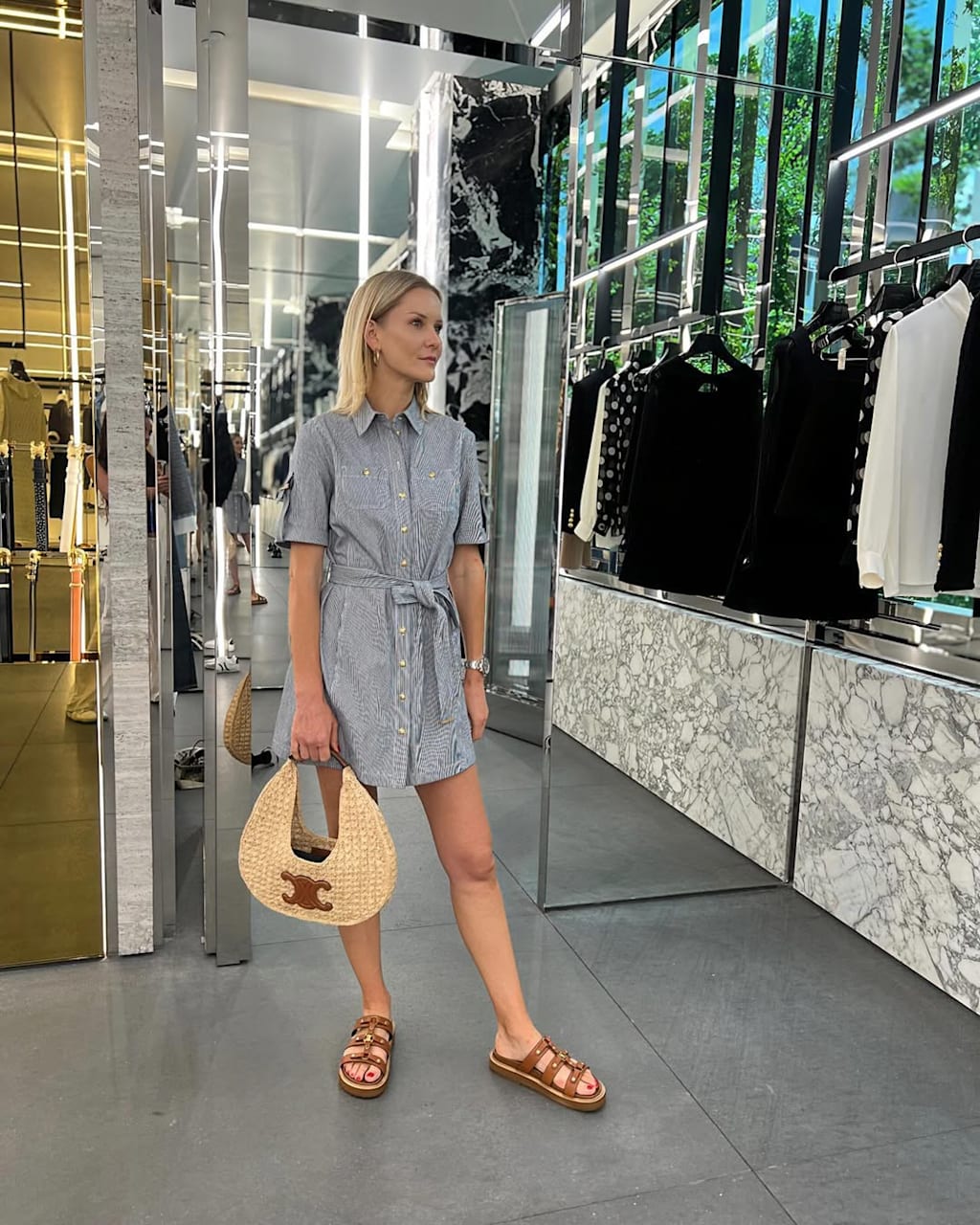
There is a persistent misconception that celebrity style is spontaneous — that the perfectly coordinated looks seen at award ceremonies, on press tours, or across social media feeds emerge from some natural sense of taste and a closet full of designer gifts. The reality is considerably more structured, more logistical, and more demanding than most outsiders appreciate. Behind every headline-worthy outfit is a carefully coordinated operation involving specialists, systems, relationships, and a significant investment of both time and resources.
For those operating at the highest levels of public life — entertainers, executives, athletes, and public figures whose appearances carry commercial and reputational weight — wardrobe management has evolved into a professional discipline in its own right. Understanding how it actually works reveals not just the mechanics of celebrity dressing, but also why it matters far beyond the world of fashion.
The Role of a Wardrobe Manager vs. a Stylist
These two titles are often used interchangeably by the public, but they represent meaningfully different functions. A celebrity stylist is primarily a creative role — the individual responsible for the vision, the selection, and the editorial direction of a client's appearance. A wardrobe manager, by contrast, is an operational one. The distinction is similar to that between an architect and a project manager: both are essential, and the best outcomes happen when both are involved.
A wardrobe manager handles the physical and logistical dimensions of a client's clothing and accessories. This includes cataloging and maintaining an existing wardrobe, coordinating the movement of garments between residences, managing dry cleaning and repairs, tracking what has been worn publicly and when, and liaising with the stylist to ensure that whatever creative vision is being executed can actually be fulfilled on time and in the right condition.
In practice, at the level of major entertainment figures or high-profile executives, this function can be surprisingly complex. A principal might maintain wardrobes across multiple homes — a primary residence, a seasonal property, a pied-à-terre in another city. Each location requires its own inventory, storage protocols, and maintenance schedule. Add to that the garments held in transit, on loan from designers, or being prepared for upcoming engagements, and the scope of the operation becomes substantial.
For clients at this level in cities like Miami — where the social calendar, the climate, the entertainment industry presence, and the international lifestyle intersect — wardrobe consultants frequently find themselves managing pieces that range from resort wear to formal eveningwear, business attire for board meetings, and event-specific looks commissioned or borrowed for red carpet appearances.
How Wardrobe Inventory Is Actually Maintained
The foundation of any well-managed celebrity wardrobe is documentation. This is not glamorous work, but it is essential. A professional wardrobe manager will typically build and maintain a detailed digital inventory of a client's clothing and accessories — cataloged not just by category, but by color, designer, season, occasion type, condition, and often by public appearance history.
That last point is particularly significant. One of the less-discussed pressures of public life is the scrutiny applied to repeated outfits. While the broader cultural conversation has begun to shift — with some public figures making a deliberate point of repeating looks — the reality for those operating in highly visible roles is that wardrobe decisions carry optics. A wardrobe manager tracking what a client has been photographed wearing, and in which context, provides genuinely useful intelligence. It prevents the subtle awkwardness of appearing in the same outfit at overlapping events attended by the same media outlets, or, at a more practical level, wearing something to an event that was previously associated with a different moment in the client's public narrative.
Inventory systems have become significantly more sophisticated in recent years. Dedicated wardrobe management software allows items to be photographed, tagged, and searched. Some high-end operations use systems that integrate directly with calendar and scheduling tools, so that outfit planning for upcoming engagements can be done with full visibility into what has already been scheduled and what is available.
Physical storage matters as much as digital organization. For garments at this level — couture pieces, vintage items, investment accessories — proper storage conditions are not optional. Climate-controlled spaces, appropriate hangers and preservation materials, and systematic handling protocols are the baseline. Garments that are not stored correctly deteriorate, and at the price points involved, that represents both a financial and a reputational concern.
The Logistics of Dressing a Public Life
Even for individuals who are not entertainers in the traditional sense — executives, philanthropists, or prominent social figures — the volume and variety of occasions that require considered dress can be considerable. A single month might include a corporate board meeting, a charity gala, an international trip with multiple social engagements, a press interview, and several private social occasions where appearance still carries weight among a rarefied audience.
Managing this requires more than a good eye. It requires forward planning, knowledge of the client's calendar, an understanding of the norms and expectations of each environment they move through, and the logistical capacity to ensure that the right pieces are in the right place at the right time.
This is where the wardrobe consultant role becomes distinct from simple shopping assistance or occasional style guidance. A consultant embedded in a client's life develops the same kind of contextual understanding that an experienced chief of staff brings to other operational domains. They know which events are photographed heavily and which are more private. They understand how a client's appearance in one context affects perceptions in another. They maintain relationships with designers, tailors, and alterations specialists to handle urgent needs. They manage the movement of pieces that are on loan from fashion houses, ensuring returns are made on time and in condition, which in turn preserves the relationships that make future loans possible.
In markets like Miami, which functions simultaneously as an entertainment hub, a business center, and an international social destination, the range of wardrobe requirements can be particularly wide. The same individual might need a look appropriate for a yacht event in Biscayne Bay and, two days later, something suitable for a corporate engagement or an international travel itinerary. Navigating these demands with coherence — maintaining a client's visual identity while meeting the practical demands of each setting — is where professional wardrobe management earns its place.
The Designer Relationship and the Loan Economy
A significant portion of what high-profile individuals wear at major public events is not purchased outright. It is borrowed — on loan from fashion houses in exchange for the visibility that comes from being worn by a prominent figure at a photographed occasion. This lending and borrowing ecosystem is central to how fashion marketing operates at the top of the market, and it is one of the more complex dimensions of what a wardrobe professional manages.
Securing loans from major houses requires established relationships. Fashion houses are selective. They consider who is asking, what the occasion is, how the brand will be represented, and whether the figure in question aligns with their current positioning. A wardrobe manager or stylist who has built trust with the communications and PR teams at these houses over time is a meaningful asset to a client, because that access does not come automatically regardless of a client's profile.
Managing loans responsibly is equally important. Garments come with conditions — on how they can be altered, whether they can be worn with other pieces, what must be done before return. A wardrobe professional who handles this with care protects not just the specific pieces but the ongoing relationship with the house. In this ecosystem, a reputation for reliability and professionalism has direct commercial value.
For clients who prefer ownership to borrowing — whether for privacy reasons, scheduling flexibility, or simply because they find the process of returns and conditions constraining — building a wardrobe at this level requires a different kind of long-term investment and relationship management, involving direct purchasing through fashion houses and the development of ongoing tailoring relationships that can produce custom work on reasonable timelines.
Why This Investment Matters Beyond Fashion
It might be tempting to view wardrobe management as a luxury indulgence — the kind of service that is pleasant but not particularly consequential. The more accurate view, particularly for individuals whose public appearance directly affects professional outcomes, is that it is a form of reputation management.
Research on social perception consistently demonstrates that visual presentation shapes how individuals are assessed before a word is spoken. For those whose professional efficacy depends on how they are perceived — by business partners, by media, by audiences, by peers — the coherence and intentionality of their visual presentation carries real stakes. A disorganized, inconsistent, or poorly managed public appearance does not simply suggest a bad outfit choice. It suggests, rightly or wrongly, something about the person's attention to detail and command of their environment.
This is why the most thoughtful individuals operating at high levels of public life approach wardrobe not as a vanity exercise but as one component of a broader personal infrastructure. The same care they apply to their communications, their scheduling, and their professional representation is applied to how they present themselves in the world. A wardrobe manager is, in this sense, part of an operational team — not an indulgence, but a professional resource.
The Modern Wardrobe Consultant: Beyond Styling
The profile of wardrobe professionals has shifted over the past decade. What was once predominantly a creative-forward role — centered on fashion knowledge and trend awareness — has increasingly incorporated skills that are more operational, more organizational, and in some cases more technologically sophisticated.
Today's wardrobe consultants at the high end of the market are expected to understand inventory systems, manage vendor relationships, coordinate across multiple locations and time zones, and work within the broader context of a client's life rather than in isolation from it. They collaborate with personal assistants, estate managers, travel coordinators, and communications teams.
For clients who are accustomed to working with professionals who bring genuine expertise and systems-level thinking to their domains, this is a natural evolution. The expectation is not simply that someone has good taste, but that they bring the same kind of professional rigor to wardrobe management that other trusted advisors bring to legal, financial, or communications matters.
The result, when done well, is something that largely disappears into the background of a client's life. The wardrobe is organized. The right pieces are available. Occasions are covered. The client can focus on the substance of what they are doing rather than the logistics of how they will appear doing it. That invisibility — the smooth functioning that removes friction from daily life — is the real measure of success in this work.
Celebrity wardrobe management is, at its core, a discipline of precision applied to a domain that most people assume runs on instinct. For those who have experienced the difference between having this function managed well and managing it poorly, the value of getting it right is unmistakable.
About the Creator
Elsab Styling
At ElsaB Styling, we specialize in providing bespoke, high-end personal styling services for high-net-worth individuals, CEOs, executives, and VIPs.
Enjoyed the story? Support the Creator.
Subscribe for free to receive all their stories in your feed.
Comments
There are no comments for this story
Be the first to respond and start the conversation.