
Baglietto and the Case for Boutique Yacht Builders in a Market Dominated by Volume
What a 170-year-old Italian shipyard reveals about craftsmanship in an industry built on scale

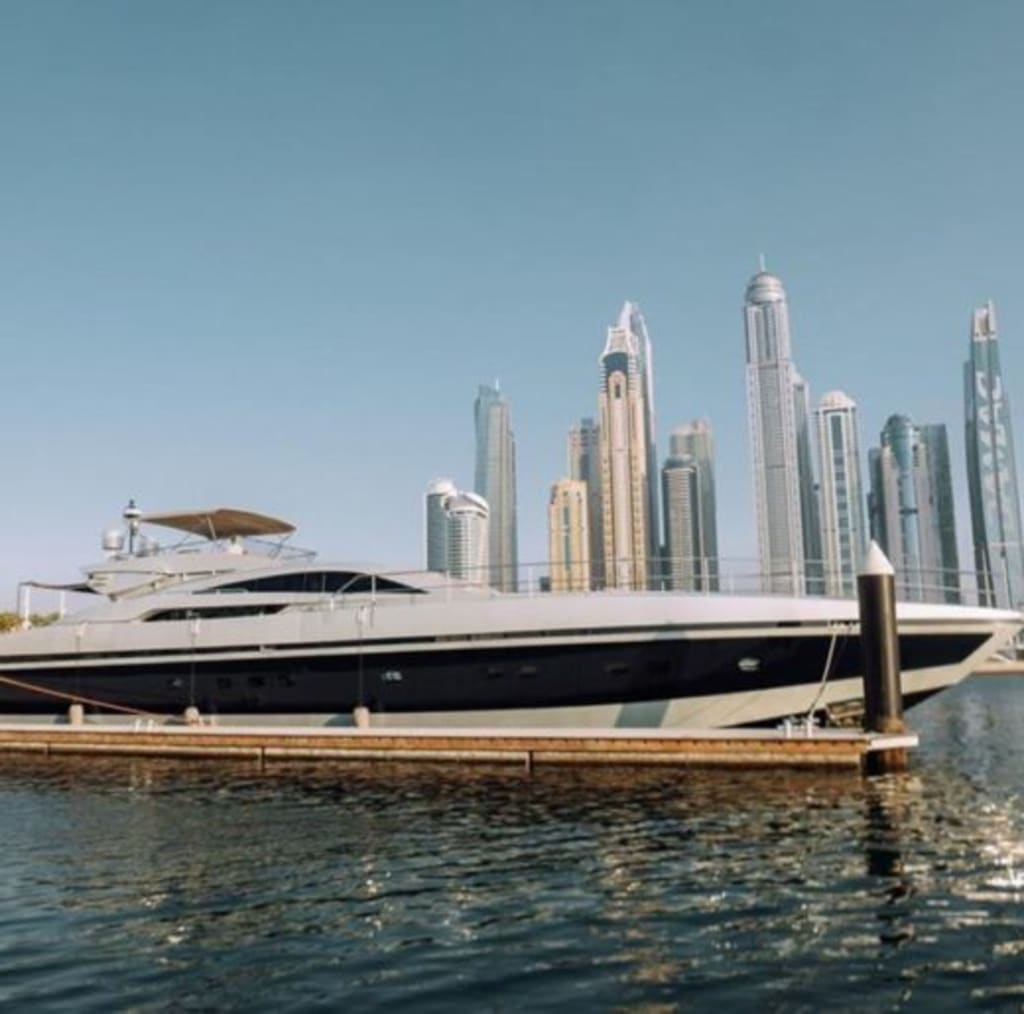
Most of the yachting industry's recent growth has come from production-line thinking: standardized hulls, repeatable interiors, and delivery schedules built around volume rather than individual commissions. Against that backdrop, a small number of shipyards have continued building the way the industry once did almost universally — slowly, selectively, and largely by hand. Baglietto, the Italian builder founded in 1854, is one of the clearest surviving examples of that older model, and its continued relevance says something worth examining about what buyers are actually looking for when scale stops being the deciding factor.
Baglietto Yachts is an Italian yacht builder founded in 1854 in Varazze and now headquartered in La Spezia, known for constructing custom and semi-custom aluminum and steel yachts rather than mass-produced models. The shipyard is widely regarded as one of the oldest continuously operating yacht builders in the world.
That longevity is unusual in an industry where shipyards routinely change ownership, merge, or disappear within a few decades. Baglietto has survived two world wars, multiple changes of ownership, and a complete transformation of what a luxury yacht is expected to be — and it has done so largely by staying narrow rather than expanding to compete on volume.
The contrast with the rest of the industry has only sharpened in recent decades. As private equity and larger marine groups have consolidated much of the production yacht market, the economics of shipbuilding have increasingly rewarded standardization: shared hull molds, repeatable interior packages, and supply chains built for predictable output rather than one-off commissions. Builders that resisted that shift haven't simply survived by accident. They've generally done so by serving a specific kind of buyer whose priorities don't line up neatly with what mass production optimizes for.
What Baglietto Actually Builds, and Why Scale Was Never the Point
Baglietto's catalog looks nothing like the model lineups published by the industry's largest production builders. Rather than a handful of fixed hull designs sold with configurable options, Baglietto works primarily in custom and semi-custom construction, building yachts that range from roughly 13 to 55 meters, with naval architecture and design handled on a project-by-project basis. Long-running collaborations, including its decades-long partnership with designer Francesco Paszkowski, have shaped a recognizable aesthetic across the shipyard's work without ever standardizing it into a repeatable product line.
This approach has real consequences for output. Where a large production yard might deliver several hundred vessels in a year, a boutique builder like Baglietto delivers a small fraction of that number, with each yacht representing a meaningfully larger share of the shipyard's annual attention and resources. That math is precisely why boutique construction has never been the more profitable path on a per-unit basis — it isn't designed to be. It is designed to produce something closer to a singular object than a model variant.
The implications of that math extend into how the shipyard allocates its workforce as well. A production builder organizes labor around repeatable tasks across a continuous build line, which is efficient precisely because the same components and processes recur from one hull to the next. A custom-first builder cannot rely on that repetition in the same way, which means skilled labor gets applied more individually to each project — a tradeoff that limits annual output but tends to produce a level of fit and finish that's harder to achieve when the same workforce is spread across dozens of nearly identical builds simultaneously.
The Difference Between a Production Yacht and a Boutique One
The distinction between these two models isn't really about quality in the most basic sense; plenty of production builders produce well-engineered, reliable vessels. The difference shows up more in how decisions get made during construction. A production yacht is built to a fixed specification with limited room for deviation, because deviation is expensive at scale and undermines the efficiency the entire model depends on. A boutique yacht, by contrast, is built around the specific owner commissioning it, with layout, materials, and even structural choices shaped by that single relationship rather than by what works across hundreds of buyers.
This has practical implications for resale and long-term ownership as well. Custom-built yachts from established boutique shipyards tend to hold a particular kind of value in the secondary market — not necessarily higher in every case, but more tied to provenance, build history, and the reputation of the specific yard than a production model typically is. A Baglietto with documented history and a known design pedigree carries a different kind of story than a comparably sized production yacht built the same year, and that story matters to a specific segment of buyers in ways that are difficult to quantify but easy to recognize once pointed out.
This is part of why brokers working at the upper end of the market often describe boutique-built yachts differently than they describe production models, even when discussing comparable specifications. A production yacht's value proposition tends to center on what it can do — speed, range, layout efficiency. A boutique yacht's value proposition more often centers on what it is — a specific build, by a specific yard, with a traceable history that becomes part of what a buyer is actually purchasing alongside the vessel itself.
A Lineage Built on Custom Work, Not Catalog Models
Baglietto's history offers a useful illustration of how a boutique builder accumulates reputation over time rather than through any single breakthrough. The shipyard's clientele has historically included European royalty and prominent cultural figures, and its design milestones — including some of the earliest hydrofoil experimentation in the early twentieth century and a pioneering role in aluminum construction decades later — emerged from individual commissions rather than from a deliberate product strategy aimed at a broad market.
That pattern has continued into the modern era. Rather than chasing the largest possible share of the superyacht market, Baglietto has continued to build within a relatively narrow size range and a consistently custom-first philosophy, even as the broader industry has consolidated around larger production groups. The shipyard's ownership has changed — it has been part of the Gavio Group since 2012 — but the underlying construction philosophy has remained largely intact through that transition, which is itself notable in an industry where new ownership frequently means new manufacturing strategy.
Why Boutique Builders Persist in an Industry That Rewards Volume
It would be reasonable to expect boutique shipyards to have been squeezed out entirely by now, given how much of the yachting industry's growth over the past two decades has come from larger production groups capable of building at far greater scale and lower per-unit cost. That this hasn't happened says something about the segment of buyers boutique builders are actually serving.
For a subset of owners — particularly those purchasing at the upper end of the market — the appeal of a yacht is partly the appeal of its scarcity and its story. A production yacht, however well built, exists as one of many essentially similar vessels. A boutique-built yacht exists as one of very few, often genuinely unique in layout or detail, with a build history that can be traced back to specific decisions made by a specific owner working with a specific design team. That distinction matters more to some buyers than horsepower, top speed, or even interior square footage, and it is precisely the kind of distinction that production-scale manufacturing cannot replicate no matter how refined its processes become.
There's also a cultural dimension to this that's easy to overlook. Italian shipbuilding in particular carries a reputation for craftsmanship that extends well beyond yachting — into furniture, fashion, and design more broadly — and shipyards like Baglietto benefit from that broader association in ways a newer or less storied builder simply cannot. Heritage, in this part of the market, functions almost like a material specification: buyers factor it into a purchase the same way they might factor in hull construction or engine choice.
That association also helps explain why boutique builders rarely try to compete head-on with production yards on price or delivery speed, even when they technically could scale up. Doing so would mean trading the very thing that makes their output distinctive for a competitive advantage that larger, better-capitalized groups already own more convincingly. A shipyard with 170 years of accumulated reputation has very little incentive to start competing on the terms that favor companies with no comparable history at all — the smarter long-term position is to keep leaning into the qualities that history actually provides.
What This Means for Buyers Evaluating New and Used Yachts Today
For someone actively comparing options — whether a first-time buyer entering the upper end of the market or an experienced owner considering a transition from a production yacht to something more bespoke — the practical question raised by a builder like Baglietto isn't really about Baglietto specifically. It's about what kind of ownership experience matters most: predictable specification and faster delivery timelines, which production builders generally offer more reliably, or a slower, more individualized process that results in something closer to a singular object than a configured model.
Markets with strong concentrations of luxury buyers tend to reflect both ends of this spectrum simultaneously rather than favoring one exclusively. Miami is a clear example of that dynamic. The volume of yachts for sale in Miami spans everything from large production fleets built for fast turnover to a smaller, quieter market in custom and semi-custom vessels from heritage shipyards, and the presence of both within the same regional market reflects how differently buyers in this segment define value once budget stops being the primary constraint.
What Baglietto's continued relevance ultimately suggests is that volume and craftsmanship aren't really competing for the same buyer in the first place. They serve different instincts — one rewarding efficiency and consistency, the other rewarding scarcity and story — and as long as a meaningful segment of the market continues to value the second, boutique builders with the patience and reputation to deliver it are likely to keep finding buyers, regardless of how large the production side of the industry continues to grow around them.
About the Creator
Robert Lama
Robert Lama is a seasoned yacht broker with Miami International Yacht Sales, a reputable yacht brokerage company specializing in both used and new yachts. https://www.miamiinternationalyachtsales.com/
Enjoyed the story? Support the Creator.
Subscribe for free to receive all their stories in your feed.
Comments
There are no comments for this story
Be the first to respond and start the conversation.