


Out here, stories swirl around some so-called anti-gravity gadget dug up on Easter Island - except none of it holds water under real scrutiny. These ideas? They sprout from fringe websites, wild online rumors, not actual science backed by experts. You won’t find any solid proof in journals where researchers check each other’s work carefully. What people call mystery often comes down to mixing up old Polynesian tales with modern fantasy. Sometimes, a stretchy version of ancient know-how gets tossed into the mix without grounding in fact. The truth is, what the Rapa Nui built stands clear through study, no magic tech needed.
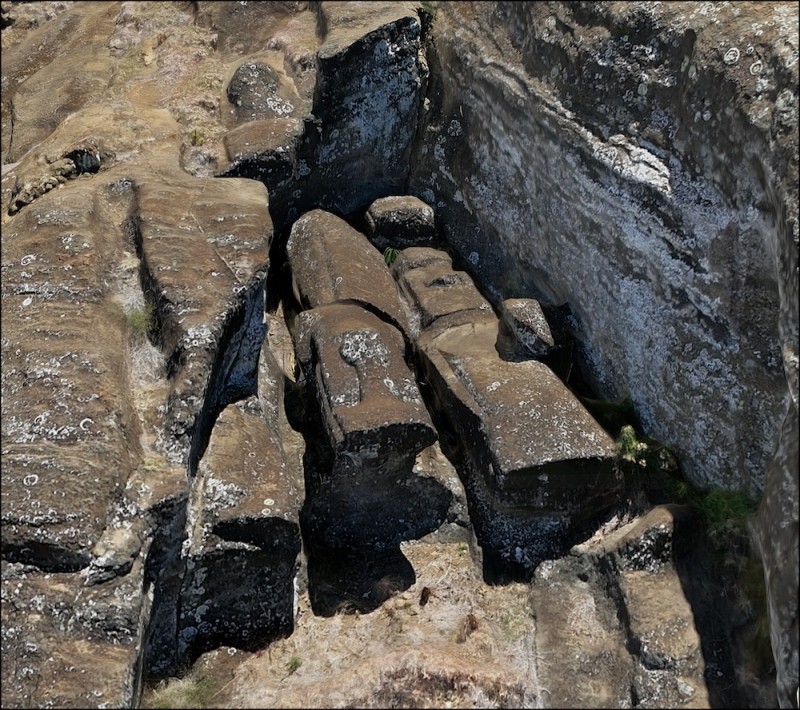
Standing tall - some reaching 10 meters - the moai were shaped by the Rapa Nui people from 1250 to 1500 CE. Weighing as much as 86 metric tons, these stone figures once defied explanation when it came to movement. Yet research led by Carl P. Lipo, from Binghamton University, uncovered key answers. Work conducted alongside Terry L. Hunt at the University of Arizona confirmed how they traveled. Peer-reviewed findings now show exactly how transport worked
3D morphological analysis of 962 moai (with focus on 62 "road statues")
Experimental replication using a 4.35-metric-ton scaled replica
Field trials on Rapa Nui’s ancient roads
Lipo and Hunt 2025 Journal of Archaeological Science
Some of the statues have wide bases shaped like a letter D. They tilt slightly forward, suggesting they were built to be carried upright. The roads underneath are about four and a half meters across, curving inward to match how humans walk. Cracks in broken pieces show stress patterns that line up with swaying while moving. In one test, eighteen individuals pulled a copy of the statue using only ropes. It took less than an hour to cover a football field's length.
The Walking Moai Idea
Standing tall, the statues moved forward not by dragging or rolling, yet through a swaying step guided by ropes pulled by people. Using teamwork, they rocked them side to side, making progress feel almost like walking. The motion - steady, rhythmic - allowed control without lifting off ground. Ropes gave grip and direction, turning effort into movement that shifted inch by inch. Balance played a big role, keeping each stone figure upright while nudging it ahead.
Less drag came from ditching heavy wood sleds - those didn’t work well after the island lost most of its trees. Movement got easier once people stopped relying on gear that needed forests.
Because of how it was shaped, leaning slightly ahead while sitting on the rounded bottom kept balance when swaying left or right. Physics made that possible without needing extra support.
Curved roads turned up in digs - built that way so statues wouldn’t sway too hard. When old moai got left behind, their cracks often came from dropping them while hauling upright.
Some say magic shifted the moai - truth leans on clever mechanics instead. Oral stories from Rapa Nui speak of statues that walked, guided by rhythm and group strength. Effort, balance, and smart leverage did what myths attribute to gods or lost tech. Feet dragging, rocking forward, pulled by ropes - not floating, just physics. People powered motion, one sway at a time, matching legend with real-world pull.
The Physics of Anti Gravity Why It Is Still Not Possible
Out near the edges of thought, Einstein’s 1915 idea reshaped how we see gravity - not as a pull, but warping in space and time. Bent by what things weigh and hold energy-wise, that fabric shifts. Picture planets nudging the stage they stand on, making it dip. Mass talks here; its presence twists the paths others take through universe-walks. No force at distance - just shapes forming where stuff sits.
What pulls things together never pushes. Every bit of matter and energy seen so far bends space the same way - curving it inward. This twist always adds up the same, like layers folding into themselves. Shape follows force, each piece tugging without exception. The universe leans in, never out.
So far, experiments show nothing with negative weight. Though math allows it sometimes, nature seems to skip such a thing entirely. Gravity always pulls, never pushes, as far as anyone has seen. Measurements keep coming back normal - no flip, no strange push. Ideas exist on paper, yet reality stays firm. Observations refuse to match those odder theories. Nothing found so far breaks the rule. Every test aligns with what we already know.
Gravity won’t flip without breaking current science. Changing space to push things apart needs stuff that doesn’t exist. Negative energy is one example - never seen in reality. Some theories allow it, but nature seems to forbid it. Bending spacetime backward means using rules we don’t understand. What if the universe just blocks such tricks? Exotic ingredients are mandatory here. Physics as we know it draws a hard line.
Claims About Easter Island Lack Foundation
Some think islanders meant magic when they said statues walked. That is wrong. Their words described how people moved them using tools and ropes instead. Movement came from human effort, not floating through air. Stories get twisted over time. What sounds mystical was actually clever engineering. People figure things out in smart ways. Believing in supernatural lifts misses the real skill involved.
Turns out the cracks in statues, how they’re broken, match up with people moving things by hand. Roads built long ago suggest feet, not forces, did the work. Evidence points away from invisible energies pulling stones. What we dig up shows effort, muscle, real hands-on labor instead.
Some think moving the huge moai needed futuristic tools like anti-gravity devices - yet smart techniques using basic mechanics made it possible within normal science. Though the statues are enormous, people likely shifted them by rolling or rocking, methods that follow natural laws just fine.
Some say there’s a secret anti-gravity machine hidden beneath Easter Island - but science offers zero proof. Built like ancient giants, the moai likely moved upright, swaying step by step in a shuffle similar to dragging a heavy fridge across a floor. Physics backs that idea; tests with replicas show it works just fine without magic or myths. Even now, floating stones through invisible beams stays pure fiction - Einstein’s rules shut that door tight. Wild stories pop up anyway, fed more by noise than facts.
About the Creator
Lynx👑
I'm thrilled to be a part of the vocal.media community. Writing has always been my passion, and I'm excited to share my stories.
Enjoyed the story? Support the Creator.
Subscribe for free to receive all their stories in your feed.
Comments
There are no comments for this story
Be the first to respond and start the conversation.