

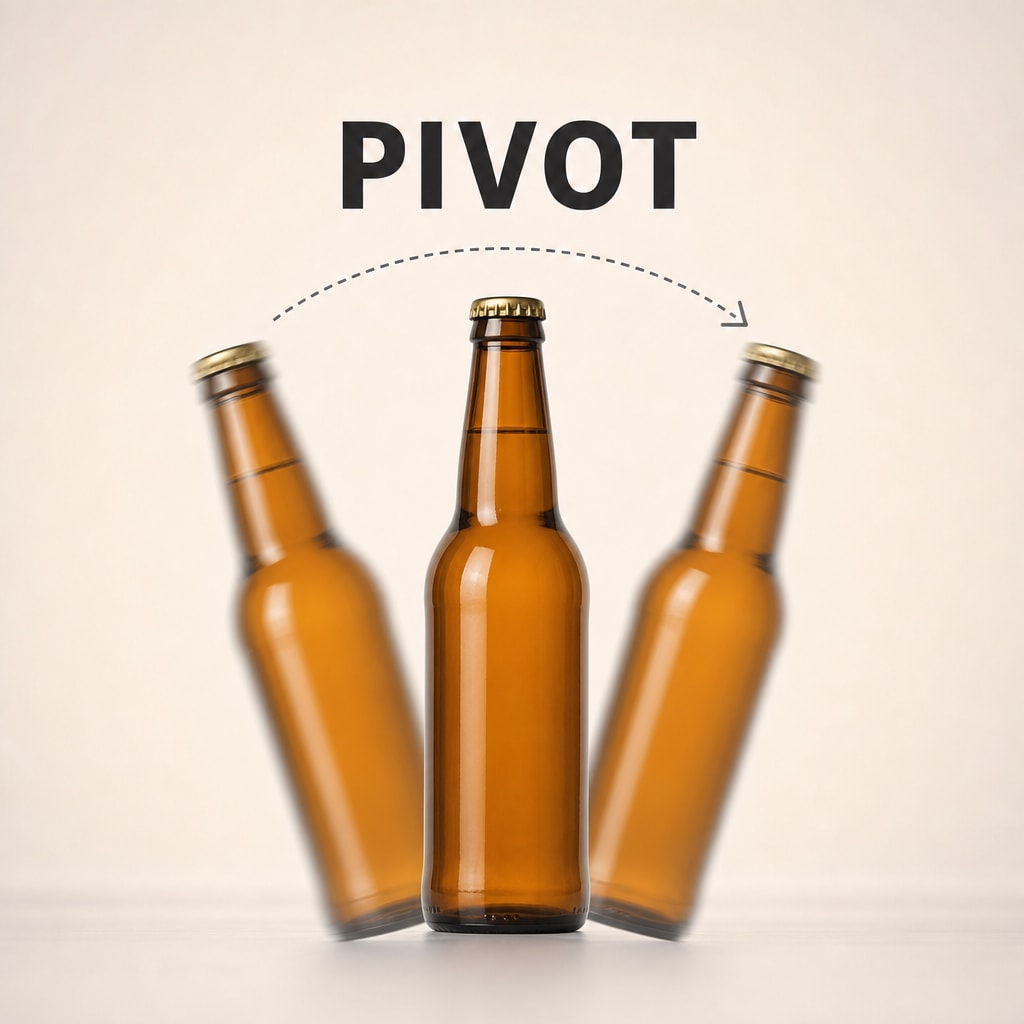
The Great Brand Shift
The first breath of any brand is engineered identity. But the second breath the one that determines whether that brand survives is adaptability.
Across industries, across decades, across every sector you can name, the brands that fall are rarely the ones with bad products. They’re the ones that refuse to move when the market moves.
Think about Blockbuster, Kodak, BlackBerry, Nokia, Sears, Toys “R” Us, Borders Books, RadioShack, Polaroid, JCPenney, MySpace, and Yahoo. Different industries. Different eras. Different customers. But the same fate. These brands didn’t collapse because people suddenly stopped liking movies, cameras, phones, toys, or books. They collapsed because they didn’t pivot. They didn’t respond to the market when the market demanded it. They stayed loyal to what used to work, even when the end user — the real shareholder — was already moving on.
A brand can have a great story. A brand can have a great product. But if it cannot adapt, it will eventually become a museum piece. Some pivots cost very little. Delaying them can cost everything.
We’re living in a time where the market moves faster than ever. Technology cycles are shorter. Consumer expectations evolve monthly. Cultural shifts hit harder than economic ones. The brands that survive are the ones that understand a simple truth: identity is engineered, but adaptability is earned.
Right now, one of the clearest examples of this is happening in the brewing industry. We’re in an age of health‑conscious consumers. People want to live longer, feel better, and stay productive — without losing the identity markers they enjoy. Alcohol consumption has been impacted, not because people stopped celebrating, but because they’re redefining what celebration looks like. Legacy customers don’t live forever. New customers don’t drink the way their parents did. And health consciousness is no longer a fad it’s a cultural shift.
So what does a brewing company do? It pivots. It creates non‑alcoholic beer. It builds a new lane without abandoning the old one. It expands identity instead of replacing it.
This is why Heineken made one of the biggest strategic moves in the industry with Heineken 0.0 — a global flagship that treated non‑alcoholic beer like a premium product instead of an afterthought. It’s why Anheuser‑Busch launched Budweiser Zero and Stella Artois Liberté, responding directly to wellness culture and “functional moderation.” Molson Coors followed with Coors Edge and a non‑alcoholic Blue Moon as part of their “beyond beer” strategy, recognizing that beer consumption was declining while functional beverages were rising.
Guinness spent years perfecting Guinness 0.0, preserving the signature Guinness mouthfeel without the alcohol — a technical pivot, not just a marketing one. Samuel Adams entered the NA craft space with Just the Haze, giving craft drinkers a non‑alcoholic option that still tasted like craft beer. Athletic Brewing didn’t just pivot — they built an entire identity around non‑alcoholic craft beer and forced legacy brewers to respond. BrewDog expanded aggressively with Punk AF and Nanny State, seeing early demand from younger drinkers. Carlsberg launched 0.0 across multiple regions, tying the move to sustainability and wellness. And in Japan, Asahi Dry Zero and Kirin Free became pioneers long before the U.S. caught up, responding to cultural and regulatory shifts that demanded new drinking norms.
These companies didn’t pivot because they were failing. They pivoted because they understood the moment. Great brands don’t try to be everything to everyone. They simply recognize which trends are consequential to their future.
The lesson is simple: don’t make the same mistake the fallen brands made. Listen to your end users. Pivot when the market calls for it. Protect your lore by evolving your identity.
To the new readers who joined the SGC world this week — welcome. Identity is a journey, not a product.
About the Creator
Jadrian Laflure
Contributor — SGC Division A Jade 2 Capital Company I write as Jadrian Laflure about identity, atmosphere, precision, and the architecture behind creative systems. This Vocal page serves as part of the SGC ecosystem within Jade 2 Capital.
Enjoyed the story? Support the Creator.
Subscribe for free to receive all their stories in your feed.
Comments
There are no comments for this story
Be the first to respond and start the conversation.