
Why snakes that live in trees continue to develop longer tails
Snake body clues

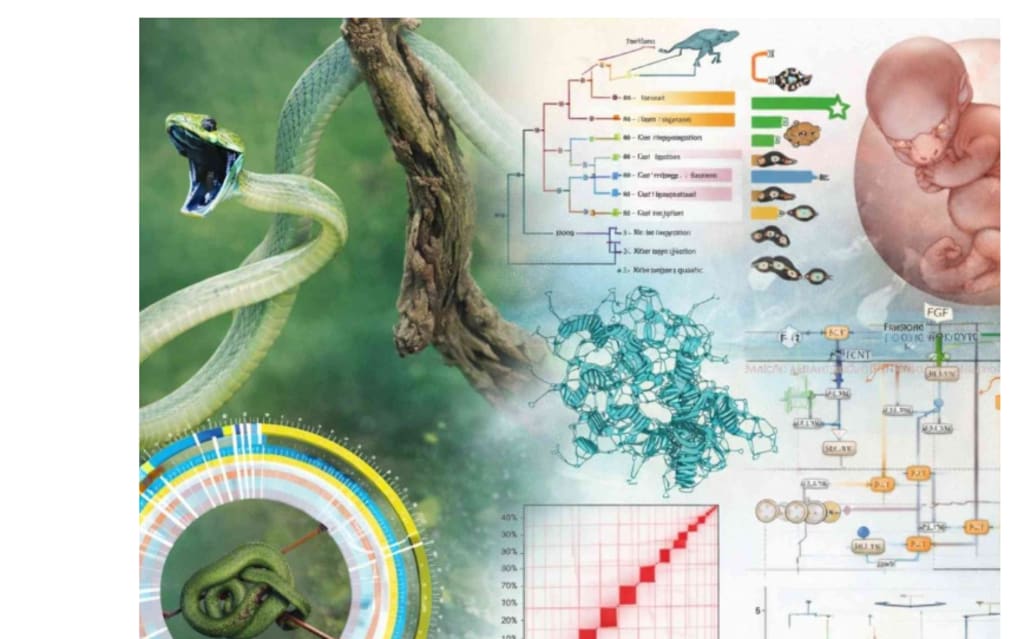
The genetic alterations that enabled tree-dwelling snakes to develop longer tails across several lineages have been discovered by scientists. The discovery demonstrates how snake bodies were continually altered by comparable DNA changes in response to tree life.
Snake body clues
Among 323 snakes from 110 species, animals that are mostly found in trees showed the most pronounced tendency of longer tails. Jia-Tang Li of the Chengdu Institute of Biology (CIB) explicitly connected inherited genetic alterations with longer tails by comparing these species.
The same longer-tail pattern appeared separately in several snake lineages, suggesting a recurring evolutionary response rather than a single origin. The explanation is limited to particular biological processes that regulate the number of vertebrae that form in the tail as a result of this repetition.
The purpose of longer tails
A snake with a longer tail has more points of contact and better control when its body turns on thin branches. Tree-climbing species have longer tails than their ground-dwelling counterparts, which probably improves balance and grip, according to earlier research.
Tail length increased so closely with the number of tail vertebrae in the new comparison that the correlation reached 0.91. The puzzle becomes less about external shape and more about how embryos continue to add segments in the back as a result of this close connection.
Making a map of the genome
The CIB team created a high-quality genome for the green cat snake in order to investigate the DNA responsible for that pattern. On a typical completeness test, the new assembly, which encompassed 18 chromosomes, retrieved 98.1%.
Researchers might compare two independent tests conducted by evolution itself using Boiga cyanea and the far-off tree-dwelling Ahaetulla prasina. Since matching signals are more difficult to discount as chance, the case for convergence became stronger when distant lineages were compared.
Under strain, genes
Parts of the developmental program that aid in dividing the developing organism into repeating units showed a number of common gene alterations. Snakes produce an abnormally high number of these repeating units, which are somites—early body blocks that eventually form vertebrae.
Genes that regulate the formation, division, and lengthening of the spine were among the most notable targets. Longer tails most likely developed via the same biological process because both tree-dwelling lineages displayed comparable alterations.
A quicker clock
The segmentation clock, which serves as a molecular timer to space out new body segments throughout early growth, provided another hint. More vertebral fragments can occur in snakes because their timer operates around four times faster than that of mice or lizards.
Fresh evolutionary alterations in genes that aid in maintaining the beat of the timer were discovered by the latest study. These signs indicated the developmental pace as a potential lever, although they did not directly prove every step.
DNA switches alter
Beyond genes, adjacent DNA sequences that regulate when genes activate were also altered. A number of these regulatory regions were located close to crucial components of the system that determine the boundary between the body and the tail.
The majority of these areas performed differently in lab experiments in snakes that lived in trees as opposed to those that stayed on the ground. Without changing the genes themselves, these changes can affect the time of growth, enabling the formation of longer tails.
Evolution remains concentrated
Snakes have frequently evolved to live in trees, although this did not seem to lead to the emergence of new species. The recurring transition typically originated with land-dwelling ancestors rather than water-based lineages, as evidenced by the majority of movements into that habitat.
The longer tail seems more appropriate for a particular functional job and less associated with fast diversification. This distinction is important because effective anatomy can address an ecological issue without increasing the number of snake lineages.
Beyond the tails of snakes
This discovery extends beyond snakes since other body parts in vertebrates are shaped by similar developmental mechanisms. Depending on how it influences growth timing, altering a single gene in mice can either shorten the tail or add additional tail bones.
Because the same route previously modifies tails in another species, this mouse parallel makes the snake result more credible. It also implies that rather than developing completely new developmental systems, evolution frequently modifies preexisting ones.
What is still absent
Researchers are yet unable to observe these precise DNA alterations reshaping a snake embryo in real time, despite strong genetic signals. Direct experiments in snake embryos are slowed somewhat because Li's CIB team and its partners currently lack the adaptable lab equipment typical of mice.
Future research will require direct experiments that evaluate tail growth after flipping candidate switches or genes. Even while some causal relationships still need to be established, the article provides the most convincing explanation yet.
What this implies
Evolution responded to the recurring preference for larger snake tails in tree life by altering the switches and genes that control vertebral growth. Biologists may ultimately be able to examine how body designs vary among species, from mammals to branch-clinging reptiles, thanks to this understanding.
About the Creator
Enjoyed the story? Support the Creator.
Subscribe for free to receive all their stories in your feed.
Comments
There are no comments for this story
Be the first to respond and start the conversation.