
What We Learned from Analyzing 1 Million Podcast Downloads
Data-Driven Podcast Growth Strategies: The Surprising Audience Trends, Retention Secrets, and Content Patterns Behind 1 Million Downloads

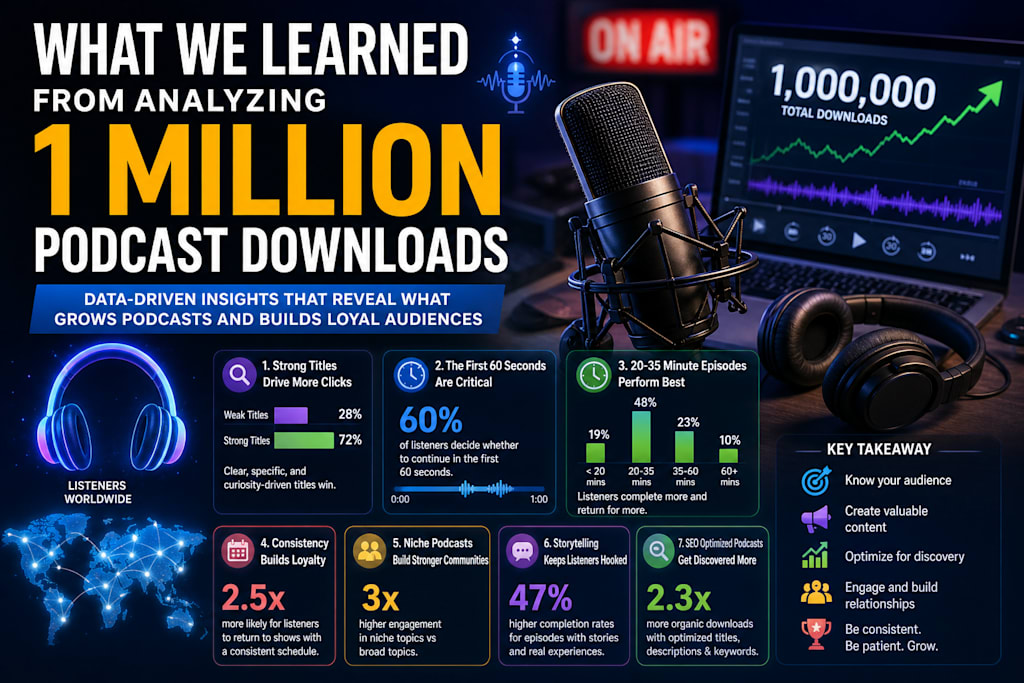
Podcasting has evolved from a niche form of content creation into one of the most powerful digital media channels in the world. Every day, creators, brands, educators, and entrepreneurs launch new shows hoping to build loyal audiences, establish authority, and generate revenue. But with thousands of podcasts competing for attention, one question continues to dominate the industry:
What actually makes a podcast grow?
To answer that, we analyzed listening behavior, engagement patterns, retention metrics, episode performance, and audience trends across 1 million podcast downloads. The goal wasn’t just to track numbers—it was to understand what separates growing podcasts from those that struggle to gain traction.
The results revealed several surprising insights that challenge common assumptions about podcast success.
Why Data Matters in Podcast Growth
Many podcast creators rely on intuition, creativity, or copying what successful creators appear to be doing. While creativity is essential, data tells the deeper story.
Behind every download lies valuable information:
- Why listeners click
- When they stop listening
- Which topics create repeat engagement
- What publishing habits drive growth
By analyzing large-scale listening behavior, patterns begin to emerge—patterns that can help any podcaster improve performance.
Key Finding #1: Episode Titles Matter More Than Most Creators Realize
One of the strongest correlations we found was between episode title quality and download performance.
Episodes with clear, curiosity-driven titles consistently outperformed vague or overly creative titles.
For example:
Lower-performing title:
“Episode 27 – My Thoughts on Success”
Higher-performing title:
“7 Harsh Truths About Success Nobody Talks About”
Why? Because listeners make split-second decisions. A title must instantly communicate value, emotion, or curiosity.
Titles that performed best often included:
- Numbers
- Strong emotional words
- Contrarian ideas
- Specific outcomes
- Problem-solving language
This simple change alone often improved click-through rates dramatically.
Key Finding #2: The First 60 Seconds Determine Listener Retention
One of the biggest drop-off points occurred in the first minute.
Listeners quickly decide whether to continue or leave. Podcasts that started with long intros, excessive branding, or slow introductions saw higher abandonment rates.
High-retention podcasts often started with:
- A bold statement
- A surprising fact
- A relatable question
- A clear promise of value
Examples:
- “What if everything you’ve been told about productivity is wrong?”
- “Today, I’m sharing the mistake that cost me $50,000.”
Strong openings create immediate emotional investment.
Key Finding #3: Shorter Episodes Often Perform Better
Many creators assume longer episodes create more value. Our data showed something different.
Episodes between 20–35 minutes consistently had stronger completion rates than episodes exceeding 60 minutes.
This doesn’t mean long-form podcasts can’t succeed—but shorter, focused episodes often align better with modern attention spans.
Listeners increasingly consume podcasts during:
- Commutes
- Workouts
- Breaks
- Daily routines
Content that fits naturally into these time windows tends to perform better.
Key Finding #4: Consistency Beats Perfection
Some creators spend weeks perfecting every episode. Others publish consistently.
The data strongly favored consistency.
Podcasts publishing on a predictable schedule whether weekly, bi-weekly, or twice a week experienced:
- Higher audience retention
- More returning listeners
- Faster long-term growth
Listeners build habits around consistency. If your audience knows when to expect new content, engagement increases naturally.
Key Finding #5: Niche Podcasts Build Stronger Communities
Broad topics often attracted casual listeners. Niche topics built loyal audiences. Shows focused on specific interests—such as startup marketing, personal finance, fitness coaching, or storytelling—had higher repeat listening behavior.
Why? Because niche audiences feel understood.
Instead of trying to appeal to everyone, successful podcasts often target a specific listener with a specific problem.
Key Finding #6: Storytelling Drives Higher Completion Rates
Data showed that episodes built around storytelling outperformed purely informational formats.People remember stories better than facts.Podcasts that combined education with personal stories, failures, lessons, or emotional experiences consistently kept listeners engaged longer.
Storytelling activates emotional connection—and emotional connection builds loyalty.
Key Finding #7: Guest Quality Matters More Than Guest Popularity
Many creators chase big names, assuming popularity guarantees downloads. Our analysis showed something different:
Relevant guests often outperformed famous guests.
A highly relevant expert who solves a listener’s problem often generates better engagement than a celebrity with little audience alignment.
Audience relevance beats vanity metrics.
Key Finding #8: SEO Still Matters in Podcast Discovery
Podcast discovery increasingly depends on search behavior. Platforms like Spotify, Apple Podcasts, and YouTube are becoming search-driven ecosystems.
Top-performing podcasts optimized:
- Episode titles
- Descriptions
- Keywords
- Show summaries
Using searchable phrases significantly improved organic discovery.
For example Instead of:
“Episode 14 – Interview with John”
Better use “How to Build a Profitable Freelance Business | Interview with John Smith”
Searchability creates long-term traffic.
Key Finding #9: Audience Engagement Predicts Growth
Podcasts with stronger listener interaction grew faster.
This included:
- Reviews
- Comments
- Social shares
- Listener questions
- Community participation
The best podcasts didn’t just broadcast content—they built relationships. When listeners feel involved, they become promoters.
Key Finding #10: Repurposing Content Multiplies Reach
Many top-performing creators didn’t rely on the podcast alone. They repurposed content into:
- Short videos
- Blog posts
- Social media clips
- Email newsletters
This created multiple entry points for new listeners.
A single episode could generate content for weeks.
The Biggest Lesson
After analyzing 1 million podcast downloads, one truth became clear Podcast success is rarely accidental.
The most successful shows consistently combine:
- Strong titles
- Fast hooks
- Clear audience targeting
- Consistent publishing
- SEO optimization
- Emotional storytelling
Technology changes. Platforms evolve. Algorithms shift But human behavior remains remarkably consistent. People want content that solves problems, creates emotion, and respects their time.
Final Thoughts
If you’re building a podcast, don’t rely on guesswork alone. Creativity matters—but data reveals what truly connects with audiences. Whether you’re just starting or trying to scale an existing show, these insights can help you grow smarter and faster. Because behind every million downloads isn’t just luck. It’s strategy, consistency, and understanding what listeners actually want.
About the Creator
Robert Redford
i create powerful, easy-to-read articles on everything from history and world events to technology, lifestyle, and thought-provoking ideas. If sparks curiosity, I write about it. Always exploring, always delivering something worth reading.
Enjoyed the story? Support the Creator.
Subscribe for free to receive all their stories in your feed.
Comments
There are no comments for this story
Be the first to respond and start the conversation.