
United States Wound Care Market to Reach US$ 10.4 Billion by 2033 as Advanced Healing Technologies Transform Patient Care
Rising Chronic Wounds, Diabetes Cases, Aging Population, and Innovative Treatment Solutions Are Reshaping the Future of Wound Management Across America

United States Wound Care Market Outlook
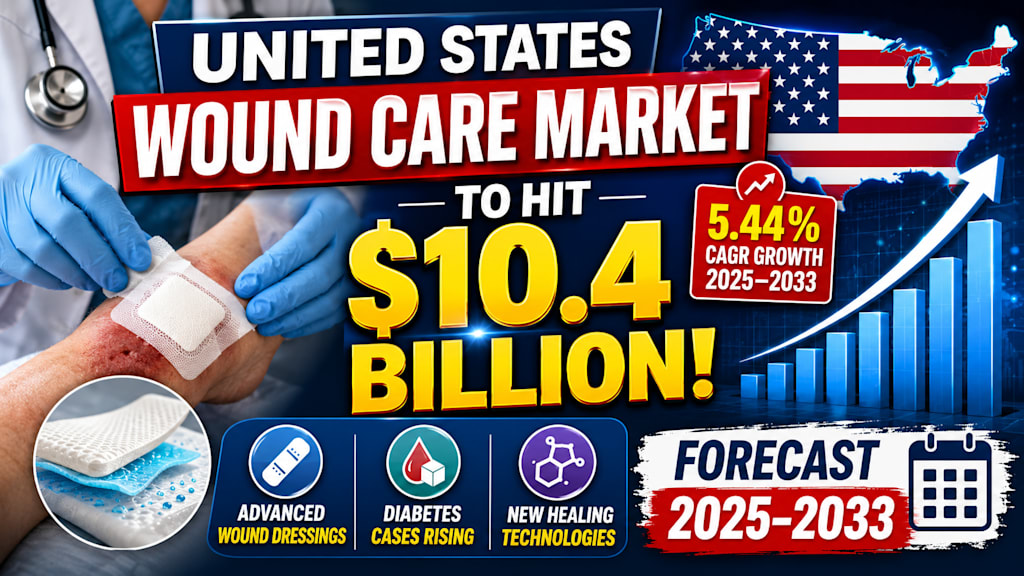
The United States wound care market is on a strong growth trajectory, driven by increasing rates of chronic diseases, an aging population, rising surgical procedures, and continuous advancements in wound management technologies. According to Renub Research, the United States Wound Care Market is projected to grow from US$ 6.45 billion in 2024 to US$ 10.4 billion by 2033, expanding at a CAGR of 5.44% during 2025–2033.
Wound care has become an essential component of modern healthcare as healthcare providers seek more effective solutions to accelerate healing, reduce infection risks, and improve patient outcomes. From diabetic foot ulcers to post-surgical wounds and burn injuries, the demand for sophisticated wound care products continues to rise across hospitals, clinics, long-term care facilities, and home healthcare settings.
As innovation accelerates and patient expectations evolve, the U.S. wound care industry is undergoing a significant transformation that is creating opportunities for manufacturers, healthcare providers, and investors alike.
Understanding the Importance of Wound Care
Wound care encompasses a broad range of products, therapies, and treatment approaches designed to support healing and prevent complications arising from acute and chronic wounds.
The market includes:
Advanced wound dressings
Traditional wound care products
Negative pressure wound therapy (NPWT)
Bioactive wound healing solutions
Growth factor therapies
Wound monitoring technologies
Historically, traditional gauze and adhesive products dominated wound treatment. However, the healthcare industry is increasingly moving toward advanced solutions that offer superior healing capabilities, reduced infection risks, and enhanced patient comfort.
The shift is particularly evident in the management of chronic wounds, where conventional methods often fail to deliver satisfactory outcomes.
Diabetes Epidemic Continues to Fuel Demand
One of the strongest drivers behind the U.S. wound care market is the growing prevalence of diabetes.
According to the Centers for Disease Control and Prevention (CDC), approximately 37.3 million Americans are living with diabetes, while nearly 96 million adults have prediabetes. These figures highlight the enormous patient population vulnerable to diabetic complications, including diabetic foot ulcers and chronic wounds.
Poor blood circulation and nerve damage associated with diabetes frequently lead to wounds that heal slowly and require specialized treatment. Without proper care, these wounds can become infected and may even result in amputations.
As diabetes cases continue to increase nationwide, healthcare providers are investing heavily in advanced wound care solutions that can improve healing outcomes and reduce healthcare costs associated with long-term treatment.
Aging Population Creating New Opportunities
America's aging population is another critical growth catalyst.
Older adults are more susceptible to:
Pressure ulcers
Venous leg ulcers
Surgical wounds
Skin tears
Chronic non-healing wounds
The U.S. Census Bureau projects significant growth in the elderly population over the next decade, creating greater demand for wound care services and products.
Age-related conditions often slow the body's natural healing processes, making specialized wound management increasingly necessary. Healthcare systems are responding by expanding access to advanced dressings, biologic therapies, and home-based wound care programs.
As life expectancy continues to rise, wound care will remain a crucial aspect of geriatric healthcare management.
Technological Innovation Revolutionizing Wound Treatment
Technology is fundamentally transforming the wound care landscape.
Modern wound care products are designed not only to cover wounds but also to actively promote healing. Advanced materials, bioengineered tissues, and intelligent monitoring systems are changing the way clinicians manage wounds.
Some of the most impactful innovations include:
Advanced Foam Dressings
Advanced foam dressings provide moisture balance, absorb exudate, and create optimal healing environments. These products are increasingly replacing traditional wound coverings in both acute and chronic wound management.
Negative Pressure Wound Therapy (NPWT)
NPWT systems use controlled suction to remove excess fluids, improve circulation, and stimulate tissue growth. The therapy has become a preferred solution for complex wounds and post-surgical recovery.
Bioactive Wound Care Products
Bioactive therapies incorporate biological components that actively support tissue regeneration. These products have demonstrated significant potential in accelerating healing and reducing complications.
Smart Wound Dressings
Emerging smart dressings can monitor wound conditions in real time and provide healthcare professionals with valuable data regarding healing progress, infection indicators, and treatment effectiveness.
These innovations are improving patient outcomes while helping healthcare systems reduce hospital stays and treatment costs.
Product Launches Strengthening Market Growth
Recent product launches and regulatory approvals are reinforcing the industry's growth momentum.
In January 2023, ConvaTec launched ConvaFoam, a next-generation foam dressing portfolio developed to address the needs of both patients and healthcare providers.
Similarly, in December 2022, MediWound received FDA approval for NexoBrid, an innovative treatment designed to remove eschar in patients suffering from severe thermal burns.
Such developments demonstrate the industry's commitment to innovation and underscore the growing demand for advanced wound management solutions across the United States.
Research institutions, biotechnology companies, and medical device manufacturers continue to invest heavily in product development, creating a strong pipeline of future innovations.
Expansion of Home Healthcare Driving Adoption
The healthcare industry is witnessing a major shift toward outpatient treatment and home-based care.
Patients increasingly prefer receiving care in the comfort of their homes, while healthcare systems seek cost-effective alternatives to prolonged hospital stays.
Several factors are supporting this trend:
Growth of telehealth services
Availability of portable wound therapy devices
Improved patient education
Expanded insurance coverage
Rising healthcare costs
Advanced wound dressings and portable NPWT systems allow patients to manage chronic wounds effectively without frequent hospital visits.
This trend is particularly beneficial for elderly patients and individuals with mobility limitations, creating significant opportunities for manufacturers focused on user-friendly wound care technologies.
Challenges Facing the U.S. Wound Care Industry
Despite its positive outlook, the wound care market faces several important challenges.
High Cost of Advanced Therapies
Sophisticated wound care products often come with premium price tags.
Bioengineered skin substitutes, advanced dressings, and NPWT systems provide superior outcomes but can be financially burdensome for patients and healthcare facilities operating under budget constraints.
Smaller hospitals and rural healthcare centers may struggle to adopt these technologies due to cost considerations.
Manufacturers must continue exploring strategies to improve affordability while maintaining product performance and innovation.
Regulatory and Reimbursement Complexities
The U.S. healthcare sector maintains strict regulatory standards to ensure patient safety.
While these regulations are essential, they can increase development costs and delay product launches.
Additionally, reimbursement policies vary among insurers, creating uncertainty for healthcare providers considering new treatment options.
Greater reimbursement clarity and streamlined approval pathways could help accelerate adoption of innovative wound care solutions across the country.
State-Level Market Analysis
California
California remains one of the most influential wound care markets in the United States.
The state's robust healthcare infrastructure, extensive research ecosystem, and early adoption of advanced medical technologies support strong demand for innovative wound management solutions.
Large healthcare networks and academic institutions contribute significantly to clinical adoption and product evaluation.
Texas
Texas continues to experience rapid growth due to population expansion and increasing healthcare investments.
Healthcare providers throughout the state are embracing advanced wound therapies to improve recovery outcomes and reduce complications associated with chronic wounds.
The state's mix of urban medical centers and rural healthcare facilities creates opportunities across multiple product categories.
New York
New York's highly developed healthcare ecosystem supports widespread adoption of advanced wound care technologies.
Specialized wound centers, research institutions, and major hospitals are driving demand for innovative therapies and biologic products.
The state's focus on quality healthcare delivery continues to support market expansion.
Florida
Florida's large elderly population makes it one of the most significant wound care markets in the country.
Demand for chronic wound management solutions remains particularly strong, driven by increasing healthcare needs among retirees and aging residents.
Hospitals, clinics, and home healthcare providers are investing heavily in advanced treatment options to improve patient outcomes.
Market Segmentation Highlights
By Wound Type
Advanced Wound Dressings
Traditional Wound Care Products
Negative Pressure Wound Therapy
Bioactive Products
Others
By Product
Foam Dressings
Antimicrobial Dressings
Alginate Dressings
Traditional Adhesive Dressings
Hydrocolloid Dressings
Hydrogel Dressings
Traditional Gauze
Film Dressings
Traditional Non-Adherent Dressings
Others
By Application
Chronic Wounds
Diabetic Foot Ulcers
Pressure Ulcers
Venous Leg Ulcers
Acute Wounds
Surgical Wounds
Traumatic Injuries
Burns
By End User
Home Care Settings
Long-Term Care Facilities
Hospitals & Clinics
10 Recent Developments by Leading Wound Care Companies
1. ConvaTec Group PLC
Introduced the ConvaFoam advanced foam dressing range in the United States, enhancing treatment options for wound exudate management and patient comfort.
2. Mölnlycke Health Care
Expanded its advanced wound dressing portfolio through continued investment in antimicrobial and foam-based wound care technologies.
3. Smith & Nephew
Strengthened its negative pressure wound therapy offerings with ongoing enhancements to its PICO platform designed for outpatient and surgical wound management.
4. Johnson & Johnson (Ethicon)
Continued integrating advanced wound closure technologies into surgical care pathways to improve healing outcomes and reduce complications.
5. Coloplast Corp
Expanded wound and skin care product availability across healthcare facilities and home care channels in the United States.
6. Integra LifeSciences (Derma Sciences)
Enhanced regenerative wound care capabilities through innovations in tissue repair and advanced wound management solutions.
7. MediWound Ltd.
Received FDA approval for NexoBrid, providing clinicians with an advanced solution for eschar removal in severe burn patients.
8. 3M Health Care
Continued expanding advanced dressing and infection prevention technologies supporting both chronic and acute wound treatment.
9. Organogenesis Holdings
Advanced its regenerative medicine portfolio through increased adoption of bioactive wound healing products for chronic wound management.
10. Baxter International
Expanded investments in wound therapy systems and advanced care technologies aimed at improving healing efficiency and patient outcomes.
Competitive Landscape
The U.S. wound care market remains highly competitive, with established multinational companies competing through innovation, strategic acquisitions, and product differentiation.
Major market participants include:
Mölnlycke Health Care
Smith & Nephew
Ethicon Inc.
Coloplast Corp
ConvaTec Group PLC
Integra LifeSciences
These companies continue investing in research, partnerships, and product innovation to strengthen their market positions and address evolving clinical needs.
Final Thoughts
The United States wound care market is entering a period of sustained growth driven by demographic shifts, chronic disease prevalence, technological innovation, and evolving healthcare delivery models. As advanced therapies become increasingly effective and accessible, healthcare providers are moving beyond traditional wound management approaches toward solutions that accelerate healing and improve patient quality of life.
With the market expected to reach US$ 10.4 billion by 2033, manufacturers that successfully balance innovation, affordability, and clinical effectiveness will be best positioned to capitalize on future opportunities. From smart dressings and regenerative medicine to home-based wound therapy systems, the next decade promises significant transformation in how wounds are treated across the United States.
For patients, providers, and industry stakeholders alike, wound care is no longer simply about treatment—it is becoming a cornerstone of modern, patient-centered healthcare.
About the Creator
Enjoyed the story? Support the Creator.
Subscribe for free to receive all their stories in your feed.
Comments
There are no comments for this story
Be the first to respond and start the conversation.