
United States Super Absorbent Polymer Market Set for Strong Growth as Hygiene, Healthcare, and Agriculture Demand Accelerates
From baby diapers to medical dressings and water-saving farming solutions, super absorbent polymers are becoming essential across America’s modern economy.

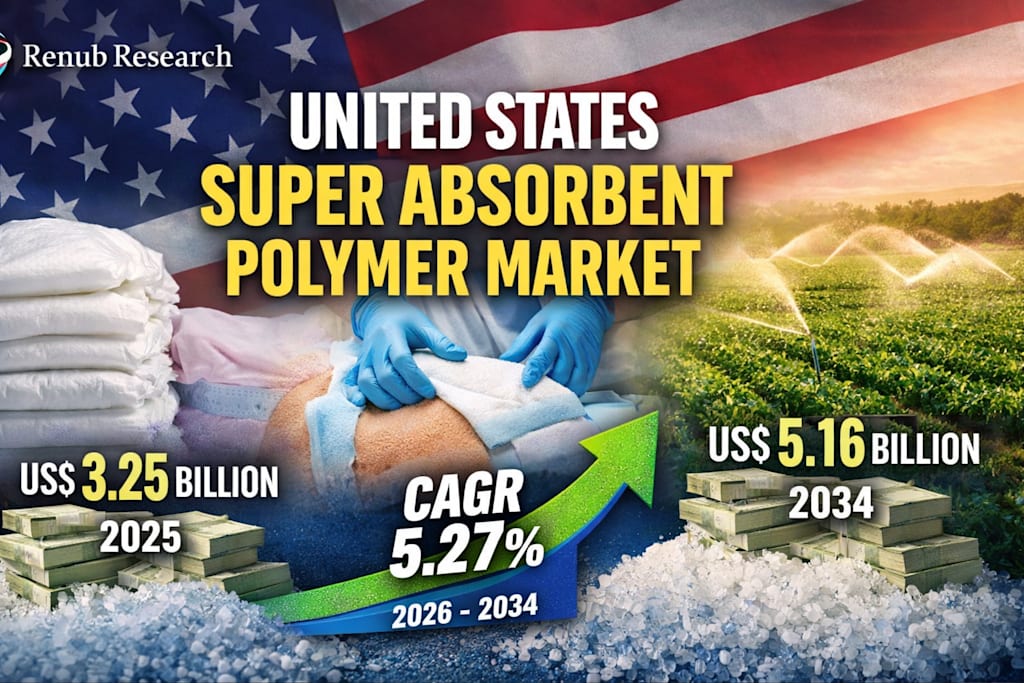
The United States Super Absorbent Polymer (SAP) Market is entering a new phase of steady expansion, supported by rising demand in personal hygiene, healthcare, industrial applications, and sustainable agriculture. According to Renub Research, the market is projected to grow from US$ 3.25 billion in 2025 to US$ 5.16 billion by 2034, expanding at a CAGR of 5.27% during 2026–2034.
While many consumers may never hear the term “super absorbent polymer,” they interact with these materials almost daily. SAPs are found in baby diapers, adult incontinence products, feminine hygiene products, wound dressings, spill control materials, and even water-retention farming products. Their ability to absorb and retain many times their own weight in liquid makes them one of the most useful specialty materials in modern manufacturing.
As the U.S. population ages, healthcare needs rise, and industries look for smarter material solutions, the SAP market is expected to remain highly relevant for years to come.
What Are Super Absorbent Polymers?
Super absorbent polymers are advanced materials typically made from cross-linked acrylic acid salts. Once exposed to liquid, they swell into a gel-like substance while locking moisture inside.
This unique capability allows manufacturers to create products that stay dry, prevent leakage, and improve comfort. That’s why SAPs are widely used in hygiene and medical products where absorbency matters most.
Beyond personal care, these materials are now expanding into:
Agriculture moisture-retention systems
Construction materials
Industrial spill control
Packaging humidity management
Wastewater treatment applications
Their versatility is one of the biggest reasons the market continues to grow.
Personal Hygiene Remains the Largest Growth Engine
One of the strongest drivers of the U.S. SAP market is continued demand for hygiene products.
Baby diapers, training pants, feminine hygiene products, and adult incontinence garments depend heavily on super absorbent polymers for performance. Consumers increasingly prefer thinner, lighter, and more comfortable products that still provide maximum dryness.
Manufacturers respond by integrating more efficient SAP grades that improve absorbency without adding bulk.
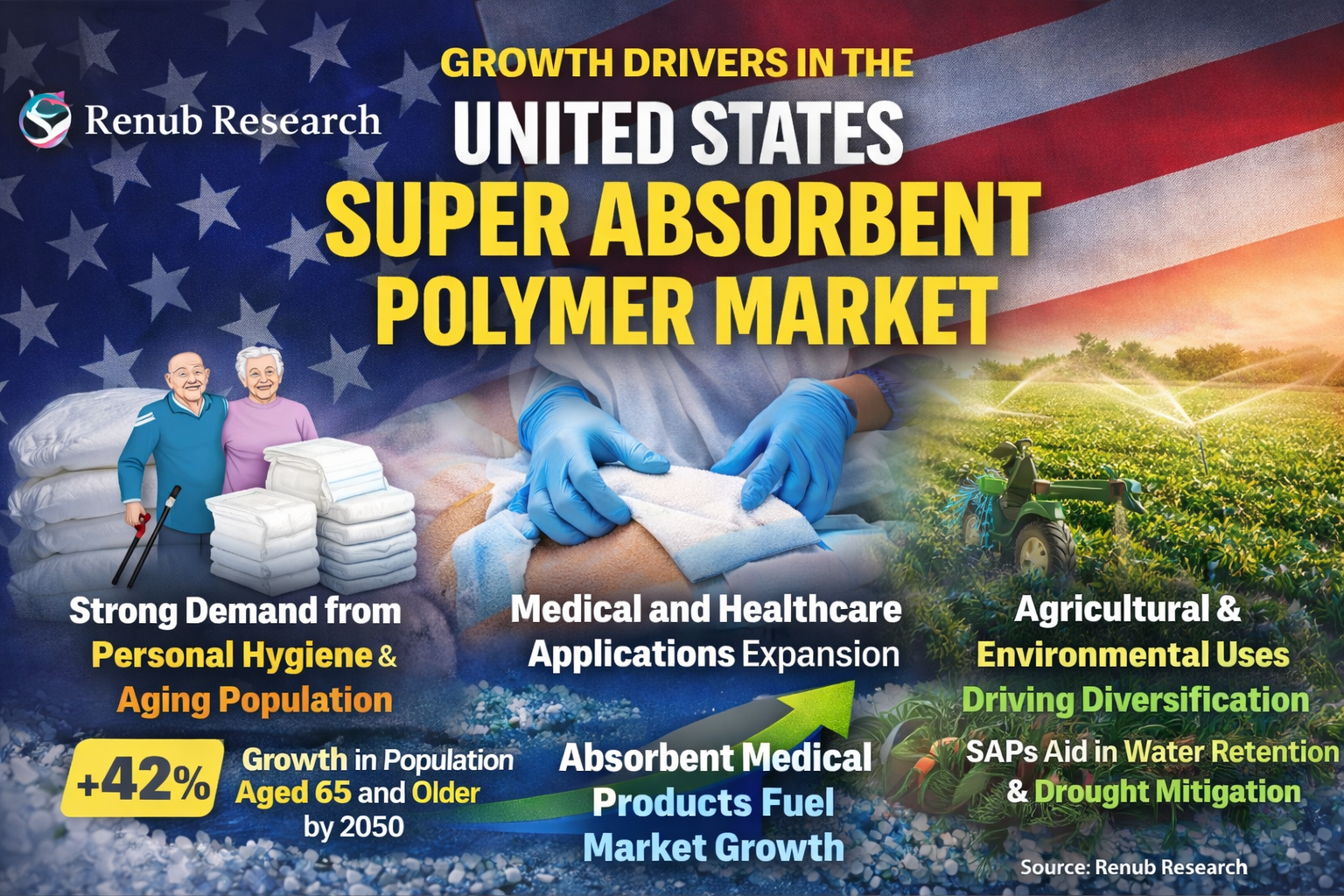
The adult incontinence segment is especially important. As America’s elderly population grows, demand for discreet, reliable hygiene solutions is rising rapidly. According to the data cited in the market report, the U.S. population aged 65 and older is expected to increase significantly by 2050.
That demographic shift alone creates long-term opportunity for SAP suppliers.
Healthcare and Medical Applications Expanding Fast
Super absorbent polymers are no longer limited to diapers and sanitary products. The medical sector is now becoming a major growth pillar.
Hospitals and healthcare providers use SAP-based materials in:
Advanced wound dressings
Surgical pads
Disposable bed pads
Medical absorbent packaging
Long-term care products
These products help manage fluids effectively while improving patient comfort and reducing infection risks.
Chronic wounds, diabetes-related complications, and aging-related healthcare needs are increasing demand for advanced wound care solutions. SAPs are particularly valuable because they maintain moist healing environments while absorbing excess fluid.
Healthcare institutions also appreciate single-use hygienic materials that reduce contamination risks and save labor time.
As healthcare infrastructure modernizes across the United States, this segment is expected to remain one of the most profitable areas of growth.
Agriculture Opens New Opportunities
One of the most exciting emerging uses of SAPs is in agriculture.
Water scarcity, drought pressure, and the need for efficient irrigation systems are pushing farmers to adopt new moisture-control technologies. Super absorbent polymers help soil retain water for longer periods, reducing irrigation frequency and improving plant growth.
They are increasingly used in:
Seed germination support
Soil moisture enhancement
Landscaping projects
Arid-region farming
Urban green development
In states facing water stress, these materials can become highly valuable tools for sustainability.
As climate concerns grow, agricultural demand may become a much larger share of the SAP market over the next decade.
Industrial and Construction Uses Gain Momentum
Beyond hygiene and healthcare, SAPs are finding roles in construction and industrial environments.
In concrete manufacturing, they help regulate water release during curing and reduce shrinkage cracking. This can improve long-term structural durability.
Industrial sectors also use SAPs for:
Spill containment
Absorbent mats
Animal sanitation products
Waste management systems
Moisture control packaging
As industries search for performance-enhancing specialty materials, SAP adoption is expanding steadily.
Environmental Challenges Remain
Despite strong growth prospects, the industry faces serious environmental pressure.
Traditional SAPs are typically made from non-biodegradable polyacrylates. Since many SAP-containing products are disposable, concerns about landfill waste and sustainability continue to rise.
Consumers and regulators are increasingly asking manufacturers to develop:
Recyclable product designs
Bio-based polymers
Biodegradable absorbent materials
Reduced plastic waste systems
However, replacing traditional SAPs is technically difficult. New materials must maintain absorbency, durability, safety, and affordability.
That means R&D spending is increasing, and innovation will be critical for future competitiveness.
Raw Material Price Volatility Creates Risk
SAP manufacturing depends on petrochemical feedstocks such as acrylic acid, sodium hydroxide, and specialty crosslinkers.
When oil prices rise or supply chains are disrupted, production costs increase quickly. Energy-intensive manufacturing processes also add pressure to margins.
Smaller producers may struggle more than global chemical giants because they have less purchasing power and fewer supply options.
To reduce risk, many companies are focusing on:
Diversified suppliers
Long-term contracts
Strategic inventories
Backward integration
Production efficiency improvements
Cost control will remain a key success factor.
State-Level Demand Shows Regional Strength
Several U.S. states are emerging as important SAP markets.
California
Large population, advanced healthcare systems, and agriculture needs make California a major demand center. Water-saving agricultural SAP solutions are especially relevant there.
New York
Dense urban populations and strong hospital networks drive demand for hygiene and medical SAP products. Institutional procurement also supports growth.
New Jersey
Strong logistics infrastructure and manufacturing capacity make New Jersey a strategic distribution hub for SAP-related products.
Washington
Agriculture, research centers, healthcare institutions, and port logistics all contribute to market opportunities.
Leading Companies Shaping the Industry
The U.S. market includes strong participation from global chemical and specialty material leaders, including:
BASF
Evonik Industries
Formosa Plastics Group
Kao Corporation
LG Chem Ltd.
Nippon Shokubai
SDP Global Co. Ltd.
Sumitomo Seika Chemicals Company Ltd.
These companies compete through innovation, quality control, production scale, and sustainability initiatives.
What Comes Next for the Market?
Over the next decade, the United States SAP market is expected to evolve in three major directions:
1. Smarter Hygiene Products
Consumers will continue demanding thinner, lighter, more effective diapers and care products.
2. Medical Innovation
Advanced wound care, patient care materials, and infection-control disposables will create higher-value opportunities.
3. Sustainable Materials
Eco-friendly SAP chemistry may become the next big battleground for manufacturers.
Companies that balance performance, affordability, and environmental responsibility are likely to lead future growth.
Final Thoughts
The United States Super Absorbent Polymer Market may not grab headlines often, but it quietly powers products that millions rely on every day.
From keeping babies dry and helping elderly patients live comfortably to conserving water in agriculture and improving medical care, SAPs are becoming increasingly essential across industries.
With the market expected to rise from US$ 3.25 billion in 2025 to US$ 5.16 billion by 2034, the future looks highly promising.
About the Creator
Enjoyed the story? Support the Creator.
Subscribe for free to receive all their stories in your feed.
Comments
There are no comments for this story
Be the first to respond and start the conversation.