
United States Pharmaceutical Market Set to Reach US$ 979.25 Billion by 2033 as Innovation, Aging Population, and Specialty Drugs Drive Growth
Strong R&D Investments, Biologics Expansion, and Rising Chronic Disease Burden Position the U.S. Pharmaceutical Industry for Sustained Growth Through 2033

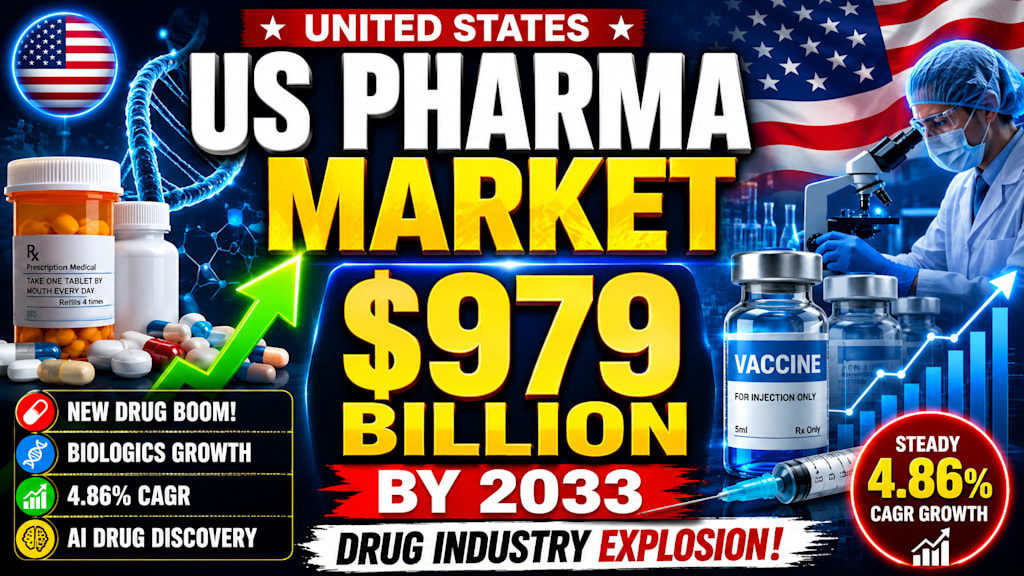
United States Pharmaceutical Market Size and Forecast 2025–2033
The United States pharmaceutical market continues to stand at the forefront of global healthcare innovation, supported by a powerful combination of scientific research, biotechnology advancements, extensive healthcare infrastructure, and a growing demand for innovative treatments. As healthcare needs evolve and chronic diseases become increasingly prevalent, pharmaceutical companies are accelerating investments in research and development to introduce breakthrough therapies that improve patient outcomes.
According to Renub Research, the United States Pharmaceutical Market is projected to reach US$ 979.25 billion by 2033, rising from US$ 638.86 billion in 2024, expanding at a CAGR of 4.86% between 2025 and 2033. This steady growth reflects increasing pharmaceutical consumption, a strong pipeline of innovative medicines, expanding biologics adoption, and rising healthcare expenditures across the country.
Pharmaceuticals Remain the Foundation of Modern Healthcare
Pharmaceutical products play a critical role in preventing, diagnosing, managing, and treating diseases. These products include prescription medicines, over-the-counter (OTC) drugs, vaccines, biologics, biosimilars, and specialty therapies.
The United States remains the world's largest pharmaceutical market due to its advanced healthcare ecosystem, favorable innovation environment, and concentration of leading pharmaceutical and biotechnology companies. The country continues to lead in the development of next-generation therapies, including gene therapies, immunotherapies, mRNA-based medicines, and precision medicine solutions.
As patient expectations rise and healthcare systems increasingly focus on improving quality of life, pharmaceuticals will continue to serve as a key driver of healthcare advancement.
Aging Population Creates Long-Term Demand for Medicines
One of the most important growth drivers for the U.S. pharmaceutical market is the country's aging population.
Older adults are more likely to suffer from chronic illnesses such as cardiovascular disease, diabetes, arthritis, cancer, Alzheimer's disease, and other neurological disorders. These conditions often require continuous treatment and long-term medication management.
Demographic projections indicate that the U.S. population aged 65 years and older will increase significantly over the coming decades. The number of older Americans is expected to grow from approximately 58 million in 2022 to around 82 million by 2050. This demographic shift will substantially increase demand for prescription medicines, specialty drugs, and disease-management therapies.
As life expectancy improves and healthcare access expands, pharmaceutical consumption among geriatric patients is expected to remain one of the industry's strongest growth catalysts.
Biotech Innovation Reshaping the Pharmaceutical Landscape
Biotechnology is revolutionizing how diseases are treated in the United States.
Pharmaceutical and biotech companies are rapidly developing advanced therapies targeting previously difficult-to-treat conditions. Innovations in cell therapy, gene editing, RNA therapeutics, monoclonal antibodies, and immuno-oncology are transforming patient care.
The success of mRNA vaccines demonstrated the potential of next-generation pharmaceutical technologies and encouraged additional investment into innovative treatment platforms.
Industry data indicates that thousands of investigational drugs are currently in active development worldwide, with a substantial share originating from U.S.-based biotechnology firms. Venture capital funding, strategic collaborations, and government-supported research initiatives continue to fuel innovation.
As more advanced therapies move through clinical trials and receive regulatory approval, pharmaceutical revenues are expected to benefit from the introduction of premium-priced, high-value treatments.
Massive Research and Development Spending Supports Market Expansion
The U.S. pharmaceutical industry remains one of the most research-intensive sectors globally.
Leading pharmaceutical companies allocate significant portions of their annual revenues toward discovering and commercializing new therapies. Industry-wide research and development spending exceeds tens of billions of dollars annually, highlighting the commitment to innovation.
Companies are focusing on therapeutic areas with substantial unmet medical needs, including oncology, rare diseases, autoimmune disorders, neurological conditions, and metabolic diseases.
Investments in artificial intelligence, machine learning, and data analytics are also helping pharmaceutical firms accelerate drug discovery, reduce development timelines, and improve clinical trial efficiency.
This robust R&D ecosystem strengthens the industry's competitive advantage and supports sustainable long-term growth.
Insurance Coverage and Reimbursement Systems Encourage Drug Utilization
Healthcare insurance remains a crucial pillar supporting pharmaceutical demand in the United States.
Programs such as Medicare and Medicaid, combined with employer-sponsored and private insurance plans, provide millions of Americans with access to prescription medications. These reimbursement mechanisms help reduce out-of-pocket costs and improve treatment adherence.
The growing emphasis on value-based healthcare is encouraging pharmaceutical companies to demonstrate measurable clinical benefits. Outcome-driven reimbursement agreements are becoming increasingly common, particularly for high-cost specialty therapies.
As reimbursement frameworks continue evolving, pharmaceutical manufacturers are developing evidence-based solutions that improve patient outcomes while meeting payer expectations.
Challenges: Drug Pricing Pressures Continue to Intensify
Despite strong growth prospects, pharmaceutical companies face increasing scrutiny regarding drug pricing.
Government agencies, healthcare providers, insurers, and patient advocacy groups continue to raise concerns about medication affordability. Legislative initiatives aimed at controlling pharmaceutical expenditures are introducing new pricing pressures across the industry.
Drug price negotiations, reimbursement reforms, and transparency requirements may impact future revenue growth for certain therapeutic categories.
To remain competitive, pharmaceutical manufacturers must balance innovation investments with affordability expectations while continuing to deliver clinical value.
Regulatory Complexity Creates Additional Market Challenges
The U.S. pharmaceutical industry operates within one of the world's most rigorous regulatory environments.
Although accelerated approval pathways help speed access to innovative therapies, companies must still navigate complex clinical trial requirements, manufacturing standards, safety monitoring obligations, and post-marketing commitments.
Regulatory compliance requires significant investment and expertise, particularly for smaller biotechnology firms with limited resources.
Manufacturers must continuously adapt to evolving regulatory expectations while maintaining product quality, safety, and effectiveness throughout the product lifecycle.
Biologics and Biosimilars Continue Gaining Market Share
Biologics represent one of the fastest-growing segments of the U.S. pharmaceutical market.
These complex therapies have transformed treatment approaches for cancer, autoimmune diseases, inflammatory disorders, and rare conditions. Their ability to target disease mechanisms with greater precision has improved patient outcomes across multiple therapeutic areas.
Meanwhile, biosimilars are introducing new competition into the marketplace by offering cost-effective alternatives to branded biologic products.
Increasing physician confidence, regulatory support, and payer adoption are accelerating biosimilar penetration. This trend is expected to improve patient access while helping healthcare systems manage costs.
Prescription Medicines Dominate Pharmaceutical Spending
Prescription pharmaceuticals remain the largest segment within the U.S. market.
Rising prevalence of chronic diseases, expanded diagnostic capabilities, telehealth adoption, and improved treatment adherence programs continue to drive prescription volumes.
Electronic prescribing systems have streamlined patient access to medications while enhancing healthcare efficiency.
Pharmaceutical companies increasingly focus on demonstrating clinical and economic value to secure favorable formulary placement and reimbursement coverage.
As healthcare providers emphasize preventive and long-term disease management, prescription drug demand is expected to remain robust.
Diabetes and Obesity Therapies Transform Treatment Markets
Diabetes remains one of the most significant public health challenges in the United States, affecting millions of individuals.
The pharmaceutical market for diabetes treatments has evolved rapidly with the introduction of innovative therapies such as SGLT2 inhibitors and GLP-1 receptor agonists. These medicines not only improve blood sugar control but also offer cardiovascular and weight-management benefits.
Similarly, obesity treatment has emerged as one of the pharmaceutical industry's most dynamic growth opportunities.
New-generation obesity medications have demonstrated remarkable clinical results, generating strong demand from patients, physicians, and healthcare providers. Expanding insurance coverage and growing public awareness are expected to support continued market expansion.
Infectious Disease Segment Receives Renewed Attention
The COVID-19 pandemic highlighted the importance of infectious disease preparedness and pharmaceutical innovation.
Pharmaceutical companies are investing heavily in vaccines, antiviral drugs, and antimicrobial therapies to address future public health challenges.
The emergence of antimicrobial resistance has further increased the need for novel antibiotic development.
Advances in vaccine technology, particularly mRNA platforms, are creating opportunities beyond COVID-19, including influenza, respiratory syncytial virus (RSV), and other infectious diseases.
Oral and Parenteral Drug Delivery Systems Maintain Strong Demand
Oral medications remain the most widely used route of administration due to convenience, affordability, and patient preference.
Tablets, capsules, and oral formulations continue to dominate treatment across cardiovascular, gastrointestinal, neurological, and metabolic disorders.
However, parenteral therapies—including injectables, biologics, and infusion treatments—are experiencing rapid growth.
The expansion of biologics and specialty pharmaceuticals has increased demand for sterile manufacturing facilities, advanced delivery technologies, and cold-chain logistics infrastructure.
Together, these delivery formats support diverse patient needs across the healthcare spectrum.
California and New York Lead Pharmaceutical Innovation
California remains a powerhouse within the U.S. pharmaceutical and biotechnology industry. The state's world-renowned innovation clusters, research institutions, and biotechnology ecosystems contribute significantly to drug discovery and commercialization.
Meanwhile, New York continues to play a critical role through its healthcare infrastructure, academic medical centers, clinical research capabilities, and financial resources.
Both states attract substantial pharmaceutical investment and serve as important hubs for clinical trials, regulatory expertise, and healthcare innovation.
Their leadership continues to influence national pharmaceutical trends and global healthcare advancements.
Final Thoughts
The United States pharmaceutical market is entering a transformative decade characterized by scientific breakthroughs, demographic shifts, and expanding therapeutic possibilities. While regulatory complexities and pricing pressures remain important considerations, the industry's strong innovation pipeline, growing biologics adoption, and increasing demand for chronic disease management create substantial growth opportunities.
With the market forecast to climb from US$ 638.86 billion in 2024 to US$ 979.25 billion by 2033, pharmaceutical companies that successfully balance innovation, affordability, and patient outcomes will be best positioned to lead the next phase of healthcare evolution.
About the Creator
Enjoyed the story? Support the Creator.
Subscribe for free to receive all their stories in your feed.
Comments
There are no comments for this story
Be the first to respond and start the conversation.