
The Sad Reason Why Gen Z Looks So Much Older Than Millennials
22 Is the New 35

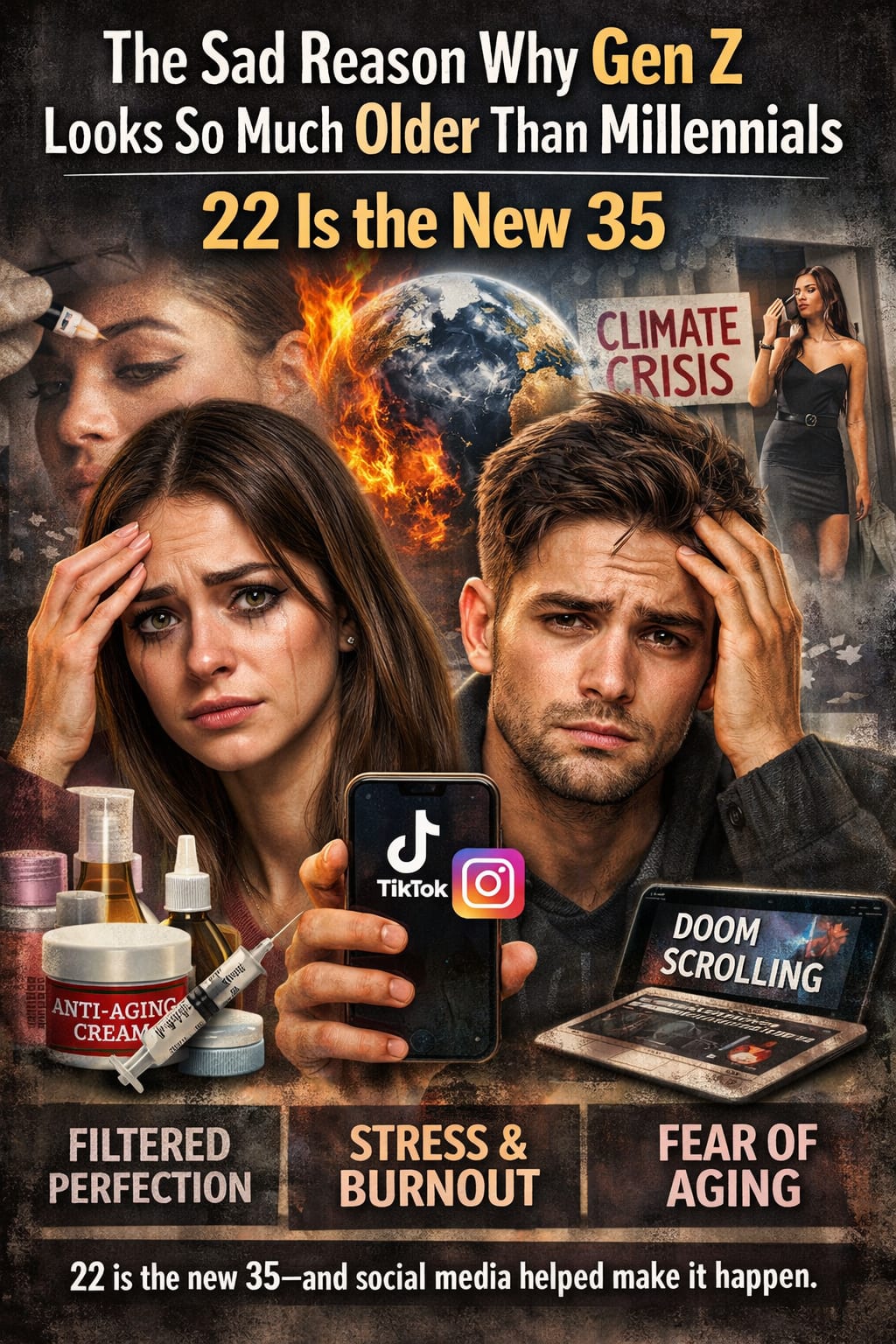
Scroll through social media long enough, and you’ll notice something strange happening. A 22-year-old looks 35. A teenager has the skincare routine of a retired celebrity. College students talk about “preventing wrinkles” before they’ve even finished growing up. Some people blame makeup. Others blame stress. A few blame fashion trends. But the truth is more complicated—and much darker. For the first time in modern history, a generation in its early twenties is obsessed with aging before they’ve even fully lived. And it’s changing how Gen Z sees themselves.
The “Adultification” of Gen Z :
Millennials spent their teenage years trying to look older. Gen Z spends their teenage years trying to avoid looking older. That difference changes everything. Instead of enjoying youth, many young people today are trapped in a constant battle against time. Preventative Botox is becoming normal. Anti-aging serums are marketed to teenagers. “Aging gracefully” is discussed by people who legally still count as kids. Some dermatologists have even warned that young people are overusing strong skincare products that they don’t actually need. The fear of aging has become an industry. And social media keeps feeding it every single day.
TikTok Changed the Way Faces Look :
In the past, most people compared themselves to celebrities in magazines. Now they compare themselves to filters. That’s a huge difference. Apps like TikTok, Instagram, and Snapchat constantly show edited, filtered, airbrushed versions of reality. Smooth skin, sharp jawlines, lifted eyes, perfect lighting—it all becomes the new “normal.” After seeing thousands of altered faces every week, real human faces start looking “wrong.” So people try to fix themselves. More contouring. More fillers. More cosmetic treatments. More skincare. More stress. Ironically, many of these trends can actually make young people appear older instead of younger.
Stress Is Aging an Entire Generation :
Gen Z grew up during chaos. Economic uncertainty. Climate anxiety. Pandemics. Political instability. Constant online pressure. Many young adults today are mentally exhausted before they even reach their mid-twenties. And stress shows up physically. Poor sleep, anxiety, endless screen time, doomscrolling, and lack of rest all affect the body. Dark circles become common. Burnout becomes normal. Even facial expressions change when someone spends years under constant pressure. Previous generations also struggled—but they could disconnect. Gen Z carries the internet in their pocket 24/7. There’s almost no escape.
Everyone Is Performing Adulthood :
Another reason Gen Z appears older is cultural. Teenagers today often dress, speak, and behave like fully grown adults online. Minimalist fashion, corporate aesthetics, luxury skincare, “clean girl” beauty trends, and influencer culture all push young people toward polished adulthood as quickly as possible. Youth itself has stopped looking youthful. In the early 2000s, teenagers dressed like teenagers. Messy styles, colorful clothes, awkward trends—it felt young. Today, many 19-year-olds look like lifestyle influencers with mortgages. The internet rewards maturity, aesthetics, and perfection. So people perform adulthood earlier than ever before.
Millennials Aged Slower Online :
Millennials had something Gen Z never truly experienced: An offline childhood. They made mistakes without cameras recording them. Bad haircuts disappeared forever. Awkward teenage phases weren’t permanently uploaded to the internet. Gen Z grew up watched. Every photo can be reposted. Every moment can be judged. Every insecurity can become public content. That pressure changes how people develop. When your appearance becomes part of your identity online, aging feels less like biology and more like failure.
The Beauty Industry Saw an Opportunity :
Companies quickly realized something important: Fear sells. So the anti-aging industry expanded downward into younger and younger audiences. Products once marketed to 40-year-olds are now sold to teenagers. Terms like: . “preventative aging” . “skin longevity” . “glass skin” . “age reversal” …have become normal parts of online culture. Young people are now encouraged to treat natural human features like problems waiting to happen. And once insecurity becomes profitable, it spreads everywhere.
But There’s Another Side to the Story :
Not all of this is literal aging. Sometimes Gen Z only seems older because trends changed. Fashion cycles repeat fast. Hairstyles are different. Makeup styles are heavier. Lighting is harsher. Social media compresses everyone into the same aesthetic. A 23-year-old today may look older than a 23-year-old from 2006 simply because modern culture favors sharper, more polished appearances. Perception matters. But even if some of it is illusion, the emotional pressure is real
The Real Problem Isn’t Aging :
The real problem is that young people are being taught to fear becoming human. Wrinkles are treated like disasters. Natural skin texture is edited away. Getting older is spoken about like losing value. That mindset creates anxiety long before actual aging even begins. And maybe that’s why so many Gen Z faces look tired. Not because they’re old— but because they’ve been told since childhood that youth is something they’re already losing.
About the Creator
Enjoyed the story? Support the Creator.
Subscribe for free to receive all their stories in your feed.
Comments
There are no comments for this story
Be the first to respond and start the conversation.