
The Machine That Remembers Me Better Than I Do
Science fiction didn't arrive with flying cars,it arrived by remembering everything.

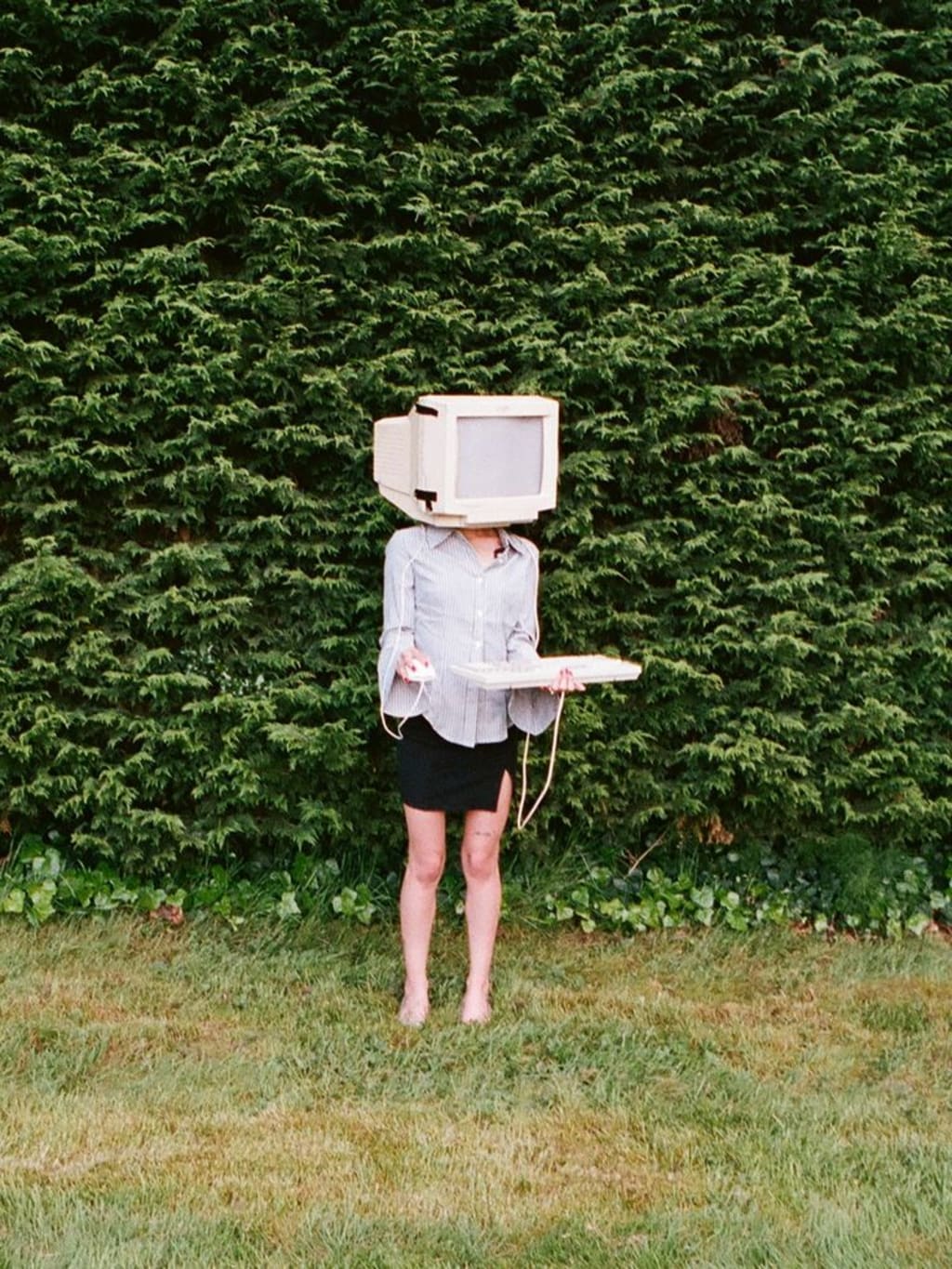
When I was a child, science fiction imagined a future filled with flying cars, teleportation, and cities suspended in the clouds. It imagined spectacular inventions that would announce themselves with explosions of color and impossible feats of engineering. The future, according to those stories, was loud.
The future I actually live in is almost silent.
It sits in my pocket, rests on my wrist, hides inside street cameras, and sleeps somewhere in warehouses filled with blinking servers. It doesn't ask for applause. It doesn't even ask for attention. Instead, it performs one extraordinary task so consistently that I've almost stopped noticing it.
It remembers.
Not just facts. Not just files.
It remembers me.
If that sentence had appeared in a science fiction novel thirty years ago, it would have sounded unsettling. Today, it is simply how life works.
Every photograph I take carries the exact second it was captured and the coordinates of where I stood. My phone quietly knows which café I visited six months ago, which route I walked to work, and how many hours I slept last Tuesday. My streaming services remember songs I forgot I loved. My shopping history remembers products I bought years ago. Search engines remember questions I was too embarrassed to ask another person.
The strange part is not that these systems remember.
The strange part is that I rely on them because I no longer have to.
Human memory was once precious because it was fragile. We told stories around fires because forgetting meant losing knowledge forever. Families kept photo albums because photographs were rare. Diaries existed because memories faded.
Today, forgetting has become the unusual event.
I don't memorize phone numbers anymore because every contact waits inside my phone. I don't remember birthdays because calendars remind me before I have the chance to forget. I rarely try to recall directions because maps speak them into my ear. Even conversations have become searchable through old messages and emails.
In subtle ways, technology has become an external brain.
Science fiction often imagined artificial intelligence becoming smarter than humans. I think something even stranger has happened first.
Our memories have become distributed.
Part of me lives inside devices.
Sometimes this feels wonderfully liberating.
Instead of filling my mind with grocery lists, passwords, appointment times, and addresses, I have room to think about larger questions. Technology has become cognitive scaffolding, supporting the small details so the mind can focus elsewhere. It feels similar to how writing transformed civilization thousands of years ago. Once ideas could exist outside the human brain, knowledge expanded beyond the limits of individual memory.
Perhaps smartphones are simply the newest chapter of that story.
But every gift changes the person receiving it.
Because technology remembers everything, I have become less comfortable with forgetting.
If I cannot find an old photo, I feel as though the memory itself has disappeared. If a message thread is deleted, it can seem as though part of a friendship has been erased. I sometimes scroll through years-old pictures not because I intentionally wanted to remember, but because the technology offered me the memory without asking.
On certain mornings my phone presents a notification:
"Three years ago today."
Immediately, I am transported into a forgotten afternoon, a vacation, a birthday, a face I have not thought about for months. The machine has become the curator of my past.
This is astonishing.
For most of human history, memory depended on chance. Today, algorithms decide which moments deserve another life.
That quiet shift changes something profound.
Memory is not simply storage. It shapes identity.
Psychologists have long argued that people are the stories they tell themselves. Those stories depend on which experiences are remembered and which quietly disappear. Forgetting has always been part of being human. We soften painful moments, exaggerate joyful ones, and gradually reshape the past into something meaningful.
Digital memory refuses to cooperate.
It stores awkward conversations with the same precision as weddings.
It keeps blurry receipts alongside family portraits.
It remembers without forgiveness.
There is something deeply science fictional about existing beside an archive that never grows tired, never sleeps, and almost never forgets.
Yet this archive is not perfect.
Its memories are factual but incomplete.
A photograph can remember my smile without remembering the anxiety hidden behind it. GPS data can prove I visited a beach without capturing the smell of the ocean or the feeling of warm sand beneath my feet. My smartwatch knows my heart rate during an exciting moment, but it cannot explain why my heart was racing.
The machine remembers events.
Only humans remember meaning.
That difference may become one of the defining challenges of our century.
As artificial intelligence becomes better at organizing, summarizing, and retrieving our digital lives, it may eventually know astonishing amounts about us. It might know our habits better than our closest friends. It could predict where we will travel, what we will buy, or when we are feeling stressed.
This sounds remarkably similar to classic science fiction.
Except there are no dramatic robots announcing their arrival.
The revolution arrived disguised as convenience.
Every feature solved a tiny problem.
Never lose your photos.
Never forget an appointment.
Never miss a birthday.
Never wonder where you parked.
Each innovation felt harmless because each innovation genuinely helped.
No single invention changed society overnight.
Millions of small conveniences quietly transformed how humans think.
Perhaps that is what real science fiction looks like when it becomes reality.
Not impossible machines.
Invisible habits.
Sometimes I imagine explaining today's world to someone from 1980.
I would tell them that millions of people voluntarily carry devices capable of accessing nearly all recorded human knowledge within seconds. These devices recognize faces, translate languages in real time, navigate unfamiliar cities using satellites orbiting Earth, answer spoken questions, measure heart rhythms, identify songs playing across a crowded room, and preserve decades of conversations inside something smaller than a paperback novel.
They would probably stop believing me halfway through the explanation.
Yet I rarely pause to appreciate any of it.
I complain when my internet connection is slow.
I become impatient if facial recognition takes two extra seconds.
Science fiction has become so ordinary that miracles now feel like minor inconveniences.
Maybe that is humanity's greatest talent.
We normalize wonder.
Fire became a tool.
Electricity became a utility.
The internet became background noise.
Artificial intelligence is rapidly becoming another everyday appliance.
The extraordinary keeps shrinking until it fits comfortably inside routine.
That may be why the most powerful technologies rarely announce themselves with spectacle. They succeed by disappearing.
The best inventions stop feeling like inventions.
They become habits.
Looking back, I suspect historians will not remember this era primarily as the age of smartphones or artificial intelligence. They may remember it as the moment humans stopped being the sole custodians of their own memories.
For thousands of years, identity lived almost entirely inside biological brains.
Now it exists across clouds, servers, algorithms, and devices scattered around the globe.
A version of me survives in photographs I forgot taking, locations I never intended to record, messages I no longer remember writing, and searches that captured passing curiosities. My digital shadow grows every day without asking permission.
That is simultaneously comforting and unsettling.
Comforting because so much can be preserved.
Unsettling because nothing truly disappears.
Science fiction warned us about machines becoming intelligent.
It spent less time imagining machines becoming witnesses.
And perhaps that is the quieter revolution already unfolding around us.
Every ordinary day, invisible systems are writing an autobiography I never consciously decided to author.
One photograph.
One location.
One heartbeat.
One search.
One memory at a time.
When I was a child, science fiction imagined a future filled with flying cars, teleportation, and cities suspended in the clouds. It imagined spectacular inventions that would announce themselves with explosions of color and impossible feats of engineering. The future, according to those stories, was loud.
The future I actually live in is almost silent.
It sits in my pocket, rests on my wrist, hides inside street cameras, and sleeps somewhere in warehouses filled with blinking servers. It doesn't ask for applause. It doesn't even ask for attention. Instead, it performs one extraordinary task so consistently that I've almost stopped noticing it.
It remembers.
Not just facts. Not just files.
It remembers me.
If that sentence had appeared in a science fiction novel thirty years ago, it would have sounded unsettling. Today, it is simply how life works.
Every photograph I take carries the exact second it was captured and the coordinates of where I stood. My phone quietly knows which café I visited six months ago, which route I walked to work, and how many hours I slept last Tuesday. My streaming services remember songs I forgot I loved. My shopping history remembers products I bought years ago. Search engines remember questions I was too embarrassed to ask another person.
The strange part is not that these systems remember.
The strange part is that I rely on them because I no longer have to.
Human memory was once precious because it was fragile. We told stories around fires because forgetting meant losing knowledge forever. Families kept photo albums because photographs were rare. Diaries existed because memories faded.
Today, forgetting has become the unusual event.
I don't memorize phone numbers anymore because every contact waits inside my phone. I don't remember birthdays because calendars remind me before I have the chance to forget. I rarely try to recall directions because maps speak them into my ear. Even conversations have become searchable through old messages and emails.
In subtle ways, technology has become an external brain.
Science fiction often imagined artificial intelligence becoming smarter than humans. I think something even stranger has happened first.
Our memories have become distributed.
Part of me lives inside devices.
Sometimes this feels wonderfully liberating.
Instead of filling my mind with grocery lists, passwords, appointment times, and addresses, I have room to think about larger questions. Technology has become cognitive scaffolding, supporting the small details so the mind can focus elsewhere. It feels similar to how writing transformed civilization thousands of years ago. Once ideas could exist outside the human brain, knowledge expanded beyond the limits of individual memory.
Perhaps smartphones are simply the newest chapter of that story.
But every gift changes the person receiving it.
Because technology remembers everything, I have become less comfortable with forgetting.
If I cannot find an old photo, I feel as though the memory itself has disappeared. If a message thread is deleted, it can seem as though part of a friendship has been erased. I sometimes scroll through years-old pictures not because I intentionally wanted to remember, but because the technology offered me the memory without asking.
On certain mornings my phone presents a notification:
"Three years ago today."
Immediately, I am transported into a forgotten afternoon, a vacation, a birthday, a face I have not thought about for months. The machine has become the curator of my past.
This is astonishing.
For most of human history, memory depended on chance. Today, algorithms decide which moments deserve another life.
That quiet shift changes something profound.
Memory is not simply storage. It shapes identity.
Psychologists have long argued that people are the stories they tell themselves. Those stories depend on which experiences are remembered and which quietly disappear. Forgetting has always been part of being human. We soften painful moments, exaggerate joyful ones, and gradually reshape the past into something meaningful.
Digital memory refuses to cooperate.
It stores awkward conversations with the same precision as weddings.
It keeps blurry receipts alongside family portraits.
It remembers without forgiveness.
There is something deeply science fictional about existing beside an archive that never grows tired, never sleeps, and almost never forgets.
Yet this archive is not perfect.
Its memories are factual but incomplete.
A photograph can remember my smile without remembering the anxiety hidden behind it. GPS data can prove I visited a beach without capturing the smell of the ocean or the feeling of warm sand beneath my feet. My smartwatch knows my heart rate during an exciting moment, but it cannot explain why my heart was racing.
The machine remembers events.
Only humans remember meaning.
That difference may become one of the defining challenges of our century.
As artificial intelligence becomes better at organizing, summarizing, and retrieving our digital lives, it may eventually know astonishing amounts about us. It might know our habits better than our closest friends. It could predict where we will travel, what we will buy, or when we are feeling stressed.
This sounds remarkably similar to classic science fiction.
Except there are no dramatic robots announcing their arrival.
The revolution arrived disguised as convenience.
Every feature solved a tiny problem.
Never lose your photos.
Never forget an appointment.
Never miss a birthday.
Never wonder where you parked.
Each innovation felt harmless because each innovation genuinely helped.
No single invention changed society overnight.
Millions of small conveniences quietly transformed how humans think.
Perhaps that is what real science fiction looks like when it becomes reality.
Not impossible machines.
Invisible habits.
Sometimes I imagine explaining today's world to someone from 1980.
I would tell them that millions of people voluntarily carry devices capable of accessing nearly all recorded human knowledge within seconds. These devices recognize faces, translate languages in real time, navigate unfamiliar cities using satellites orbiting Earth, answer spoken questions, measure heart rhythms, identify songs playing across a crowded room, and preserve decades of conversations inside something smaller than a paperback novel.
They would probably stop believing me halfway through the explanation.
Yet I rarely pause to appreciate any of it.
I complain when my internet connection is slow.
I become impatient if facial recognition takes two extra seconds.
Science fiction has become so ordinary that miracles now feel like minor inconveniences.
Maybe that is humanity's greatest talent.
We normalize wonder.
Fire became a tool.
Electricity became a utility.
The internet became background noise.
Artificial intelligence is rapidly becoming another everyday appliance.
The extraordinary keeps shrinking until it fits comfortably inside routine.
That may be why the most powerful technologies rarely announce themselves with spectacle. They succeed by disappearing.
The best inventions stop feeling like inventions.
They become habits.
Looking back, I suspect historians will not remember this era primarily as the age of smartphones or artificial intelligence. They may remember it as the moment humans stopped being the sole custodians of their own memories.
For thousands of years, identity lived almost entirely inside biological brains.
Now it exists across clouds, servers, algorithms, and devices scattered around the globe.
A version of me survives in photographs I forgot taking, locations I never intended to record, messages I no longer remember writing, and searches that captured passing curiosities. My digital shadow grows every day without asking permission.
That is simultaneously comforting and unsettling.
Comforting because so much can be preserved.
Unsettling because nothing truly disappears.
Science fiction warned us about machines becoming intelligent.
It spent less time imagining machines becoming witnesses.
And perhaps that is the quieter revolution already unfolding around us.
Every ordinary day, invisible systems are writing an autobiography I never consciously decided to author.
One photograph.
One location.
One heartbeat.
One search.
One memory at a time.
About the Creator
Samara Pollyana
turning words into expressions ❤️
Insta:@sammyzs__
Enjoyed the story? Support the Creator.
Subscribe for free to receive all their stories in your feed. You could also become a paid subscriber, letting them know you appreciate their work.
Comments
There are no comments for this story
Be the first to respond and start the conversation.