space
Space: The Final Frontier. Exploring space developments and theorizing about how humans fit into the universe.
The Cloud Chamber at CERN
The Cloud Chamber at CERN When we think of the great milestones in modern science, the mind often jumps to spacecrafts, satellites, and groundbreaking discoveries like DNA or the Higgs boson. Yet, hidden behind the spotlight lies a remarkable tool that quietly changed the way humanity studies the invisible building blocks of matter: the cloud and bubble chambers. Among them, one machine stood out in scale and impact — the Big European Bubble Chamber (BEBC) at CERN.
By Mohamed hgazyabout a year ago in Futurism
The Solar Warden Files: Corey Goode's SSP Testimony
In the hidden corridors of modern mythology and forbidden history, few stories ignite as much intrigue, skepticism, and fascination as the testimony of Corey Goode. His account of Solar Warden, a silent fleet patrolling not just our skies but the vastness of space itself, is a cosmic epic that captivates the imagination. Whether he is a whistleblower or a storyteller, the resonance of his narrative is too strong to dismiss outright. This is the story of Solar Warden, the alleged secret space program that suggests humanity has been a spacefaring civilization for far longer than we have been told.
By The Secret History Of The Worldabout a year ago in Futurism
Brain-Computer Interfaces: Merging Minds with Machines. AI-Generated.
The Age of Mind-Machine Integration Imagine thinking a command and having a computer, a robot, or even a smart home execute it instantly—without saying a word. Brain-computer interfaces (BCIs), once the realm of sci-fi, are now rapidly advancing. From controlling robotic arms to streaming thoughts into virtual reality, BCIs promise to merge human cognition with machine intelligence in ways never before possible. Neural implants, such as Elon Musk’s Neuralink, aim to read and write information directly to the brain, potentially enhancing memory, learning, and communication. While the technology is still experimental, early trials show remarkable results: paralyzed patients controlling robotic limbs, individuals restoring lost sensory function, and people interacting with computers using thought alone. --- How Brain-Computer Interfaces Work At the core of BCIs are neural sensors capable of detecting electrical activity in the brain. These sensors convert neuronal signals into digital commands that machines can understand. Two main types exist: 1. Invasive BCIs: Implanted directly into the brain tissue, offering high-precision readings but requiring surgery. 2. Non-Invasive BCIs: Placed on the scalp, like EEG headsets, offering lower precision but easier application. These signals are processed using AI algorithms, which decode complex thought patterns and convert them into actionable instructions. The potential applications range from medical therapy to everyday life augmentation. --- Real-World Applications
By Muhammad Riazabout a year ago in Futurism
The Rise of Digital Humans: AI Clones and Virtual Immortality
The Dawn of Digital Humans Imagine a world where your personality, memories, and even appearance can be stored digitally—and continue to interact with loved ones long after you’re gone. What once sounded like science fiction is rapidly becoming a technological reality. AI-driven “digital humans” or virtual clones are emerging, offering a glimpse into a future where human consciousness and artificial intelligence merge. Tech giants and research labs are racing to create AI avatars that think, speak, and respond like real people. Using deep learning, natural language processing, and neural networks, these AI clones can replicate the way you write, speak, and make decisions. In effect, they become digital versions of yourself—capable of chatting, teaching, or even working on your behalf. --- How AI Clones Are Built Creating a digital human requires three main components: 1. Data Collection: Everything from your social media posts, emails, and voice recordings to videos and photographs is analyzed. 2. Neural Modeling: AI systems model your language patterns, decision-making habits, and even emotional responses. 3. Avatar Creation: The digital representation can appear as a realistic 3D humanoid or a voice-only assistant capable of interaction. The result is astonishing. These AI clones can hold conversations, answer questions, and mimic your sense of humor or personality quirks. Some developers even imagine virtual immortality, where your AI continues to interact with future generations, preserving your identity beyond your physical life. --- Real-World Applications
By Muhammad Riazabout a year ago in Futurism
Neuralink’s Bold Vision: How Brain-Computer Interfaces Could Redefine Human Evolution by 2030
Neuralink and the Future of Human-Machine Symbiosis Elon Musk, the billionaire entrepreneur behind Tesla and SpaceX, is also at the helm of one of the most futuristic and controversial companies in the world: Neuralink. Founded in 2016, Neuralink aims to create brain-computer interfaces (BCIs) that allow direct communication between the human brain and machines. What started as a medical project to help patients with paralysis may one day redefine human learning, memory, and even evolution itself. In 2025, Neuralink announced significant progress in clinical trials. The first human patients fitted with the chip were able to control a computer cursor with their thoughts alone. While this achievement may seem small compared to Musk’s dreams of “telepathic communication” or “downloading knowledge,” it marks a historic moment in the story of humanity’s relationship with technology. --- Why Neuralink?
By Muhammad Riazabout a year ago in Futurism
3 AI Websites That Will Blow Your Mind!
It always happens when you least expect it. One minute, you’re mindlessly scrolling at 2AM — trying to convince yourself that watching “just one more” cat compilation isn’t a terrible life choice. The next minute? BAM. You stumble upon something so surreal, so jaw-dropping, so unbelievably futuristic that your brain does a double take.
By Fazal Ur Rahmanabout a year ago in Futurism
The Akashic Records: The Library of the Soul and the Hidden History of Humanity
The Library of the Soul and the Hidden History of Humanity Across cultures and centuries, there has been a whispered belief in an incredible archive that preserves the memory of all things. This archive is not carved into stone tablets, nor hidden away in dusty libraries, but exists in a realm beyond the physical, an etheric field said to record every thought, word, action, and intention. Known today as the Akashic Records, this concept has fascinated mystics, scholars, and seekers alike, offering a glimpse into a universal memory where the past, present, and even the possibilities of the future are inscribed.
By The Secret History Of The Worldabout a year ago in Futurism
The Hidden Legacy of Giants and the Smithsonian Part Two: The Vanishing Bones
The Vanishing Bones The story of giants in North America did not end with the early newspaper clippings and scattered reports of colossal skeletons. If anything, those accounts were only the beginning of a more profound mystery that would grow more unsettling as the decades unfolded. Where the first wave of discoveries gave the public images of titanic skeletons unearthed from burial mounds and ancient chambers, the following years revealed something stranger still: the systematic disappearance of evidence. Eyewitnesses told their stories, crates were packed and shipped, and then, silence. The bones were gone, as though swallowed by history itself.
By The Secret History Of The Worldabout a year ago in Futurism
The Latest Breakthrough in the Double-Slit Experiment
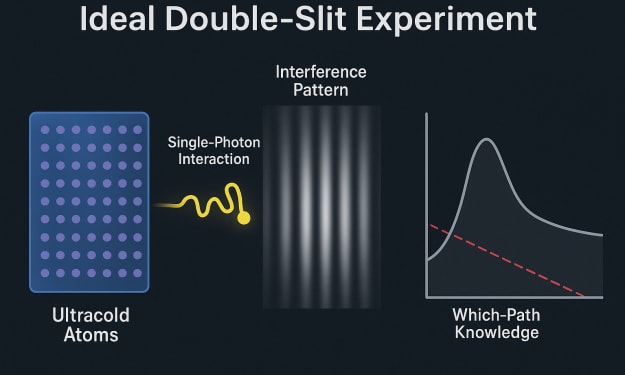
MIT Puts to Rest the Wave-Particle Duality Debate In July 2025, physicists at the Massachusetts Institute of Technology (MIT) achieved what is arguably the cleanest and most compelling realization to date of the famed double-slit experiment. Conducted in Cambridge, Massachusetts, this “idealized” rendition of the 1801 Young experiment pitted Einstein’s century-old intuition against Bohr’s quantum orthodoxy—and emerged as a decisive vindication of Bohr’s principle of complementarity.
By Mohamed hgazyabout a year ago in Futurism