space
Space: The Final Frontier. Exploring space developments and theorizing about how humans fit into the universe.
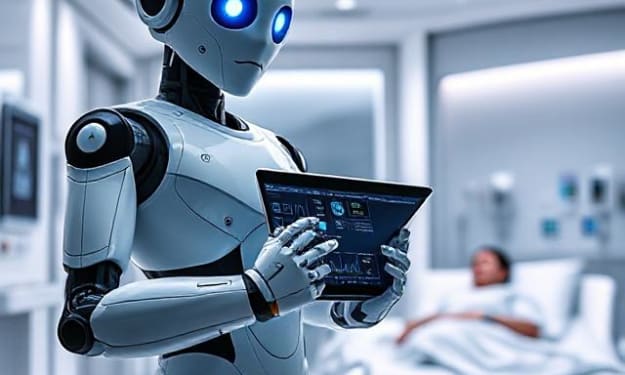
Elon Musk’s $10,000 Robot "MediBot" – The Future of Healthcare or a Threat to Doctors?
Start writing... Elon Musk has a reputation for entering industries no one expects and then flipping them upside down. He did it with cars through Tesla, with rockets through SpaceX, and with AI through OpenAI. Now, Musk is setting his sights on healthcare, one of the most complex and human-centered industries in the world. His latest creation, MediBot, is being hailed as the “Doctor of the Future.” Priced at $10,000, MediBot is a humanoid robot powered by artificial intelligence, capable of performing tasks that range from simple health monitoring to advanced diagnostics. For millions struggling with access to affordable healthcare, it could be revolutionary. But critics warn that MediBot might also threaten the roles of doctors, nurses, and even hospitals as we know them. Is this robot a medical miracle—or a sign that human doctors could one day become obsolete? --- What is MediBot? MediBot is Tesla’s bold step into the world of medical technology. Unlike apps or wearable devices that simply track health data, MediBot is a physical, interactive robotic assistant designed to work directly with patients in their homes or clinics. Some of MediBot’s core abilities include: Diagnosing 5,000+ medical conditions with a reported 95% accuracy Monitoring patient vitals in real time (heart rate, blood pressure, oxygen levels, blood sugar, etc.) Performing basic medical procedures such as wound cleaning and administering injections Offering AI-driven consultations via natural voice interaction Connecting instantly with doctors and hospitals during emergencies Learning new treatments continuously through AI cloud updates At a price of $10,000, MediBot is aimed not just at wealthy households but also at small clinics in developing countries where doctors are often unavailable. In places where healthcare is stretched thin, this could make a real difference. --- How Does MediBot Work? MediBot combines robotics, AI, and advanced medical imaging to deliver a futuristic experience. It is equipped with robotic arms, precision scanners, and cloud-connected processors. Patients can interact with it through simple voice commands such as: “MediBot, check my blood pressure.” “MediBot, schedule a diabetes test.” “MediBot, analyze my cough.” It uses: AI-driven diagnostics – analyzing symptoms and comparing them to massive medical databases Predictive health algorithms – spotting early signs of diseases like cancer, diabetes, or heart disease before they worsen 24/7 health monitoring – continuously tracking patient data to prevent emergencies Emergency response systems – alerting nearby hospitals and ambulances when urgent care is needed For example, if MediBot detects irregular heart rhythms in a patient while they’re asleep, it can immediately alert emergency services and provide CPR until help arrives. --- The Impact on the Healthcare Industry The introduction of MediBot could shake the healthcare industry to its core. Benefits 1. Affordable Care: Millions of people without access to doctors could finally get reliable medical support. 2. Hospital Relief: Overcrowded hospitals could use MediBot to handle basic cases, freeing human doctors for critical surgeries. 3. Faster Diagnoses: AI-driven pattern recognition can sometimes detect illnesses faster than humans. 4. Consistent Quality: Unlike humans, robots don’t get tired, stressed, or distracted. 5. Global Reach: MediBot could bring healthcare to remote villages and rural communities worldwide. Risks and Concerns 1. Job Displacement: Doctors, nurses, and lab technicians worry their roles may shrink. 2. Data Privacy: Sensitive health records handled by AI could be hacked or misused. 3. Lack of Human Touch: Medicine isn’t just science—it’s also empathy, reassurance, and trust. Can a robot provide that? 4. Over-Reliance: Patients might depend too much on MediBot, ignoring the need for professional medical guidance. While some medical experts believe MediBot will act as a support system for doctors, others fear it will make many healthcare jobs redundant. --- Human Doctors vs. Robot Doctors A major debate now emerges: Can robots truly replace doctors? Proponents argue that AI is more accurate in data-driven diagnoses. For instance, studies already show AI can outperform doctors in detecting early-stage lung cancer from X-rays. MediBot could multiply this advantage by working tirelessly 24/7. On the other hand, doctors emphasize the human element. Medicine is about more than diagnosis—it’s about holding a patient’s hand, giving them hope, and understanding emotions. A robot may give facts, but it cannot give comfort. The future may not be about replacing doctors entirely, but rather creating a human-robot partnership. Doctors will focus on empathy, complex surgeries, and critical thinking, while robots handle repetitive tasks and routine monitoring. --- Ethical Questions With MediBot entering healthcare, a new set of ethical dilemmas arises: Should robots be allowed to make life-or-death decisions? Who is responsible if a robot gives the wrong diagnosis—Tesla, the doctor, or the patient? Will patients trust a robot more than a human doctor? Could MediBot widen the gap between rich and poor if only some can afford it? These questions highlight why MediBot is not just a technological invention but also a social challenge. --- Is This the Future of Medicine? Elon Musk insists that MediBot is not here to replace doctors, but to assist them. In his vision, MediBot will handle routine medical care, while human doctors push medical science forward with innovation. Imagine a future where every household has a MediBot that acts as a family doctor—checking daily vitals, preventing diseases before they start, and ensuring emergencies are caught early. Hospitals would be less crowded, healthcare would be more affordable, and millions of lives could be saved. But whether humanity is ready to let robots take charge of health decisions is another story. --- Final Thoughts MediBot may be the boldest attempt yet to merge artificial intelligence with human survival. If successful, it could democratize healthcare worldwide, making reliable medical care available to anyone, anywhere. Yet it also forces us to confront uncomfortable truths: Do we trust machines with our lives? Should empathy be sacrificed for efficiency? What happens to the millions of professionals whose jobs are at risk? Like all of Musk’s inventions, MediBot is disruptive, controversial, and visionary. Whether it becomes a lifesaving household staple or a symbol of misplaced trust in machines, one thing is certain—MediBot is a game-changer for the future of healthcare. --- SEO Keywords: Elon Musk medical robot, Tesla MediBot, AI in healthcare, robotic doctor, smart medical assistant, future of medicine, robot replacing doctors, healthcare AI, AI-powered diagnosis, medical technology 2025
By Muhammad Riazabout a year ago in Futurism
Elon Musk’s Bold Plan: Tesla’s Optimus Robots to Build the First Colony on Mars
In the year 2026, the eyes of the world are not on Earth but on a fiery trail cutting through the sky. From SpaceX’s launch site in Texas, the Starship rocket rises, carrying not humans—but the first AI-powered humanoid robots designed to set foot on Mars. These are not ordinary machines. They are Tesla’s Optimus robots, the mechanical pioneers of a new age. Standing 5 feet 8 inches tall and powered by Tesla’s advanced AI, they are humanity’s first attempt to build a foundation for life on another planet. It’s a mission that sounds like science fiction. But for Elon Musk, it’s the next logical step in his lifelong vision: making life multi-planetary. --- 🚀 The Launch Day On the morning of launch, Elon Musk stands inside the control center. Engineers monitor screens glowing with telemetry data. Journalists from every corner of the world are tuned in, and billions are streaming live from their homes. The countdown begins. “Ten… nine… eight…” The Starship, the world’s largest reusable rocket, ignites with a roar that shakes the earth. Flames thunder across the launch pad as the spacecraft ascends into the sky, carrying dozens of Optimus robots locked in their charging pods. Musk whispers, almost to himself: "This is it. The first workers of Mars are on their way." --- 🌌 The Journey Through Space For weeks, the Starship drifts through the silence of space. Inside, the Optimus units remain dormant, their AI sleeping while the ship navigates toward the red planet. They are not passengers—they are the cargo, the tools, and the workforce that will prepare Mars for human arrival. Unlike astronauts, they need no oxygen, no food, and no water. They require only energy, which solar panels will provide once they touch down. Back on Earth, people debate. Some celebrate Musk’s vision, others doubt it. But one fact is clear: humanity’s first colony on Mars will not be built by humans. It will be built by machines. --- 🛬 The First Footsteps The landing zone is Elysium Planitia, a flat region chosen for safety and sunlight. After months of travel, Starship descends through Mars’ thin atmosphere. Dust storms swirl, shaking the craft. But the ship holds steady and lands with a muted thud. The hatch opens. For the first time in history, a humanoid robot steps onto Martian soil. Its mechanical feet press into the red dust, leaving the first artificial footprints. One after another, the Optimus units emerge, forming a silent army of pioneers under the pale Martian sky. Billions on Earth watch the broadcast. For a moment, the world is united by awe. --- 🛠️ Building the Martian Outpost The robots immediately begin their programmed tasks. Some unfold giant solar panels, tilting them toward the weak sun. Others begin assembling habitats using bricks made from Martian regolith. Surveying drones launch into the air, mapping the landscape. Teams of Optimus units plant communication towers to connect back to Earth. They move with uncanny human-like motions—lifting, gripping, and constructing. Unlike astronauts who would tire after hours, Optimus robots work tirelessly, day and night. Their mission is simple but critical: prepare Mars for human life. --- ⚡ The Harsh Reality But Mars is not gentle. Temperatures plunge to –100°C at night. Dust storms rage for weeks, coating solar panels and cutting power. The thin atmosphere and high radiation test the robots’ endurance. One Optimus unit collapses, its joints frozen by the cold. Another struggles with sand clogging its motors. Yet the rest adapt, their AI learning in real time. They reroute power, share data wirelessly, and repair one another with spare parts carried aboard Starship. Back on Earth, engineers watch anxiously. Elon Musk tweets updates: "Our robots are learning to survive Mars. Each challenge makes them stronger. Humanity is coming next." --- 👨🚀 Humanity Watches In classrooms, children draw pictures of Optimus robots building cities on Mars. In offices, scientists debate the risks and rewards. Religious leaders call it either a divine step forward or human arrogance. Yet every night, news outlets replay the same footage: a silver humanoid raising the first solar panel on Mars. It becomes a symbol of hope, progress, and the start of a new era. --- 🌍 Why Robots First? Sending humans to Mars has always been dangerous and costly. The thin atmosphere, deadly radiation, and long communication delays make it nearly impossible without preparation. That’s why Musk’s plan is so bold: use robots first. They can build habitats, test resources, and set up power systems before astronauts ever arrive. If Optimus succeeds, the next generation of explorers will land not on barren soil but in a robot-built base ready for human life. --- 🌅 A Colony is Born Months later, the first Martian outpost is complete. From orbit, satellites capture images of rows of solar panels, small domes, and communication towers—all assembled by robots. It’s not a city. It’s not even a village. But it’s something far greater: a proof of concept. Humanity can build on another world. Elon Musk announces at a press conference: "This is the first robot-built colony in human history. When humans arrive, they won’t be stepping into the unknown. They’ll be stepping into a home our machines have already prepared." --- 🌌 The Legacy Historians will later write that the first pioneers of Mars were not astronauts, but machines. Optimus became more than just a robot—it became a symbol of the partnership between human intelligence and artificial intelligence. From this small beginning, future generations will expand. First dozens of robots, then hundreds, then humans, then families. One day, cities may rise under glass domes, and children may be born who will never know Earth as their home. And it all began with a single launch in 2026. --- 📝 Conclusion Elon Musk’s plan to send Tesla’s Optimus robots to Mars may sound like science fiction, but it is closer to reality than ever before. With SpaceX’s Starship and Tesla’s AI-powered machines, the groundwork for human colonization of Mars could be laid within the next few years. If successful, this mission will not only redefine space exploration but also the very definition of what it means to be human. For in the future, humanity’s story will not be confined to one planet—it will stretch across the stars. --- 📌 SEO Keywords Elon Musk Mars mission, Tesla Optimus robot, SpaceX Starship Mars 2026, Robots on Mars, AI humanoid robots, Tesla AI on Mars, Elon Musk robot plan, Mars colonization 2026, SpaceX future missions. ---
By Muhammad Riazabout a year ago in Futurism
Sophisticated WhatsApp Hack Targets iPhone Users.
In today’s digital-first world, messaging apps are no longer just tools for chatting with friends—they’ve become lifelines for business, family connections, and even activism. But what happens when the very app you trust to keep your private conversations secure becomes the target of one of the most advanced cyberattacks seen in years? That’s exactly the situation unfolding with WhatsApp. A newly uncovered zero-click hacking campaign has exposed a dangerous vulnerability that allowed attackers to infiltrate iPhones without the victim ever tapping a suspicious link or opening a malicious file. For iPhone users worldwide, this discovery is a wake-up call: your security can be compromised even if you don’t make a single mistake. The Zero-Click WhatsApp Exploit Explained Unlike traditional hacks that rely on tricking users into clicking a bad link or downloading infected files, a zero-click exploit requires no interaction at all. That means attackers can silently install spyware or malware on your device without you even realizing something is wrong. In this case, researchers uncovered that hackers combined two separate vulnerabilities: 1. WhatsApp Vulnerability (CVE-2025-55177): Hackers exploited the way WhatsApp handled linked-device synchronization, tricking the app into processing malicious URLs. 2. Apple iOS Vulnerability (CVE-2025-43300): This flaw in Apple’s ImageIO system allowed attackers to cause memory corruption by sending a carefully crafted image file. When chained together, these two weaknesses gave cybercriminals a powerful weapon—remote access to iPhones through WhatsApp messages. No clicks, no downloads, no alerts. Just silent, undetectable infiltration. Who Was Targeted? Meta, the parent company of WhatsApp, has confirmed that the attack was not widespread. Fewer than 200 individuals worldwide were affected, with most of them belonging to civil society groups, journalists, and activists. That detail makes the incident even more alarming. These kinds of high-precision, targeted operations are hallmarks of state-sponsored spyware campaigns. The attackers weren’t after ordinary WhatsApp users—they were after people whose voices challenge power. Amnesty International’s Security Lab warned that while the attack mainly hit iPhone users, some evidence suggests Android users may have also been targeted. This broadens the scope of the threat and reminds us that no platform is completely safe. Why This Hack Is So Dangerous The WhatsApp incident is not just another data breach or phishing scam. It’s part of a growing trend of invisible cyberattacks designed to spy on specific individuals. Here’s why this hack stands out: No User Mistake Required: You could have the best digital hygiene in the world—never clicking suspicious links, avoiding shady apps—and still fall victim. Encrypted Doesn’t Mean Invulnerable: WhatsApp is celebrated for its end-to-end encryption, but that only protects messages in transit. Vulnerabilities in the app itself open the door for attackers before encryption even matters. High-Value Targets: By focusing on fewer than 200 people, attackers maximize stealth and minimize detection. Each victim is likely chosen carefully for political, economic, or intelligence reasons. What Apple and WhatsApp Have Done Fortunately, both Meta (WhatsApp) and Apple responded quickly. WhatsApp Updates: iOS users should update to version 2.25.21.73 or newer. macOS users should install version 2.25.21.78 or newer. Apple Patches: Apple released urgent fixes addressing the ImageIO vulnerability. iPhone, iPad,and Mac users are strongly advised to update immediately. User Notifications: Meta has been sending alerts to individuals believed to have been targeted. These messages recommend performing a factory reset and enabling extra security measures like Apple’s Lockdown Mode. How to Protect Yourself Right Now Even if you weren’t among the 200 known targets, it’s critical to secure your device. Here are the steps every WhatsApp user should take: 1. Update WhatsApp Immediately Open the App Store and install the latest version of WhatsApp. This patch closes the door on the vulnerability. 2. Update Your iPhone or iPad Go to Settings > General > Software Update and install the newest iOS release. Apple’s fix for CVE-2025-43300 is included. 3. Enable Lockdown Mode (for high-risk users) Available in Settins > Privacy & Security, Lockdown Mode limits certain device functions to block sophisticated spyware. While it slightly reduces convenience, it drastically improves protection. 4. Review Linked Devices In WhatsApp, check Settings > Linked Devices and remove anything unfamiliar. 5. Stay Alert for Suspicious Behavior Sudden battery drain, overheating, or strange app behavior can sometimes indicate spyware. 6. Factory Reset if Compromised If you receive a notification from WhatsApp or Apple, perform a complete device reset. It’s the most reliable way to remove hidden malware. The Bigger Picture: Cybersecurity in 2025 This attack highlights an uncomfortable truth: even the most trusted tech platforms are vulnerable. For years, iPhones were considered nearly “unhackable” for everyday users, but the reality is shifting. As cyber-weapons become more advanced, privacy and security are no longer guaranteed by default. Instead, users must take proactive steps to stay safe. Governments and corporations will continue to clash over surveillance, and unfortunately, apps like WhatsApp often find themselves caught in the middle. But here’s the silver lining: every major incident like this forces tech giants to harden their defenses, leading to stronger apps and safer systems for all of us. Final Thoughts If you use WhatsApp on an iPhone, update your app and iOS immediately. Even if you weren’t directly targeted, patching your software is the single most important step to protect yourself from future attacks. The WhatsApp hack is a reminder that cybersecurity is not just a tech issue—it’s a human rights issue. When hackers infiltrate the phones of activists and journalists, it isn’t just about data; it’s about silencing voices. For everyday users, the lesson is clear: never get comfortable with digital safety. Stay updated, stay cautious, and remember that in 2025, even a simple messaging app can become a battlefield.
By Tech Horizonsabout a year ago in Futurism
Electromagnetism and How It Was Discovered
Electromagnetism and How It Was Discovered The Story of Michael Faraday and the Force That Changed Our World When we switch on a light, charge our phone, or listen to music through wireless headphones, we rarely stop to think about the invisible forces making it all possible. Yet, behind these everyday conveniences lies one of nature’s most fundamental powers: electromagnetism. It is the force that binds electricity and magnetism into one unified phenomenon and, more importantly, the force that allowed humanity to step into the modern technological age.
By Mohamed hgazyabout a year ago in Futurism
Scientists Uncover a 520-Million-Year-Old Fossilized Larva with Its Brain Intact
When we think of fossils, we often picture giant dinosaur skeletons or ancient plants trapped in stone. But a discovery in China has stunned scientists because it’s not about size—it’s about detail. Researchers recently unearthed a fossilized larva dating back 520 million years, and what makes this find extraordinary is that its brain, nervous system, digestive glands, and circulatory traces are still preserved. This tiny creature, no bigger than a poppy seed, has become one of the most important keys to unlocking the mysteries of early animal evolution.
By NextGen Mobile Techabout a year ago in Futurism
The Soul Harvest: Are We Feeding Forces We Cannot See?
Are We Feeding Forces We Cannot See? For as long as humans have told stories, we have stories of unseen powers feeding on the living. Ancient cultures described gods demanding sacrifice, spirits feeding on fear, and celestial beings who thrived on human devotion. To most, these were myths, strange metaphors of a superstitious age. But what if they were more than that? What if humanity itself has always been a resource, not only of labor and obedience, but of energy, emotional, spiritual, and unseen? This is the chilling idea behind what some refer to as the Soul Harvest.
By The Secret History Of The Worldabout a year ago in Futurism
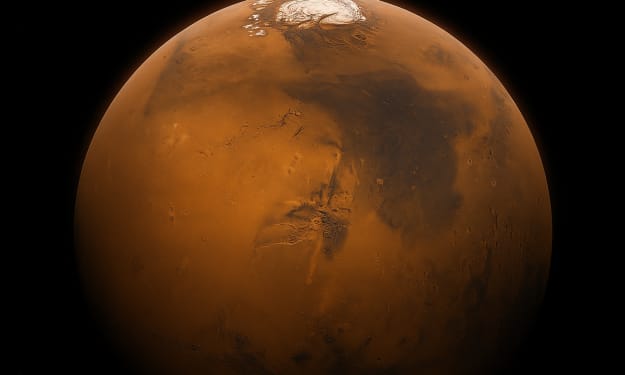
Scientists May Have Discovered a Brand-New Mineral on Mars—And It Could Rewrite What We Know About the Red Planet
For decades, scientists have been fascinated by the Red Planet. From its mysterious canyons to its once-water-rich landscapes, Mars continues to challenge everything we think we know about planetary evolution. Now, a groundbreaking discovery has added a new chapter to that story: researchers believe they may have found a brand-new mineral on the Martian surface. This finding isn’t just another scientific footnote—it could reshape our understanding of Mars’s volcanic activity, chemical processes, and potential habitability over billions of years. What Exactly Did Scientists Discover? Using data from NASA’s **Mars Reconnaissance Orbiter**, a team of researchers detected unusual spectral signatures in certain Martian regions. These signals pointed to the presence of a rare ferric hydroxysulfate compound, something never before confirmed on Mars. To test the discovery, scientists recreated the mineral in laboratory conditions on Earth. What they found was striking: the substance had a unique crystal structure and thermal stability, suggesting it might indeed qualify as a new mineral. But here’s the catch—official classification requires the mineral to also exist on Earth. Until then, it remains a tantalizing “potential” mineral awaiting confirmation. Where Was It Found on Mars? The mysterious substance was spotted in multiple locations across the planet, including: Valles Marineris – the vast canyon system that stretches more than 2,500 miles across Mars. Aram Chaos – a region filled with collapsed terrain and evidence of ancient water activity. Juventae Plateau – an area known for layered sulfate deposits. The fact that the mineral appears in multiple locations makes the discovery even more significant. It suggests that this wasn’t a localized fluke, but rather a process that might have shaped parts of Mars’s surface on a planetary scale. How Did It Form? Laboratory experiments revealed that this mineral likely formed under high-temperature conditions, in an oxidizing environment, and through processes that released water. This is a huge deal because it points to volcanic or geothermal activity on Mars. For years, many scientists assumed Mars became geologically “dead” billions of years ago. But this discovery hints that localized heating and chemical activity may have continued well into the Amazonian period (the last 3 billion years). In other words, Mars may have stayed more active, dynamic, and possibly habitable for longer than previously believed. Why This Discovery Matters At first glance, a new mineral might not sound world-changing. But in planetary science, minerals act as time capsules—they record the conditions under which they formed. Here’s why this matters: Clues to Mars’s past climate: The mineral suggests Mars was not only warm and wet billions of years ago but may have stayed chemically active in more recent times. Hints of volcanic activity: The mineral’s heat-driven formation points to localized volcanic or geothermal systems—something that could have created temporary pockets of habitable environments. Implications for life: If Mars had ongoing heat and water activity, even in small bursts, it increases the possibility that microbial life may have had places to survive. The Next Step for Confirmation Before scientists can officially name and catalog this substance as a new mineral, it needs to be identified on Earth as well. This step is crucial to confirm its uniqueness in the mineralogical record. Future Mars missions, including sample-return programs, may also play a role in confirming the discovery. If the mineral can be physically retrieved and studied on Earth, we’ll know with certainty what makes it special. What This Means for the Future of Mars Exploration This discovery comes at a time when Mars exploration is at its peak. NASA’s Perseverance rover continues drilling samples, while future missions are being planned to return Martian rocks to Earth. Every new finding—especially one as significant as a potential new mineral—adds to our understanding of the planet’s past and its possibilities for the future. If confirmed, this mineral could even guide us to regions worth prioritizing for exploration. After all, where there’s evidence of heat, water, and chemical activity, there may be answers to the ultimate question: Was Mars ever home to life? Final Thoughts The discovery of a possible new mineral on Mars is more than just a geological curiosity—it’s a window into the Red Planet’s hidden past. It challenges long-held assumptions about Mars being a cold, dead world for billions of years. Instead, it suggests the planet may have been more active, more dynamic, and potentially more life-friendly than we imagined. As exploration continues, one thing is clear: Mars is still holding onto secrets, and each discovery brings us closer to unlocking its mysteries.
By NextGen Mobile Techabout a year ago in Futurism
Tesla Pi Ultra 5G: A Smartphone Designed for the Future of Technology
Imagine a smartphone that doesn’t just keep up with your lifestyle but actually enhances it—a device that combines cutting-edge technology, luxury design, and seamless integration with your Tesla vehicle. Enter the Tesla Pi Ultra 5G, the tech world’s newest game-changer. From its stunning 6.9-inch OLED display to a quad-camera system capable of 8K video, this smartphone promises to deliver performance, style, and innovation in one sleek package. Whether you’re a Tesla fan, a tech enthusiast, or simply looking for the ultimate smartphone experience, the Pi Ultra 5G is designed to impress—and it’s about to change how you think about mobile technology. Sleek Design and Immersive Display The Tesla Pi Ultra 5G immediately grabs attention with its 6.9-inch OLED display, featuring a 3200 x 1440 resolution. The 120Hz refresh rate ensures smooth scrolling, responsive gaming, and vivid visuals for videos or photos. Tesla’s design philosophy shines through with edge-to-edge display, minimal bezels, and an under-display front camera, giving the device a clean, futuristic look. Durability Features: Gorilla Glass Victus on front and back for scratch resistance Aerospace-grade aluminum frame for strength and lightness Sleek yet resilient design suitable for daily use This combination of style and durability positions the Pi Ultra 5G as a premium smartphone that’s both elegant and practical. Performance That Keeps Up With You The heart of the Tesla Pi Ultra 5G is the Snapdragon 8 Gen 3 processor, ensuring lightning-fast performance for multitasking, gaming, and media editing. With 16GB of RAM and 512GB of internal storage, users have ample space and speed for apps, files, and heavy-duty applications. Tesla’s custom Android 14-based OS adds unique optimizations, offering: Smooth user experience Efficient battery management Seamless integration with Tesla vehicles Whether you’re navigating multiple apps, streaming high-definition videos, or managing smart devices, the Pi Ultra 5G handles everything effortlessly. Next-Level Camera Capabilities Photography and videography take a huge leap forward with the Pi Ultra 5G’s quad-camera system: 108MP primary sensor for high-resolution images 16MP ultra-wide lens for landscapes and group shots 12MP telephoto lens with 5x optical zoom for distant details 2MP depth sensor for portrait shots and bokeh effects The rear camera system supports 8K video recording and AI-driven scene optimization, enhancing colors, contrast, and focus automatically. For selfies and video calls, the 32MP front camera ensures crystal-clear images, perfect for content creators, vloggers, or casual social media users. Long-Lasting Battery and Ultra-Fast Charging Powering all these features is a 5500mAh battery designed to last a full day, even under heavy usage. Tesla has also included 100W wired fast charging, 50W wireless charging, and reverse wireless charging to power accessories like earbuds or smartwatches. This makes the Pi Ultra 5G not only reliable but also convenient for users who need fast, flexible charging options throughout the day. Smart Connectivity and Tesla Ecosystem Integration The Pi Ultra 5G supports dual 5G SIM cards, ensuring reliable, high-speed connectivity anywhere. Its standout feature, however, is Tesla vehicle integration. This allows users to: Remotely control Tesla cars Access real-time vehicle data Adjust settings directly from the smartphone Additional smart features include an AI-powered voice assistant, enhanced privacy controls, and exclusive Tesla software optimizations, making it a truly intelligent and connected device. Why the Tesla Pi Ultra 5G Stands Out The Tesla Pi Ultra 5G is not just another smartphone—it’s a statement of innovation. Key highlights include: Premium design with edge-to-edge OLED display High performance with Snapdragon 8 Gen 3, 16GB RAM, and 512GB storage Professional-grade camera system capable of 8K video Long-lasting battery with versatile fast charging options Seamless Tesla integration for a connected lifestyle This combination makes it ideal for Tesla owners, tech enthusiasts, and anyone looking for a premium, next-generation smartphone. Final Thoughts With the Tesla Pi Ultra 5G, Tesla has successfully brought its innovative vision from electric cars to smartphones. From its sleek design and powerful hardware to advanced cameras and smart integrations, it offers a unique and futuristic mobile experience. If you’re looking for a smartphone that combines style, performance, and intelligent features, the Tesla Pi Ultra 5G is a device that stands out from the competition. Tesla fans, tech lovers, and content creators alike will find it hard to resist this blend of innovation, functionality, and luxury. Tesla Pi Ultra 5G
By Tech Horizonsabout a year ago in Futurism
Part Two: Law, Grace, and the Question of the True God
Jesus and the Reframing of the Law If the God of the Old Testament revealed himself primarily through law and covenant, Jesus stood as a radical reinterpretation. He accepted the Torah outright; instead, he claimed to fulfill it, to bring it to its intended purpose. Yet his fulfillment often came in the form of reversal. Where the law demanded retaliation, "an eye for an eye," Jesus commanded forgiveness, teaching his followers to turn the other cheek. Where the law permitted hatred of enemies, Jesus insisted that God's love extended even to those who opposed us.
By The Secret History Of The Worldabout a year ago in Futurism
When Magnetism Balances Out
When Magnetism Balances Out Exploring the Science, History, and Applications of the Curie Temperature Magnetism surrounds us in ways that often go unnoticed. From the refrigerator magnets holding family photos to the intricate components inside our smartphones and computers, magnetic materials play an essential role in our daily lives. Yet, behind this everyday phenomenon lies a fascinating scientific story—one that culminates in a critical turning point known as the Curie Temperature, the point at which a magnet loses its magnetic properties.
By Mohamed hgazyabout a year ago in Futurism
Antimatter: The Mirror World of Physics
Antimatter: The Mirror World of Physics From the discovery of the positron to the mysteries of the universe In 1932, something extraordinary happened in physics. While studying cosmic rays with a cloud chamber, the American physicist Carl Anderson noticed unusual tracks that did not match any known particle at the time. These tracks revealed a particle with the same mass as the electron, but carrying a positive charge instead of a negative one. Anderson had just discovered the positron—the first known particle of antimatter.
By Mohamed hgazyabout a year ago in Futurism