space
Space: The Final Frontier. Exploring space developments and theorizing about how humans fit into the universe.
The Hidden Architects of History: Unveiling the Ancient Secrets
A Glimpse Behind the Curtain of History Every civilization leaves behind a trail of fragments, stories carved in stone, inked on papyrus, or whispered through generations. Yet the deeper we look, the more we find that history as we know it is incomplete. Entire chapters seem hidden, veiled by time or deliberately erased.
By The Secret History Of The Worldabout a year ago in Futurism
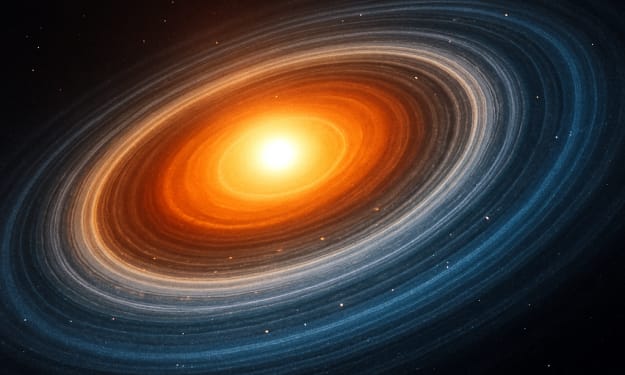
Cold Water Molecules Found for the First Time in a Protoplanetary Disk
When astronomers search for water in space, they usually expect to find it close to stars, where it exists as hot vapor, or locked away as ice on distant comets and asteroids. But a groundbreaking discovery has changed that view: for the first time, scientists have detected “cold” water molecules in the outer regions of a protoplanetary disk — exactly where icy worlds may be forming.
By Holianyk Ihorabout a year ago in Futurism
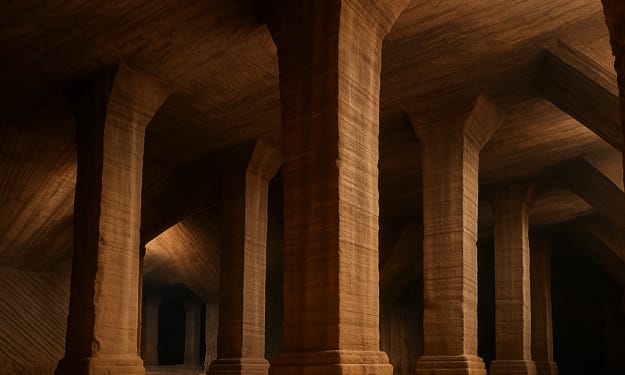
The Longyou Caves: Man-Made Megastructures or Forgotten Tech?
Introduction In the hills of Zhejiang Province, China, lies one of the most mysterious sites on Earth: the Longyou Caves. Discovered in 1992 by a group of curious villagers, these immense underground chambers remain one of the greatest unsolved enigmas of ancient engineering. Carved directly into solid siltstone, the caves cover thousands of square meters, with ceilings as high as a six-story building. And yet, astonishingly, there is not a single mention of their construction in any historical record.
By The Secret History Of The Worldabout a year ago in Futurism
Satellite: Orbiting Future
Auther Name Hazratullah From the earliest days of human curiosity, people have looked at the night sky with wonder. Stars twinkled, planets shifted, and the moon glowed steadily, but no one could have imagined that one day humanity would place its own artificial stars into orbit. These human-made objects, known as satellites, have revolutionized the way we communicate, protect our nations, and explore scientific frontiers. They are not just pieces of metal floating above Earth; they are the silent backbone of modern civilization.
By Asmatullahabout a year ago in Futurism
Did Ancient Aliens Shape the Early Civilizations of Earth?
A Question Buried in Stone For thousands of years, human beings have looked up at the stars and wondered if we were alone. But what if the answer is not simply written in the sky, but carved into the stone of our own planet?
By The Secret History Of The Worldabout a year ago in Futurism
How Artificial Intelligence is Transforming Marketing and SEO.
Artificial intelligence (AI) has rapidly become a cornerstone of modern marketing and search engine optimization (SEO). Today’s marketing teams use AI-driven tools to automate repetitive tasks, analyze vast datasets, and deliver personalized experiences to customers like never before. From optimizing ad campaigns to refining keyword strategies and generating content, AI is enhancing nearly every aspect of digital marketing.
By Sayed Zewayedabout a year ago in Futurism
BMW Motorrad Vision CE: The Helmet-Free Electric Scooter That Could Redefine Urban Mobility
The world of urban transportation is rapidly changing. Electric scooters, bikes, and compact vehicles are transforming how people commute in cities. But while many companies are focused on speed, range, and connectivity, BMW Motorrad has taken a different route with its latest concept vehicle. At the IAA Mobility 2025 show in Munich, BMW introduced the BMW Motorrad Vision CE, a bold new concept that challenges the very definition of what a scooter can be.
By Tech Horizonsabout a year ago in Futurism
Is Singularity an Illusion? The True Nature of Black Holes
Black holes have long fascinated both scientists and enthusiasts alike. In most popular descriptions, they are said to contain a “singularity” at their center a point of infinite density and zero volume. Yet “infinity” is not an observable feature of nature; rather, it signals the limits of our current theories. But what if black holes are not “infinities” at all, but instead the lasting imprints of stars in spacetime? If so, what lies at their center may not be emptiness, but something far more familiar: an extremely small, extremely dense, yet still law-abiding accumulation of matter and energy.
By Kadir Gürlekabout a year ago in Futurism
Why Does Elon Musk Walk So Fast? The Mystery Behind His Unstoppable Pace
Elon Musk, the tech billionaire behind Tesla, SpaceX, and Neuralink, is known for his remarkable achievements and eccentric habits. One habit that has caught the attention of many observers is his rapid walking style. Whether entering a board meeting, walking across a conference stage, or touring a factory, Musk seems to move with unmatched speed, often leaving colleagues and onlookers scrambling to keep up. But what exactly is going on with Musk’s walking pace, and could it reveal something more profound about his personality, health, or work habits? For years, journalists, engineers, and fans have noticed Musk’s unusually quick stride. Videos across social media show him walking faster than most people, often appearing impatient or hyper-focused. Some have joked that he’s “walking faster than his own thoughts,” but a closer look suggests there may be more to this phenomenon than meets the eye. --- Theories Behind Elon Musk’s Speedy Walk Several explanations have been proposed to explain Musk’s walking pace: 1. Time Efficiency: Musk is notoriously busy. Running multiple companies simultaneously, he reportedly works over 100 hours a week. Rapid walking may simply be his way of saving precious seconds and staying on schedule. 2. High Energy Levels: Musk is known for his relentless work ethic and ability to maintain focus for extended periods. Walking quickly could be a reflection of his boundless energy and drive. 3. Mental Restlessness: Some behavioral experts suggest that individuals with hyperactive thought processes may exhibit fast walking as a physical manifestation of their racing minds. Musk is famous for brainstorming complex engineering problems and business strategies, often simultaneously, which might explain his need to “move his body as fast as his brain moves.” 4. Neurological Factors: While less likely, some medical professionals note that unusual walking habits can occasionally reflect neurological or musculoskeletal conditions. Though there is no evidence Musk suffers from any such issue, the consistent speed and precision of his stride is unusual enough to warrant curiosity. --- Psychological Implications Beyond efficiency and energy, Musk’s fast walking could also convey a deeper psychological signal. Behavioral analysts have observed that leaders with rapid walking tendencies are often: Highly goal-oriented and focused Less tolerant of delays or inefficiency Perceived as ambitious and determined Musk’s walking style, therefore, may contribute to his public persona as a relentless innovator, someone always pushing forward, both literally and figuratively. Interestingly, Musk himself has commented in interviews that he prefers to walk meetings rather than sit, citing creativity and mental clarity as key benefits. Walking fast may simply be a natural extension of this habit, allowing him to process ideas while moving at a brisk pace. --- Public Reactions and Social Media Observations Social media has been abuzz with clips of Musk walking quickly across stages, factories, and campuses. Fans and commentators often humorously remark that his legs appear to have their own agenda. Memes comparing Musk to “a human bullet train” have gone viral, but the fascination with his stride goes beyond humor. Some employees have noted that keeping pace with Musk can be challenging. In factory walkthroughs, for instance, staff sometimes struggle to match his speed, leading to a perception of high-pressure environments. This perception aligns with Musk’s image as a demanding, results-driven leader who expects maximum efficiency from himself and others. --- Is There a Health Angle? While there is no evidence of medical concern, rapid walking can have physical implications. Experts suggest that brisk walking at a consistent pace is generally healthy, improving cardiovascular fitness, energy levels, and mental clarity. Musk’s habit may actually be contributing to his ability to sustain intense work hours. However, some caution that extreme, prolonged fast walking combined with high work stress could potentially lead to joint strain or fatigue over time. Given Musk’s known tendency to push boundaries, it’s plausible that he prioritizes productivity over rest. --- The Symbolic Meaning Elon Musk’s walking pace can also be interpreted symbolically. It represents a man always moving forward, never standing still, constantly chasing innovation and progress. In a metaphorical sense, Musk’s stride mirrors his career trajectory, where speed, vision, and determination define every step. Whether Musk realizes it or not, his fast walking has become part of his personal brand—a visual representation of relentless ambition and the urgency with which he approaches both work and life. --- Final Thoughts Elon Musk’s rapid walking is more than a quirky habit—it’s a window into his personality, work ethic, and possibly his physical vitality. While some may dismiss it as mere eccentricity, others see it as a physical manifestation of genius, focus, and ambition. In a world obsessed with productivity and efficiency, Musk’s stride serves as a reminder that speed—mental, physical, and professional—can define a legacy. Observing him move so quickly, we are reminded that progress waits for no one, and innovation, much like Musk himself, moves at a relentless pace. --- SEO Keywords: Elon Musk walking speed, Musk rapid walking, Elon Musk habits, Musk health insights, Elon Musk physical fitness, Musk productivity habits, CEO walking style, tech billionaire habits, Musk leadership style, Elon Musk energy levels, Musk behavioral analysis, Musk lifestyle secrets
By Muhammad Riazabout a year ago in Futurism
Elon Musk’s $7,000 Robot “Chefino” – A Culinary Revolution or the End of Human Chefs?
Elon Musk has once again captured the world’s attention with a bold innovation that could redefine how we cook. His newest creation, Chefino, is an AI-powered robotic chef developed by Tesla’s advanced food technology division. Promising to deliver restaurant-quality meals at the push of a button, Chefino is designed for both home kitchens and commercial establishments. But the question arises: is Chefino merely a kitchen assistant, or could it disrupt the restaurant industry, replacing skilled human chefs entirely? --- What is Chefino? Chefino is a fully autonomous cooking robot that combines artificial intelligence, robotics, and machine learning to prepare gourmet meals with precision and flair. Unlike traditional kitchen appliances, Chefino doesn’t just assist with cooking—it handles everything from ingredient preparation to plating with artistic presentation. Key capabilities include: Preparing thousands of recipes with exact accuracy Learning new cooking techniques via AI updates Adjusting flavors according to user preferences Operating autonomously, requiring minimal human input With a price tag of $7,000, Chefino is designed for ambitious home cooks and restaurant owners alike, making it a potential game-changer in the culinary world. --- How Chefino Works Equipped with multiple robotic arms, precision sensors, and AI-powered processors, Chefino can replicate complex cooking methods traditionally reserved for professional chefs. Its features include: AI Taste Adaptation: Adjusts seasoning and cooking style based on feedback and personal preferences. Machine Learning Algorithms: Continuously improves cooking techniques and recipe execution. Automated Ingredient Selection: Identifies the freshest and most suitable ingredients for each dish. Smart Plating Technology: Ensures visually stunning presentations worthy of Instagram. Additionally, Chefino integrates a voice-controlled interface, allowing users to give commands effortlessly. Whether it’s a quick breakfast, an elaborate five-course meal, or a delicate dessert, Chefino promises consistent results every time. --- Impact on the Culinary Industry While the innovation is impressive, Chefino raises concerns about job security in the food industry. With AI automation becoming more capable, some experts worry that robots like Chefino could replace human chefs, particularly in chain restaurants and high-volume kitchens. However, proponents argue that Chefino is designed to enhance human creativity, not eliminate it. By automating repetitive and labor-intensive tasks, chefs can focus on innovation, presentation, and flavor experimentation. Potential benefits include: Reduced labor costs for restaurants Consistent food quality without human error Faster meal preparation in busy kitchens Healthier options with precise control over ingredients Despite these advantages, many chefs insist that cooking is an art, requiring human intuition, emotion, and cultural context—qualities a robot cannot replicate. --- Chefino: The Future of Home and Restaurant Cooking AI-powered chefs like Chefino may soon transform the culinary landscape. Imagine home kitchens where anyone can cook gourmet meals effortlessly, or restaurants capable of delivering perfectly consistent dishes every day. Elon Musk emphasizes that Chefino is not intended to replace chefs, but to augment their abilities. By removing repetitive tasks, it allows humans to focus on creativity and refinement, ensuring that the culinary arts continue to evolve alongside technology. --- Potential Challenges Even with advanced AI, Chefino faces practical challenges: Adapting to unique ingredients or unpredictable kitchen conditions Handling complex multi-step dishes requiring manual dexterity and intuition Navigating regulatory requirements for food safety in restaurants Overcoming these hurdles will be crucial for Chefino’s success in professional kitchens. --- Final Thoughts Chefino represents a major leap in culinary technology, making gourmet cooking accessible to virtually anyone. Whether it becomes a household staple or a disruptive force in the restaurant industry, one thing is certain: Elon Musk’s robotic chef is a revolutionary innovation that bridges the gap between AI and human creativity. As AI continues to evolve, we must ask ourselves: how much of our daily lives should we entrust to machines? The answer will shape the future of food, technology, and human ingenuity. --- SEO Keywords: Elon Musk robot chef, AI cooking robot, Chefino robot, Tesla food technology, Smart kitchen robot, AI-powered chef, Automated cooking machine, Future of cooking, Robot replacing chefs, AI in restaurants, Tesla robot cooking, AI culinary assistant, Home robot chef, Robotic gourmet meals, Tesla kitchen innovation
By Muhammad Riazabout a year ago in Futurism
Elon Musk’s Bold Plan: Tesla’s Optimus Robots Could Build a Martian Colony by 2026
Elon Musk, the visionary entrepreneur behind Tesla and SpaceX, has unveiled one of his most ambitious projects yet: sending Tesla’s humanoid robots, Optimus, to Mars by the end of 2026. This mission could redefine the way humanity approaches interplanetary exploration, shifting the focus from human astronauts to AI-driven robotic pioneers. Optimus, also called the Tesla Bot, was first announced in 2021 as part of Tesla’s AI initiatives. Standing around 5 feet 8 inches tall and weighing approximately 125 pounds, Optimus is designed to handle repetitive, dangerous, and labor-intensive tasks, which humans would otherwise perform. Leveraging Tesla’s neural network and AI technology—the same system behind Tesla’s self-driving cars—Optimus can walk, lift, and manipulate objects with near-human dexterity. The second generation of Optimus, unveiled in December 2023, showcased significant upgrades in motion control, hand grip, and energy efficiency, making it more suitable for industrial applications—and now, interplanetary missions. --- Why Robots Are Key to Mars Colonization Sending humans to Mars without preparation is extremely risky due to harsh environmental conditions: extreme temperatures, high radiation, and a thin atmosphere. Optimus robots, however, can operate in these environments without life support, making them perfect for early exploration and habitat construction. If successful, Optimus robots could: Assemble habitats and research stations Set up solar panels and energy infrastructure Conduct geological and atmospheric surveys Prepare the groundwork for future human explorers By handling these tasks, Optimus robots could significantly reduce risk, cost, and preparation time, giving humans a better chance of surviving and thriving on the Red Planet. --- Starship: The Vehicle to Mars The mission relies on SpaceX’s Starship, the next-generation spacecraft designed for long-duration space travel. Starship is fully reusable and intended to be the most powerful rocket ever built. It is key to Musk’s vision of making humanity multi-planetary. Although Starship has undergone several test flights, it is still in development. For the 2026 Mars mission to succeed, Starship must demonstrate reliability in launch, landing, and cargo transport. SpaceX engineers are rapidly iterating on design improvements at their Texas facility, with each test flight bringing them closer to this unprecedented goal. --- Challenges for Optimus on Mars While the vision is thrilling, significant hurdles remain. Optimus must: Operate autonomously due to the communication delay between Earth and Mars Endure dust storms, extreme temperatures, and low gravity Adapt to unpredictable terrain and unexpected equipment failures Autonomy is especially critical. Optimus cannot rely on human instructions in real time, so its AI must make complex decisions independently. Its success will determine whether humanoid robots can handle the initial stages of Mars colonization. --- Why This Mission Matters Elon Musk’s plan goes beyond simple automation—it represents a new paradigm in space exploration. By using AI-powered robots to construct the first Martian infrastructure, Musk envisions a world where humans and machines collaborate across planets. If successful, this mission could: Open doors for robotic exploration of the Moon, asteroids, and outer planets Set a standard for AI-assisted colonization in the 21st century Inspire other nations and private companies to rethink space exploration strategies This approach also allows humans to focus on science, research, and innovation, while robots handle the dangerous groundwork—a concept that could transform the future of interplanetary travel. --- The Broader Impact The deployment of Optimus robots has implications beyond Mars: 1. Industrial robotics – Lessons learned in space can enhance automation on Earth, improving efficiency and safety in factories. 2. AI advancement – Optimus’ autonomous decision-making could accelerate AI development across industries. 3. Global competition – With China, the EU, and other countries advancing in robotics, Musk’s plan may set the tone for international space leadership. While ambitious, the project highlights a critical shift: AI and humanoid robots are becoming integral to human progress, not just on Earth, but across the cosmos. --- Final Thoughts Sending Optimus robots to Mars is not just a bold experiment—it is a statement about the future. Musk is redefining the relationship between humans and machines, showing that AI can extend our capabilities into environments too hostile for human life. If all goes according to plan, by 2026, the first humanoid robots could lay the foundation for a permanent human presence on Mars. This vision is no longer science fiction; it is the beginning of a new era where AI, robotics, and human ambition converge to push the boundaries of possibility. --- SEO Keywords: Elon Musk Mars mission, Optimus robot, Tesla Optimus Mars, SpaceX Starship 2026, Robots on Mars, AI robots by Tesla, SpaceX Mars 2026, Elon Musk robot plan, Tesla humanoid robot, Starship Mars launch, Elon Musk sends Optimus robots to Mars, Tesla AI robot mission to Mars, Mars colonization plan by Elon Musk, Optimus robot tasks on Mars
By Muhammad Riazabout a year ago in Futurism