social media
Trending science fiction, technology, and scientific developments on social media.
The Book of Giants, Echoes from the Forgotten Age
Whispers from a Lost World Long before the rise of modern civilization, before the sands covered ancient cities and legends turned into myth, there was a time of giants. Not just in stature, but in power, knowledge, and defiance. These beings walked among early humans, towering and fierce, half-divine and half-mortal. They left behind ruins, whispers, and chaos.
By The Secret History Of The Worldabout a year ago in Futurism
Samsung Used Phones to Buy Right Now in UAE
Are you looking for the best deals on used Samsung phones in UAE? You're not alone! With smartphone prices skyrocketing, many buyers in Dubai, Sharjah, and across the Emirates are turning their attention to used Samsung phones. And why not? They offer top-tier specs at wallet-friendly prices — a win-win for anyone looking to buy Samsung phones without breaking the bank.
By Ready2 Resaleabout a year ago in Futurism
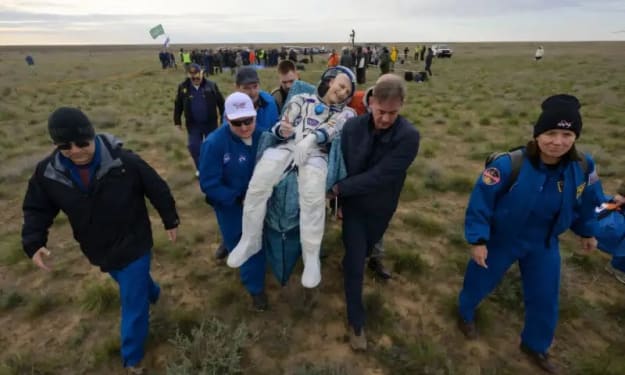
NASA's Oldest Active Astronaut Returns to Earth on 70th Birthday. AI-Generated.
NASA's Oldest Active Astronaut Returns to Earth on 70th Birthday In an inspiring milestone for both human achievement and the spirit of exploration, NASA’s oldest active astronaut, Don Pettit, returned safely to Earth on April 20, 2025 — the very day he turned 70. The historic event marked the end of a seven-month mission aboard the International Space Station (ISS), and solidified Pettit’s legacy as one of NASA’s most experienced and dedicated spacefarers.
By Adnan Rasheedabout a year ago in Futurism
The Evolution of Financial Development
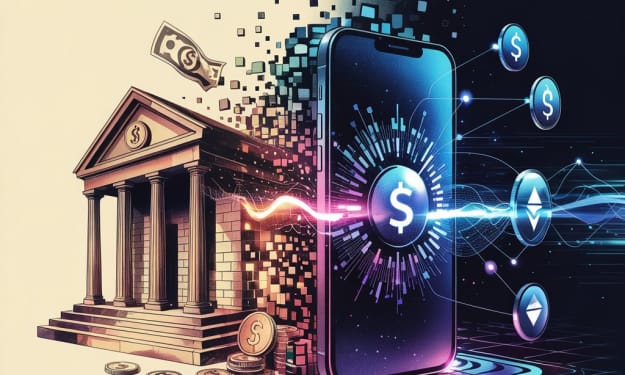
nce upon a time, money was simple. People traded goods like cows, wheat, and gold coins. There were no banks, no credit cards, and certainly no apps to transfer money with a click. Life was basic, but it worked — until people needed something better. As villages grew into cities, the world needed a safer way to keep money. Carrying gold everywhere was dangerous. So, the first banks were born. These banks were strong buildings made of stone and brick. They had thick doors, big locks, and serious guards. People trusted these banks to protect their money. Banks became the heart of every town. Inside, people deposited their gold, borrowed money for farming or starting a business, and saved for their future. Bankers kept big leather books where every transaction was written by hand. It was slow, but it was safe. As time passed, the world changed. Ships started crossing oceans, carrying spices, silk, and silver. Trade between countries grew, and with it, the need for new financial systems. Paper money appeared — easier to carry than heavy coins. Banks also became smarter, helping people send money to faraway lands. Still, banking was something you did by walking into a building, standing in line, and signing papers with a pen. Then came the 20th century — the age of speed. Trains, cars, airplanes, and telephones connected people faster than ever. Banks had to keep up. They introduced checks, ATMs, and credit cards. Suddenly, you didn’t always need to visit a bank to get your money. You could swipe a card at a shop or withdraw cash from a machine. It was magic! But the real revolution started with the rise of computers and the internet. In the late 1990s and early 2000s, online banking was born. Now, people could check their balance, pay bills, and move money without leaving their homes. No more waiting in long lines. No more bank hours. Banking was becoming a 24/7 service. And then — smartphones changed everything again. With a small device in your hand, you could open a bank account, send money across the world, invest in stocks, and even get a loan — all without talking to a banker. New companies, called "fintechs" (short for financial technology), entered the game. They weren’t traditional banks. They were apps, websites, and digital platforms that made banking faster, cheaper, and easier. Money itself started changing. In 2009, a mysterious person (or group) named Satoshi Nakamoto introduced Bitcoin — the first digital currency, also called cryptocurrency. Bitcoin didn’t need banks at all. It worked through a technology called blockchain — a secure, public record of transactions that anyone could see but no one could cheat. Suddenly, the idea of money moved beyond borders. You didn’t need a local bank account to hold or send Bitcoin. It didn’t matter if you were in New York, Nairobi, or New Delhi — digital money connected people everywhere. Today, we are living in a world where traditional banks and digital platforms are blending. Many people still trust brick-and-mortar banks for big things like mortgages or savings. But for everyday tasks, millions are using digital wallets like PayPal, Google Pay, and Apple Pay. Some people even use crypto wallets for buying things online or investing. Financial development has not only made life more convenient — it has opened doors for people who were left out before. In the past, millions had no access to banks because they lived too far from cities or didn’t have the right documents. Now, with just a phone and internet connection, they can save money, borrow for their business, and plan for their future. Of course, there are challenges. Digital banking must be safe. Cybercrime is a real danger, and not everyone understands how to protect themselves online. Regulators and governments are working hard to set rules that make digital finance safe for everyone. Looking ahead, the journey of money is far from over. Experts talk about "Web3" — a new version of the internet where people own their own digital identities and money flows freely across virtual worlds. Imagine paying for a virtual car in a video game using real money from your digital wallet! From carrying heavy coins in leather bags to tapping a phone screen in seconds, the journey of money is a story of human innovation, trust, and dreams. The walls of old banks may still stand in many towns, but the future of finance is borderless, paperless, and limitless. And the best part? This is just the beginning.
By Muhammad Tariq about a year ago in Futurism
Electric Vehicles: What's New in 2025 ?
The "early adopter" phase of electric vehicles (EVs) is officially over and they are now mainstream. 2025 is shaping up to be a ground-breaking year for the EV industry as the world moves toward cleaner, smarter, and more effective modes of transportation. Let's take a look at the most recent trends that will shape electric mobility's future.
By Dipak Chakrabortyabout a year ago in Futurism
The Anunnaki and the Hidden Battle for Earth
The Anunnaki and the Hidden Battle for Earth Humanity has always stared up at the stars with a sense of longing. We’ve built myths, stories, and religions around gods descending from the heavens. What if those ancient tales weren’t just metaphors or religious dreams, what if they were memories? Whispers of a time when powerful beings from beyond this world walked among us?
By The Secret History Of The Worldabout a year ago in Futurism
The Anunnaki: Ancient Gods, Modern Mysteries, Are We Still Under Their Control?
The Anunnaki: Ancient Gods, Modern Mysteries, Are We Still Under Their Control? For thousands of years, humanity has looked to the stars and asked the ultimate question: Where did we come from? Ancient myths, lost texts, and forbidden knowledge all seem to point to a mysterious race known as the Anunnaki, a group of powerful beings from another world who may have played a hand in our creation... and who might still be here.
By The Secret History Of The Worldabout a year ago in Futurism
King Solomon & the Anunnaki: Wisdom from the Stars?
Was King Solomon’s power truly from God, or was it extraterrestrial in origin? Among the great mysteries of ancient times, few figures stand out quite like King Solomon. Known for his unmatched wisdom, control over spirits, and construction of the majestic Temple of Solomon, his story feels larger than life, almost... mythological. But what if it’s not a myth? What if Solomon’s knowledge, tools, and “divine” connection point not just to God in the traditional sense, but to extraterrestrial beings, such as the Anunnaki or even the Pleiadians?
By The Secret History Of The Worldabout a year ago in Futurism
World’s First Humanoid Robot Half Marathon Held in China Shocking Results as Humans Easily Win
World’s First Humanoid Robot Half Marathon Held in China Shocking Results as Humans Easily Win 21 humanoid robots from top tech firms raced alongside 12,000 human runners in Beijing but technology still has a long road to catch up.
By Adnan Rasheedabout a year ago in Futurism
China's Tiangong The World's First Electric Humanoid Robot Ready to Transform the Future
China's Tiangong The World's First Electric Humanoid Robot Ready to Transform the Future Meet Tiangong China’s revolutionary humanoid robot that walks runs and learns like a human setting a new global standard in robotics.
By Adnan Rasheedabout a year ago in Futurism
The Lucy Mission of NASA: A Historic Journey to Discover Asteroid Secrets
NASA's Lucy mission is making headlines in the ever-expanding field of space exploration as it prepares for yet another thrilling close encounter, this time with an asteroid. Not only is this ground-breaking mission a significant step forward for NASA, but it also marks a thrilling chapter in humanity's attempt to comprehend where our solar system came from. Launched in October 2021, Lucy is the first mission designed specifically to study Jupiter’s Trojan asteroids — a unique group of space rocks that share Jupiter’s orbit around the Sun. Scientists believe these asteroids are ancient remnants from the early solar system, frozen in time for billions of years. The formation processes of planets, moons, and other celestial bodies can be deduced from their study.
By Dipak Chakrabortyabout a year ago in Futurism