science
Topics and developments in science and medicine, presented by Futurism.
Scientists May Have Discovered a Brand-New Mineral on Mars—And It Could Rewrite What We Know About the Red Planet
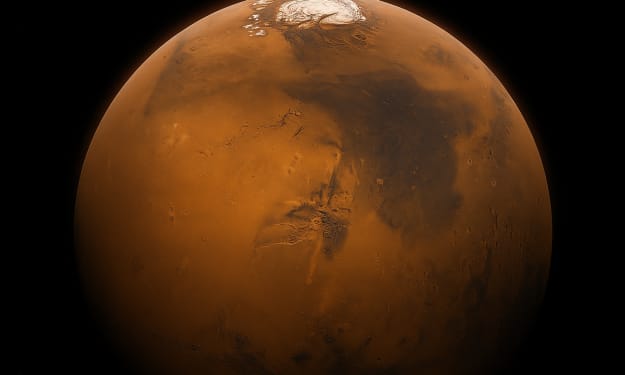
For decades, scientists have been fascinated by the Red Planet. From its mysterious canyons to its once-water-rich landscapes, Mars continues to challenge everything we think we know about planetary evolution. Now, a groundbreaking discovery has added a new chapter to that story: researchers believe they may have found a brand-new mineral on the Martian surface. This finding isn’t just another scientific footnote—it could reshape our understanding of Mars’s volcanic activity, chemical processes, and potential habitability over billions of years. What Exactly Did Scientists Discover? Using data from NASA’s **Mars Reconnaissance Orbiter**, a team of researchers detected unusual spectral signatures in certain Martian regions. These signals pointed to the presence of a rare ferric hydroxysulfate compound, something never before confirmed on Mars. To test the discovery, scientists recreated the mineral in laboratory conditions on Earth. What they found was striking: the substance had a unique crystal structure and thermal stability, suggesting it might indeed qualify as a new mineral. But here’s the catch—official classification requires the mineral to also exist on Earth. Until then, it remains a tantalizing “potential” mineral awaiting confirmation. Where Was It Found on Mars? The mysterious substance was spotted in multiple locations across the planet, including: Valles Marineris – the vast canyon system that stretches more than 2,500 miles across Mars. Aram Chaos – a region filled with collapsed terrain and evidence of ancient water activity. Juventae Plateau – an area known for layered sulfate deposits. The fact that the mineral appears in multiple locations makes the discovery even more significant. It suggests that this wasn’t a localized fluke, but rather a process that might have shaped parts of Mars’s surface on a planetary scale. How Did It Form? Laboratory experiments revealed that this mineral likely formed under high-temperature conditions, in an oxidizing environment, and through processes that released water. This is a huge deal because it points to volcanic or geothermal activity on Mars. For years, many scientists assumed Mars became geologically “dead” billions of years ago. But this discovery hints that localized heating and chemical activity may have continued well into the Amazonian period (the last 3 billion years). In other words, Mars may have stayed more active, dynamic, and possibly habitable for longer than previously believed. Why This Discovery Matters At first glance, a new mineral might not sound world-changing. But in planetary science, minerals act as time capsules—they record the conditions under which they formed. Here’s why this matters: Clues to Mars’s past climate: The mineral suggests Mars was not only warm and wet billions of years ago but may have stayed chemically active in more recent times. Hints of volcanic activity: The mineral’s heat-driven formation points to localized volcanic or geothermal systems—something that could have created temporary pockets of habitable environments. Implications for life: If Mars had ongoing heat and water activity, even in small bursts, it increases the possibility that microbial life may have had places to survive. The Next Step for Confirmation Before scientists can officially name and catalog this substance as a new mineral, it needs to be identified on Earth as well. This step is crucial to confirm its uniqueness in the mineralogical record. Future Mars missions, including sample-return programs, may also play a role in confirming the discovery. If the mineral can be physically retrieved and studied on Earth, we’ll know with certainty what makes it special. What This Means for the Future of Mars Exploration This discovery comes at a time when Mars exploration is at its peak. NASA’s Perseverance rover continues drilling samples, while future missions are being planned to return Martian rocks to Earth. Every new finding—especially one as significant as a potential new mineral—adds to our understanding of the planet’s past and its possibilities for the future. If confirmed, this mineral could even guide us to regions worth prioritizing for exploration. After all, where there’s evidence of heat, water, and chemical activity, there may be answers to the ultimate question: Was Mars ever home to life? Final Thoughts The discovery of a possible new mineral on Mars is more than just a geological curiosity—it’s a window into the Red Planet’s hidden past. It challenges long-held assumptions about Mars being a cold, dead world for billions of years. Instead, it suggests the planet may have been more active, more dynamic, and potentially more life-friendly than we imagined. As exploration continues, one thing is clear: Mars is still holding onto secrets, and each discovery brings us closer to unlocking its mysteries.
By NextGen Mobile Techabout a year ago in Futurism
Tesla Pi Ultra 5G: A Smartphone Designed for the Future of Technology
Imagine a smartphone that doesn’t just keep up with your lifestyle but actually enhances it—a device that combines cutting-edge technology, luxury design, and seamless integration with your Tesla vehicle. Enter the Tesla Pi Ultra 5G, the tech world’s newest game-changer. From its stunning 6.9-inch OLED display to a quad-camera system capable of 8K video, this smartphone promises to deliver performance, style, and innovation in one sleek package. Whether you’re a Tesla fan, a tech enthusiast, or simply looking for the ultimate smartphone experience, the Pi Ultra 5G is designed to impress—and it’s about to change how you think about mobile technology. Sleek Design and Immersive Display The Tesla Pi Ultra 5G immediately grabs attention with its 6.9-inch OLED display, featuring a 3200 x 1440 resolution. The 120Hz refresh rate ensures smooth scrolling, responsive gaming, and vivid visuals for videos or photos. Tesla’s design philosophy shines through with edge-to-edge display, minimal bezels, and an under-display front camera, giving the device a clean, futuristic look. Durability Features: Gorilla Glass Victus on front and back for scratch resistance Aerospace-grade aluminum frame for strength and lightness Sleek yet resilient design suitable for daily use This combination of style and durability positions the Pi Ultra 5G as a premium smartphone that’s both elegant and practical. Performance That Keeps Up With You The heart of the Tesla Pi Ultra 5G is the Snapdragon 8 Gen 3 processor, ensuring lightning-fast performance for multitasking, gaming, and media editing. With 16GB of RAM and 512GB of internal storage, users have ample space and speed for apps, files, and heavy-duty applications. Tesla’s custom Android 14-based OS adds unique optimizations, offering: Smooth user experience Efficient battery management Seamless integration with Tesla vehicles Whether you’re navigating multiple apps, streaming high-definition videos, or managing smart devices, the Pi Ultra 5G handles everything effortlessly. Next-Level Camera Capabilities Photography and videography take a huge leap forward with the Pi Ultra 5G’s quad-camera system: 108MP primary sensor for high-resolution images 16MP ultra-wide lens for landscapes and group shots 12MP telephoto lens with 5x optical zoom for distant details 2MP depth sensor for portrait shots and bokeh effects The rear camera system supports 8K video recording and AI-driven scene optimization, enhancing colors, contrast, and focus automatically. For selfies and video calls, the 32MP front camera ensures crystal-clear images, perfect for content creators, vloggers, or casual social media users. Long-Lasting Battery and Ultra-Fast Charging Powering all these features is a 5500mAh battery designed to last a full day, even under heavy usage. Tesla has also included 100W wired fast charging, 50W wireless charging, and reverse wireless charging to power accessories like earbuds or smartwatches. This makes the Pi Ultra 5G not only reliable but also convenient for users who need fast, flexible charging options throughout the day. Smart Connectivity and Tesla Ecosystem Integration The Pi Ultra 5G supports dual 5G SIM cards, ensuring reliable, high-speed connectivity anywhere. Its standout feature, however, is Tesla vehicle integration. This allows users to: Remotely control Tesla cars Access real-time vehicle data Adjust settings directly from the smartphone Additional smart features include an AI-powered voice assistant, enhanced privacy controls, and exclusive Tesla software optimizations, making it a truly intelligent and connected device. Why the Tesla Pi Ultra 5G Stands Out The Tesla Pi Ultra 5G is not just another smartphone—it’s a statement of innovation. Key highlights include: Premium design with edge-to-edge OLED display High performance with Snapdragon 8 Gen 3, 16GB RAM, and 512GB storage Professional-grade camera system capable of 8K video Long-lasting battery with versatile fast charging options Seamless Tesla integration for a connected lifestyle This combination makes it ideal for Tesla owners, tech enthusiasts, and anyone looking for a premium, next-generation smartphone. Final Thoughts With the Tesla Pi Ultra 5G, Tesla has successfully brought its innovative vision from electric cars to smartphones. From its sleek design and powerful hardware to advanced cameras and smart integrations, it offers a unique and futuristic mobile experience. If you’re looking for a smartphone that combines style, performance, and intelligent features, the Tesla Pi Ultra 5G is a device that stands out from the competition. Tesla fans, tech lovers, and content creators alike will find it hard to resist this blend of innovation, functionality, and luxury. Tesla Pi Ultra 5G
By Tech Horizonsabout a year ago in Futurism
Canada’s First Dinosaur-Era Dragonfly Fossil Discovered in Alberta
In the heart of Alberta’s Badlands, researchers have uncovered a fossil that brings a surprising twist to Canada’s prehistoric story. For the first time, scientists have found a dragonfly fossil from the age of dinosaurs. At 75 million years old, this discovery not only reveals a new species but also fills a major gap in the evolutionary history of dragonflies in North America.
By Muzamil khanabout a year ago in Futurism
When Blocked Arteries Feed Cancer
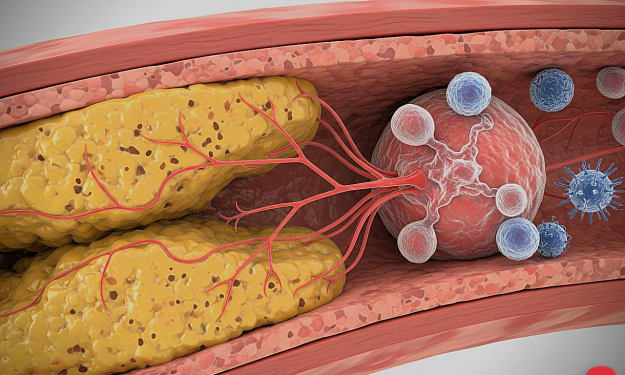
In a major breakthrough, scientists have discovered that restricted blood flow, a common problem in diseases like peripheral artery disease (PAD), can speed up cancer growth by aging the immune system before its time. The research, published on August 19, 2025, in JACC: CardioOncology, connects two health concerns cardiovascular disease and cancer in ways that could change how patients with both conditions are treated.
By Muzamil khanabout a year ago in Futurism
When Magnetism Balances Out
When Magnetism Balances Out Exploring the Science, History, and Applications of the Curie Temperature Magnetism surrounds us in ways that often go unnoticed. From the refrigerator magnets holding family photos to the intricate components inside our smartphones and computers, magnetic materials play an essential role in our daily lives. Yet, behind this everyday phenomenon lies a fascinating scientific story—one that culminates in a critical turning point known as the Curie Temperature, the point at which a magnet loses its magnetic properties.
By Mohamed hgazyabout a year ago in Futurism
Antimatter: The Mirror World of Physics
Antimatter: The Mirror World of Physics From the discovery of the positron to the mysteries of the universe In 1932, something extraordinary happened in physics. While studying cosmic rays with a cloud chamber, the American physicist Carl Anderson noticed unusual tracks that did not match any known particle at the time. These tracks revealed a particle with the same mass as the electron, but carrying a positive charge instead of a negative one. Anderson had just discovered the positron—the first known particle of antimatter.
By Mohamed hgazyabout a year ago in Futurism
The Tasmanian Tiger’s DNA Reveals a Hidden Extinction Story
The thylacine, often called the Tasmanian tiger because of its striped back, was a unique carnivorous marsupial. It looked like a dog with a pouch and once roamed across Australia, Tasmania, and New Guinea. Sadly, the species was declared extinct in 1936, when the last known thylacine died in Hobart Zoo.
By Muzamil khanabout a year ago in Futurism
Mars: The Final Frontier?
For centuries, humanity has gazed up at Mars with wonder. Its reddish surface and eerie, desert-like landscapes have inspired countless imaginations. From ancient civilizations to modern scientists, Mars has captured the minds of dreamers and explorers alike. But as the dream of human colonization inches closer to reality, we must ask: Is Mars truly the final frontier, or is it a far more complicated journey than we’ve been led to believe? The Vision of a New World In the early days of space exploration, Mars was often portrayed as a habitable world, waiting for us to discover its secrets. With its days lasting roughly 24.6 hours and the presence of frozen water at its poles, Mars appeared to be a close match to Earth. Stories of Martian civilizations and the potential for human settlement painted a future of interplanetary travel, where colonies on Mars would thrive, a second home for humankind. Elon Musk’s SpaceX and NASA's Artemis missions have been at the forefront of pushing Mars exploration forward. SpaceX’s Starship, designed for long-duration flights, aims to make the dream of Mars colonization a reality. Musk’s ambitious plans include not just sending astronauts to Mars but building a self-sustaining city on its surface, a feat that sounds like science fiction come to life. But the reality of life on Mars is far from what we might expect.
By Sahir E Shafqatabout a year ago in Futurism
10 Coding Hacks to Move Faster Than Your Brain in 2025
Your brain moves fast. Your fingers… not so much. But in 2025, coding at the speed of thought is possible if you use the right hacks. Forget “working harder.” These 10 tricks will help you write code faster, cleaner, and smarter, without burning out.
By DianApps Technologiesabout a year ago in Futurism
10 Ways ChatGPT and AI Are Transforming Our Daily Lives
Introduction Artificial Intelligence (AI) has moved from science fiction into everyday reality. Today, AI-powered tools are everywhere—from the apps on our smartphones to the platforms we use for learning, shopping, and working. Among these tools, **ChatGPT**, developed by OpenAI, stands out as one of the most influential. It is a conversational AI model capable of answering questions, drafting content, providing translations, and even sparking creativity. But ChatGPT is only part of the larger AI ecosystem. Together, these technologies are redefining what it means to live, learn, and work in the 21st century.
By Moqadas Kliwalabout a year ago in Futurism
Will Humans Really Live on Mars?
Will Humans Really Live on Mars? By: Abdullah The Truth Behind the Hype For decades, the idea of humans living on Mars has captivated dreamers, scientists, and science fiction fans alike. Mars, with its reddish glow and mysterious landscapes, has always felt like the next big step for humanity’s journey into the stars. But while headlines often proclaim that we’re “almost ready” to colonize the Red Planet, the truth is far more complicated.
By Abdullah Khan about a year ago in Futurism