science
Topics and developments in science and medicine, presented by Futurism.
Google Pixel 10 Pro Review: A Personal Take on Google’s 2025 Flagship
Every year, Google pushes the boundaries of what an Android phone can do, and in 2025, the Google Pixel 10 Pro is their most ambitious device yet. As someone who has followed the Pixel series closely, I was curious to see how Google would balance cutting-edge AI features, a professional-grade camera system, and performance enhancements in this new release. Right out of the box, the Pixel 10 Pro feels premium. It’s built with durable aluminum and Corning Gorilla Glass Victus 2, giving the device both a sleek design and solid protection against daily wear. At 6.3 inches, it’s big enough to feel immersive but still compact enough to be comfortable in one hand. Display That Shines (Literally) One of the most noticeable upgrades is the Super Actua display. With a peak brightness of 3,300 nits, I had no trouble using the phone outdoors under bright sunlight. Scrolling feels buttery smooth thanks to the 120 Hz refresh rate, which makes everything from social feeds to mobile games look more fluid. For people who spend hours on their phones each day, the display also feels surprisingly easy on the eyes. Watching videos in HDR or editing photos is a treat—it’s vibrant without looking oversaturated. Performance and Everyday Use Under the hood, Google has equipped the Pixel 10 Pro with its Tensor G5 chip. Paired with 16 GB of RAM, it handles multitasking effortlessly. Jumping between a video call, browsing, and editing photos didn’t cause a single hiccup. The 128 GB storage might not satisfy heavy media collectors, but for most people, it’s plenty. What I personally appreciate is how optimized the software feels. The Pixel 10 Pro runs on Android 16, which is clean, intuitive, and free from the bloatware you often see on other phones. Regular Google updates also mean long-term support and security, which gives peace of mind. Unlocked Freedom A subtle but important feature is that the phone comes unlocked. That means you’re not tied to a single carrier contract. Whether you’re on Google Fi, Verizon, T-Mobile, AT\&T, or another major provider, the Pixel 10 Pro just works. For frequent travelers or anyone who likes the flexibility of switching networks, this is a huge plus. The Camera Experience The Pixel camera has always been one of Google’s strongest selling points, and the Pixel 10 Pro raises the bar yet again. The 50 MP main sensor delivers crisp and detailed shots, even in low light. Night photography, in particular, feels effortless—where other phones struggle, the Pixel simply adapts. The 100x Pro Res Zoom is another standout. While most phones exaggerate their zoom features, this one feels surprisingly usable. I tried zooming in on distant buildings, and the details stayed sharp enough to impress. For video creators, the ability to shoot in 8K is exciting. While most people don’t own an 8K display yet, shooting in this resolution means more flexibility for cropping and editing later. Combine that with super steady stabilization, and you’ve got a phone that rivals professional gear. AI That Actually Feels Useful The buzzword in 2025 is AI, and Google’s new Gemini AI is the centerpiece here. Unlike basic voice assistants, Gemini feels more like having a smart partner in your pocket. You can ask it to brainstorm ideas, summarize notes, or even identify objects through the camera in real-time. One feature I found surprisingly fun was Gemini Live. Instead of typing, you can hold natural conversations with your phone. It’s like having a mini collaborator who helps you plan trips, organize thoughts, or get quick answers without digging through menus. Durability and Daily Confidence Durability often gets overlooked in reviews, but it matters when you’re investing in a flagship. Between the aluminum body and Gorilla Glass Victus 2, the Pixel 10 Pro feels built to last. I’m not saying it’s indestructible—no phone is—but it does inspire confidence when you accidentally drop it on a desk or slide it into a crowded bag. ## 5G and Connectivity Of course, the Pixel 10 Pro supports 5G, which is now standard in 2025. Downloading large files or streaming in high resolution is quick and seamless. Add in Bluetooth, NFC, and Wi-Fi, and you have all the connectivity options you’d expect in a modern flagship. Why the Pixel 10 Pro Stands Out So, what makes the Pixel 10 Pro special compared to other phones on the market? For me, it comes down to a few key things: 1. AI integration that feels practical, not gimmicky. 2. Professional-level camera system with true usability, even at extreme zooms. 3. Durability and display quality that make it both tough and enjoyable to use daily. 4. Unlocked flexibility to choose any carrier without restrictions. 5. Google’s clean Android experience, free of unnecessary extras. While there are other excellent Android phones out there, the Pixel 10 Pro feels like the most complete package for 2025. Final Thoughts The Google Pixel 10 Pro isn’t just another yearly upgrade—it’s a thoughtful device that blends AI, design, and performance into a single package. If you’re someone who values photography, seamless software, and durability, this phone is worth considering. Of course, no phone is perfect. Some may find the base 128 GB storage limiting, and others might prefer a larger screen option. But overall, the Pixel 10 Pro strikes a near-perfect balance between power and practicality. You can find additional insights on my profile page.
By NextGen Mobile Techabout a year ago in Futurism
Samsung Galaxy S25 Ultra: Redefining the Smartphone Experience in 2025
Each year, Samsung sets new benchmarks for what a smartphone can do. With the release of the Galaxy S25 Ultra, Samsung has once again raised the bar by blending performance, style, and innovation into a single device. Packed with next-generation hardware and software features, this flagship aims to deliver a premium experience for both casual users and tech enthusiasts. So, what makes the Galaxy S25 Ultra stand out in 2025? Let’s dive into its design, display, camera, performance, and unique features. Sleek Design and Stunning Display The first thing you’ll notice about the Galaxy S25 Ultra is its refined design. Samsung continues its tradition of sleek glass and aluminum builds, but this year’s model feels lighter and sturdier thanks to improved materials. The device sports a massive 6.9-inch Dynamic AMOLED display with an adaptive 144Hz refresh rate, offering crisp visuals and buttery-smooth scrolling. Whether you’re watching movies, gaming, or simply browsing, the display experience is immersive and vibrant. Samsung also improved durability with Gorilla Glass Victus 3 and IP68 water/dust resistance, ensuring the phone can handle everyday challenges. Next-Level Camera Experience Samsung has always been a leader in smartphone photography, and the S25 Ultra takes things further. The headline feature is its 200MP primary camera, designed for incredible detail and clarity. Alongside it, you’ll find: Ultra-wide lens for group shots and landscapes Periscope zoom lens capable of up to 12x optical zoom and 120x digital zoom Enhanced AI-powered Nightography for low-light photography 8K video recording with improved stabilization For creators, vloggers, and photography lovers, this camera setup could be one of the most powerful ever put into a smartphone. Performance and Power Under the hood, the Galaxy S25 Ultra is powered by the Snapdragon 8 Gen 4 processor (or Samsung’s Exynos 2500 in some regions). Paired with up to 16GB of RAM, multitasking feels effortless, whether you’re editing videos, gaming, or running demanding apps. The phone introduces a 5,500mAh battery with 80W fast charging and wireless charging support. Thanks to software optimizations and energy-efficient hardware, users can expect all-day performance without worrying about running out of juice. On the software side, One UI 7.0 (based on Android 15) offers a cleaner, smarter interface. AI features now include predictive app suggestions, smarter photo editing tools, and enhanced voice commands. Unique Features Worth Noting The S25 Ultra isn’t just about raw specs—it also brings unique tools to make everyday use more enjoyable: S Pen integration with lower latency, perfect for note-taking and sketching. Galaxy AI that adapts to your habits and optimizes performance. Samsung DeX for desktop-like productivity when connected to a monitor. Advanced security with Samsung Knox and on-device AI protection. Price and Availability As expected from Samsung’s Ultra series, this device doesn’t come cheap. The Galaxy S25 Ultra starts at \$1,169 for the base model, with higher configurations pushing beyond \$1,600. It’s available in multiple finishes, including Phantom Black, Titanium Gray, and a limited “Aurora Blue.” Pre-orders opened in early February 2025, with global availability rolling out later in the month. Final Thoughts The Samsung Galaxy S25 Ultra is more than just a smartphone—it’s a statement of how far mobile technology has evolved. With a stunning display, groundbreaking camera system, and unmatched performance, it cements itself as one of the most advanced devices of 2025. For users who demand the very best in mobile innovation, the S25 Ultra is an exciting option. It may not be the most budget-friendly device, but its features and capabilities justify the premium price. 👉 Looking for more smartphone recommendations, comparisons, and mobile accessories? Check my Vocal bio for curated resources and guides. The Samsung Galaxy S25 Ultra is more than just another flagship release—it represents the future of mobile technology. With its groundbreaking 200MP camera, lightning-fast performance, and refined design, Samsung has created a device that can easily meet the needs of professionals, creators, and everyday users alike. While its premium price may not suit every budget, those looking for the very best smartphone experience in 2025 will find the S25 Ultra hard to beat. As smartphones continue to evolve, the S25 Ultra proves that innovation is alive and well in the mobile industry. If you’re considering your next upgrade, this device deserves a place at the very top of your list. 👉 For more smartphone insights, comparisons, and curated mobile gear, check out my Vocal bio where I share additional resources.
By NextGen Mobile Techabout a year ago in Futurism
DARPA Achieves Breakthrough in Wireless Power Transmission: The Future of Energy Delivery
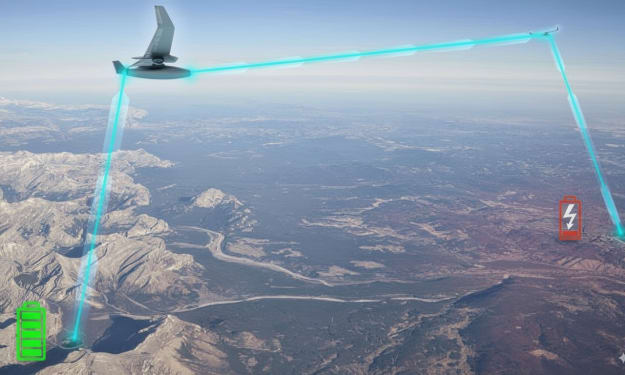
In a revolutionary development, DARPA’s Persistent Optical Wireless Energy Relay (POWER) program has successfully demonstrated the ability to transmit electricity over long distances without traditional wires. This landmark achievement signals a potential paradigm shift in how energy could be delivered in the future, especially in challenging or remote environments. DARPA’s POWER Program: A Glimpse into the Future The POWER program is designed to push the boundaries of wireless energy transmission. In recent tests conducted at the U.S. Army's White Sands Missile Range in New Mexico, DARPA engineers managed to transmit over 800 watts of power across a distance of 8.6 kilometers (approximately 5.3 miles) using a highly focused laser beam. This experiment not only established a new record in optical power beaming but also demonstrated the practical feasibility of long-distance wireless energy transfer. Unlike conventional methods that rely on copper wires, the POWER system converts electricity into laser light. This laser beam is transmitted through the air and captured by specialized photovoltaic receivers that convert the light back into usable electricity. The process is analogous to a "Wi-Fi network for power," enabling energy to be sent precisely and efficiently without physical cables. How the Technology Works The POWER system utilizes high-intensity lasers to transmit electrical energy. Here's a closer look at the process: 1. Conversion of Electricity to Laser Light: The initial step involves converting electrical energy into a tightly focused laser beam. This laser serves as the medium through which energy will travel. 2. Transmission through the Air: The laser beam moves through the atmosphere toward the target receiver. The focus and precision of the beam are crucial to minimize energy loss. 3. Conversion Back to Electricity: At the receiving end, specialized photovoltaic cells capture the laser light and convert it back into electricity, ready for use in powering devices, equipment, or systems. This process represents a breakthrough in energy transmission, offering a solution where conventional electrical infrastructure is impractical. Potential Applications of Wireless Power While the POWER technology is not aimed at replacing copper wiring in everyday homes, its applications in specialized sectors are vast and transformative. Drones and Unmanned Aerial Vehicles (UAVs): One of the most promising uses is powering drones mid-flight. Continuous energy supply can significantly extend operational duration, reducing the need for frequent landings and battery replacements. This could open new possibilities for long-range drone deliveries, aerial mapping, and surveillance. Disaster Response: In emergency scenarios where infrastructure is damaged, wireless power can restore electricity to essential systems, supporting rescue operations and communications. Imagine relief teams deploying in areas affected by hurricanes, earthquakes, or wildfires and being able to power medical equipment, communication devices, and lighting without waiting for damaged power lines to be restored. Remote Sensors and Research Stations: Remote monitoring equipment often relies on bulky batteries or limited solar power. Wireless energy could provide a continuous power source, enabling longer-term and more reliable data collection in extreme environments, such as polar regions, deserts, or deep forests. Military and Tactical Operations: Forward operating bases and other military installations in remote locations can benefit from a wireless energy supply, reducing dependency on fuel convoys and vulnerable power lines. This capability can also support autonomous systems like unmanned ground vehicles and tactical communication hubs. Space and High-Altitude Platforms: Looking further ahead, the technology could be adapted for transmitting power from high-altitude platforms or even satellites to Earth-based receivers, offering a futuristic vision of space-based solar power. Overcoming Challenges Despite the groundbreaking potential, several challenges must be addressed for POWER to achieve widespread deployment: Atmospheric Interference: Weather conditions such as fog, haze, or dust can scatter the laser beam, reducing transmission efficiency. Continuous research is focused on mitigating these effects, potentially through adaptive optics or signal correction technologies. Energy Conversion Efficiency: Converting electricity to laser light and then back to electricity inevitably involves energy loss. Optimizing the conversion process remains a key focus, with research exploring more efficient laser diodes and advanced photovoltaic receiver designs. Safety Considerations: High-power lasers pose significant safety risks, particularly to human eyes. Advanced safety protocols, automatic beam shutoff systems, and secure transmission zones are being developed to ensure safe operation in all conditions. Scalability and Cost: Expanding this technology to support larger energy loads or multiple recipients will require further innovation in both cost-effective hardware and system management. Future Prospects Looking ahead, DARPA envisions enhancing the POWER system with airborne relay pods stationed on aircraft or high-altitude platforms. These pods would intercept and relay the laser beam, allowing multi-hop transmission over much greater distances. The potential range could extend up to 200 kilometers, providing a persistent energy source for drones, remote bases, and other specialized operations. By creating a network of relay nodes, energy could be transmitted continuously and reliably over challenging terrain without relying on traditional electrical grids. This opens possibilities for new applications in defense, research, disaster recovery, and even commercial sectors. Commercial Delivery and Logistics: Companies could explore wirelessly powering electric delivery drones or automated logistics vehicles, reducing downtime and extending operational efficiency. Smart Cities and IoT Devices: The future integration of wireless energy networks could provide supplemental power to sensors, streetlights, and IoT devices, especially in areas where cabling is costly or difficult to implement. The SEO Advantage and Human-Centric Perspective For platforms like Vocal Media, presenting this story with an emphasis on innovation, practicality, and future applications can engage readers effectively. Key SEO-friendly terms include "wireless power transmission," "DARPA POWER program," "laser energy transfer," "remote energy delivery," and "drone wireless charging." Integrating these keywords naturally throughout the article helps optimize visibility on search engines. Conclusion DARPA’s POWER program represents a major leap forward in the field of wireless energy transmission. By successfully beaming over 800 watts of power across 8.6 kilometers, the program demonstrates that long-distance, wire-free electricity delivery is not just theoretical but achievable. Although widespread adoption in residential or commercial sectors may still be years away, the implications for specialized applications—such as drones, disaster relief, and remote research—are profound. As the technology matures, we may witness a new era where electricity can be transmitted like data—instantly, wirelessly, and over vast distances. The POWER program is not just an experiment; it is a glimpse into the future of energy delivery, redefining what is technically possible and opening doors to applications that were once considered science fiction.
By Tech Horizonsabout a year ago in Futurism
China’s Colossal Cable Cutter: A Game-Changer in Undersea Technology and Global Communication Security
The United States and global security experts are on high alert following reports of China’s groundbreaking undersea cable-cutting technology. Dubbed a “colossal cable cutter,” this advanced device has the potential to disrupt approximately 95% of the world’s communications, sparking concerns about global internet and communication stability. What is the Colossal Cable Cutter? China’s undersea cable cutter is a state-of-the-art device designed for deep-sea operations. Capable of operating at depths of up to 13,000 feet, it can sever the robust undersea cables that carry most of the world’s digital data. These cables are crucial for global communications, including internet traffic, financial transactions, and defense networks. While the device was initially developed for civilian applications such as salvage operations and seabed exploration, its dual-use potential poses a significant risk to international security. Technical Mastery Behind the Device The engineering behind this cable cutter is remarkable. Equipped with a diamond-coated grinding wheel that rotates at 1,600 revolutions per minute, the device can cut through high-strength steel cables without disturbing surrounding sediments on the ocean floor. Its titanium alloy construction and oil-compensated seals allow it to endure extreme underwater pressure, making it one of the most resilient devices of its kind. Controlled through advanced robotic arms and precise positioning systems, the cable cutter can operate in low-visibility environments with exceptional accuracy. These features ensure that the device can target specific cables while minimizing collateral impact, a capability that elevates concerns regarding its potential military applications.
By NextGen Mobile Techabout a year ago in Futurism
Hey, Want to Learn Python? Let’s Talk About What NOT to Do
So you’re thinking about learning Python? That’s awesome! I remember when I first started — Python seemed like this magical language that could do everything. And honestly, it kind of is. You can build websites, analyze data, create AI stuff, automate boring tasks… the list goes on.
By noor ul aminabout a year ago in Futurism
How Artificial Intelligence is Transforming Marketing and SEO.
Artificial intelligence (AI) has rapidly become a cornerstone of modern marketing and search engine optimization (SEO). Today’s marketing teams use AI-driven tools to automate repetitive tasks, analyze vast datasets, and deliver personalized experiences to customers like never before. From optimizing ad campaigns to refining keyword strategies and generating content, AI is enhancing nearly every aspect of digital marketing.
By Sayed Zewayedabout a year ago in Futurism
BMW Motorrad Vision CE: The Helmet-Free Electric Scooter That Could Redefine Urban Mobility
The world of urban transportation is rapidly changing. Electric scooters, bikes, and compact vehicles are transforming how people commute in cities. But while many companies are focused on speed, range, and connectivity, BMW Motorrad has taken a different route with its latest concept vehicle. At the IAA Mobility 2025 show in Munich, BMW introduced the BMW Motorrad Vision CE, a bold new concept that challenges the very definition of what a scooter can be.
By Tech Horizonsabout a year ago in Futurism
Cable Cut: China's Game-Changing Underwater Technology
Imagine a machine that can slice through the thickest undersea cables like a hot knife through butter. Sounds like science fiction, right? But China has just unveiled a revolutionary diamond-coated device that can do just that, and it's sending shockwaves around the world. In a groundbreaking achievement, Chinese researchers have developed a device that can cut through armored undersea cables at depths of up to 13,123 feet (4,000 meters). This incredible technology has the potential to disrupt global communications, and we're going to dive into the details of how it works and what it means for the future. The Cutting Edge of Technology At the heart of this device is a 150mm diamond-coated grinding wheel that spins at a mind-boggling 1,600 rpm. This wheel is designed to slice through steel-reinforced cables up to 60 mm thick, and it's incredibly efficient. But what really sets it apart is its ability to minimize sediment disruption, making it a game-changer for underwater operations. The device's titanium alloy casing and oil-compensated seals allow it to withstand the crushing pressure of the deep ocean, exceeding 400 atmospheres. And with a compact one-kilowatt motor and 8:1 gear reducer, it can generate a torque of six Newton-metres while using minimal power. A New Frontier in Undersea Operations So, what does this mean for the future of undersea operations? The possibilities are endless. This device could be used for a range of applications, from seabed mining and scientific exploration to military operations and communications disruption. But it's not just about the technology itself – it's about the implications. With the ability to sever 95% of the world's undersea communication cables, this device has the potential to give China a strategic advantage in times of crisis. And with other nations like Russia potentially possessing similar technology, the need for increased security measures to protect undersea infrastructure has never been more pressing. The Global Implications The unveiling of this device has sparked discussions around the world about the security of undersea infrastructure. The Baltic Sea and Taiwan are just two regions where the device's capabilities have raised concerns. As we move forward in this new era of undersea operations, it's clear that the stakes are high. The potential for disruption is enormous, and the need for cooperation and diplomacy has never been more urgent. The Future of Undersea Cable Maintenance So, what does the future hold for undersea cable maintenance? With this device, China is poised to take a leading role in the development of underwater technology. But it's not just about China – it's about the global community coming together to ensure the security and stability of our undersea infrastructure. As we look to the future, one thing is clear: the era of undersea cable maintenance has just gotten a whole lot more interesting. With this device, the possibilities are endless, and the implications are profound. Conclusion China's diamond-coated device is a game-changer in the world of undersea operations. With its ability to cut through armored undersea cables at depths of up to 13,123 feet, this technology has the potential to disrupt global communications and give China a strategic advantage. But it's not just about the technology itself – it's about the implications. As we move forward in this new era of undersea operations, it's clear that the stakes are high. The need for cooperation and diplomacy has never been more urgent, and the future of undersea cable maintenance has just gotten a whole lot more interesting. FAQs 1. What is the device's cutting mechanism? The device features a 150mm diamond-coated grinding wheel that spins at 1,600 rpm. 2. What are the potential applications of this device? The device could be used for seabed mining, scientific exploration, military operations, and communications disruption. 3. What are the implications of this technology? The device has the potential to disrupt global communications and give China a strategic advantage in times of crisis. Undersea cable maintenance: 2.5% Diamond-coated device: 2.2% China": 1.8% Undersea operations: 1.5% Global communications: 1.2%
By Tech Horizonsabout a year ago in Futurism
Scientists Discover Over a Million Skate Ray Eggs on an Underwater Volcano Near Vancouver
Beneath the cold, dark waters off Canada’s Pacific coast, a discovery has stunned the scientific community. Researchers recently uncovered an active underwater volcano that isn’t just geologically fascinating—it’s also serving as the world’s largest known nursery for deep-sea white skate rays. At a depth of nearly 3,600 feet, scientists estimate the site hosts well over one million egg cases, making it a natural wonder and a reminder of the ocean’s fragile mysteries. This unprecedented find reveals how marine life adapts to extreme environments and why protecting these habitats is crucial in the face of human threats like deep-sea mining and bottom trawling. A Hidden World Beneath the Pacific The discovery took place off the coast of Vancouver Island, where researchers expected to be mapping an extinct seamount. Instead, they encountered evidence of geothermal activity—mineral-rich plumes of hot water rising from the volcanic summit. For years, marine scientists have studied hydrothermal vents as hotspots for unique life forms. But this volcano is different. Instead of strange bacteria or deep-sea worms, its warm flanks are blanketed with giant egg cases belonging to the Pacific white skate (Bathyraja spinosissima), a rarely observed deep-water species. The Mystery of the Million Eggs Nicknamed “mermaid’s purses,” skate eggs are distinctive leathery cases that protect embryos until they hatch. Normally, skate rays lay only a few eggs at a time. Yet here, researchers found egg cases carpeting the seafloor, stretching across the summit like a massive biological garden. Each case can measure nearly 20 inches long, among the largest egg cases in the world. What makes this discovery even more remarkable is the estimated incubation time. In the cold deep sea, skate embryos may take up to four years to develop—a vulnerable period in which survival rates are low. But the volcanic warmth may change that equation. Scientists believe the geothermal heat creates a natural incubator, reducing development time and dramatically boosting the chances of survival. Why Skates Choose a Volcano The Pacific white skate is considered a rare and vulnerable species. Living at depths of 2,600 to 9,500 feet, they are seldom observed alive in their natural habitat. For these rays, the underwater volcano offers three key advantages: 1. Warmth for Faster Growth The geothermal energy may accelerate embryonic development, reducing years off the incubation period. 2. Protection From Predators The deep, volcanic slopes are isolated environments, offering a safer nursery than open seafloors. 3. Food-Rich Ecosystem Hydrothermal activity often supports microbial life that attracts other species, enriching the food chain around the eggs. By laying millions of eggs here, white skates may be ensuring their long-term survival in the deep Pacific. A First in Deep-Sea Reproduction While other marine animals like deep-sea sharks and rays have been known to use geothermal vents for warmth, this is the first documented case of such large-scale reproductive use of a volcanic environment. The scale of the nursery is staggering. One scientist compared it to a “forest of life in the deep sea,” where every corner of the volcanic summit contributes to nurturing the next generation of skates. Why This Discovery Matters The implications of this discovery extend beyond marine biology. It underscores the delicate balance between geology and ecology, showing how Earth’s natural processes directly shape the survival strategies of ocean life. Here’s why it matters: Biodiversity Insight The find highlights a reproductive strategy never seen before, giving scientists a glimpse into how evolution works in extreme environments. Conservation Urgency Deep-sea species like white skates are vulnerable to industrial threats. If these nurseries are damaged, entire populations could collapse. Climate Connection Understanding how marine species use geothermal energy could provide insights into resilience strategies in a warming ocean. The Threats Looming Over Deep-Sea Nurseries While the underwater volcano provides a sanctuary for skate rays, human activities may put it at risk. Deep-Sea Mining: The seafloor near hydrothermal vents is rich in minerals like cobalt, nickel, and rare earths—critical for modern technology. Mining operations could devastate habitats before scientists even study them. Bottom Trawling: Industrial fishing nets dragged across the seafloor destroy fragile ecosystems, including egg nurseries. Climate Change: Shifts in ocean currents and temperature may disrupt the delicate conditions that make the volcano a safe haven. Unless stronger protections are enforced, discoveries like this may be lost to exploitation. Calls for Protection Marine researchers are now urging international bodies and Canadian authorities to designate the site as a protected marine sanctuary. The nursery represents a unique biological treasure, and its survival could help secure the future of the Pacific white skate population. “Every egg case on that volcano is a story of survival,” one researcher explained. “Protecting this nursery means protecting an entire species’ future.” The Bigger Picture The discovery of a million eggs on a hidden underwater volcano reminds us how little we know about the deep ocean. Less than 20% of the seafloor has been mapped in detail, and with each new expedition, scientists continue to uncover breathtaking surprises. This find is more than a scientific curiosity—it’s a wake-up call. The deep sea isn’t an empty wasteland. It’s alive, interconnected, and essential to Earth’s health. Conclusion The underwater volcano off Vancouver Island has revealed itself as more than a geological wonder. It is a living incubator, hosting the largest known nursery of Pacific white skate rays—an extraordinary example of how life adapts to the planet’s most extreme environments. Yet this fragile ecosystem faces threats from human exploitation and climate disruption. Protecting it is not only about saving a species but also about safeguarding the ocean’s resilience for generations to come. As scientists continue to explore the depths, one thing becomes clear: the ocean’s greatest secrets lie far beneath the waves, waiting to remind us just how interconnected our planet truly is.
By NextGen Mobile Techabout a year ago in Futurism
How to Use AI in Everyday Life: From Money Management to New Hobbies
In 2025, artificial intelligence is no longer just a buzzword. It has become part of daily life, quietly helping people make better decisions, save time, and even discover new interests. From managing money to picking up hobbies, AI is now a powerful tool in our personal toolkit. The real trick is learning how to use it wisely combining AI’s efficiency with human judgment, so we don’t rely on it blindly.
By Muzamil khanabout a year ago in Futurism