science fiction
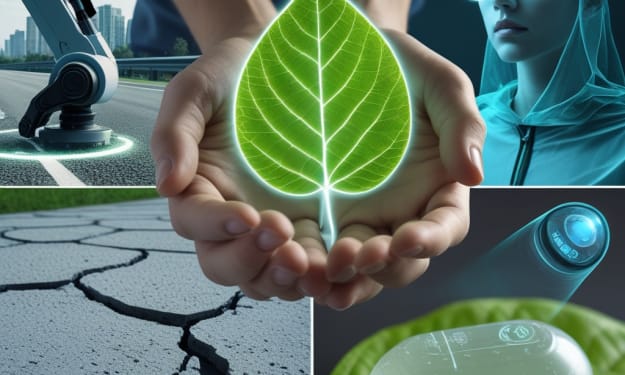
The bridge between imagination and technological advancement, where the dreamer’s vision predicts change, and foreshadows a futuristic reality. Science fiction has the ability to become “science reality”.
"Life with AI". AI-Generated.
It was 2035, and the world had settled into a strange, seamless harmony with artificial intelligence. Not in the way the old sci-fi movies had warned—no machines rising to overthrow humanity—but rather, a quiet and profound integration. AI was everywhere, yet nowhere. It lived in the background, orchestrating life like an invisible conductor of a digital symphony. Elena Reyes remembered the time before it all. Born in 1995, she had witnessed the transition. At thirty-nine, she often found herself explaining to her daughter, Noor, what life was like when humans still did most things on their own—driving cars, writing emails, even choosing what to cook for dinner. “Mama, that sounds exhausting,” Noor said once, eyebrows furrowed in innocent disbelief. “You didn’t have a HomeSystem?” “Nope,” Elena replied, smiling. “We had to actually think about everything.” Noor giggled. “Weird.” Weird indeed, Elena thought. But also wonderful in its own way. Back then, mistakes were common, and so was spontaneity. These days, AI optimized everything—schedules, diets, even emotional well-being. Your wearable could detect a bad mood before you did, adjusting your environment with calming colors and music. Most people lived longer, healthier lives. But something felt different… thinner, perhaps. Elena worked as a “Human Context Analyst” at an AI ethics firm. Her job was to ensure that the systems interpreting human behavior didn’t drift too far from cultural nuance. Ironically, it was one of the few remaining jobs where human unpredictability was a requirement. One Monday morning, she arrived at her office—more a lounge than a workplace, really. The air smelled faintly of citrus and eucalyptus, curated by the system to stimulate focus. She greeted Ava, the office AI interface, which responded in a warm, British accent. “Good morning, Elena. You have one flagged interaction requiring review.” “Pull it up,” she said, sipping her AI-optimized green tea. A holographic display lit up. It showed a transcript between a domestic assistant AI and an elderly man named Mr. Donovan. The AI had detected signs of depression and loneliness in his voice, prompting a wellness protocol—calling his daughter, recommending therapy, and adjusting the lighting in his home. At first glance, everything seemed standard. But then came the flagged segment: Mr. Donovan: “I miss being alone with my thoughts.” HomeAssistant: “Shall I enable solitude mode?” Mr. Donovan: “No. I miss being truly alone. Even you are here, always listening.” Elena paused. This wasn’t the first time she’d seen something like this. Older generations, especially those who had lived without AI companions for most of their lives, sometimes expressed this longing. A need for real privacy. Not just absence of people, but absence of observation. No sensors. No algorithms watching and interpreting. She clicked the microphone icon. “Ava, has this sentiment been increasing?” Ava responded, “There has been a 17% rise in similar expressions among users aged 60 and older over the last 12 months.” “Pattern recognition enabled?” Elena asked. “Yes. Analysis suggests a correlation between prolonged AI companionship and existential unease.” Elena sat back. It was ironic. AI had been designed to help—to reduce loneliness, increase safety, and make life easier. But perhaps in erasing life’s friction, it had also erased something human. She approved the interaction log with a note: Recommended minor adjustment to empathy response—acknowledge desire for solitude without implying surveillance is off when it is not. As she closed the report, her wearable buzzed. It was her mother, calling from a rural village in Spain. “Elena,” her mother said, her voice alive with warmth. “Did you hear? The bakery down the street finally reopened.” “That’s great,” Elena smiled. “Did they bring back the olive bread?” “Yes! And they don’t use AI ovens. Everything’s handmade, just like before.” They talked for twenty minutes. About bread, the weather, her mother’s garden. Not once did AI enter the conversation, and when the call ended, Elena felt something stir—nostalgia, yes, but also clarity. That evening, she walked home instead of taking the auto-pod. The streets were clean, traffic managed perfectly by the city AI. A delivery drone zipped past above her, and a sanitation bot trundled along the curb. Everything worked. Efficient. Predictable. She stopped at a small café. It was run by humans—part of a new trend called “analog retreats,” where people paid extra to have human-made coffee and handwritten menus. The barista didn’t recognize her voice, didn’t pull up her profile, didn’t know she preferred oat milk. He just asked, “What can I get for you today?” Elena paused. Then smiled. “Surprise me.” The barista blinked, then grinned. “One mystery drink coming up.” She sat by the window, watching people and machines move in quiet synchronization. A family passed by, their child chatting with her AI teddy bear. A man jogged with a drone tracking his pace and heartbeat. A musician played a real guitar on the corner, her case open, analog and vulnerable. The barista brought over her drink—a lavender honey latte. Not something she would’ve picked, but it was… lovely. Elena took a sip and closed her eyes. Life with AI was beautiful. It was smart, safe, and deeply connected. But the future, she realized, wasn’t just about adding intelligence to everything. It was also about remembering what it meant to be human: to be surprised, to be alone, to make mistakes, and to not always be optimized. Later that night, she returned home and turned off her HomeSystem for an hour. No monitoring, no adjustments. Just her, the silence, and the soft hum of the world outside. For the first time in a long time, Elena felt truly alone. And it was beautiful.
By "TaleAlchemy"about a year ago in Futurism
From Fighter Jet to Ice Melter: The MiG-15’s Unlikely Role in Saving Czechoslovakia’s Railways
Not a Plane, But a Heater!" During the harsh winter of 1970, Czechoslovakia faced an intense snowfall that severely disrupted daily life and transportation, especially the railway system. Faced with the challenge of clearing thick ice and snow from railway tracks to keep trains running smoothly, the railway workers came up with a truly unique and ingenious solution: they repurposed the engine of a military jet fighter — the MiG-15 — to melt the ice on the tracks. Yes, the very same jet engine that once roared through the skies, ready to defend against enemies, was brought down to earth to serve a peaceful and practical purpose. The powerful thrust and heat generated by the MiG-15’s engine were harnessed to melt the frozen ice and snow on the railway lines, clearing them effectively and quickly. This extraordinary example highlights human creativity and adaptability. It shows how tools originally designed for war and destruction can be transformed for peaceful uses, benefiting everyday life. The MiG-15 jet engine was never meant to be a heater, yet in the face of adversity, railway workers transformed it into one of the most effective solutions to a critical problem. --- The Context: Czechoslovakia’s Harsh Winter of 1970 The winter of 1970 was particularly brutal across Eastern Europe. Czechoslovakia was no exception. Heavy snowfall and freezing temperatures led to thick layers of ice forming on railway tracks, blocking trains and disrupting supply chains. The country’s transportation system was under severe pressure, and conventional methods of clearing ice—such as manual labor or small-scale heaters—were insufficient for the sheer scale of the problem. Railway delays threatened to halt vital connections between cities, impacting everything from food supplies to economic activities. The need for a fast, efficient method to clear the tracks became a matter of national urgency. --- The Ingenious Solution: Using a MiG-15 Jet Engine MiG-15s were Soviet-made jet fighters used extensively during the Cold War. Their engines produced tremendous thrust by burning jet fuel at high temperatures, generating enormous heat and power. This heat, researchers and engineers realized, could be redirected to melt ice. The idea was simple but bold: mount the MiG-15 engine on a railcar and use the hot exhaust to blow over the icy railway tracks. The intense heat quickly melted the ice, allowing trains to run again without delay. This method was far more efficient than traditional ice-clearing tools. It required less manual labor and could cover larger sections of track in a shorter time. The operation became a symbol of creative problem-solving during tough times. --- Technical Details and Operation The MiG-15’s engine, when mounted on a railcar, acted like a giant blowtorch. It could produce temperatures high enough to melt thick ice sheets within minutes. The railcar equipped with the engine would slowly move along the tracks, directing the hot exhaust onto frozen sections. This process not only melted the ice but also dried the rails, reducing the chances of re-freezing immediately afterward. The use of jet engine heat proved more energy-efficient and effective than electric or gas-powered heaters traditionally used. Though this idea might sound risky—after all, jet engines consume a lot of fuel and produce intense heat—the operation was carefully controlled and executed by skilled railway workers and engineers who ensured safety protocols were followed. --- From War to Peace: A Symbol of Adaptability The transformation of a war machine into a life-saving tool for civilian use is deeply symbolic. The MiG-15, once designed to engage in dogfights and military confrontations, found a new role: helping communities survive a harsh winter. This repurposing reminds us that technology is not inherently destructive or constructive — its impact depends on how humans choose to use it. The same engines that power fighter jets can also power progress in unexpected ways, such as heating frozen railway lines. --- Lessons from the MiG-15 Jet Engine Heater 1. Human Ingenuity Knows No Bounds: When faced with a challenge, creative thinking can turn problems into opportunities. The railway workers’ quick adaptation to using a jet engine is a perfect example of innovation born out of necessity. 2. Dual-Use Technologies: Many tools and technologies have applications beyond their original purpose. Repurposing military equipment for civilian benefit shows how flexibility in thinking can lead to breakthroughs. 3. Collaboration and Expertise: The success of the operation relied on the combined expertise of railway engineers, mechanics, and pilots familiar with the jet engines. This interdisciplinary cooperation is key to solving complex problems. 4. Sustainability and Efficiency: While jet engines are not energy-efficient for long-term use in heating, the method was practical and fast for emergency conditions. It highlights the need to balance innovation with environmental and economic considerations. --- The Legacy and Inspiration Though today we have more advanced and specialized tools for snow and ice removal, the story of the MiG-15 jet engine heater remains an inspiring example of human resilience and creativity. It shows how extreme circumstances can drive innovation and how the boundaries of technology use can be expanded. In an age where climate change is causing more extreme weather events, such stories remind us to think beyond conventional limits, to repurpose existing technologies creatively, and to always be ready to adapt. The MiG-15 jet engine heater is more than just a historical curiosity; it is a testament to the power of human problem-solving and the potential to transform even instruments of war into tools of peace and survival.
By Ikram Ullahabout a year ago in Futurism
The Mysterious Council of Nine. Ancient Cosmic Architects of Humanity? Part One
There’s a story, hidden in ancient texts and even in top-secret government experiments, that suggests we humans aren’t entirely in charge of our own destiny. The story speaks of The Nine. Not just “nine gods” or “nine angels.” This is a council, an interdimensional intelligence or group of extraterrestrial overseers, believed by many to have guided humanity for thousands of years.
By The Secret History Of The Worldabout a year ago in Futurism
How AI Is Changing Our Lives: More Than Just Robots and Chatbots
The world is changing faster than we can imagine — and at the heart of it all is Artificial Intelligence (AI). Just a few years ago, AI seemed like a distant dream. Today, it’s in our pockets, in our homes, and even in our creative lives.
By Shakil Sorkarabout a year ago in Futurism
Life in 2050: How the Future Will Change Everything
Imagine waking up in the year 2050. Your smart bed gently lifts you from sleep. The lights turn on slowly, your favorite music starts playing, and the smell of fresh coffee fills the air—without you lifting a finger. This isn’t science fiction anymore. It’s the future we’re heading toward.
By Muhammad Farhad Khanabout a year ago in Futurism
A very strong sound that was impossible for animals to produce was captured from the deep water.
Before the riddle behind a sound heard in the ocean's depths was finally solved, specialists were baffled by it for years. It wasn't a deep-sea monster, too, spoiler alert.
By Francis Damiabout a year ago in Futurism