science fiction
The bridge between imagination and technological advancement, where the dreamer’s vision predicts change, and foreshadows a futuristic reality. Science fiction has the ability to become “science reality”.
Scientists Discover Over a Million Skate Ray Eggs on an Underwater Volcano Near Vancouver
Beneath the cold, dark waters off Canada’s Pacific coast, a discovery has stunned the scientific community. Researchers recently uncovered an active underwater volcano that isn’t just geologically fascinating—it’s also serving as the world’s largest known nursery for deep-sea white skate rays. At a depth of nearly 3,600 feet, scientists estimate the site hosts well over one million egg cases, making it a natural wonder and a reminder of the ocean’s fragile mysteries. This unprecedented find reveals how marine life adapts to extreme environments and why protecting these habitats is crucial in the face of human threats like deep-sea mining and bottom trawling. A Hidden World Beneath the Pacific The discovery took place off the coast of Vancouver Island, where researchers expected to be mapping an extinct seamount. Instead, they encountered evidence of geothermal activity—mineral-rich plumes of hot water rising from the volcanic summit. For years, marine scientists have studied hydrothermal vents as hotspots for unique life forms. But this volcano is different. Instead of strange bacteria or deep-sea worms, its warm flanks are blanketed with giant egg cases belonging to the Pacific white skate (Bathyraja spinosissima), a rarely observed deep-water species. The Mystery of the Million Eggs Nicknamed “mermaid’s purses,” skate eggs are distinctive leathery cases that protect embryos until they hatch. Normally, skate rays lay only a few eggs at a time. Yet here, researchers found egg cases carpeting the seafloor, stretching across the summit like a massive biological garden. Each case can measure nearly 20 inches long, among the largest egg cases in the world. What makes this discovery even more remarkable is the estimated incubation time. In the cold deep sea, skate embryos may take up to four years to develop—a vulnerable period in which survival rates are low. But the volcanic warmth may change that equation. Scientists believe the geothermal heat creates a natural incubator, reducing development time and dramatically boosting the chances of survival. Why Skates Choose a Volcano The Pacific white skate is considered a rare and vulnerable species. Living at depths of 2,600 to 9,500 feet, they are seldom observed alive in their natural habitat. For these rays, the underwater volcano offers three key advantages: 1. Warmth for Faster Growth The geothermal energy may accelerate embryonic development, reducing years off the incubation period. 2. Protection From Predators The deep, volcanic slopes are isolated environments, offering a safer nursery than open seafloors. 3. Food-Rich Ecosystem Hydrothermal activity often supports microbial life that attracts other species, enriching the food chain around the eggs. By laying millions of eggs here, white skates may be ensuring their long-term survival in the deep Pacific. A First in Deep-Sea Reproduction While other marine animals like deep-sea sharks and rays have been known to use geothermal vents for warmth, this is the first documented case of such large-scale reproductive use of a volcanic environment. The scale of the nursery is staggering. One scientist compared it to a “forest of life in the deep sea,” where every corner of the volcanic summit contributes to nurturing the next generation of skates. Why This Discovery Matters The implications of this discovery extend beyond marine biology. It underscores the delicate balance between geology and ecology, showing how Earth’s natural processes directly shape the survival strategies of ocean life. Here’s why it matters: Biodiversity Insight The find highlights a reproductive strategy never seen before, giving scientists a glimpse into how evolution works in extreme environments. Conservation Urgency Deep-sea species like white skates are vulnerable to industrial threats. If these nurseries are damaged, entire populations could collapse. Climate Connection Understanding how marine species use geothermal energy could provide insights into resilience strategies in a warming ocean. The Threats Looming Over Deep-Sea Nurseries While the underwater volcano provides a sanctuary for skate rays, human activities may put it at risk. Deep-Sea Mining: The seafloor near hydrothermal vents is rich in minerals like cobalt, nickel, and rare earths—critical for modern technology. Mining operations could devastate habitats before scientists even study them. Bottom Trawling: Industrial fishing nets dragged across the seafloor destroy fragile ecosystems, including egg nurseries. Climate Change: Shifts in ocean currents and temperature may disrupt the delicate conditions that make the volcano a safe haven. Unless stronger protections are enforced, discoveries like this may be lost to exploitation. Calls for Protection Marine researchers are now urging international bodies and Canadian authorities to designate the site as a protected marine sanctuary. The nursery represents a unique biological treasure, and its survival could help secure the future of the Pacific white skate population. “Every egg case on that volcano is a story of survival,” one researcher explained. “Protecting this nursery means protecting an entire species’ future.” The Bigger Picture The discovery of a million eggs on a hidden underwater volcano reminds us how little we know about the deep ocean. Less than 20% of the seafloor has been mapped in detail, and with each new expedition, scientists continue to uncover breathtaking surprises. This find is more than a scientific curiosity—it’s a wake-up call. The deep sea isn’t an empty wasteland. It’s alive, interconnected, and essential to Earth’s health. Conclusion The underwater volcano off Vancouver Island has revealed itself as more than a geological wonder. It is a living incubator, hosting the largest known nursery of Pacific white skate rays—an extraordinary example of how life adapts to the planet’s most extreme environments. Yet this fragile ecosystem faces threats from human exploitation and climate disruption. Protecting it is not only about saving a species but also about safeguarding the ocean’s resilience for generations to come. As scientists continue to explore the depths, one thing becomes clear: the ocean’s greatest secrets lie far beneath the waves, waiting to remind us just how interconnected our planet truly is.
By NextGen Mobile Techabout a year ago in Futurism
Elon Musk’s $10,000 Robot "MediBot" – The Future of Healthcare or a Threat to Doctors?
Start writing... Elon Musk has a reputation for entering industries no one expects and then flipping them upside down. He did it with cars through Tesla, with rockets through SpaceX, and with AI through OpenAI. Now, Musk is setting his sights on healthcare, one of the most complex and human-centered industries in the world. His latest creation, MediBot, is being hailed as the “Doctor of the Future.” Priced at $10,000, MediBot is a humanoid robot powered by artificial intelligence, capable of performing tasks that range from simple health monitoring to advanced diagnostics. For millions struggling with access to affordable healthcare, it could be revolutionary. But critics warn that MediBot might also threaten the roles of doctors, nurses, and even hospitals as we know them. Is this robot a medical miracle—or a sign that human doctors could one day become obsolete? --- What is MediBot? MediBot is Tesla’s bold step into the world of medical technology. Unlike apps or wearable devices that simply track health data, MediBot is a physical, interactive robotic assistant designed to work directly with patients in their homes or clinics. Some of MediBot’s core abilities include: Diagnosing 5,000+ medical conditions with a reported 95% accuracy Monitoring patient vitals in real time (heart rate, blood pressure, oxygen levels, blood sugar, etc.) Performing basic medical procedures such as wound cleaning and administering injections Offering AI-driven consultations via natural voice interaction Connecting instantly with doctors and hospitals during emergencies Learning new treatments continuously through AI cloud updates At a price of $10,000, MediBot is aimed not just at wealthy households but also at small clinics in developing countries where doctors are often unavailable. In places where healthcare is stretched thin, this could make a real difference. --- How Does MediBot Work? MediBot combines robotics, AI, and advanced medical imaging to deliver a futuristic experience. It is equipped with robotic arms, precision scanners, and cloud-connected processors. Patients can interact with it through simple voice commands such as: “MediBot, check my blood pressure.” “MediBot, schedule a diabetes test.” “MediBot, analyze my cough.” It uses: AI-driven diagnostics – analyzing symptoms and comparing them to massive medical databases Predictive health algorithms – spotting early signs of diseases like cancer, diabetes, or heart disease before they worsen 24/7 health monitoring – continuously tracking patient data to prevent emergencies Emergency response systems – alerting nearby hospitals and ambulances when urgent care is needed For example, if MediBot detects irregular heart rhythms in a patient while they’re asleep, it can immediately alert emergency services and provide CPR until help arrives. --- The Impact on the Healthcare Industry The introduction of MediBot could shake the healthcare industry to its core. Benefits 1. Affordable Care: Millions of people without access to doctors could finally get reliable medical support. 2. Hospital Relief: Overcrowded hospitals could use MediBot to handle basic cases, freeing human doctors for critical surgeries. 3. Faster Diagnoses: AI-driven pattern recognition can sometimes detect illnesses faster than humans. 4. Consistent Quality: Unlike humans, robots don’t get tired, stressed, or distracted. 5. Global Reach: MediBot could bring healthcare to remote villages and rural communities worldwide. Risks and Concerns 1. Job Displacement: Doctors, nurses, and lab technicians worry their roles may shrink. 2. Data Privacy: Sensitive health records handled by AI could be hacked or misused. 3. Lack of Human Touch: Medicine isn’t just science—it’s also empathy, reassurance, and trust. Can a robot provide that? 4. Over-Reliance: Patients might depend too much on MediBot, ignoring the need for professional medical guidance. While some medical experts believe MediBot will act as a support system for doctors, others fear it will make many healthcare jobs redundant. --- Human Doctors vs. Robot Doctors A major debate now emerges: Can robots truly replace doctors? Proponents argue that AI is more accurate in data-driven diagnoses. For instance, studies already show AI can outperform doctors in detecting early-stage lung cancer from X-rays. MediBot could multiply this advantage by working tirelessly 24/7. On the other hand, doctors emphasize the human element. Medicine is about more than diagnosis—it’s about holding a patient’s hand, giving them hope, and understanding emotions. A robot may give facts, but it cannot give comfort. The future may not be about replacing doctors entirely, but rather creating a human-robot partnership. Doctors will focus on empathy, complex surgeries, and critical thinking, while robots handle repetitive tasks and routine monitoring. --- Ethical Questions With MediBot entering healthcare, a new set of ethical dilemmas arises: Should robots be allowed to make life-or-death decisions? Who is responsible if a robot gives the wrong diagnosis—Tesla, the doctor, or the patient? Will patients trust a robot more than a human doctor? Could MediBot widen the gap between rich and poor if only some can afford it? These questions highlight why MediBot is not just a technological invention but also a social challenge. --- Is This the Future of Medicine? Elon Musk insists that MediBot is not here to replace doctors, but to assist them. In his vision, MediBot will handle routine medical care, while human doctors push medical science forward with innovation. Imagine a future where every household has a MediBot that acts as a family doctor—checking daily vitals, preventing diseases before they start, and ensuring emergencies are caught early. Hospitals would be less crowded, healthcare would be more affordable, and millions of lives could be saved. But whether humanity is ready to let robots take charge of health decisions is another story. --- Final Thoughts MediBot may be the boldest attempt yet to merge artificial intelligence with human survival. If successful, it could democratize healthcare worldwide, making reliable medical care available to anyone, anywhere. Yet it also forces us to confront uncomfortable truths: Do we trust machines with our lives? Should empathy be sacrificed for efficiency? What happens to the millions of professionals whose jobs are at risk? Like all of Musk’s inventions, MediBot is disruptive, controversial, and visionary. Whether it becomes a lifesaving household staple or a symbol of misplaced trust in machines, one thing is certain—MediBot is a game-changer for the future of healthcare. --- SEO Keywords: Elon Musk medical robot, Tesla MediBot, AI in healthcare, robotic doctor, smart medical assistant, future of medicine, robot replacing doctors, healthcare AI, AI-powered diagnosis, medical technology 2025
By Muhammad Riazabout a year ago in Futurism
Artistly.ai Review 2025: Is This AI Design Tool Worth the Hype (and Lifetime Deal)?
Have you ever stumbled upon a creative tool that makes you pause and think, “Why haven’t I tried this sooner?” That’s the kind of buzz surrounding Artistly.ai review conversations across design and content circles. In an industry where speed and originality often clash, platforms like Artistly.ai are stepping up with promises to transform the way creators work—whether you’re a designer, marketer, or entrepreneur looking to save time without sacrificing quality.
By Kamel Saidaniabout a year ago in Futurism
Sophisticated WhatsApp Hack Targets iPhone Users.
In today’s digital-first world, messaging apps are no longer just tools for chatting with friends—they’ve become lifelines for business, family connections, and even activism. But what happens when the very app you trust to keep your private conversations secure becomes the target of one of the most advanced cyberattacks seen in years? That’s exactly the situation unfolding with WhatsApp. A newly uncovered zero-click hacking campaign has exposed a dangerous vulnerability that allowed attackers to infiltrate iPhones without the victim ever tapping a suspicious link or opening a malicious file. For iPhone users worldwide, this discovery is a wake-up call: your security can be compromised even if you don’t make a single mistake. The Zero-Click WhatsApp Exploit Explained Unlike traditional hacks that rely on tricking users into clicking a bad link or downloading infected files, a zero-click exploit requires no interaction at all. That means attackers can silently install spyware or malware on your device without you even realizing something is wrong. In this case, researchers uncovered that hackers combined two separate vulnerabilities: 1. WhatsApp Vulnerability (CVE-2025-55177): Hackers exploited the way WhatsApp handled linked-device synchronization, tricking the app into processing malicious URLs. 2. Apple iOS Vulnerability (CVE-2025-43300): This flaw in Apple’s ImageIO system allowed attackers to cause memory corruption by sending a carefully crafted image file. When chained together, these two weaknesses gave cybercriminals a powerful weapon—remote access to iPhones through WhatsApp messages. No clicks, no downloads, no alerts. Just silent, undetectable infiltration. Who Was Targeted? Meta, the parent company of WhatsApp, has confirmed that the attack was not widespread. Fewer than 200 individuals worldwide were affected, with most of them belonging to civil society groups, journalists, and activists. That detail makes the incident even more alarming. These kinds of high-precision, targeted operations are hallmarks of state-sponsored spyware campaigns. The attackers weren’t after ordinary WhatsApp users—they were after people whose voices challenge power. Amnesty International’s Security Lab warned that while the attack mainly hit iPhone users, some evidence suggests Android users may have also been targeted. This broadens the scope of the threat and reminds us that no platform is completely safe. Why This Hack Is So Dangerous The WhatsApp incident is not just another data breach or phishing scam. It’s part of a growing trend of invisible cyberattacks designed to spy on specific individuals. Here’s why this hack stands out: No User Mistake Required: You could have the best digital hygiene in the world—never clicking suspicious links, avoiding shady apps—and still fall victim. Encrypted Doesn’t Mean Invulnerable: WhatsApp is celebrated for its end-to-end encryption, but that only protects messages in transit. Vulnerabilities in the app itself open the door for attackers before encryption even matters. High-Value Targets: By focusing on fewer than 200 people, attackers maximize stealth and minimize detection. Each victim is likely chosen carefully for political, economic, or intelligence reasons. What Apple and WhatsApp Have Done Fortunately, both Meta (WhatsApp) and Apple responded quickly. WhatsApp Updates: iOS users should update to version 2.25.21.73 or newer. macOS users should install version 2.25.21.78 or newer. Apple Patches: Apple released urgent fixes addressing the ImageIO vulnerability. iPhone, iPad,and Mac users are strongly advised to update immediately. User Notifications: Meta has been sending alerts to individuals believed to have been targeted. These messages recommend performing a factory reset and enabling extra security measures like Apple’s Lockdown Mode. How to Protect Yourself Right Now Even if you weren’t among the 200 known targets, it’s critical to secure your device. Here are the steps every WhatsApp user should take: 1. Update WhatsApp Immediately Open the App Store and install the latest version of WhatsApp. This patch closes the door on the vulnerability. 2. Update Your iPhone or iPad Go to Settings > General > Software Update and install the newest iOS release. Apple’s fix for CVE-2025-43300 is included. 3. Enable Lockdown Mode (for high-risk users) Available in Settins > Privacy & Security, Lockdown Mode limits certain device functions to block sophisticated spyware. While it slightly reduces convenience, it drastically improves protection. 4. Review Linked Devices In WhatsApp, check Settings > Linked Devices and remove anything unfamiliar. 5. Stay Alert for Suspicious Behavior Sudden battery drain, overheating, or strange app behavior can sometimes indicate spyware. 6. Factory Reset if Compromised If you receive a notification from WhatsApp or Apple, perform a complete device reset. It’s the most reliable way to remove hidden malware. The Bigger Picture: Cybersecurity in 2025 This attack highlights an uncomfortable truth: even the most trusted tech platforms are vulnerable. For years, iPhones were considered nearly “unhackable” for everyday users, but the reality is shifting. As cyber-weapons become more advanced, privacy and security are no longer guaranteed by default. Instead, users must take proactive steps to stay safe. Governments and corporations will continue to clash over surveillance, and unfortunately, apps like WhatsApp often find themselves caught in the middle. But here’s the silver lining: every major incident like this forces tech giants to harden their defenses, leading to stronger apps and safer systems for all of us. Final Thoughts If you use WhatsApp on an iPhone, update your app and iOS immediately. Even if you weren’t directly targeted, patching your software is the single most important step to protect yourself from future attacks. The WhatsApp hack is a reminder that cybersecurity is not just a tech issue—it’s a human rights issue. When hackers infiltrate the phones of activists and journalists, it isn’t just about data; it’s about silencing voices. For everyday users, the lesson is clear: never get comfortable with digital safety. Stay updated, stay cautious, and remember that in 2025, even a simple messaging app can become a battlefield.
By Tech Horizonsabout a year ago in Futurism
Scientists Uncover a 520-Million-Year-Old Fossilized Larva with Its Brain Intact
When we think of fossils, we often picture giant dinosaur skeletons or ancient plants trapped in stone. But a discovery in China has stunned scientists because it’s not about size—it’s about detail. Researchers recently unearthed a fossilized larva dating back 520 million years, and what makes this find extraordinary is that its brain, nervous system, digestive glands, and circulatory traces are still preserved. This tiny creature, no bigger than a poppy seed, has become one of the most important keys to unlocking the mysteries of early animal evolution.
By NextGen Mobile Techabout a year ago in Futurism
The Soul Harvest: Are We Feeding Forces We Cannot See?
Are We Feeding Forces We Cannot See? For as long as humans have told stories, we have stories of unseen powers feeding on the living. Ancient cultures described gods demanding sacrifice, spirits feeding on fear, and celestial beings who thrived on human devotion. To most, these were myths, strange metaphors of a superstitious age. But what if they were more than that? What if humanity itself has always been a resource, not only of labor and obedience, but of energy, emotional, spiritual, and unseen? This is the chilling idea behind what some refer to as the Soul Harvest.
By The Secret History Of The Worldabout a year ago in Futurism
Scientists May Have Discovered a Brand-New Mineral on Mars—And It Could Rewrite What We Know About the Red Planet
For decades, scientists have been fascinated by the Red Planet. From its mysterious canyons to its once-water-rich landscapes, Mars continues to challenge everything we think we know about planetary evolution. Now, a groundbreaking discovery has added a new chapter to that story: researchers believe they may have found a brand-new mineral on the Martian surface. This finding isn’t just another scientific footnote—it could reshape our understanding of Mars’s volcanic activity, chemical processes, and potential habitability over billions of years. What Exactly Did Scientists Discover? Using data from NASA’s **Mars Reconnaissance Orbiter**, a team of researchers detected unusual spectral signatures in certain Martian regions. These signals pointed to the presence of a rare ferric hydroxysulfate compound, something never before confirmed on Mars. To test the discovery, scientists recreated the mineral in laboratory conditions on Earth. What they found was striking: the substance had a unique crystal structure and thermal stability, suggesting it might indeed qualify as a new mineral. But here’s the catch—official classification requires the mineral to also exist on Earth. Until then, it remains a tantalizing “potential” mineral awaiting confirmation. Where Was It Found on Mars? The mysterious substance was spotted in multiple locations across the planet, including: Valles Marineris – the vast canyon system that stretches more than 2,500 miles across Mars. Aram Chaos – a region filled with collapsed terrain and evidence of ancient water activity. Juventae Plateau – an area known for layered sulfate deposits. The fact that the mineral appears in multiple locations makes the discovery even more significant. It suggests that this wasn’t a localized fluke, but rather a process that might have shaped parts of Mars’s surface on a planetary scale. How Did It Form? Laboratory experiments revealed that this mineral likely formed under high-temperature conditions, in an oxidizing environment, and through processes that released water. This is a huge deal because it points to volcanic or geothermal activity on Mars. For years, many scientists assumed Mars became geologically “dead” billions of years ago. But this discovery hints that localized heating and chemical activity may have continued well into the Amazonian period (the last 3 billion years). In other words, Mars may have stayed more active, dynamic, and possibly habitable for longer than previously believed. Why This Discovery Matters At first glance, a new mineral might not sound world-changing. But in planetary science, minerals act as time capsules—they record the conditions under which they formed. Here’s why this matters: Clues to Mars’s past climate: The mineral suggests Mars was not only warm and wet billions of years ago but may have stayed chemically active in more recent times. Hints of volcanic activity: The mineral’s heat-driven formation points to localized volcanic or geothermal systems—something that could have created temporary pockets of habitable environments. Implications for life: If Mars had ongoing heat and water activity, even in small bursts, it increases the possibility that microbial life may have had places to survive. The Next Step for Confirmation Before scientists can officially name and catalog this substance as a new mineral, it needs to be identified on Earth as well. This step is crucial to confirm its uniqueness in the mineralogical record. Future Mars missions, including sample-return programs, may also play a role in confirming the discovery. If the mineral can be physically retrieved and studied on Earth, we’ll know with certainty what makes it special. What This Means for the Future of Mars Exploration This discovery comes at a time when Mars exploration is at its peak. NASA’s Perseverance rover continues drilling samples, while future missions are being planned to return Martian rocks to Earth. Every new finding—especially one as significant as a potential new mineral—adds to our understanding of the planet’s past and its possibilities for the future. If confirmed, this mineral could even guide us to regions worth prioritizing for exploration. After all, where there’s evidence of heat, water, and chemical activity, there may be answers to the ultimate question: Was Mars ever home to life? Final Thoughts The discovery of a possible new mineral on Mars is more than just a geological curiosity—it’s a window into the Red Planet’s hidden past. It challenges long-held assumptions about Mars being a cold, dead world for billions of years. Instead, it suggests the planet may have been more active, more dynamic, and potentially more life-friendly than we imagined. As exploration continues, one thing is clear: Mars is still holding onto secrets, and each discovery brings us closer to unlocking its mysteries.
By NextGen Mobile Techabout a year ago in Futurism
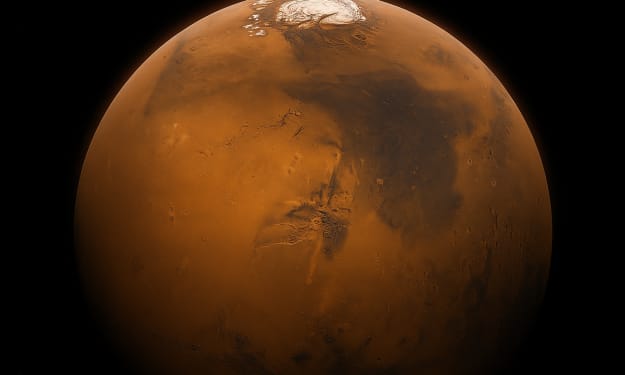
Mars: The Final Frontier?
For centuries, humanity has gazed up at Mars with wonder. Its reddish surface and eerie, desert-like landscapes have inspired countless imaginations. From ancient civilizations to modern scientists, Mars has captured the minds of dreamers and explorers alike. But as the dream of human colonization inches closer to reality, we must ask: Is Mars truly the final frontier, or is it a far more complicated journey than we’ve been led to believe? The Vision of a New World In the early days of space exploration, Mars was often portrayed as a habitable world, waiting for us to discover its secrets. With its days lasting roughly 24.6 hours and the presence of frozen water at its poles, Mars appeared to be a close match to Earth. Stories of Martian civilizations and the potential for human settlement painted a future of interplanetary travel, where colonies on Mars would thrive, a second home for humankind. Elon Musk’s SpaceX and NASA's Artemis missions have been at the forefront of pushing Mars exploration forward. SpaceX’s Starship, designed for long-duration flights, aims to make the dream of Mars colonization a reality. Musk’s ambitious plans include not just sending astronauts to Mars but building a self-sustaining city on its surface, a feat that sounds like science fiction come to life. But the reality of life on Mars is far from what we might expect.
By Sahir E Shafqatabout a year ago in Futurism
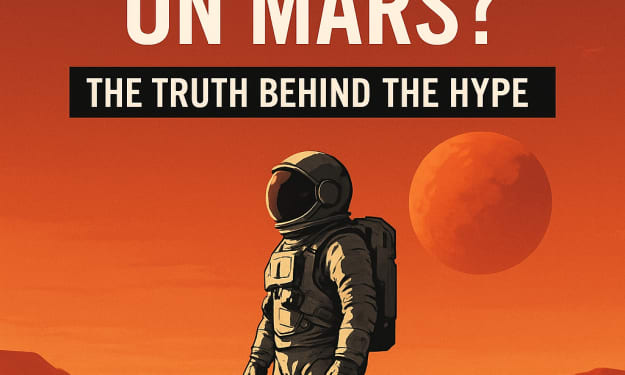
Will Humans Really Live on Mars?
Will Humans Really Live on Mars? By: Abdullah The Truth Behind the Hype For decades, the idea of humans living on Mars has captivated dreamers, scientists, and science fiction fans alike. Mars, with its reddish glow and mysterious landscapes, has always felt like the next big step for humanity’s journey into the stars. But while headlines often proclaim that we’re “almost ready” to colonize the Red Planet, the truth is far more complicated.
By Abdullah Khan about a year ago in Futurism
Un-Normal
There was the sound of screams, the crashing of glass and steel, the gurgling noise of blood boiling in the back of a throat, and the hands gripping flesh that threatened to tear away. Sirens blanketed an area filled with acrid air. The taste of concrete dust, smoke, and iron filling both nose and mouth.
By Jason Burnhamabout a year ago in Futurism