science fiction
The bridge between imagination and technological advancement, where the dreamer’s vision predicts change, and foreshadows a futuristic reality. Science fiction has the ability to become “science reality”.
Few Minutes with Elon Musk
In life, one of the most powerful truths to remember is this: never show fear when you are among people. Fear makes others see you as smaller than you are. Courage, even if quiet and calm, commands respect. When you hold yourself with confidence, people are more likely to treat you as an equal, no matter their status.
By Life Hopesabout a year ago in Futurism
Are Ancient Myths and Modern UFOs Telling the Same Story?
Ancient Shadows and Forgotten Beings In the last few years, headlines about UFOs have shifted from tabloid gossip to front-page news. Military pilots speak of objects accelerating beyond physics, intelligence reports confirm “unidentified aerial phenomena,” and governments cautiously admit they don’t know what we are dealing with.
By The Secret History Of The Worldabout a year ago in Futurism
Erosia
In the dominion of Erosia, existence itself was bound to the carnal act. The cities glistened with towers wrought of crystaline lustre, and the parks shimmered with lanterns whose glow waxed and waned like the breath of lovers. The very air quivered with sighs and gasps, as ordinary as the chirp of sparrows at dawn.
By Stephen Betancourtabout a year ago in Futurism
The Hidden Architects of History: Unveiling the Ancient Secrets
A Glimpse Behind the Curtain of History Every civilization leaves behind a trail of fragments, stories carved in stone, inked on papyrus, or whispered through generations. Yet the deeper we look, the more we find that history as we know it is incomplete. Entire chapters seem hidden, veiled by time or deliberately erased.
By The Secret History Of The Worldabout a year ago in Futurism
The Longyou Caves: Man-Made Megastructures or Forgotten Tech?
Introduction In the hills of Zhejiang Province, China, lies one of the most mysterious sites on Earth: the Longyou Caves. Discovered in 1992 by a group of curious villagers, these immense underground chambers remain one of the greatest unsolved enigmas of ancient engineering. Carved directly into solid siltstone, the caves cover thousands of square meters, with ceilings as high as a six-story building. And yet, astonishingly, there is not a single mention of their construction in any historical record.
By The Secret History Of The Worldabout a year ago in Futurism
DARPA Achieves Breakthrough in Wireless Power Transmission: The Future of Energy Delivery
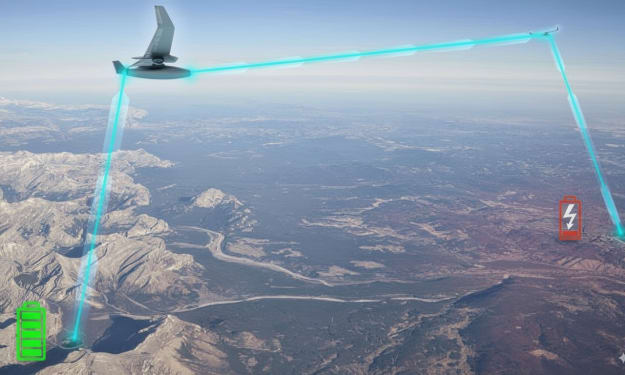
In a revolutionary development, DARPA’s Persistent Optical Wireless Energy Relay (POWER) program has successfully demonstrated the ability to transmit electricity over long distances without traditional wires. This landmark achievement signals a potential paradigm shift in how energy could be delivered in the future, especially in challenging or remote environments. DARPA’s POWER Program: A Glimpse into the Future The POWER program is designed to push the boundaries of wireless energy transmission. In recent tests conducted at the U.S. Army's White Sands Missile Range in New Mexico, DARPA engineers managed to transmit over 800 watts of power across a distance of 8.6 kilometers (approximately 5.3 miles) using a highly focused laser beam. This experiment not only established a new record in optical power beaming but also demonstrated the practical feasibility of long-distance wireless energy transfer. Unlike conventional methods that rely on copper wires, the POWER system converts electricity into laser light. This laser beam is transmitted through the air and captured by specialized photovoltaic receivers that convert the light back into usable electricity. The process is analogous to a "Wi-Fi network for power," enabling energy to be sent precisely and efficiently without physical cables. How the Technology Works The POWER system utilizes high-intensity lasers to transmit electrical energy. Here's a closer look at the process: 1. Conversion of Electricity to Laser Light: The initial step involves converting electrical energy into a tightly focused laser beam. This laser serves as the medium through which energy will travel. 2. Transmission through the Air: The laser beam moves through the atmosphere toward the target receiver. The focus and precision of the beam are crucial to minimize energy loss. 3. Conversion Back to Electricity: At the receiving end, specialized photovoltaic cells capture the laser light and convert it back into electricity, ready for use in powering devices, equipment, or systems. This process represents a breakthrough in energy transmission, offering a solution where conventional electrical infrastructure is impractical. Potential Applications of Wireless Power While the POWER technology is not aimed at replacing copper wiring in everyday homes, its applications in specialized sectors are vast and transformative. Drones and Unmanned Aerial Vehicles (UAVs): One of the most promising uses is powering drones mid-flight. Continuous energy supply can significantly extend operational duration, reducing the need for frequent landings and battery replacements. This could open new possibilities for long-range drone deliveries, aerial mapping, and surveillance. Disaster Response: In emergency scenarios where infrastructure is damaged, wireless power can restore electricity to essential systems, supporting rescue operations and communications. Imagine relief teams deploying in areas affected by hurricanes, earthquakes, or wildfires and being able to power medical equipment, communication devices, and lighting without waiting for damaged power lines to be restored. Remote Sensors and Research Stations: Remote monitoring equipment often relies on bulky batteries or limited solar power. Wireless energy could provide a continuous power source, enabling longer-term and more reliable data collection in extreme environments, such as polar regions, deserts, or deep forests. Military and Tactical Operations: Forward operating bases and other military installations in remote locations can benefit from a wireless energy supply, reducing dependency on fuel convoys and vulnerable power lines. This capability can also support autonomous systems like unmanned ground vehicles and tactical communication hubs. Space and High-Altitude Platforms: Looking further ahead, the technology could be adapted for transmitting power from high-altitude platforms or even satellites to Earth-based receivers, offering a futuristic vision of space-based solar power. Overcoming Challenges Despite the groundbreaking potential, several challenges must be addressed for POWER to achieve widespread deployment: Atmospheric Interference: Weather conditions such as fog, haze, or dust can scatter the laser beam, reducing transmission efficiency. Continuous research is focused on mitigating these effects, potentially through adaptive optics or signal correction technologies. Energy Conversion Efficiency: Converting electricity to laser light and then back to electricity inevitably involves energy loss. Optimizing the conversion process remains a key focus, with research exploring more efficient laser diodes and advanced photovoltaic receiver designs. Safety Considerations: High-power lasers pose significant safety risks, particularly to human eyes. Advanced safety protocols, automatic beam shutoff systems, and secure transmission zones are being developed to ensure safe operation in all conditions. Scalability and Cost: Expanding this technology to support larger energy loads or multiple recipients will require further innovation in both cost-effective hardware and system management. Future Prospects Looking ahead, DARPA envisions enhancing the POWER system with airborne relay pods stationed on aircraft or high-altitude platforms. These pods would intercept and relay the laser beam, allowing multi-hop transmission over much greater distances. The potential range could extend up to 200 kilometers, providing a persistent energy source for drones, remote bases, and other specialized operations. By creating a network of relay nodes, energy could be transmitted continuously and reliably over challenging terrain without relying on traditional electrical grids. This opens possibilities for new applications in defense, research, disaster recovery, and even commercial sectors. Commercial Delivery and Logistics: Companies could explore wirelessly powering electric delivery drones or automated logistics vehicles, reducing downtime and extending operational efficiency. Smart Cities and IoT Devices: The future integration of wireless energy networks could provide supplemental power to sensors, streetlights, and IoT devices, especially in areas where cabling is costly or difficult to implement. The SEO Advantage and Human-Centric Perspective For platforms like Vocal Media, presenting this story with an emphasis on innovation, practicality, and future applications can engage readers effectively. Key SEO-friendly terms include "wireless power transmission," "DARPA POWER program," "laser energy transfer," "remote energy delivery," and "drone wireless charging." Integrating these keywords naturally throughout the article helps optimize visibility on search engines. Conclusion DARPA’s POWER program represents a major leap forward in the field of wireless energy transmission. By successfully beaming over 800 watts of power across 8.6 kilometers, the program demonstrates that long-distance, wire-free electricity delivery is not just theoretical but achievable. Although widespread adoption in residential or commercial sectors may still be years away, the implications for specialized applications—such as drones, disaster relief, and remote research—are profound. As the technology matures, we may witness a new era where electricity can be transmitted like data—instantly, wirelessly, and over vast distances. The POWER program is not just an experiment; it is a glimpse into the future of energy delivery, redefining what is technically possible and opening doors to applications that were once considered science fiction.
By Tech Horizonsabout a year ago in Futurism
Did Ancient Aliens Shape the Early Civilizations of Earth?
A Question Buried in Stone For thousands of years, human beings have looked up at the stars and wondered if we were alone. But what if the answer is not simply written in the sky, but carved into the stone of our own planet?
By The Secret History Of The Worldabout a year ago in Futurism
How Artificial Intelligence is Transforming Marketing and SEO.
Artificial intelligence (AI) has rapidly become a cornerstone of modern marketing and search engine optimization (SEO). Today’s marketing teams use AI-driven tools to automate repetitive tasks, analyze vast datasets, and deliver personalized experiences to customers like never before. From optimizing ad campaigns to refining keyword strategies and generating content, AI is enhancing nearly every aspect of digital marketing.
By Sayed Zewayedabout a year ago in Futurism
BMW Motorrad Vision CE: The Helmet-Free Electric Scooter That Could Redefine Urban Mobility
The world of urban transportation is rapidly changing. Electric scooters, bikes, and compact vehicles are transforming how people commute in cities. But while many companies are focused on speed, range, and connectivity, BMW Motorrad has taken a different route with its latest concept vehicle. At the IAA Mobility 2025 show in Munich, BMW introduced the BMW Motorrad Vision CE, a bold new concept that challenges the very definition of what a scooter can be.
By Tech Horizonsabout a year ago in Futurism