opinion
Opinions in science, science fiction, and fantasy.
Does The Design Industry Need to Do Better?
“For a lot of businesses, freelancers remain a dirty secret. Many companies are reluctant to admit they’re using independent talent — they won’t tell their clients that freelancers are working on their accounts. It’s a strange double standard,” says Matthew Knight.
By Gading Widyatamaka2 years ago in Futurism
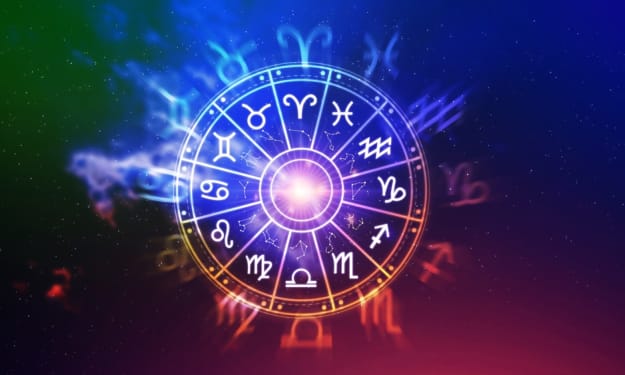
Finding Trusted Astrology Guidance at Your Fingertips
Astrology has been an integral part of Indian culture for thousands of years, with its origins in ancient scriptures and traditions. People across the world consult astrologers for guidance in various aspects of their lives—be it love, career, health, or personal growth. In the digital age, accessing astrological advice has never been easier. The best astrologers in India now offer their services online, allowing you to get personalized insights from the comfort of your home.
By Free Horoscope2 years ago in Futurism
Can We Bring Back the Woolly Mammoth? Scientists Are One Step Closer with Woolly Mice
Imagine walking through the Arctic tundra and spotting a real, living woolly mammoth. It sounds like something straight out of Jurassic Park, but scientists are actually working to make it happen. And their latest breakthrough? Creating "woolly mice", tiny creatures with genetic traits borrowed from the prehistoric giants. This experiment is more than just a scientific curiosity. It’s a major step toward bringing back the woolly mammoth, and it raises big questions: Is de-extinction really possible? Should we even try?
By Bevy Osuos2 years ago in Futurism
Wasting Money, Resources, Time, Energy 101
The sun sets and we turn on our lights. In our fast-paced lives, we often forget to look up to our starry friends. Does it not fascinate you that some of the stars you look at were once observed by Einstein, Newton, Galileo, Da Vinci, Aristotle, and even dinosaurs? We might not have seen these personalities or creatures, but something far out at a distance appears to have witnessed the story of mankind slowly unfolding.
By Krutarth Trivedi2 years ago in Futurism
The Digital Afterlife: Can Technology Make Us Immortal?
For as long as humans have existed, we have been obsessed with the idea of immortality. Ancient rulers built pyramids to preserve their legacies, alchemists searched for the elixir of life, and philosophers debated the nature of the soul. But what if the key to eternal life isn’t in magic or mythology—but in technology?
By Ahmet Kıvanç Demirkıran2 years ago in Futurism
From Hieroglyphs to Emojis:
Byline: How symbols, from ancient carvings to digital icons, have shaped—and sometimes shattered—human bonds. Prologue: The First “LOL” In 1999, Japanese designer Shigetaka Kurita created 176 pixelated icons to help users communicate on a clunky mobile internet platform. Among them: a heart, a musical note, and a tiny pile of poop. These were the first emojis. Fast-forward to 2024: Over 3,600 emojis exist, and 92% of online users deploy them daily. But Kurita’s innovation wasn’t new—it was a digital revival of humanity’s oldest instinct: to compress meaning into symbols. From the Rosetta Stone to TikTok, our need to connect has always outpaced language. The tools change; the urge remains. 1. The Birth of Symbols: How Marks on Walls Built Civilizations Key Concept: Semiotics The study of signs and symbols reveals they’re not just communication too but social glue. Ancient Innovations: Cave Paintings (40,000 BCE): Lascaux’s ochre bison weren’t art; they were survival guides, mapping prey and rituals. Cuneiform (3,400 BCE): Sumerians pressed reeds into clay to track grain taxes. The first symbols were receipts. Hieroglyphs (3,200 BCE): Egyptians carved owls, water ripples, and eyes into tombs, merging art, religion, and bureaucracy. Quote: “Writing began as accounting, then became magic,” says linguist John DeFrancis. “Symbols gave humans power over the unseen.” 2. The Alphabet Revolution: Democratizing Knowledge Phoenician Disruption (1,200 BCE): Traders along the Mediterranean coast ditched complex hieroglyphs for 22 consonant symbols. Simple, portable, and adaptable, this alphabet spread via commerce, not conquest. Cultural Impact: Greek Innovation: Added vowels, enabling philosophy and drama. Roman Adaptation: Latin script became the font of empires. Gutenberg’s Press (1440): Mechanized letters birthed mass media, but also propaganda and censorship. Power Shift: Literacy ceased being a priestly privilege. By 1800, 12% of Europeans could read; by 1900, 75%. 3. Emoticons to Emojis: The Digital Hieroglyphs The Rise of Tone in Text: 1982: Scott Fahlman proposed 🙂 and 🙁 to clarify jokes on a Carnegie Mellon forum. 1990s: Japanese kaomoji (e.g., (╯°□°)╯︵ ┻━┻) added nuance to early chat rooms. 2015: The “Face with Tears of Joy” 😂 became Oxford Dictionary’s Word of the Year. Emoji Psychology: Universal vs. Cultural: A thumbs-up 👍 is offensive in the Middle East; a peach 🍑 means “buttocks” in the U.S. Emotional Efficiency: Texts with emojis are perceived as 24% warmer and 11% more competent (2023 Stanford study). The Dark Side: Miscommunication: A ❤️ can be romantic, platonic, or passive-aggressive. Algorithmic Bias: Early emojis skewed white and male; diversifying them took years of activism. 4. The Meme Epoch: Symbols as Social Currency From Dawkins to Doge: Evolutionary biologist Richard Dawkins coined “meme” in 1976 to describe cultural replication. Internet memes turbocharged this: 2005: LOLcats blended absurdity and cats. 2013: Harlem Shake videos united global strangers in chaotic dance. 2020: Bernie’s Mittens became a shorthand for pandemic-era resignation. Why Memes Work: Speed: A meme condenses complex ideas (e.g., existential dread) into a shareable image. Tribalism: Sharing memes signals in-group belonging. During BLM protests, a black square 🟥 on Instagram conveyed solidarity—critics called it “slacktivism.” 5. AI and the Future of Symbols: Beyond Human Language GPT-4’s Hieroglyphs: AI models invent their own “symbols” to process data. In 2023, researchers found ChatGPT using internal shorthand like [emotion_anger:0.7]—a digital Rosetta Stone we can’t decode. Neuralink’s Vision: Elon Musk’s brain-chip trials aim to let users “text” via thought. Could future symbols bypass keyboards, tapping directly into emotions? The Metaverse’s Icons: VR avatars use gestures (waves, nods) as universal symbols. But cultural gaps persist: A head tilt means “yes” in Bulgaria, and “no” in Greece. 6. Lost in Translation: When Symbols Divide Historical Warnings: The Cross ✝️: A symbol of love for Christians, a trigger for Crusade victims. Swastika 卍: Sacred in Hinduism and Buddhism, now irreparably poisoned. Modern Fractures: Hashtag Wars: #BlackLivesMatter vs. #AllLivesMatter show how symbols weaponize empathy. Algorithmic Echoes: TikTok’s “For You” page serves personalized symbols, splintering shared cultural narratives. Epilogue: The Next Symbolic Leap In 3024, archaeologists may dig up a smartphone and ponder the tiny 🚀 and 🌍 in our texts. They’ll see what we often miss: Symbols are more than tools. They’re mirrors of our fears, hopes, and hunger to say, “You’re not alone.” As poet William Blake wrote: “To see a World in a Grain of Sand… hold Infinity in the palm of your hand.” Today, we hold it in a thumbs-up. Food for Thought: What symbol—ancient or modern—best captures your life right now? What might it mean to someone 1,000 years from now?
By Pure Crown2 years ago in Futurism
The Forgotten Genius of Ada Lovelace:
Byline: The 19th-century visionary who saw beauty in numbers and machines in metaphors. Prologue: A Mind Between Two Worlds In 1833, a 17-year-old girl named Ada Byron attended a London salon where guests marveled at a clanking brass contraption: Charles Babbage’s Difference Engine, a mechanical calculator. While others saw gears and numbers, Ada saw something else entirely—a “thinking machine” that could compose music, paint art, and perhaps even dream. Her mother, Lady Byron, had raised her on strict math lessons to suppress the “dangerous imagination” Ada inherited from her father, the poet Lord Byron. But Ada defied categorization. She called herself a “poetical scientist”—a title that would define her legacy as the world’s first computer programmer. 1. The Enchantress of Numbers: Ada’s Education Mentored by Titans: Mary Somerville: The renowned mathematician and astronomer tutored Ada, introducing her to advanced calculus and celestial mechanics. Charles Babbage: The irascible inventor of the Analytical Engine (a proto-computer) became her collaborator. Their letters brimmed with equations and inside jokes. A Unique Mind: Ada blended rigor and romance. In her journals, differential calculus sat beside lines like, “I want to put inimitable life into my work—a fire, a soul.” 2. The Notes That Changed History 1843 Babbage asked Ada to translate an Italian article about his Analytical Engine. What began as a translation evolved into a manifesto. Her Notes (Three Times Longer Than the Original Article) Included: The First Algorithm: A step-by-step method to calculate Bernoulli numbers using the Engine—now considered the first computer program. A Vision Beyond Calculation: Ada argued the machine could manipulate any symbols, not just numbers. She envisioned it composing music, generating art, and solving equations “of arbitrary complexity.” The Concept of a Loop: She described how the Engine could repeat operations, a foundational principle in coding. Poetic Insight: Ada compared the Engine’s punch cards to Joseph-Marie Jacquard’s loom, which wove silk using encoded patterns. “The Analytical Engine weaves algebraic patterns,” she wrote, “just as the loom weaves flowers and leaves.” 3. The Poetical Science: Where Art Met Algebra Ada’s genius lay in her interdisciplinary lens: Metaphors as Code: She described the Engine’s “memory” (storage) and “mill” (processor) in terms a poet might use. Music and Machines: She theorized that musical notes could be converted into numbers for the Engine to manipulate, foreshadowing digital audio. The “Science of Operations”: She framed math as a language of processes, not just answers—a philosophy that underpins modern programming. Controversy: Male peers dismissed her ideas. Mathematician Augustus De Morgan claimed her flights of fancy proved “the female mind cannot sustain abstract thought.” Babbage, though impressed, called her “my fairy who has thrown her magic wand over the hardest of my materials.” 4. The Tragic Eclipse of a Visionary Ada’s later years were marred by illness, gambling debts, and opium addiction. She died of uterine cancer in 1852 at 36—the same age as her father. Lost to History: For a century, her contributions were erased. Historians credited Babbage alone, dismissing Ada as a “hysterical” sidekick. Even Alan Turing’s 1950 paper on AI cited Babbage but not Lovelace. Rediscovery: In the 1970s, feminist scholars resurrected her work. The U.S. Department of Defense named its programming language Ada in 1980, cementing her place in tech history. 5. Ada’s Legacy: Code as Art, Machines as Partners Modern Echoes: AI Creativity: Projects like OpenAI’s MuseNet, which composes music, fulfill Ada’s prophecy of machines as artists. Human-Centered Design: Tech innovators like Steve Jobs cited Ada’s fusion of creativity and engineering as inspiration. The Poetical Scientist’s Mantra: “Imagination is the Discovering Faculty… It seizes points in common, between subjects having no apparent connection.” Epilogue: The Ghost in the Machine In 2023, an AI trained on Ada’s writings generated a sonnet in her voice: “I dream of engines wrought from starlight’s loom, Where numbers dance and melodies take flight. The gears, they hum a universal tune— A poet’s calculus, a coder’s rite.” The poem is flawed, fand ragmented. But somewhere, perhaps, Ada smiled. Reflection: Ada Lovelace’s story challenges the binary of art vs. science. In a world obsessed with STEM vs. humanities, she reminds us that innovation lives at the intersection. Question for Readers: What “impossible” idea could you pursue if you embraced your inner poetical scientist
By Pure Crown2 years ago in Futurism
The Hearts of Nara City
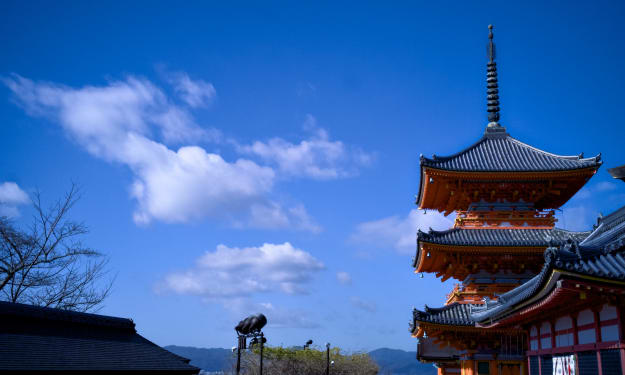
The country of Japan is a country of contradiction. Wooden temples shrouded in the early morning mist border metal Goliaths, office complexes of sprawling webworks of steel and glass. Down the dim alleyways of the bustling city sprouts the idyllic garden, blossoming straight out of a Ghibli feature. A culture that embraces the traditions and roots of its past with as much fervor as it reaches up for the flourishing of the future is that of the verdant landscape, the towering volcano, and the titantic megacity.
By Greg Craig2 years ago in Futurism
The Quantum Paradox: How Uncertainty Powers Human Creativity
Prologue: The Jazz of the Universe In 1959, physicist Freeman Dyson scribbled a note to his colleague Richard Feynman: “Your diagrams look like jazz—particles dancing to rules they’re inventing mid-air.” Feynman’s Nobel Prize-winning work in quantum electrodynamics revealed a subatomic world where particles exist in multiple places at once, where certainty is a myth, and where creativity isn’t just allowed—it’s mandatory. Decades later, neuroscientists discovered something startling: The human brain, when improvising a guitar solo or solving an unsolvable equation, mirrors the quantum realm’s chaotic choreography. Uncertainty, it turns out, isn’t a bug in the system—it’s the source code of genius. 1. Heisenberg in the Brain: The Uncertainty Principle of Ideas
By Pure Crown2 years ago in Futurism