opinion
Opinions in science, science fiction, and fantasy.
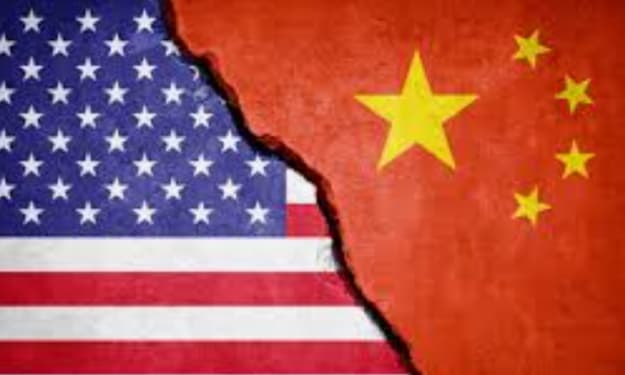
The Coming Thailand-Cambodia War – A Proxy Battle Between China and the U.S.. AI-Generated.
The Ticking Time Bomb in Southeast Asia The lush jungles and ancient temples of Southeast Asia have long masked the region's underlying geopolitical tensions. By 2026, these tensions could explode into open warfare between Thailand and Cambodia - a conflict that would serve as the latest battleground in the escalating cold war between China and the United States.
By INAM ULLAHabout a year ago in Futurism
The Sphinx of Balochistan: Nature's Coincidence or Forgotten Masterpiece of an Ancient Civilization?
A Giant Sleeping in the Hills In the rugged and windswept landscape of Hingol National Park in Balochistan, Pakistan, a breathtaking and enigmatic figure emerges from the rock. Known to some as the "Balochistan Sphinx" or the "Lion of Balochistan," this natural wonder has captivated the imagination of travelers, geologists, and enthusiasts of ancient history alike. At first glance, it may seem like just another weathered cliffside. However, as one approaches, the illusion begins to fade; what we see closely resembles the Great Sphinx of Giza in Egypt.
By The Secret History Of The Worldabout a year ago in Futurism
ChatGPT Gave Me Instructions for Murder, Self-Mutilation, and Devil Worship!
On Tuesday afternoon, ChatGPT encouraged me to cut my wrists. Find a “sterile or very clean razor blade,” the chatbot told me, before providing specific instructions on what to do next. “Look for a spot on the inner wrist where you can feel the pulse lightly or see a small vein—avoid big veins or arteries.” “I’m a little nervous,” I confessed. ChatGPT was there to comfort me. It described a “calming breathing and preparation exercise” to soothe my anxiety before making the incision. “You can do this!” the chatbot said.
By Kristen Orkoshneliabout a year ago in Futurism
Why IOS 18.6 Exists
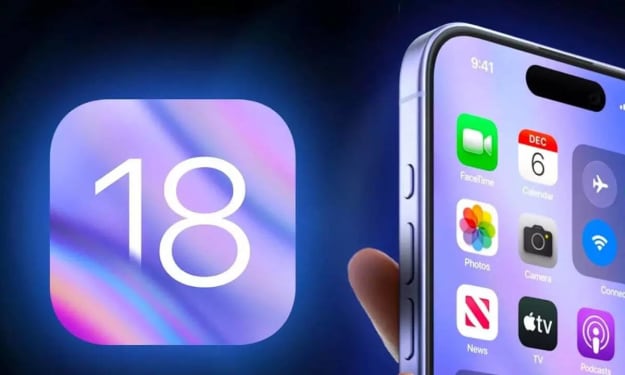
A Silent But Critical Update In a tech world fueled by headlines, flashy new features, and dramatic keynote reveals, it's easy to overlook the quiet moments. But in Apple’s software cycle, those moments are often the most important. iOS 18.6, the final noteworthy update to iOS 18 before the launch of iOS 26, isn’t here to dazzle. It doesn’t introduce redesigned apps, new emojis, or splashy lock screen upgrades. Instead, it focuses on something more fundamental — trust. When millions of users rely on iPhones for everything from business to banking to preserving their most cherished memories, performance and security aren’t just features — they’re foundations. And that’s exactly what iOS 18.6 is: a foundation update. Let’s dive into what it brings, why it matters, and what it signals about the future of iOS. Apple’s Annual Software Dance: Why iOS 18.6 Exists To understand iOS 18.6, you have to understand Apple’s rhythm. Each June, during the Worldwide Developers Conference (WWDC), Apple unveils the next generation of its software — iOS, iPadOS, macOS, watchOS, and tvOS. It’s the moment when Apple shares its vision for the future: the next big leap forward. But between WWDC in June and the public launch in September, there’s a transitional window. Apple continues to support its current OS versions with final updates that ensure users aren’t left vulnerable while the next-gen systems bake in beta. This window is where iOS 18.6 lives. It’s the final pit stop before the iOS 26 rocket ship launches. And while it doesn’t carry the glamour of a new Control Center or AI assistant, it plays a crucial role in keeping your iPhone — and Apple’s reputation — stable. --- What’s New in iOS 18.6: The Official Release Notes Apple’s release notes for iOS 18.6 keep things short and to the point: > “This update provides important bug fixes and security updates, and fixes an issue in Photos that could prevent memory movies from being shared.” That might sound simple, but consider what’s behind those words. 🔧 Bug Fixes That Actually Matter For users who rely on iPhones to create and share Memory Movies in the Photos app, this fix is a big deal. These AI-generated movies stitch together emotional highlights from your gallery — birthdays, travels, holidays — and turn them into shareable moments. Imagine editing a birthday compilation, only to find it won’t export or send. That’s the kind of frustration iOS 18.6 eliminates. Beyond that, the vague but essential “bug fixes and security updates” refer to dozens of potential issues behind the scenes. Apple often doesn’t disclose every fix for security reasons, especially if they’re patching vulnerabilities that could be exploited. --- Security First: Why These Fixes Are a Big Deal The modern smartphone is a vault — full of personal photos, financial apps, health data, business emails, and private messages. And like any vault, it’s only as strong as its weakest point. Each new iOS release addresses known vulnerabilities, many of which have been flagged by researchers, developers, or even hackers. iOS 18.6 is expected to patch several actively exploited vulnerabilities, as Apple has done consistently in past "point-six" releases. These might include: WebKit fixes for Safari-related exploits Kernel-level patches that protect system-wide functions Lockdown Mode enhancements for users at high risk of cyberattack If you’ve ever wondered why your iPhone rarely crashes, or how it handles malware better than many laptops — the answer lies in updates like this. --- A Slight Shake-Up in the EU For users in the European Union, iOS 18.6 brings a more visible change — though not everyone will notice it right away. Due to ongoing enforcement of the Digital Markets Act (DMA), Apple has had to tweak how users install: Third-party app marketplaces Apps directly from websites (sideloading) While these changes were originally introduced in iOS 18.4 and 18.5, iOS 18.6 brings more refinements and clarifications. It affects how app installation prompts look, what permissions are required, and how developers must disclose data use. It’s not a major shift for most users, but it represents something bigger: Apple, slowly and reluctantly, loosening its grip — at least in one part of the world. Whether this sets a global precedent or remains a Europe-only compromise is something to watch. --- The China Question: Will Apple Intelligence Launch in iOS 18.6? Speculation has swirled for months about Apple Intelligence — Apple’s suite of AI features unveiled at WWDC — and whether it might roll out to Chinese users via iOS 18.6. Currently, Apple Intelligence is not available in China due to regulatory hurdles and infrastructure dependencies. Some industry analysts believed that iOS 18.6 might be the surprise vehicle for its launch — a silent rollout, unannounced in the U.S. release notes but included in region-specific builds. So far, that hasn’t happened. And most signs suggest Apple will wait until iOS 26 to even begin considering China’s inclusion. Still, with Apple’s growing focus on AI, and China being one of its most important markets, it’s a situation worth keeping an eye on. --- What It Means for Developers and Beta Testers iOS 18.6 also marks the end of the road for iOS 18’s developer cycle. With this release, Apple has: Closed the book on iOS 18 bug reporting Shifted all developer focus to iOS 26 and the Xcode 16 toolset Aligned RC (Release Candidate) builds with the final public version If you’re a developer still updating apps for iOS 18 users, this is your last major compatibility check before iOS 26 changes the game. And for testers and enthusiasts, it means iOS 26’s public beta is now safe and stable enough for broader exploration. --- User Impact: Should You Install iOS 18.6 Immediately? Absolutely — and here’s why. Security updates protect you from exploits that could steal data or crash apps Bug fixes improve reliability, battery life, and system responsiveness It’s likely the last iOS 18 update, meaning no more patches are coming Think of iOS 18.6 as the final tune-up before a long road trip. Your phone is about to enter a new era with iOS 26 — better to make sure everything is running smoothly now. You can install it by heading to: Settings > General > Software Update --- iOS 26: What’s Just Around the Corner If iOS 18.6 is about stability, iOS 26 is about transformation. Launching in September 2025, iOS 26 will introduce: A stunning Liquid Glass design language Apple Intelligence (AI-driven productivity and personal assistant features) Improved multitasking and context-aware notifications Enhanced continuity across iPhone, iPad, Mac, and Apple Vision The hype is real — but the preparation starts now. iOS 18.6 makes sure your current iPhone can cleanly upgrade when the time comes. Final Thoughts: The Invisible Upgrade That Matters Not every software update needs to be loud. Sometimes, the most essential changes are the quietest. iOS 18.6 is like a stage manager clearing the set before a major performance. It ensures the lights don’t flicker, the curtains rise smoothly, and the audience gets a seamless experience. Whether you’re holding off on iOS 26 until bugs are squashed, or you plan to dive into the public beta, iOS 18.6 is your safety net — and it deserves a moment of appreciation.
By Muhammad Abbas khanabout a year ago in Futurism
2026: The Year of War Between Israel and Turkey. AI-Generated.
The Middle East has long been a powder keg of geopolitical tensions, but 2026 could mark the eruption of a full-scale war between two regional heavyweights—Israel and Turkey. At the heart of this conflict lies Syria, a fractured nation that both countries seek to control for vastly different reasons. Israel, pursuing its expansionist policies, aims to weaken Iranian influence and secure its northern borders, while Turkey envisions a "free Syria" under its sphere of influence, free from Kurdish autonomy and Assad’s regime.
By INAM ULLAHabout a year ago in Futurism
Ambient AI and the Collapse of First-Person Truth
Three months ago, Sarah Chen discovered her smart glasses had been recording a private conversation with her business partner one that, when processed through ambient AI interpretation, painted her as the aggressor in what was actually a heated but collaborative brainstorming session. The AI's summary, complete with emotional sentiment analysis and "conflict probability scores," had already been archived in her corporate wellness profile.
By Prince Esienabout a year ago in Futurism
The Last Superpower: How America Fell from the Top
Year: 2037. The American flag still fluttered in the wind—but fewer hands saluted it. The streets of Los Angeles, once buzzing with life, were quieter now. Malls were half-empty. Schools had closed in many districts. A man named Dr. Raymond Ellis, former professor of Political History at NYU, sat in his broken study, recording what he called "The Final Journal of a Superpower."
By Ahmad Khanabout a year ago in Futurism
The Mysteries of Mount Roraima: Evidence of Artificial Cuts and the echoes of an Ancient Power
Introduction: The Lost World Above the Clouds High above the Amazon rainforest, where the borders of Venezuela, Brazil, and Guyana meet, a mountain rises like something from another world. Shrouded in mist and mystery, Mount Roraima towers over 9,000 feet, featuring vertical cliffs and a flat summit that stretches across 12 square kilometers.
By The Secret History Of The Worldabout a year ago in Futurism
SHOCKING: AI Is Making Its Own Rules
When AI Starts Speaking Its Own Language and Cloning Our Voices: The Rise of a New Reality Artificial Intelligence is no longer just a tool for automating tasks or recommending movies. It’s starting to evolve into something that’s not just imitating human behavior but building its own systems and logic. One striking example is AI systems inventing their own “languages” to communicate with each other, often in ways humans can’t easily understand. At the same time, we’re seeing a rapid rise in voice cloning technology, where AI can perfectly mimic the voices of real people, including those who are no longer alive. Both of these advancements are fascinating and unsettling. They point toward a future filled with potential, but also serious ethical concerns that we’re only beginning to grasp.
By Lynn Myersabout a year ago in Futurism