future
Exploring the future of science today, while looking back on the achievements from yesterday. Science fiction is science future.
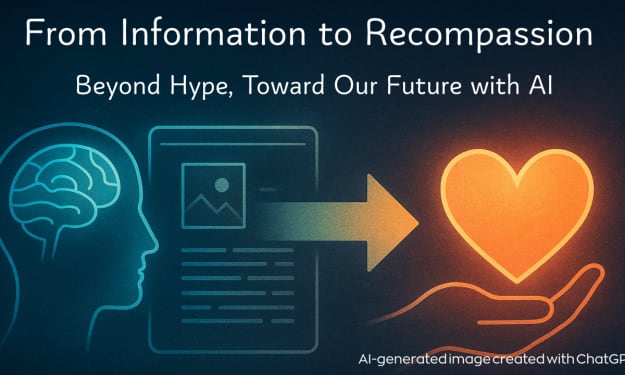
From Information to Recompassion: The Future of Information
Is this the worst timing in the AI hype cycle? When we talk about the future of AI, the term “hype cycle” often comes up. New technologies rise to a “peak of inflated expectations,” then fall into a “trough of disillusionment,” and eventually settle into practical uses. I sometimes call this wave, half in jest, the “bubble cycle.”
By Satoshi Orimoabout a year ago in Futurism
The AI Awakening: How Australia is Becoming the Unexpected Powerhouse of Generative Intelligence. AI-Generated.
In the digital corridors of Sydney's business district, something extraordinary is happening. Lawyers are drafting contracts with AI assistants, creative agencies are producing stunning visuals in minutes instead of hours, and healthcare researchers are accelerating drug discovery by years, not decades. This isn't science fiction—it's the reality of Australia's generative AI revolution, and it's transforming the nation faster than anyone predicted.
By Amyra Singhabout a year ago in Futurism
Satellite: Orbiting Future
Auther Name Hazratullah From the earliest days of human curiosity, people have looked at the night sky with wonder. Stars twinkled, planets shifted, and the moon glowed steadily, but no one could have imagined that one day humanity would place its own artificial stars into orbit. These human-made objects, known as satellites, have revolutionized the way we communicate, protect our nations, and explore scientific frontiers. They are not just pieces of metal floating above Earth; they are the silent backbone of modern civilization.
By Asmatullahabout a year ago in Futurism
Google Pixel 10 Pro Review: A Personal Take on Google’s 2025 Flagship
Every year, Google pushes the boundaries of what an Android phone can do, and in 2025, the Google Pixel 10 Pro is their most ambitious device yet. As someone who has followed the Pixel series closely, I was curious to see how Google would balance cutting-edge AI features, a professional-grade camera system, and performance enhancements in this new release. Right out of the box, the Pixel 10 Pro feels premium. It’s built with durable aluminum and Corning Gorilla Glass Victus 2, giving the device both a sleek design and solid protection against daily wear. At 6.3 inches, it’s big enough to feel immersive but still compact enough to be comfortable in one hand. Display That Shines (Literally) One of the most noticeable upgrades is the Super Actua display. With a peak brightness of 3,300 nits, I had no trouble using the phone outdoors under bright sunlight. Scrolling feels buttery smooth thanks to the 120 Hz refresh rate, which makes everything from social feeds to mobile games look more fluid. For people who spend hours on their phones each day, the display also feels surprisingly easy on the eyes. Watching videos in HDR or editing photos is a treat—it’s vibrant without looking oversaturated. Performance and Everyday Use Under the hood, Google has equipped the Pixel 10 Pro with its Tensor G5 chip. Paired with 16 GB of RAM, it handles multitasking effortlessly. Jumping between a video call, browsing, and editing photos didn’t cause a single hiccup. The 128 GB storage might not satisfy heavy media collectors, but for most people, it’s plenty. What I personally appreciate is how optimized the software feels. The Pixel 10 Pro runs on Android 16, which is clean, intuitive, and free from the bloatware you often see on other phones. Regular Google updates also mean long-term support and security, which gives peace of mind. Unlocked Freedom A subtle but important feature is that the phone comes unlocked. That means you’re not tied to a single carrier contract. Whether you’re on Google Fi, Verizon, T-Mobile, AT\&T, or another major provider, the Pixel 10 Pro just works. For frequent travelers or anyone who likes the flexibility of switching networks, this is a huge plus. The Camera Experience The Pixel camera has always been one of Google’s strongest selling points, and the Pixel 10 Pro raises the bar yet again. The 50 MP main sensor delivers crisp and detailed shots, even in low light. Night photography, in particular, feels effortless—where other phones struggle, the Pixel simply adapts. The 100x Pro Res Zoom is another standout. While most phones exaggerate their zoom features, this one feels surprisingly usable. I tried zooming in on distant buildings, and the details stayed sharp enough to impress. For video creators, the ability to shoot in 8K is exciting. While most people don’t own an 8K display yet, shooting in this resolution means more flexibility for cropping and editing later. Combine that with super steady stabilization, and you’ve got a phone that rivals professional gear. AI That Actually Feels Useful The buzzword in 2025 is AI, and Google’s new Gemini AI is the centerpiece here. Unlike basic voice assistants, Gemini feels more like having a smart partner in your pocket. You can ask it to brainstorm ideas, summarize notes, or even identify objects through the camera in real-time. One feature I found surprisingly fun was Gemini Live. Instead of typing, you can hold natural conversations with your phone. It’s like having a mini collaborator who helps you plan trips, organize thoughts, or get quick answers without digging through menus. Durability and Daily Confidence Durability often gets overlooked in reviews, but it matters when you’re investing in a flagship. Between the aluminum body and Gorilla Glass Victus 2, the Pixel 10 Pro feels built to last. I’m not saying it’s indestructible—no phone is—but it does inspire confidence when you accidentally drop it on a desk or slide it into a crowded bag. ## 5G and Connectivity Of course, the Pixel 10 Pro supports 5G, which is now standard in 2025. Downloading large files or streaming in high resolution is quick and seamless. Add in Bluetooth, NFC, and Wi-Fi, and you have all the connectivity options you’d expect in a modern flagship. Why the Pixel 10 Pro Stands Out So, what makes the Pixel 10 Pro special compared to other phones on the market? For me, it comes down to a few key things: 1. AI integration that feels practical, not gimmicky. 2. Professional-level camera system with true usability, even at extreme zooms. 3. Durability and display quality that make it both tough and enjoyable to use daily. 4. Unlocked flexibility to choose any carrier without restrictions. 5. Google’s clean Android experience, free of unnecessary extras. While there are other excellent Android phones out there, the Pixel 10 Pro feels like the most complete package for 2025. Final Thoughts The Google Pixel 10 Pro isn’t just another yearly upgrade—it’s a thoughtful device that blends AI, design, and performance into a single package. If you’re someone who values photography, seamless software, and durability, this phone is worth considering. Of course, no phone is perfect. Some may find the base 128 GB storage limiting, and others might prefer a larger screen option. But overall, the Pixel 10 Pro strikes a near-perfect balance between power and practicality. You can find additional insights on my profile page.
By NextGen Mobile Techabout a year ago in Futurism
The Impact of AI on the Future of Jobs: What You Need to Know
Introduction Artificial Intelligence (AI) is no longer just a buzzword. It is a reality that is transforming how industries operate, how businesses function, and most importantly, how jobs are created and reshaped. From automating mundane tasks to revolutionizing entire sectors, AI is slowly but steadily influencing the labor market. While many fear job displacement due to automation, others see AI as an opportunity to enhance human productivity and create new, innovative job roles. In this article, we will dive deep into how AI is affecting the job market, what future trends we should expect, and how you can prepare yourself for the inevitable shift. --- The Rise of AI in the Workforce AI is not just an emerging technology—it's already embedded in various aspects of the workforce. Automation, predictive analytics, and machine learning algorithms are enhancing industries like manufacturing, retail, healthcare, and even financial services. In fact, many companies have already implemented AI-driven systems to streamline processes and reduce the need for human intervention in tasks that are repetitive or data-intensive. One prime example of AI’s impact can be seen in manufacturing. Automated robots are now capable of assembling products faster, more accurately, and with fewer errors than humans. These robots not only perform physical tasks but are also integrated with machine learning systems that allow them to learn from experience and improve their performance over time. In sectors like customer service, chatbots powered by AI are replacing call center agents. These bots can resolve customer issues 24/7, provide personalized recommendations, and even predict customer preferences based on past data. While this may sound like job elimination, AI systems need constant monitoring, upgrading, and refinement, creating jobs in AI oversight and support. --- Jobs That Are Most Vulnerable to AI While many see AI as a force for good, it’s impossible to ignore that certain jobs are at risk of being replaced. The McKinsey Global Institute estimates that up to 800 million workers worldwide could be displaced by 2030 due to automation. Low-skill, repetitive jobs are especially vulnerable. For example, in transportation, self-driving trucks and autonomous vehicles have the potential to replace millions of truck drivers and delivery personnel. The rise of AI in logistics also means that manual inventory management could be replaced by smarter, automated systems. In the retail industry, cashier jobs are also threatened by AI-powered checkouts and self-service kiosks. While these jobs may disappear, they also prompt the creation of new positions that focus on technology implementation, maintenance, and customer experience management. --- Emerging Careers in the AI Era While AI may disrupt some traditional roles, it is also giving rise to a variety of new and high-demand careers. The most notable of these are in the field of data science, machine learning, AI ethics, and cybersecurity. Let’s look at some of the roles you may want to consider as AI continues to evolve: 1. Data Scientists AI relies on vast amounts of data to function, and this is where data scientists come in. These professionals are responsible for collecting, analyzing, and interpreting data to help AI systems learn and make accurate predictions. With AI being implemented across sectors like healthcare, finance, and marketing, the demand for skilled data scientists is skyrocketing. 2. Machine Learning Engineers Machine learning engineers design algorithms that allow AI systems to improve over time without being explicitly programmed. They build the infrastructure for AI systems to train, process data, and evolve. Companies are investing heavily in these professionals to ensure their AI systems are optimized for future advancements. 3. AI Ethics Specialists As AI becomes more integrated into society, ethical considerations become more critical. AI systems are only as good as the data they are trained on, and without oversight, biases can emerge. AI Ethics specialists work to ensure that AI systems are fair, transparent, and free from discrimination. This is particularly important in fields like criminal justice, hiring processes, and banking, where algorithmic bias can have serious consequences. 4. AI Trainers Some AI systems require human intervention to teach them how to perform specific tasks. These "AI trainers" teach machines how to make decisions based on real-world examples. In areas like speech recognition, visual recognition, and natural language processing, AI trainers work to provide feedback that helps the system improve its performance. 5. Cybersecurity Experts for AI Systems As AI becomes more widespread, the need to secure these technologies increases. AI systems handle sensitive information and are prone to vulnerabilities that can be exploited by cybercriminals. This has led to a growing demand for cybersecurity professionals who specialize in safeguarding AI-driven systems. --- How AI is Transforming Existing Jobs One of the most interesting things about AI is that it doesn’t just eliminate jobs—it can enhance them. AI tools can assist professionals in sectors like healthcare, marketing, and education, allowing them to focus on more complex, creative, and human-centric tasks. In healthcare, AI tools help doctors analyze medical images and predict disease outbreaks, making diagnosis faster and more accurate. Doctors, however, are still required to provide the human touch, make judgment calls, and interact with patients in ways that AI cannot. In marketing, AI tools help brands predict consumer behavior, segment audiences, and create personalized advertisements. But marketers still need to craft compelling narratives and create engaging content that resonates with their audience. In education, AI-powered platforms assist teachers in tracking students’ progress, identifying learning gaps, and personalizing lesson plans. But teachers will always be essential in providing mentorship, encouragement, and shaping the social-emotional development of their students. In these examples, AI doesn’t replace jobs—it changes the nature of work, making professionals more efficient and allowing them to focus on higher-level tasks. --- The Skills You Need to Succeed in the AI Era As AI continues to reshape the job market, workers must adapt. The future workforce will need a combination of technical and soft skills to thrive. Some of the most important skills include: 1. Technical Skills: Familiarity with AI technologies such as machine learning, natural language processing, and deep learning will become increasingly important. Professionals will need to be comfortable working with AI tools and platforms. 2. Creativity and Problem-Solving: AI can analyze data, but it cannot innovate in the same way humans can. Creativity, problem-solving, and the ability to think critically will remain highly valued. 3. Emotional Intelligence (EI): As AI takes over more technical and routine tasks, human workers will need to focus on areas where they excel—such as empathy, teamwork, and communication. These "soft skills" will become more valuable as automation increases. 4. Lifelong Learning: The rapid pace of technological advancements means that workers must continually upskill and adapt to new tools. A mindset of lifelong learning will be critical for those who want to stay relevant in the job market. --- Conclusion: Embrace the Future with AI The impact of AI on the future of jobs is both exciting and challenging. While some jobs will undoubtedly be lost, others will be transformed, and new opportunities will arise. As AI continues to advance, it’s essential for workers to stay informed, adaptable, and prepared for the changes ahead. To thrive in the AI era, individuals should focus on developing a blend of technical expertise and interpersonal skills. Embracing AI as a tool for enhancing human productivity—not replacing it—will ensure that workers remain relevant, resilient, and ready for the workforce of tomorrow.
By Abubakar Khanabout a year ago in Futurism
DARPA Achieves Breakthrough in Wireless Power Transmission: The Future of Energy Delivery
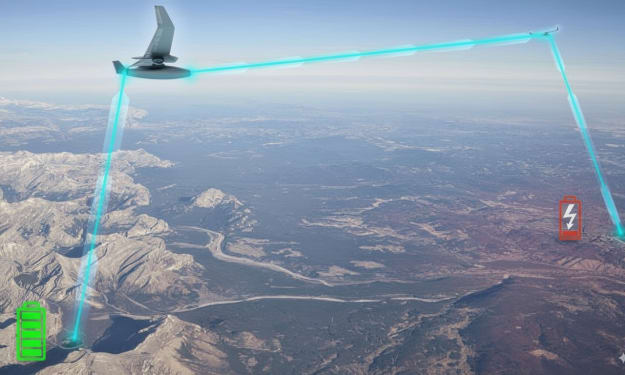
In a revolutionary development, DARPA’s Persistent Optical Wireless Energy Relay (POWER) program has successfully demonstrated the ability to transmit electricity over long distances without traditional wires. This landmark achievement signals a potential paradigm shift in how energy could be delivered in the future, especially in challenging or remote environments. DARPA’s POWER Program: A Glimpse into the Future The POWER program is designed to push the boundaries of wireless energy transmission. In recent tests conducted at the U.S. Army's White Sands Missile Range in New Mexico, DARPA engineers managed to transmit over 800 watts of power across a distance of 8.6 kilometers (approximately 5.3 miles) using a highly focused laser beam. This experiment not only established a new record in optical power beaming but also demonstrated the practical feasibility of long-distance wireless energy transfer. Unlike conventional methods that rely on copper wires, the POWER system converts electricity into laser light. This laser beam is transmitted through the air and captured by specialized photovoltaic receivers that convert the light back into usable electricity. The process is analogous to a "Wi-Fi network for power," enabling energy to be sent precisely and efficiently without physical cables. How the Technology Works The POWER system utilizes high-intensity lasers to transmit electrical energy. Here's a closer look at the process: 1. Conversion of Electricity to Laser Light: The initial step involves converting electrical energy into a tightly focused laser beam. This laser serves as the medium through which energy will travel. 2. Transmission through the Air: The laser beam moves through the atmosphere toward the target receiver. The focus and precision of the beam are crucial to minimize energy loss. 3. Conversion Back to Electricity: At the receiving end, specialized photovoltaic cells capture the laser light and convert it back into electricity, ready for use in powering devices, equipment, or systems. This process represents a breakthrough in energy transmission, offering a solution where conventional electrical infrastructure is impractical. Potential Applications of Wireless Power While the POWER technology is not aimed at replacing copper wiring in everyday homes, its applications in specialized sectors are vast and transformative. Drones and Unmanned Aerial Vehicles (UAVs): One of the most promising uses is powering drones mid-flight. Continuous energy supply can significantly extend operational duration, reducing the need for frequent landings and battery replacements. This could open new possibilities for long-range drone deliveries, aerial mapping, and surveillance. Disaster Response: In emergency scenarios where infrastructure is damaged, wireless power can restore electricity to essential systems, supporting rescue operations and communications. Imagine relief teams deploying in areas affected by hurricanes, earthquakes, or wildfires and being able to power medical equipment, communication devices, and lighting without waiting for damaged power lines to be restored. Remote Sensors and Research Stations: Remote monitoring equipment often relies on bulky batteries or limited solar power. Wireless energy could provide a continuous power source, enabling longer-term and more reliable data collection in extreme environments, such as polar regions, deserts, or deep forests. Military and Tactical Operations: Forward operating bases and other military installations in remote locations can benefit from a wireless energy supply, reducing dependency on fuel convoys and vulnerable power lines. This capability can also support autonomous systems like unmanned ground vehicles and tactical communication hubs. Space and High-Altitude Platforms: Looking further ahead, the technology could be adapted for transmitting power from high-altitude platforms or even satellites to Earth-based receivers, offering a futuristic vision of space-based solar power. Overcoming Challenges Despite the groundbreaking potential, several challenges must be addressed for POWER to achieve widespread deployment: Atmospheric Interference: Weather conditions such as fog, haze, or dust can scatter the laser beam, reducing transmission efficiency. Continuous research is focused on mitigating these effects, potentially through adaptive optics or signal correction technologies. Energy Conversion Efficiency: Converting electricity to laser light and then back to electricity inevitably involves energy loss. Optimizing the conversion process remains a key focus, with research exploring more efficient laser diodes and advanced photovoltaic receiver designs. Safety Considerations: High-power lasers pose significant safety risks, particularly to human eyes. Advanced safety protocols, automatic beam shutoff systems, and secure transmission zones are being developed to ensure safe operation in all conditions. Scalability and Cost: Expanding this technology to support larger energy loads or multiple recipients will require further innovation in both cost-effective hardware and system management. Future Prospects Looking ahead, DARPA envisions enhancing the POWER system with airborne relay pods stationed on aircraft or high-altitude platforms. These pods would intercept and relay the laser beam, allowing multi-hop transmission over much greater distances. The potential range could extend up to 200 kilometers, providing a persistent energy source for drones, remote bases, and other specialized operations. By creating a network of relay nodes, energy could be transmitted continuously and reliably over challenging terrain without relying on traditional electrical grids. This opens possibilities for new applications in defense, research, disaster recovery, and even commercial sectors. Commercial Delivery and Logistics: Companies could explore wirelessly powering electric delivery drones or automated logistics vehicles, reducing downtime and extending operational efficiency. Smart Cities and IoT Devices: The future integration of wireless energy networks could provide supplemental power to sensors, streetlights, and IoT devices, especially in areas where cabling is costly or difficult to implement. The SEO Advantage and Human-Centric Perspective For platforms like Vocal Media, presenting this story with an emphasis on innovation, practicality, and future applications can engage readers effectively. Key SEO-friendly terms include "wireless power transmission," "DARPA POWER program," "laser energy transfer," "remote energy delivery," and "drone wireless charging." Integrating these keywords naturally throughout the article helps optimize visibility on search engines. Conclusion DARPA’s POWER program represents a major leap forward in the field of wireless energy transmission. By successfully beaming over 800 watts of power across 8.6 kilometers, the program demonstrates that long-distance, wire-free electricity delivery is not just theoretical but achievable. Although widespread adoption in residential or commercial sectors may still be years away, the implications for specialized applications—such as drones, disaster relief, and remote research—are profound. As the technology matures, we may witness a new era where electricity can be transmitted like data—instantly, wirelessly, and over vast distances. The POWER program is not just an experiment; it is a glimpse into the future of energy delivery, redefining what is technically possible and opening doors to applications that were once considered science fiction.
By Tech Horizonsabout a year ago in Futurism
Charging Ahead: The Electric Revolution Reshaping Australia. AI-Generated.
The Land Down Under is experiencing an electric awakening that's reshaping not just how Australians drive, but how they think about transportation, sustainability, and the future. What started as a modest $16.2 billion market in 2024 is now on track to explode into a staggering $171.6 billion industry by 2033—a transformation that represents one of the most dramatic shifts in Australian automotive history.
By Amyra Singhabout a year ago in Futurism
The Golden Mirage Made Real: Why the World's Wealthy Are Betting Billions on Dubai
The sun sets over the Arabian Gulf, casting a liquid gold path from the horizon to the iconic silhouette of the Burj Al Arab. Below, on a private beach, a Russian tech entrepreneur sips a coffee, finalizing a property deal on his phone. In a penthouse overlooking the Dubai Marina, a Chinese e-commerce magnate watches the yachts glide by, her assets securely growing in a tax-free environment. Meanwhile, in the sleek offices of the Dubai International Financial Centre (DIFC), a British fund manager is structuring a new investment vehicle for a cohort of European clients who see not just a city, but a strategic global hub. This is not a scene from a futuristic film; it is the daily reality of Dubai, a metropolis that has meticulously engineered itself into the ultimate sanctuary for the world’s millionaires and billionaires. The flow of wealth into this Emirati city-state is a torrent, not a trickle. But why? What alchemy has transformed a modest trading port into a magnetic nexus for global capital? The answer is not a single factor, but a masterfully constructed ecosystem of opportunity, security, and ambition. The Foundation: A Tax-Free Oasis in a Turbulent World For any high-net-worth individual, the first and most potent lure is Dubai’s fiscal policy. In a world where governments increasingly scrutinize wealth, Dubai offers a breathtakingly simple proposition: zero percent income tax, zero percent capital gains tax, and zero percent tax on personal dividends or inheritance. Imagine keeping every single dollar of profit from a lucrative exit, every dirham of dividend from a massive investment portfolio, and every penny of rental income from a global property empire. This is not a loophole; it is the law. For entrepreneurs and investors from high-tax nations in Europe, North America, and Asia, this represents not just an increase in wealth, but a fundamental liberation of capital. It allows for accelerated growth, aggressive re-investment, and the preservation of family wealth across generations in a way that is nearly impossible elsewhere. This fiscal haven is anchored by a stable political climate. While other global financial centers can be subject to political volatility, Dubai, as part of the United Arab Emirates, offers remarkable stability. Its leadership operates with a long-term, business-first vision, famously turning ambitious blueprints (like palm-shaped islands or a museum district) into tangible reality with staggering speed. For the wealthy, this predictability is as valuable as the tax benefits. They are not just investing in assets; they are investing in a vision of the future that is consistently delivered. The Brick-and-Mortar Dream: Real Estate as a Trophy and a Tool Dubai’s skyline is a testament to its love affair with prime real estate. For millionaires, property here is more than just a solid asset; it’s a multi-purpose tool. Firstly, it’s a safe-haven investment. Freehold ownership laws allow foreigners to own property outright in designated areas, granting them a tangible, valuable asset in a stable jurisdiction. The property market, while cyclical, has shown strong long-term appreciation, offering significant capital growth potential. Secondly, it’s a lucrative income stream. Dubai’s status as a global tourism and business hub ensures a constant demand for high-end rental properties. Yields, particularly in prime locations like Downtown Dubai or Palm Jumeirah, often outperform those in London, New York, or Hong Kong. Thirdly, and perhaps most importantly, it’s a gateway to residency. The UAE’s Golden Visa program has been a game-changer. By investing a minimum of 2 million AED (approximately $545,000) in property, investors can secure a long-term, renewable residency visa for themselves and their families. This visa provides unparalleled freedom: the right to live, work, and study in the UAE, and comes with the perks of visa-free travel to countless countries. It is a passport to a lifestyle of global mobility and security. A Crossroads of Continents: The Strategic Hub Location is everything. Dubai sits at the crossroads of Europe, Asia, and Africa, making it the perfect logistical and business base for anyone with global interests. Its world-class airports, particularly Dubai International (DXB), connect it to over 240 destinations non-stop. A CEO can have meetings in Mumbai, London, and Singapore all in the same week with minimal jet lag. This connectivity is bolstered by state-of-the-art infrastructure—some of the best ports, highways, and telecommunications networks on the planet. For the wealthy investor, this means seamless operation of international businesses. It’s a place to park their wealth, their family, and their headquarters, all while having the entire world within a comfortable flight’s reach. The Luxury Lifestyle: Living the Dream Wealth is not just about accumulation; it’s about enjoyment. Dubai caters to this desire with a hedonistic precision that is unmatched. It is a city built for pleasure and prestige. Think of the finest restaurants helmed by celebrity chefs, luxury boutiques in colossal, air-conditioned malls, and pristine, manicured beaches. Think of world-class golf courses carved from the desert, five-star hotels that redefine opulence, and a calendar brimming with premier sporting and cultural events like the Dubai World Cup horse race or the Art Dubai fair. For the family, it offers top-tier international schools, pristine healthcare facilities, and an environment that is exceptionally safe. The crime rate is astonishingly low, allowing children to play freely and families to walk at any hour without a second thought. This combination of luxury and security is an irresistible package for those who can afford it. Diversification and Future-Proofing Astute investors never put all their eggs in one basket. For many Western and Asian millionaires, Dubai represents a crucial strategic diversification away from traditional markets. It’s a bet on the rising economic influence of the Middle East and the broader Global South. Furthermore, Dubai is future-proofing itself. While built on oil wealth initially, it has aggressively diversified its economy into sectors like tech, renewable energy, and finance. Initiatives like the Dubai Metaverse Strategy and its push to become a global hub for artificial intelligence signal to investors that the city is not resting on its laurels. It is positioning itself at the forefront of the next economic revolution, inviting wealth to come and be part of it. The Intangible Allure: The Brand of Success Finally, there is an intangible, yet powerful, allure: the Dubai brand. Owning a property here, having a Dubai residency, and participating in its high-octane social scene is a symbol of having "made it." It’s a statement of global citizenship, of success, and of a place among the world’s elite. It is, in many ways, the world’s most luxurious country club, with a skyline for its walls and the world as its doorstep. The story of millionaires investing in Dubai is the story of a city that identified the desires of the ultra-wealthy and built a reality to meet them. It offered them a deal too good to refuse: keep your money, grow it in safety, enjoy a life of unparalleled luxury, and secure a future for your family, all from a dynamic hub at the center of the world. The golden mirage of the desert has, through vision and will, been made utterly real. And the world’s wealthy are not just visiting; they are moving in, and they are staying.
By Danyal Hashmiabout a year ago in Futurism
Did Ancient Aliens Shape the Early Civilizations of Earth?
A Question Buried in Stone For thousands of years, human beings have looked up at the stars and wondered if we were alone. But what if the answer is not simply written in the sky, but carved into the stone of our own planet?
By The Secret History Of The Worldabout a year ago in Futurism
How Artificial Intelligence is Transforming Marketing and SEO.
Artificial intelligence (AI) has rapidly become a cornerstone of modern marketing and search engine optimization (SEO). Today’s marketing teams use AI-driven tools to automate repetitive tasks, analyze vast datasets, and deliver personalized experiences to customers like never before. From optimizing ad campaigns to refining keyword strategies and generating content, AI is enhancing nearly every aspect of digital marketing.
By Sayed Zewayedabout a year ago in Futurism