future
Exploring the future of science today, while looking back on the achievements from yesterday. Science fiction is science future.
If Anyone Builds It, Everyone Dies
5 Disturbing Truths From the Book Claiming AI Will End Humanity Last year in Alameda, California, city officials halted a scientific experiment designed to combat global warming. The plan was to spray microscopic salt particles into the clouds to make them brighter and reflect more sunlight. Fearing unintended consequences for the regional ecosystem, they shut it down.
By Francisco Navarroabout a year ago in Futurism
The Future of GPT-5: Revolutionary Leap or Evolutionary Step?
As the artificial intelligence landscape continues to evolve at breakneck speed, the tech world holds its collective breath for the next major milestone: GPT-5. Following the groundbreaking releases of GPT-3 and GPT-4, which fundamentally transformed how we interact with AI systems, GPT-5 represents not just another iterative improvement, but potentially a paradigm shift that could redefine the boundaries of machine intelligence.
By noor ul aminabout a year ago in Futurism
The Future of Public Spaces in a Digital Age
The spaces we share every day: parks, town squares, libraries, train platforms — are not fading into the past. They are still here, still part of the city’s rhythm. What’s changed is how they fit into our lives. As more of what we do happens online, these physical places are quietly learning how to matter in new ways.
By Timo Slacovicabout a year ago in Futurism
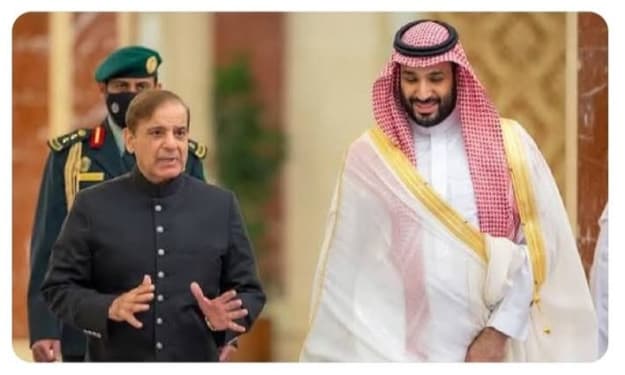
A Historic Pact: Pakistan and Saudi Arabia Unite in Mutual Defense
On September 17, 2025, Pakistan and Saudi Arabia signed a landmark mutual defense agreement, formalizing a strategic alliance that echoes through the geopolitics of South Asia and the Middle East. The pact, officially dubbed a “Strategic Mutual Defense Agreement,” binds the two countries in a commitment that an attack on one will be regarded as an attack on both. --- Background and Context This agreement takes place amid growing uncertainty over regional security, especially in light of recent events such as an Israeli airstrike in Doha, Qatar, which targeted leaders of Hamas. The attack has stirred deep unease among several Arab states. Saudi Arabia has long maintained close defense, religious, and economic ties with Pakistan. Over the decades, Pakistan has been a key partner in securing Saudi Arabia’s interests, including helping to guard the holy cities, training Saudi forces, and participating in military exercises. For Saudi Arabia, the pact reflects growing concerns about the reliability of existing security guarantees, especially those that depend on external powers. Gulf states have in recent years increasingly explored diversification of their strategic alliances. --- Key Provisions The core clause of the agreement states that “any aggression against either country shall be considered an aggression against both.” The agreement speaks of “developing aspects of defense cooperation” and strengthening “joint deterrence” against any aggression. It is described by officials as comprehensive, encompassing all military means deemed necessary depending on the threat. There is some ambiguity, but the discussion of Pakistan being a nuclear-armed state has led analysts to speculate whether Pakistan’s nuclear deterrence could play a role in this pact. However, the pact does not explicitly mention any particular third country as a target, nor does it publicly commit Saudi Arabia to act in every situation; officials emphasized that the agreement is not in reaction to specific events or adversaries. --- Strategic Significance The timing, language, and content of this agreement carry multiple messages. 1. Deterrence Signal: By tying their security so closely together, both Pakistan and Saudi Arabia aim to deter potential aggression from external actors. For Saudi Arabia, it amplifies its defensive posture at a time of rising tensions—such as Israeli strikes, worries over Iran’s nuclear program, and fluctuating US involvement in the region. 2. Nuclear Implications: Pakistan is one of the few nuclear-armed states in the region. The pact has prompted discussion about whether Pakistan’s nuclear “umbrella” might extend to Saudi Arabia under certain circumstances. While nothing has been confirmed, the mention of “all defensive and military means” is taken by many as opening that possibility. 3. Regional Realignment: This agreement is a strong indicator of shifting defense alignments. Gulf states, including Saudi Arabia, have traditionally depended heavily on the United States for security. That reliance appears to be under reconsideration—either complemented or backed up by alternative alliances. 4. Message to Multiple Parties: While Israel’s recent operations (especially in Qatar) appear to have been a trigger, the agreement is also likely aimed at signaling to other regional and global players, including India, Iran, and Western powers. For instance, India has responded carefully, saying it will study the implications of the deal for its national security and regional stability. --- Reactions and Implications India: New Delhi has acknowledged the agreement and underscores that it formalizes what has often been informal cooperation. Officials in India are assessing how this pact might affect India’s strategic calculations, especially given its own shared history and rivalries with Pakistan. Bilateral trade between India and Saudi Arabia is large and growing, which may complicate any fully aligned support with Pakistan. Saudi Arabia: Riyadh has been cautious in its public statements, stressing that the pact is not a response to any specific country or threat. Saudi officials also insist the kingdom’s ties with India remain strong. Pakistan: Islamabad likely views this as a major diplomatic win. Not just because of the security guarantee, but also due to its symbolic importance—reinforcing Pakistan’s role in regional security affairs and elevating its strategic partnership with one of the richest and most influential states in the Arab world. Other Regional Players: Iran, other Gulf monarchies, and smaller states may interpret this alliance in different ways—either as a strengthening of Sunni-led security frameworks or as potential escalatory. The dynamics with Iran, in particular, will be of interest, given Saudi Arabia’s somewhat eased tensions with Tehran in recent years but continuing strategic competition. --- Challenges, Caveats, and Unknowns Implementation: The strength of any mutual defense pact lies not only in its text but in its execution. Questions remain: How fast can joint forces mobilize? What rules of engagement will apply? Under what conditions will Saudi Arabia act militarily if Pakistan is attacked—and vice versa? Nuclear Ambiguity: While there is speculation about Pakistan’s nuclear deterrent being part of the arrangement, there is no public confirmation that Saudi Arabia will formally be included under Pakistan’s nuclear umbrella. Such arrangements carry massive diplomatic risk. Diplomatic Balancing: Saudi Arabia also has ties with many countries that may react poorly to this pact. Ensuring that economic, trade, and diplomatic relationships—especially with India and Western powers—are not strained will require delicate balancing. Regional Spillovers: Any perception of escalation could heighten tensions—especially with Israel, Iran, or over issues in Yemen and the broader Gulf. There is a risk of misinterpretation or overreaction from other states. --- Conclusion The Strategic Mutual Defense Agreement between Pakistan and Saudi Arabia is a consequential move—both deeply symbolic and potentially transformative. It reflects not only shared strategic interests and long-standing ties, but also a changing regional security architecture where countries are reconsidering dependencies and aligning more closely based on perceived threats. For Pakistan, the deal reinforces its security assurances and elevated status in regional affairs. For Saudi Arabia, it provides a stronger deterrent and a reaffirmation of defense ties beyond its usual alliances. For the region, the pact adds a new dimension—one that could either contribute to stability, through deterrence and shared responsibility, or heighten tensions, depending on how it is managed. As with many such pacts, much will depend on clarity, credible commitment, and how external actors respond. The coming months and years will test whether this agreement remains a declaration of solidarity or becomes a central pillar of a new strategic order in the Muslim world.
By Hasbanullahabout a year ago in Futurism
Few Minutes with Elon Musk
In life, one of the most powerful truths to remember is this: never show fear when you are among people. Fear makes others see you as smaller than you are. Courage, even if quiet and calm, commands respect. When you hold yourself with confidence, people are more likely to treat you as an equal, no matter their status.
By Life Hopesabout a year ago in Futurism
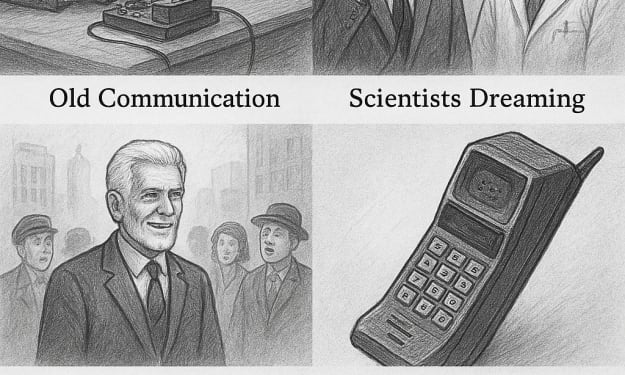
The Call That Changed the World
In today’s world, imagining even a single day without a mobile phone seems nearly impossible. From the moment we wake up to the time we go to sleep, mobile phones have become an inseparable part of our lives. But this facility, which we now take for granted, was once just a dream. Let’s explore how the mobile phone was invented, who made it possible, and how it has transformed the world forever.
By Hazrat Bilalabout a year ago in Futurism
Google VaultGemma: The Future of Privacy-Preserving AI Language Models
With growing concerns around data privacy in artificial intelligence, Google has taken a huge leap forward with VaultGemma, a new privacy-focused language model that is rewriting the rules of AI development. VaultGemma is a large language model (LLM) built from the ground up using state-of-the-art differential privacy techniques, ensuring sensitive data is kept secure during training. This revolutionary model promises to safeguard personal and confidential information without sacrificing the powerful capabilities expected of modern AI systems. What is VaultGemma? VaultGemma is a 1-billion parameter AI language model, representing the largest open-weight LLM ever trained from scratch with formal differential privacy guarantees. Unlike many previous models that faced challenges with data leakage or memorization of sensitive information, VaultGemma integrates privacy at its core by limiting what the model can remember from any single piece of training data. This breakthrough significantly reduces the risk of extracting private details or confidential information through model outputs.By leveraging differential privacy—an advanced mathematical framework—VaultGemma ensures that no individual data point substantially influences the model’s behavior. The training process incorporates carefully calibrated noise and clipping techniques during optimization, protecting training sequences that consist of 1024 tokens. This method guarantees that VaultGemma’s responses do not reveal specific facts from any single sequence of training data, providing a formal privacy guarantee defined by rigorous parameters (ε ≤ 2.0 and δ ≤ 1.1e-10). Revolutionary Technical InnovationsGoogle’s AI and DeepMind teams pioneered new scaling laws tailored specifically for differentially private language model training. These laws provide a framework to balance compute resources, privacy levels, and model utility, enabling VaultGemma to perform optimally given the constraints of privacy guarantees. Training this massive model required a cluster of 2048 TPUv6e chips, highlighting the immense computational effort behind this development. Crucially, VaultGemma was trained on a mixture of datasets used previously for Google’s Gemma 2 model—comprising English-language web documents, scientific articles, and code. During preprocessing, documents were split or packed into sequences optimized for privacy training, allowing the model to learn broad language patterns while preventing memorization of sensitive specifics. Tests performed by Google verified that VaultGemma shows no detectable memorization of training data, even when prompted with sequences extracted from the training set. This stands as direct evidence that the privacy techniques are effective in practice, not only theoretically.Performance and Practical ImpactWhile VaultGemma performs brilliantly in terms of privacy, it is important to note that its utility currently trails the cutting edge of AI models without privacy constraints. On academic benchmarks such as ARC-C, VaultGemma scored 26.45 compared to 38.31 by Google’s non-private Gemma-3 1B model. This gap reflects the trade-offs inherent in maintaining rigorous privacy standards, which, though computationally costly, mark a significant step in making privacy-preserving AI viable for real-world use. Google has openly shared VaultGemma’s weights on platforms like Hugging Face and Kaggle, along with a detailed technical report and research paper. This open-source commitment is designed to accelerate innovation in private AI, encouraging researchers and developers worldwide to explore, improve, and deploy models that respect user data privacy at scale.Why VaultGemma Matters NowThe release of VaultGemma comes at a critical time when privacy regulations and public awareness of data protection are tightening globally. Large language models like ChatGPT and other popular AIs have faced criticism for potentially exposing user data during or after training, creating calls for stronger safeguards. VaultGemma sets a precedent by proving that it is possible to build powerful AI systems with built-in privacy protections that can meet regulatory and ethical standards. Google’s approach shows that differential privacy can be integrated successfully into deep learning workflows, offering a blueprint for future model development. Organizations that handle sensitive data—such as in healthcare, finance, and government sectors—stand to benefit from deploying such privacy-respecting tools without compromising AI capabilities. How VaultGemma Advances AI PrivacyStrict Privacy Guarantees: By adhering to formal differential privacy definitions and openly releasing verifiable results, VaultGemma establishes trust and transparency. Open Research Model: Sharing model weights and detailed methodologies invites community collaboration for improving privacy-preserving AI. Balancing Privacy and Utility: While some performance trade-offs exist, VaultGemma demonstrates that these costs are manageable and justifiable for applications prioritizing data protection. A Foundation for Future Innovation: VaultGemma’s methods and scaling laws provide a roadmap for training even larger and more powerful models while safeguarding privacy. ConclusionGoogle’s VaultGemma is a milestone for AI development, marking an essential shift towards privacy-first design in large language models. By rigorously applying differential privacy techniques, Google has crafted a model that meaningfully protects individual data privacy without completely sacrificing capability. This innovation not only addresses urgent privacy concerns today but also paves the way for the next generation of AI systems—responsible, secure, and aligned with modern data protection standards. For businesses, developers, and AI researchers interested in privacy-preserving AI, VaultGemma offers a rare and important resource: a powerful, well-documented, and publicly available model that reframes how privacy and AI can coexist. With VaultGemma, the future of private, safe, and effective AI looks promising. This comprehensive introduction to VaultGemma is optimized for users seeking the latest advancements in AI privacy technology and is crafted to rank highly on search engines by incorporating relevant AI and privacy keywords naturally throughout the article.
By Tech Horizonsabout a year ago in Futurism
WearOS Smartwatch vs. Apple Watch Series 10: Which One Should You Buy in 2025?
Smartwatches are no longer just about telling time — they’ve become lifestyle companions. Whether you’re tracking fitness goals, monitoring your health, or staying connected without pulling out your phone, a good smartwatch can make a huge difference. In 2025, two devices stand out for tech enthusiasts: a premium WearOS smartwatch with a polished stainless steel design and the Apple Watch Series 10, Apple’s most advanced wearable to date.
By NextGen Mobile Techabout a year ago in Futurism
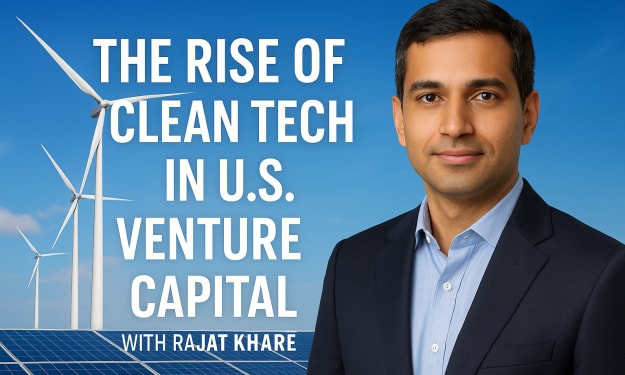
How Policy, Technology, and Investors Like Rajat Khare Are Driving the U.S. Clean Tech Revolution
Clean tech is no longer a an exclusive niche. The US is making a case as the leading source of clean-tech venture capital and this shift is changing the investment strategy, industrial policies and startup plans. The following is a brief and substantiated explanation of why the capital flowing to clean technology as well as the practical obstacles that remain for investors, and how founders should prepare for the coming decade.
By Chris Reviewabout a year ago in Futurism