future
Exploring the future of science today, while looking back on the achievements from yesterday. Science fiction is science future.
Defining the Metaverse…
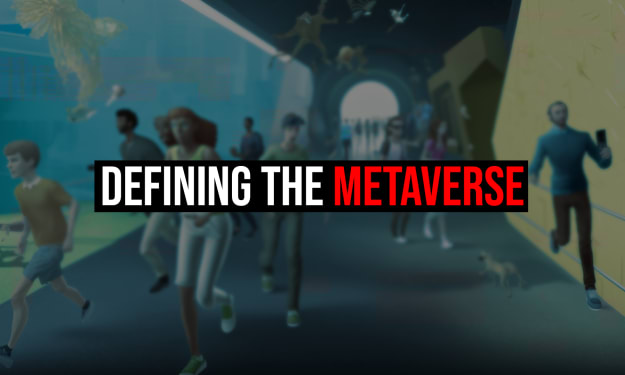
If you didn’t work in the tech industry prior to 2021, the term “Metaverse” might have been unfamiliar to you. But when social media giant Facebook changed its name to “Meta,” there was suddenly a virtual gold rush for NFTs and virtual land. News outlets and blogs covered Mark Zuckerberg’s “metaverse”, though they often misunderstood the term. Zuckerberg was talking about his vision of the Metaverse when changing the company’s name and not a singular virtual world, while at the same time launching Meta’s virtual world platform Horizons. This created a lot of confusion among news outlets and those racing to become knowledgeable on the subject matter to position themselves as subject matter experts. The Metaverse is not just a virtual world; it’s a by-product of the third generation of the internet, an entire connection of platforms at the internet level with the interoperability of digital assets.
By Eugene Capon4 years ago in Futurism
Artificial Intelligence (AI) advancements in computer technology
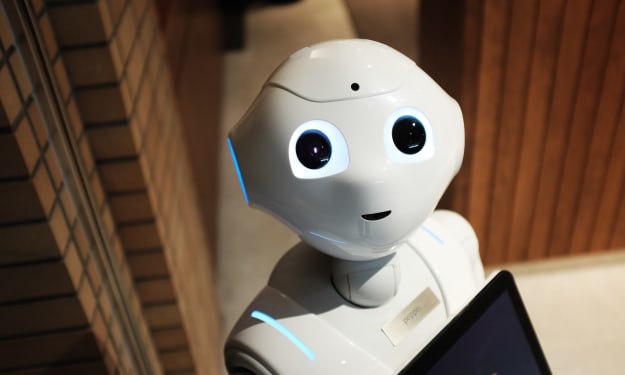
Artificial Intelligence (AI) has rapidly transformed the computer industry, making the impossible possible. AI refers to the development of computer systems that can perform tasks that typically require human intelligence. Over the past few years, AI advancements in computer technology have made significant strides, and it has become a buzzword in the technology industry. This article will explore the latest AI advancements in computer technology and their impact on the world.
By Joel Marks4 years ago in Futurism
How the Sharing Economy is Transforming Business
Chapter 1: Introduction The sharing economy is a rapidly growing sector of the economy that is transforming the way people live and work. It is an economic system where individuals and businesses share resources, goods, and services with each other in order to maximize efficiency and reduce costs. This type of economy is enabled by technology, which allows people to access resources and services quickly and easily. The sharing economy has the potential to revolutionize the way we live and work, and it has already begun to have a major impact on the global economy.
By Kutty Kishore4 years ago in Futurism
The Battle of the Titans: A Must-Read Review of “The Great Debate: Google vs ChatGPT”
Throughout my reading of “The Great Debate: Google vs. ChatGPT” made me think about my own experiences with these two platforms. As the owner of a small business, I have utilized both ChatGPT and Google in my operations, and I have frequently pondered the issue of which platform is truly superior.
By Emil Latumbo4 years ago in Futurism
The Valley of Death
I believe my friend, Greta could have changed the outcome of WWII for Poland. Poland, in 1939, became the rope in a nasty game of tug of war between two mighty military powers, Nazi Germany from the West and the USSR from the East. Although the Polish military was strong in numbers, they did not have the advanced weaponry the Soviets or the Nazis had. Their approach to fighting the invasions was faulty as well, using all-out defensive tactics right in the beginning, rather than biding their time and setting up in advantageously strategic positions to selectively pick off the troops of their invaders The army was almost completely defeated in the first few weeks of the war, leaving their citizens at the mercy of the bloodthirsty enemy armies.
By Tina D'Angelo4 years ago in Futurism
The Future of Technology: 5 Technologies That Will Change Our Lives Forever
I. Introduction Technology has already transformed the way we live, work, and interact with one another. From smartphones and social media to smart homes and self-driving cars, technology has made our lives more efficient, convenient, and connected. However, the pace of technological change shows no signs of slowing down. In the years ahead, there are several emerging technologies that are poised to revolutionize the way we live even further. In this article, we'll explore five technologies that are likely to change our lives forever: Artificial Intelligence (AI), Internet of Things (IoT), Augmented Reality (AR) and Virtual Reality (VR), Blockchain, and Quantum Computing. II. Artificial Intelligence (AI) Artificial Intelligence (AI) refers to the ability of machines to learn, reason, and make decisions like humans. AI is already being used in a wide range of applications, from voice assistants like Siri and Alexa to predictive analytics in healthcare and finance. However, the potential of AI goes far beyond these applications. In the future, AI could be used to automate a wide range of tasks, from driving cars to diagnosing diseases. This has the potential to make our lives more efficient and convenient, but it also raises questions about the impact of automation on jobs and society as a whole. III. Internet of Things (IoT) The Internet of Things (IoT) refers to the network of interconnected devices and sensors that are embedded in everyday objects, from appliances and vehicles to clothing and buildings. IoT devices can communicate with one another and share data, allowing for new levels of automation, efficiency, and control. For example, a smart home might have sensors that can detect when someone enters a room and adjust the temperature and lighting accordingly. In the future, IoT could be used to create smart cities, where everything from traffic lights to public transportation is connected and optimized for efficiency. IV. Augmented Reality (AR) and Virtual Reality (VR) Augmented Reality (AR) and Virtual Reality (VR) refer to technologies that enable users to interact with digital content in immersive and interactive ways. AR overlays digital information onto the real world, while VR creates fully immersive digital environments. Both AR and VR are already being used in entertainment and gaming, but they also have potential applications in fields like education, healthcare, and architecture. For example, AR could be used to create interactive educational content that overlays information onto real-world objects, while VR could be used to create virtual environments for medical training or architectural design. V. Blockchain Blockchain technology is a decentralized digital ledger that records transactions in a secure and transparent way. Each transaction is recorded as a block in the chain, and each block is linked to the previous block, creating an unalterable record of all transactions. Blockchain is best known as the technology behind cryptocurrencies like Bitcoin, but it has potential applications in fields like supply chain management, voting, and identity verification. For example, blockchain could be used to create a secure and transparent supply chain for food and pharmaceuticals, allowing consumers to track the origin and quality of the products they buy. VI. Quantum Computing Quantum computing refers to the use of quantum-mechanical phenomena, such as superposition and entanglement, to perform calculations that are impossible with classical computers. Quantum computers have the potential to solve complex problems in fields like cryptography, chemistry, and materials science. For example, quantum computers could be used to create unbreakable encryption, simulate complex chemical reactions, or design new materials with specific properties. While quantum computers are still in the early stages of development, they have the potential to revolutionize the way we solve some of the world's most challenging problems. VII. Conclusion The five technologies discussed above have the potential to transform our lives in ways that we can only begin to imagine. They offer new levels of automation
By Mystery Writer4 years ago in Futurism
CHATGPT
ChatGPT is a large language model developed by OpenAI, which is a leading research organization focused on advancing AI technology in a safe and beneficial manner. ChatGPT is trained on a vast amount of text data and uses deep learning techniques to understand natural language and generate responses to questions and prompts in a human-like manner. It is capable of answering a wide range of questions and engaging in open-ended conversations on various topics. ChatGPT has been used in a variety of applications, including customer service, language translation, and educational resources.
By Ronny Hamilton4 years ago in Futurism
TIME TRAVEL
Time travel has been a topic of fascination and speculation for centuries. The idea of being able to travel through time and experience different periods in history is something that has captured the imagination of people all over the world. In this blog, we will explore the concept of a time-traveling man and what it would mean to have the ability to travel through time.
By Curiosity Ticket4 years ago in Futurism