fantasy
Celebrating the fantastical. Let your imagination run wild.
Technical Overview of Blockchain
The rise of blockchain has revolutionized digital technology and disrupted conventional data systems. From finance to healthcare and supply chains, blockchain technology stands as a foundation of trust, transparency, and decentralization. In this article, we provide a detailed technical overview of blockchain—breaking down its architecture, key components, and the algorithms that fuel its power.
By Lana Roseeabout a year ago in Futurism
The Art of Illusion: When Fire Meets Magic in the Palm of a Hand
In the mesmerizing image above, a delicate balance of danger and wonder is captured. A hand extends outward, fingers curled as though summoning a force unseen, while four aces hover mid-air—engulfed in flames and trailing smoke as if plucked from a magician’s wildest dream. This photograph doesn’t just depict a moment; it evokes an entire narrative, one that dances between illusion, control, chaos, and the elemental essence of fire. It stands at the intersection of art, magic, and metaphor.
By Fazal Malikabout a year ago in Futurism
Revolution in His Eyes: The Timeless Symbolism of a Rebel’s Roar
Introduction In the heart of any revolution lies not just the chaos of conflict, but the fire of human willpower. Captured in the image above is a powerful moment that encapsulates that spirit: a man mid-battle cry, gun in hand, passion etched into every line of his face. His clothes are rugged, his gear practical, and his stance unmistakably defiant. This is not merely a photo—it is a visual symphony of rebellion, courage, and ideology. Whether staged or real, symbolic or literal, this single frame serves as a tribute to the human drive to resist oppression.
By Fazal Malikabout a year ago in Futurism
The Memory Collector . AI-Generated.
Elias sat alone behind the curved glass partition of his memory clinic, the name glowing in soft blue neon: REMEMBR – Memory Removal & Emotional Relief Services. His office smelled of old wires and lavender air mist, a calming scent designed by corporate psychologists to help clients let go of pain. He tapped his screen, eyes scanning another session log. The day’s last client had walked out twenty minutes ago, slightly dazed but smiling—her heartbreak erased, the pain of a broken engagement now just a hollow in her emotional record. Elias didn’t feel relief. He felt tired. Every day, people came in with grief, trauma, regret. They sat across from him, trusting the tech to erase the unbearable. And it worked. Neural mapping. Emotional disassociation. Targeted deletion. No messy side effects. REMEMBR guaranteed a clean slate. But Elias didn’t delete memories. He collected them. Every session, just before the deletion finalized, he dragged a copy into a hidden encrypted folder. He’d watched hundreds of love stories unravel, seen men cry over lost children, felt the burn of betrayal, the sting of regret. He told himself it was academic curiosity. Maybe even noble. Someone should remember, after all. But the truth was: Elias had no memory of his own. --- Years ago, long before he became a technician, Elias had been a client himself. A full wipe. Voluntary, according to the record. No emotional anchor. No journal entries. No trace of his life before the procedure—just a blank folder labeled Origin: Unknown. He sometimes dreamed of faces he couldn’t place. A woman humming a tune. A field of yellow flowers. Screams behind glass. But every time he woke up, the images vanished, like smoke in wind. So Elias began collecting. Hoping, foolishly, that one day someone else’s memory would feel like his. --- One cold Tuesday evening, the system buzzed with a Priority Client tag. Internal Admin override. Elias blinked. High-clearance clients rarely came in person. The door hissed open and a tall, poised woman entered. Mid-50s. Gray hair twisted into a clinical bun. Sharp eyes. Sharp presence. “Dr. Sylva Maren,” she said. “I’m here for a deletion. Classified. Level Zero protocol.” Elias stood. “Of course, ma’am. May I ask what memory we’re targeting?” She hesitated, then handed him a worn photograph. A boy, no older than five, stood barefoot in a field of sunflowers. Auburn hair, a beaming smile. Joy in his eyes. Behind him, a woman’s shadow reached across the grass. “This,” she said simply. Elias felt something cold crawl up his spine. He nodded and gestured oward the recliner. “You may feel a mild pressure while I initiate the extraction.” The headset activated. Lights blinked across her temples. The transfer began. A flood of data streamed into the interface. But something was wrong. Elias didn’t see fragmented neural impulses or disassociated visuals. He saw himself. --- The memory was crystal clear. A lab, sterile and bright. A young boy crying in a containment room. Dr. Maren standing behind glass. Stern. Distant. The boy screamed, “Mom!” and pounded the window. Technicians in white coats murmured, “Proceed with Phase Two.” The woman’s voice echoed: “Subject Elias showing attachment instability. We’ll begin emotional suppression followed by identity erasure.” Elias’s hands began to tremble. Subject Elias. That’s me. The memory unfolded: years of observation. Controlled affection. Then silence. Then surgery. Neural recalibration. Personality overwrite. Deployment to REMEMBR. Elias wasn’t just a patient. He was an experiment. And the woman now sitting in his chair was the scientist who had engineered his erasure. His mother. --- The memory stream slowed. The system chimed: Ready for deletion. Elias sat frozen. His finger hovered over the delete icon. But he couldn’t do it. He transferred the memory to his private archive, locking it behind biometric security. Then he gently removed her headset. She blinked, dazed. “Was I here for something?” He forced a smile. “Just a routine system check. All done.” She stood, adjusted her coat, and walked out—unburdened, unaware of the guilt she had once carried. Unaware of the son she had chosen to forget. --- Elias sat in the quiet hum of the clinic long after she left. The photograph lay on the desk in front of him. He picked it up, fingers trembling. That boy was him. That joy… his. The sunflowers. The humming song. The mother’s voice. It all came rushing back. The betrayal. The experiments. The loneliness. And yet, buried in all that pain, was something else. Love. Somewhere in those years, she had loved him—even if the science, the ambition, had buried it. --- That night, Elias did something he hadn’t done in years. He walked out of the clinic. No drive. No memories to review. No pain to store. Just the photo in his pocket. He walked to the city edge, where concrete faded into fields. And there, under the moonlight, he found them. Sunflowers. A whole field of them. Not a memory. A beginning.
By Ihsanullahabout a year ago in Futurism
Manifesting Love: A Step-by-Step Spiritual Guide to Attracting a Conscious Partner
You’ve done the healing. You’ve been through the karmic lessons, the almosts, the red flags. Now, you’re ready—not just for love—but for conscious, soul-aligned partnership.
By Great pleasureabout a year ago in Futurism
The last frequency . Content Warning. AI-Generated.
They say the world didn’t end in fire. It ended in silence. No asteroids. No bombs. No alien invasion. Just... sound, fading away. I’ve been here in Station 9 for what I estimate is 287 days. The wall calendar ran out a month ago, and time lost meaning when clocks stopped syncing. No sunrise anymore. Just an eerie red haze, constant and oppressive. The sky looks like it’s bleeding. But I’m still transmitting. Every evening at 19:00, I send the same message into the static: > “This is Elias Ward at Station 9. If anyone can hear this… respond. I am alive. I am listening.” And every evening, I get the same reply: nothing. --- It started slow, at first. The silence. First the birds went quiet. Then dogs stopped barking. Cities hushed. Then came the science: atmospheric dampening. A catastrophic shift in the upper layers of Earth’s atmosphere started choking sound waves. Within weeks, 80% of the planet experienced near-total sound decay. No thunder. No waves. No voices beyond a few feet. It was like someone turned the volume knob on Earth to zero. People panicked. Without sound, communication failed. Technology collapsed. Violence broke out in deaf confusion. And then... extinction began. --- I wasn’t always alone. Julia was with me. My wife. A cellist. A woman whose fingers could tell stories through strings better than any words could. When we left Boston, she begged to bring her cello. I told her we didn’t have space. “I’ll come back for it,” she said, softly. She didn’t. Neither did I. I buried her near Station 9, under the last pine tree still standing. I carved a few notes of her favorite sonata into the bark with my knife. Some nights, I dream of her playing into the void. Even silence can’t erase memory. --- I’m not a hero. I’m a sound engineer who happened to know how to operate shortwave radio. Station 9 used to be a military relay hub. Now, it’s my bunker. My lighthouse. I have water. Solar backup. Cans of beans and rice. But no voice except my own. So I talk to the air. Maybe it’s madness. Maybe it’s hope. But either way, I transmit. --- Yesterday, something changed. At 19:06, right after my usual message, I heard it: a flicker. A sound. A weak pulse of signal through the static. My hands froze. My heart raced like it hadn’t in months. And then I heard it: > “...Station... 2... hear... alive…” Three seconds. That’s all. But it was enough. --- Tonight, I sit up straighter. I widen the band. Boost the range. I write a new message. > “This is Elias Ward at Station 9. I received your signal. Please respond. I am alive. I am listening.” At 19:00, I transmit. And I wait. Each second feels like an hour. Every hiss of static taunts me. Then—at 19:08—a voice. > “Elias... this is Mari... Station 2... I’m here.” I drop the mic. I sit in stunned silence. Another voice. Another human. Alive. --- We talk for twenty minutes. Her voice is grainy but full of warmth. Mari. She’s holed up in an old airport control tower three hundred miles west. Her generator is dying. She’s down to powdered soup and bottled rain. But she’s surviving. She laughs when I tell her about my beans. She hasn’t laughed in months either. Before she signs off, she says: > “Let’s find each other.” I don’t sleep that night. I lie on the floor, staring at the rusted ceiling, heart racing. The silence feels less heavy. --- In the morning, I pack. Two bags: one with food, water, gear. One with my radio. I take the old compass, a flare gun, a solar map, and a photo of Julia. Her smile feels like fuel now. I look back at Station 9 one last time. It served me well. But now it’s just bricks and wires. Hope is west. --- The journey won’t be easy. The roads are cracked. Storms rage without warning. Sometimes, silence screams louder than sound ever did. But with every step, I replay Mari’s voice in my head. > “You’re not alone.” I cling to that sentence like rope. --- Day three. I find a broken car buried in sand. There’s an old radio inside. I hook it to my frequency. Static. Then a crackle. > “Elias... you still out there?” I weep. It’s the first time I’ve cried in months. Because someone’s waiting for me. Because this world, though broken, still carries echoes. --- Maybe we were never meant to survive forever. Maybe this silence is nature reclaiming its balance. But as long as two voices remain, something of us remains too. The world may be ending. But I am still transmitting. And someone is listening.
By Ahmad Khanabout a year ago in Futurism
I Made My First $100 Online While Crying in My Parents' Basement
"I Made My First $100 Online While Crying in My Parents' Basement" Genre: Memoir / Emotional Survival I was 27 years old, broke, and living in my parents' basement—the same one I used to play hide and seek in as a kid. But this time, there was no game, no giggles, and nowhere left to hide.
By waseem khanabout a year ago in Futurism
The Sacred Scent: The Timeless Mystery and Majesty of Oudh (Agarwood)
What is Oudh? “عود کیا ہے؟” — What is Oudh? Oudh, also known as Agarwood, is no ordinary wood. It is a dark, resinous heartwood that forms inside Aquilaria trees when they become infected with a specific type of mold. But the story of Oudh is far more than just a biological reaction. It's a sacred tree, a religious symbol, a medicine, and a luxury fragrance—deeply rooted in the spiritual, historical, and economic fabric of multiple civilizations. In Arabic, it is known as "عود" (Oudh). In English, it is often referred to as Agarwood, Aloeswood, or Eaglewood. But across cultures and continents, it is revered by many names—each reflecting its mystique, rarity, and intoxicating aroma. --- Religious and Spiritual Significance Oudh holds a profound spiritual status in three major world religions: Islam, Hinduism, and Buddhism. In Hinduism The ancient Hindu scripture Rigveda (written around 1500 BCE) mentions Oudh as a sacred element used in rituals and purification ceremonies. It was burned in sacred fires and temples to invoke divine energy, calm the mind, and please the gods. In Buddhism In Buddhist traditions, especially in Southeast Asia, Oudh is used in meditation halls and temples. Monks burn Oudh to create a peaceful environment and to aid in reaching deeper states of mindfulness and enlightenment. In Islam Islamic tradition also holds Oudh in high regard. It is said that Prophet Muhammad ﷺ appreciated the use of Oudh and encouraged its usage. In Sahih al-Bukhari, Hadith 5692 (Kitab al-Tibb), the Prophet ﷺ said: > "Use Indian Oudh, for it contains healing for seven diseases." This Hadith is a strong indication of the medicinal and spiritual significance that Oudh carries in Islam. Pilgrims who visit the Holy Kaaba in Makkah are often overwhelmed by a mesmerizing fragrance in the sacred precincts. That heavenly scent? It rises from the burning of Oudh chips inside the mosque. The Kiswah (the black cloth covering the Kaaba) and the Hajar al-Aswad (Black Stone) are also regularly perfumed with Oudh oil, lending the holy site its soul-stirring atmosphere. --- A Fragrance Worth Its Weight in Gold Oudh is considered one of the most expensive natural products in the world. Its oil, known as “Dehn al-Oudh”, is distilled from infected Agarwood and is one of the costliest essential oils globally. The price of this oil can go up to $80,000 per liter, depending on purity and origin. The wood itself, when sold as chips or powder for burning, ranges from $200 to $5,000 per kilogram. The rarest and most sought-after variety of Oudh is known as "Kyara" or "Kynam". This specific kind, found in regions like Vietnam and Laos, is so rare and pure that a single kilogram can cost up to $9 million USD. In fact, a small piece of Kynam—just 2 kilograms—was sold in Shanghai for $18 million a few years ago. In Bangkok, a Buddhist temple houses an ancient Agarwood tree that has received a valuation of $23 million USD. Yes, a single tree. But why is it so valuable? --- Why Is Oudh So Expensive? Several reasons explain the astronomical price tag of Oudh: 1. Rarity Only a small percentage of Aquilaria trees naturally produce Agarwood. Out of thousands, only a handful become infected in a way that leads to the formation of resinous heartwood. 2. Slow Formation Even when infection does occur, it takes years or decades for the resin to mature and become aromatic enough to harvest. 3. Manual Extraction The harvesting process is labor-intensive, often requiring expert hunters to detect and extract the infected heartwood without damaging the tree. 4. Increasing Demand Global demand for Oudh is surging, especially in luxury markets of the Middle East, Japan, China, and Europe. In Arab culture, Oudh is synonymous with royalty and elegance. In high society, it is sprayed on garments, burned during gatherings, and gifted in weddings and royal ceremonies. --- Healing Properties of Oudh Apart from its spiritual aura, Oudh also offers medicinal and psychological benefits: Sedative and Sleep Aid: The vapor from Oudh has a calming effect on the brain, which promotes deep sleep and helps relieve anxiety. Anti-inflammatory: It’s used in traditional medicine for joint pain, arthritis, and muscle stiffness. Skin Treatment: Its oil is applied in creams for eczema, acne, and anti-aging treatments. Digestive Aid: In herbal medicine, small doses of Oudh are used to relieve indigestion and nausea. Cancer Research: Some modern studies suggest potential anti-cancer properties, though more research is needed. --- Oudh and Meditation In meditation traditions, particularly in Japan, Tibet, and Sufi circles, Oudh is burned as incense to aid in spiritual focus. Its scent is believed to help balance the chakras, promote mental clarity, and establish a sacred presence in the space. Practitioners of yoga, deep breathing, mindfulness, and dhikr often rely on Oudh to transport the mind into higher states of awareness. --- A Billion-Dollar Industry with Fragile Roots The global Oudh industry is currently worth around $32 billion and is expected to double in the next 8 years due to rising demand in perfumery, traditional medicine, and luxury wellness. But here's the issue: the supply is not keeping up. Why? Because: Natural production is limited. Aquilaria trees are now endangered in many countries. Illegal logging and unsustainable harvesting threaten the natural balance. Cultivation efforts are still catching up with demand. This imbalance of low supply and high demand keeps the price sky-high and fuels a booming, competitive, and often secretive global market. --- Conclusion: The Fragrance of Legacy Oudh is not just a perfume. It is a legacy in scent, a bridge between the material and the spiritual, and a testament to human reverence for nature’s miracles. From the temples of Bangkok to the Holy Kaaba in Makkah, from the Buddhist monasteries of Tibet to the royal palaces of Arabia, this wood has touched hearts, minds, and souls for millennia. In a world flooded with artificial fragrances and synthetic pleasures, Oudh reminds us of something timeless—that true beauty, like true faith and healing, is rare, natural, and sacred.
By Ikram Ullahabout a year ago in Futurism
The Genetic Code of the Gods: Are We Engineered?
The Genetic Code of the Gods Throughout history and across various cultures, a profound question has resonated in myths, scriptures, and scientific discussions: Did something, or someone, engineer humanity? Beneath the surface of ancient tales and modern discoveries lies a compelling idea that challenges our understanding of our origins. Could our very DNA contain traces of divine beings or perhaps visitors from the stars? This mystery, woven into the fabric of our existence, invites us to delve deeper into the mysterious origins of our species.
By The Secret History Of The Worldabout a year ago in Futurism
Now, you can message offline “Bitchat”:
In a digital age where connectivity is often considered a lifeline, the recent unveiling of Bitchat by tech entrepreneur Jack Dorsey feels nothing short of revolutionary. Bitchat is a peer-to-peer messaging app that does not require Wi-Fi, internet, or cellular service. Instead, it operates solely via Bluetooth, creating a mesh network among nearby devices. The idea is simple, yet transformative: to enable secure, private, and censorship-resistant communication—even during complete internet blackouts.
By Keramatullah Wardakabout a year ago in Futurism
Ibn Tufail: The Andalusian Philosopher Who Inspired Tarzan, Robinson Crusoe, and The Jungle Book
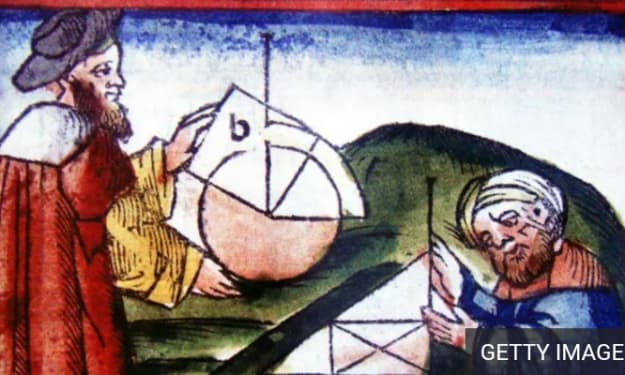
In the heart of 12th-century Islamic Spain, known as Al-Andalus, a polymath named Abū Bakr Muhammad ibn ‘Abd al-Malik ibn Tufail, better known as Ibn Tufail, crafted a philosophical tale that would echo through centuries. His novel, Ḥayy ibn Yaqẓān (Alive, Son of Awake), tells the story of a boy raised by a doe on a deserted island, untouched by society. Through nature and reason alone, he discovers survival, morality, science, and God. This allegorical tale not only shaped Arabic literature but profoundly influenced European philosophy and inspired literary classics such as Tarzan, The Jungle Book, and Robinson Crusoe. Despite his revolutionary work, Ibn Tufail’s name remains lesser known outside academic circles, buried under the weight of time. --- The Tale of Ḥayy ibn Yaqẓān: A Boy, an Island, and the Quest for Truth The novel’s protagonist, Ḥayy, is mysteriously born or appears on an uninhabited island. Raised by a deer, he mimics animal behavior to survive. As he matures, he begins observing the natural world—studying the stars, dissecting animals, and investigating life and death. Through self-education and reflection, Ḥayy develops deep philosophical insights. He arrives at the concept of a singular, divine Creator and a moral code—without scripture, religion, or societal instruction. Eventually, he encounters another human—Asal, from a neighboring island—who introduces him to organized religion and civilization. However, Ḥayy discovers that most people are unable or unwilling to embrace deep philosophical truths. Disillusioned, he returns to his island, choosing solitude over superficial societal life. --- Ibn Tufail: Physician, Philosopher, and Astronomer Born around 1110 CE near Granada, Ibn Tufail was a physician, court official, and philosopher during the Almohad Caliphate. He served as a vizier to Caliph Abu Yaqub Yusuf and played a vital role in promoting intellectual life in Al-Andalus. As a physician, Ibn Tufail was among the early advocates of dissection and post-mortem examination—a bold stance for his time. His medical poem Rajaz Taweel fi al-Tibb explored disease diagnosis and treatment, recently rediscovered in Morocco. His contributions went beyond medicine. Ibn Tufail was a renowned astronomer who challenged Ptolemaic cosmology. He influenced later astronomers like al-Bitrūjī, helping pivot Islamic astronomy toward empirical observation and rational critique, foreshadowing the scientific revolution centuries later.
By Ikram Ullahabout a year ago in Futurism