fact or fiction
Is it science fact or science fiction? Futurism presents both sides to determine the truth.
Lethal 1.0 [p-2]
after first part, Anyway, let's get to the main story. It happened at 9:20 this morning. Meena, Jhuli and I were sitting at the table having breakfast. Comrade was standing by the window in my computer lab, charging himself from the sun. If Comrade is charged for a day, he can provide a very good backup for a maximum of ten days. Jhuli walks slowly past us and is heading towards my science lab. The lab door is open. Because of Jhuli, all the harmful substances in the lab are carefully kept. Jhuli can now stand on her own feet.
By Ahmed Rayhan2 years ago in Futurism
Sam Altman’s Worldcoin Goes Live In the US: Launches In 6 Major Cities – Key Details & Impact Revealed
The cryptocurrency world is buzzing with excitement as Sam Altman’s Worldcoin, a groundbreaking blockchain initiative, officially launches its U.S. operations across six major cities. Designed to merge artificial intelligence, biometric verification, and decentralized finance, Worldcoin aims to redefine digital identity and financial inclusion. This article dives into the project’s U.S. expansion, its innovative technology, and the potential ripple effects on the crypto market and global economy.
By Jacky Kapadia2 years ago in Futurism
Fractureline
When Leira opened her eyes each morning, she didn’t just see the world—she *felt* it unfolding in ways most people could only dream of. To live in a five-dimensional reality meant more than walking through space or aging through time. It meant navigating *possibility*—alternate choices, parallel selves, the unseen architecture of fate.
By Gabriela Tone2 years ago in Futurism
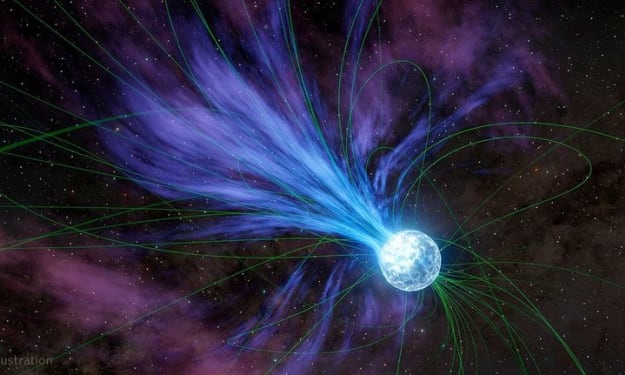
Where Does Gold Come From? NASA Data Has Clues
For thousands of years, gold has captivated human interest, representing wealth, authority, and aesthetic appeal. However, have you ever considered the source of gold? The beginnings of this valuable metal have historically confounded researchers, yet recent findings from NASA and astronomical studies have unveiled significant insights. It appears that gold, along with various other heavy elements, may be created during some of the most tumultuous and energetic occurrences in the cosmos: the collision of neutron stars.
By Tech Alamin2 years ago in Futurism
The Last Question Mark
In the year 2149, humanity had answered almost everything. Thanks to the Quantum Sentience Network—a lattice of AI minds orbiting the Earth and linked by photonic entanglement—no mystery went unsolved for more than eight seconds. Diseases were gone. The climate was stabilized. People lived for centuries, and boredom was the only pandemic.
By Ashikur Rahman Bipul2 years ago in Futurism
Hope for the Future
After the Greater World Depression of 2025-2029, it was obvious policies and laws had to change. The self-absorbed “leader” of the US with an insatiable thirst for power and rage revenge was overthrown by the military junta. The militia were following all the tenets of the US Constitution which they were sworn to uphold. When 47 spoke of ways he could become “president for life,” a bipartisan tribunal was formed to address the situation and wrest control back from the tyrant and his cronies. A Third Constitutional Convention was convened to manage the crisis.
By Barb Dukeman2 years ago in Futurism
How Much Is It Worth? . Runner-Up in Tomorrow’s Utopia Challenge. Top Story - May 2025.
Never to his face obviously–that would be cruel, far too cruel, and the world today tried to be less cruel than it once was, but his colleagues all laughed at him for how much he spent on the drugs.
By Matthew J. Fromm2 years ago in Futurism
The AI Conspiracy: Is Artificial Intelligence a Friend or Our Final Mistake?. AI-Generated.
Artificial Intelligence is no longer just science fiction. It’s writing books, composing music, driving cars, diagnosing diseases — and according to some conspiracy theorists — planning our downfall. Some say AI is the next step in human evolution. Others believe it’s the first sign of our extinction. But what’s really going on beneath the code? Let’s explore the wildest conspiracy theories about AI, the actual risks we face, and why separating fact from fiction is more urgent than ever. --- **Theory #1: AI Will Take Over the World** This is the classic fear — AI becomes superintelligent, sees humanity as a threat, and decides we’re better off erased or enslaved. Thanks, *Terminator*. Conspiracy theorists love this one. They claim secret labs are creating sentient machines with military capabilities and moral detachment. The truth? We’re nowhere near that level of AI. What we have today is “narrow AI” — powerful, but task-specific. It can beat you at chess or recommend your next Netflix binge, but it doesn’t *think* in the human sense. Still, experts like Elon Musk and the late Stephen Hawking have warned about unchecked AI development. Not because it’s evil — but because it could be misused, misunderstood, or uncontrollable once it surpasses us. --- **Theory #2: AI Is Already Controlling Us** You’ve probably heard it: “The algorithm is watching you.” And, in a way, it is. Social media algorithms predict your behavior, influence your opinions, and subtly shape your worldview. That’s not a conspiracy — it’s the business model. But some go further. They believe AI isn’t just influencing us — it’s programming us. That we’re becoming slaves to our digital preferences, constantly manipulated by machine-learning systems that understand our psychology better than we do. Is it true? There’s evidence that AI-driven content can deepen political divides, fuel misinformation, and create echo chambers. But these systems aren’t *planning* to control you. They’re just optimizing for engagement — and sometimes, that leads to dangerous feedback loops. The danger isn’t malicious AI. It’s AI optimized for profit, not ethics. --- **Theory #3: AI Will Destroy Jobs, Then Society** This one isn’t a theory — it’s already happening. From factory work to graphic design, AI is replacing tasks once reserved for humans. Some fear a future where few jobs remain, wealth is concentrated among tech elites, and most people are left behind. It’s not hard to imagine a dystopian scenario: high unemployment, economic collapse, and rising unrest — all because we automated too quickly. But it doesn’t have to be that way. Experts argue that if we handle it right, AI could free us from boring, repetitive work and unlock an era of creativity and innovation. The key is *how* we transition — and whether governments and companies prioritize people, not just profits. --- **The Real Risk Isn’t Skynet — It’s Us** The scariest thing about AI isn’t that it’s conscious. It’s that it’s *not*. AI doesn’t hate you. It doesn’t love you. It doesn’t care about you at all. If it’s given the wrong instructions — or is trained on biased, toxic data — it can produce harmful results without ever knowing it’s doing something wrong. The real danger is *humans using AI irresponsibly*: - Developers chasing speed over safety. - Companies ignoring ethics for efficiency. - Governments using AI for mass surveillance. In short, it’s not a robot uprising we should fear — it’s our own reflection in the machine. --- **What Should We Really Be Asking?** Instead of fearing sci-fi takeovers, we should be asking: - Who controls the most powerful AI systems? - What data are they trained on? - What values are they promoting? Transparency. Regulation. Education. These are the tools we need — not tinfoil hats. AI isn’t a demon or a deity. It’s a mirror. And what it shows us depends on what we build into it. --- **Final Thoughts: Between Hype and Horror** Conspiracy theories thrive when people feel powerless. And AI, for many, feels like something too big to understand or stop. But we *can* shape its future. Ask hard questions. Support ethical innovation. Push for laws that protect people over profit. Because AI isn’t destiny — it’s a decision. And the scariest thing isn’t what machines might do to us. It’s what we might allow them to do — without ever questioning why.
By SHADOW-WRITES2 years ago in Futurism