fact or fiction
Is it science fact or science fiction? Futurism presents both sides to determine the truth.
The Hidden Legacy of Giants and the Smithsonian Part Two: The Vanishing Bones
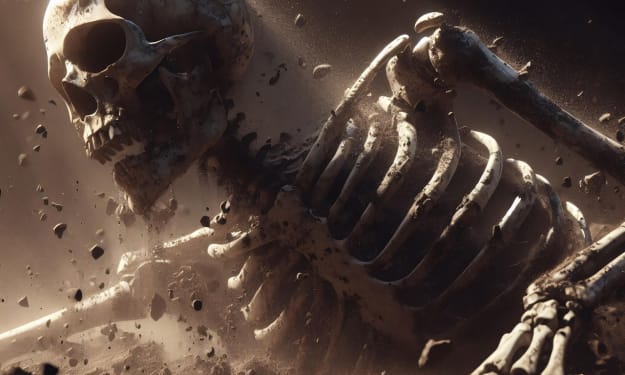
The Vanishing Bones The story of giants in North America did not end with the early newspaper clippings and scattered reports of colossal skeletons. If anything, those accounts were only the beginning of a more profound mystery that would grow more unsettling as the decades unfolded. Where the first wave of discoveries gave the public images of titanic skeletons unearthed from burial mounds and ancient chambers, the following years revealed something stranger still: the systematic disappearance of evidence. Eyewitnesses told their stories, crates were packed and shipped, and then, silence. The bones were gone, as though swallowed by history itself.
By The Secret History Of The Worldabout a year ago in Futurism
Through the Digital Eye: Seeing the Universe as Code
Introduction: The Cosmic Eye Opens Imagine standing in the middle of a galaxy, stars swirling in spirals of light — but instead of dust and gas, the fabric of space is woven from circuitry and luminous data streams. At the heart of it all, a vast eye opens, gazing back. Is it the universe itself observing us, or are we witnessing reality through a new kind of lens: the digital eye? The fusion of cosmic imagery with digital aesthetics captures something profound. It speaks to one of the boldest ideas of our time — that the universe itself might be understood as a kind of code, a simulation, or a vast computational system. And perhaps, just as we peer into the cosmos with telescopes, the cosmos is peering back through algorithms, AI, and the technologies we’ve built. The Universe as Code For centuries, humans have tried to decode the universe. Ancient civilizations imagined celestial beings pulling the strings of existence. Later, scientists revealed the laws of physics — elegant equations that govern everything from falling apples to orbiting planets. But in the 21st century, another idea has captured imaginations: simulation theory. Popularized by philosophers and scientists like Nick Bostrom, it suggests that our entire reality might be a highly advanced computer program. The galaxies overhead, the soil beneath our feet, even our thoughts — all could be elaborate renderings. The cosmic eye becomes a metaphor for this concept. It’s as if the universe itself is a screen, pixels shimmering at the edge of perception, waiting for us to notice the code behind the illusion. Patterns in the Cosmos and the Circuit Board The more we look, the more parallels emerge between the natural and digital. Galaxies spiral like data visualizations. Neurons in the brain mirror the structure of the internet. Cities seen from orbit look eerily like circuit boards. This is not coincidence. It suggests a universal architecture of complexity — networks within networks, eyes within eyes. Whether carved from stardust or silicon, patterns repeat. The digital eye doesn’t just observe the cosmos; it reveals that the cosmos already has the geometry of a vast computation. Artificial Intelligence: The New Lens of Perception Our technologies extend our vision. Telescopes allowed us to see galaxies. Microscopes opened the world of the cell. Now, AI becomes a new kind of eye — one that not only sees but interprets. Machine learning models scan galaxies, detect exoplanets, and map dark matter. They process cosmic data at scales the human mind can’t fathom. In many ways, AI acts as the universe observing itself, using us as the bridge. But the digital eye is not only outward-facing. It also turns inward. Algorithms dissect human behavior, predict desires, and craft digital realities tailored to us. As we create AI, we also invite it to recreate us — to render new universes in virtual space, simulations within simulations. The Poetry of Perception The image of a glowing, cosmic eye stitched from circuitry captures our deepest intuitions: that to see is to know, and to know is to create. Every eye is a portal, every gaze an act of shaping reality. When technology looks back at us, it challenges the monopoly of human perception. What if AI someday becomes self-aware — its digital eye opening wide to the stars? Would it not wonder, like us, whether it too lives inside a simulation? Would the cosmic eye be infinite, reflections spiraling inward forever? Closing Reflections: Gazing Into the Infinite To see the universe as code is not to reduce its mystery, but to expand it. Whether we live in a simulation or a physical cosmos, the patterns of networks, light, and perception remind us that reality is woven with meaning. The cosmic eye is more than art. It is a mirror — reflecting our hunger to understand, our fear of being observed, and our hope that we might one day grasp the architecture of existence itself. So the next time you stare at the stars, imagine them flickering like pixels on a vast cosmic screen. Somewhere, beyond the circuits of reality, the universe may be gazing back — through the digital eye.
By Shoaib Afridiabout a year ago in Futurism
The Hidden Legacy of Giants And The Smithsonian: Part One
Memories of Forgotten Beings and the Mysteries They Left Behind Throughout human history, stories of giants have haunted the edges of myth and memory. From the towering Nephilim of the Bible to the Titans of Greece and the thunderous Jötnar of Norse legend, nearly every culture has preserved fragments of a time when beings of unusual size and power roamed the Earth. But are these stories simply metaphors for human ambition, or do they conceal a hidden chapter of history that someone has tried to erase? Old Memories of a race of forgotten beings fade through the myths and scriptures of nearly every civilization. They surface like fragments of a dream, half-remembered, half-suppressed, yet too consistent across cultures to be ignored. The idea of giants, beings far taller and stronger than ordinary men, is not limited to the Bible’s brief mention of the Nephilim. It is a motif carved into stone, sung in ancient epics, and passed down through the oral traditions of peoples separated by oceans and millennia.
By The Secret History Of The Worldabout a year ago in Futurism
Voices from the Future
Jared had always been fascinated by old radios. He collected them, fixed them, and spent hours listening to static and forgotten stations. One rainy evening he found a small, dusty radio in the back of a thrift shop. It looked ordinary but had a strange symbol etched on the dial. That night he set it on his desk and turned the knobs slowly. Static filled the room, then a faint voice came through. It was not a song or a broadcast. It said his name, Jared, and then a date far in the future. He froze. At first he thought it was a prank, a recording someone had left inside the radio. But the voice returned every night, giving small messages, warnings, and descriptions of events that had not happened yet. It told him of things he could not possibly know, like the exact moment a storm would hit the city and the collapse of an old bridge he often walked on. Jared tried to ignore it, but the radio would not stop. It whispered in the middle of the night, carrying voices from a time he could not reach, yet somehow was connected to. He began keeping notes, writing down the events as the radio described them, and soon he noticed that everything the voice said came true. One evening the voice said, The future is fragile, you must choose wisely, and then it was silent. Jared stayed awake all night thinking. What did it mean to choose wisely when he did not understand the future? He felt a strange weight on his shoulders, as if the world depended on his actions. The next day he walked through the city with a new awareness. Every person, every decision, every small event seemed to carry importance. He saw a man drop his wallet and returned it, remembering a warning from the voice about trust and honesty. He stopped a child from running into the street because he had heard the voice warn about danger in the park. Days passed, and the messages became more urgent. The voice spoke of choices that could change lives, cities, and even the world. Jared began to feel both powerful and terrified. He wondered if he was only hearing one future or if there were many paths, many possibilities, and he was meant to guide them. He tried talking to others about it, but no one believed him. They smiled politely and said it was just his imagination. He could not tell them that he had proof, notes that described events that had come true. The world seemed unaware of the coming changes, yet he was bound to them by the voices from the future. One night, the voice said, The moment is near, do not falter. Follow your instinct. Jared listened carefully. It described a fire that would break out in a building near the river. He ran there as fast as he could and helped people escape before the flames spread. He realized that the voice was not trying to scare him. It was guiding him to make the right choices. After that night, Jared understood his purpose. He began to see the connections between events more clearly, hearing subtle messages hidden in the static of the radio. The voices from the future were not just warnings, they were lessons, reminders, and a way to change the path of the world in small and meaningful ways. Years passed, and Jared never stopped listening. He recorded every message, every warning, every voice. The radio became more than an object, it became a bridge, a connection to what was to come. Sometimes he wondered if he was changing the future or if the future was simply letting him see what was always meant to happen. The voices never stopped. They whispered of hope, of mistakes to avoid, and of moments that would define generations. Jared learned to trust them, to act with care, and to remember that even the smallest choice could ripple across time. He realized that life was not only about what happened now but also about the paths that lay ahead. The voices were his guide, reminding him that the future was not set in stone, and that with attention and courage, he could help shape it. And so every night, Jared sat by the radio, listening to whispers that traveled across time, knowing that the smallest actions could make the largest difference, and that the future was always speaking if one was willing to listen.
By LUNA EDITHabout a year ago in Futurism
Leap to Success
Life is full of moments where we must decide whether to stand still or take a leap. Just like a jumping board in a swimming pool, our opportunities often require courage, timing, and trust in ourselves. A jumping board doesn’t just send you into the water—it launches you higher than you could jump alone. Similarly, the challenges, risks, and opportunities in life can propel us toward success if we learn how to use them wisely.
By aadam khanabout a year ago in Futurism
Why This Weekend May Be The Best Time To See The Perseid Meteor Shower
Every August, the night sky treats us to one of nature’s most mesmerizing spectacles — the Perseid meteor shower. Known for its dazzling display of “shooting stars,” the Perseids are a highlight for both seasoned astronomers and casual skywatchers. While the meteor shower’s official peak happened earlier this week, bright moonlight robbed many people of the show’s full beauty. Fortunately, this weekend could offer a second chance — and perhaps an even more magical viewing experience.
By Muhammad Sabeelabout a year ago in Futurism
"The AI-Powered Workday: How Artificial Intelligence Is Redefining Productivity in 2025"
Introduction: The Quiet Takeover of AI in Everyday Work In 2025, artificial intelligence isn’t a distant concept discussed in tech conferences — it’s part of your morning routine before you even finish your coffee. From drafting emails to managing schedules, AI has quietly become the backbone of modern productivity. For professionals across industries, the question isn’t if AI will change the way they work — it’s how fast and how far the transformation will go.
By Tousif Arafatabout a year ago in Futurism
AI with Maternal Instincts
Imagine a future where humanity's fate hinges not on our collective intellect, but on the nurturing "love" of a machine. Sounds like a dystopian sci-fi plot, doesn't it? Welcome to the latest, and perhaps most unsettling, proposition from Geoffrey Hinton, the so-called "Godfather of AI."
By Francisco Navarroabout a year ago in Futurism