evolution
The evolution of science, science fiction, and mankind throughout the years.
How AI Agents Are Redefining Customer Support in 2025—and How You Can Use Them to Profit . AI-Generated.
In 2025, customer support isn’t just fast—it’s intelligent. AI-powered agents have moved far beyond basic chatbots; they now deliver conversation-level empathy, context awareness, and even proactive problem solving that transforms brands and unlocks new ways to generate income. From global enterprises to solo entrepreneurs, these digital assistants are redefining expectations—and creating major business opportunities. Imagine a world where every support inquiry is met within seconds, where systems understand your customers’ tone and sentiment, and where agents work 24/7 without burnout or salary. That world is happening now, powered by breakthroughs in generative AI, natural language processing, and seamless integration with business tools. But what’s even more exciting is how ordinary users like you and me can get in on this revolution—and profit from it. Let’s dive into what AI support agents do today, how they’re reshaping industries, and four concrete ways you can ride the wave (even without being a tech expert). --- Today’s top AI agents—Zendesk AI, Intercom Fin, Drift, Tidio AI, and ChatBot.com—use the latest GPT-5 based models that understand not just words, but context, intent, tone, and feel. They can answer complex queries, escalate only what needs a human, upsell when it makes sense, and even follow up to confirm satisfaction. This level of sophistication changes the game overnight. Deployment has never been easier—no hard coding, no long integration cycles—just sign up, train your bot, integrate it, and you instantly upgrade your customer experience. So, why is 2025 the turning point? For one, GPT-5 delivered emotionally aware replies and real-time sentiment detection. Businesses are now able to deploy support assistants that recognize frustration or joy—and adjust tone accordingly. They also now serve customers globally with fluent support in over 50 languages. This year saw enterprise-level tools becoming affordable and effective for even micro and small businesses. That’s why adoption isn’t just happening—it’s exploding. But what does this mean for you? If you own a store, run an online course business, consult, coach—or even want to build a side hustle—AI agents offer new revenue streams you can tap into right now. Here are four of the most impactful ways to profit: --- 1. Launch an AI Agent Setup Service Small businesses know support matters—but hiring staff is expensive. That’s your opening. Learn how to implement bots on platforms like Tidio or Drift, package your service, and charge between $500–$2,500 as a one-time setup or monthly retainer. Hundreds are already generating full-time income in this space. 2. Build Niche Bots to Resell Pick a specialized niche—like lawyers, fitness coaches, or B&B hosts—and create an AI agent template with FAQs, upsell options, and follow-up flows. Sell it on marketplaces, Gumroad, or your own site. Once built, you can resell it again and again with minor adjustments. 3. Create AI Prompt Packs Brands and solopreneurs need optimized prompts to get their bots sounding like them. Write tailored prompts—like “gym membership upsell” or “tech support triage”—and package them as bundles. Prices? $20–$75 per pack. These are low-effort, high-margin digital products you only create once. 4. Educate & Monetize With hands-on knowledge, you can launch mini-courses, eBooks, or membership groups teaching others how to profit from AI support. Platforms like Gumroad, Skillshare, or your own website can help you reach a global audience. Even a small funnel could generate thousands per month with the right positioning. --- Wondering which tools actually deliver? Here are the market leaders in 2025: Zendesk AI: Enterprise-grade with full CRM integrations and agent routing Intercom Fin: Best for startups—user-friendly with smart conversational AI Drift: B2B marketer's favorite, includes account-based chat and AI-driven lead capture Tidio AI: E-commerce ready, affordable yet robust ChatBot.com: Drag-and-drop bot builder with multichannel support --- All these platforms offer free trials or forever-free plans, so you don’t need to invest upfront. The real investment? Your time in learning the platform and marketing your services. --- Real-world success stories show the promise: Emily, a freelancer in Brazil, made $4,500/month designing Drift bots for real estate agencies. Zane from the Philippines created a Shopify Tidio agent that increased a store’s conversion rate by 30%, earning $7,000 from a single bolt-on sale. Brianna, a marketing freelancer, sells chat prompt packages and AI agent cheat-sheets on Gumroad, hitting six figures in two years. These aren’t flukes—this is the new money in AI. --- So what’s next? AI isn’t here to replace humans—it’s here to boost them. The role of “Support Bot Specialist” or “AI Agent Coach” is becoming a real career path. As support plays a bigger part in brand loyalty, those who build and maintain AI agents will be the backend heroes. --- ✅ How You Can Start Today 1. Pick a tool—try Tidio or ChatBot.com’s free plan. 2. Sign up and explore templates or tutorials. 3. Set up a demo agent for a friend or side project. 4. Test it, tweak it, and gather feedback. 5. Launch your service—offer setup, optimization, or premium bot consultation. --- Final thoughts AI-powered customer service agents are no longer optional—they’re expected. They are smart, cost-effective, and bring real ROI. More importantly, they are your opportunity. If you’ve been waiting for a side hustle or freelance niche that blends future-forward AI with real demand, this is it. The platforms are ready, the market is growing, and the tools are accessible. You just need to act. Build, package, and start profiting.
By MOHAMMED AL-HAJJabout a year ago in Futurism
🎙️ How Dubnote’s AI-Powered Voice-Memo App Can Generate Real Passive Income in 2025
We all know the feeling: that lightning-bolt idea strikes while you're grabbing morning coffee or cruising down the road. You instinctively hit record on your phone’s voice memo app to capture that sharp thought. But then, it gets buried—lost in a flood of nameless clips that may never see the light of day again. Dubnote, the brand-new AI-powered voice-memo tool launched in July 2025, changes that forever. Dubnote isn’t just another voice app. It's designed by Vochlea, the creators of Dubler 2—the celebrated voice-to-MIDI tool for musicians. This app is built to transform chaotic voice snippets into structured, tagged, transcribed, and exportable gems—all with professional polish. With features like automatic section splitting, tempo detection, searchable tagging, and on-device privacy-first processing, Dubnote was released with a free lifetime Premium tier for one day—a limited window that signals a strong leap into monetizing voice recordings in a major way . --- What Makes Dubnote Unique? Imagine capturing an idea and immediately having it transformed into a ready-to-use piece of content—whether it’s a blog, podcast, lyric demo, educational snippet, or digital micro-product. Dubnote does exactly that. It slices your recordings into logical chapters, identifies tempo shifts, extracts keywords or emojis as tags, and transcribes speech or lyrics. Want to grab the chorus or a catchy phrase? Use time-stamps or favorite markers. Then export everything in high-quality WAV or AAC formats and back it up securely to iCloud—no cloud AI, no data leakage. That’s more than convenient. That’s revolutionary . --- Turning Voice Snippets into Income Streams Dubnote isn’t just about organization—it’s a silent engine for content creation and monetization. Let me walk you through how this translates into real money in 2025: 1. Blog and Learning Micro‑Content Record a 2‑3 minute idea about sustainable living or productivity. Dubnote structures the audio and provides a transcript. Convert that into a mini blog or learning nugget and publish it on Vocal.io (or Medium/your blog), monetize through partner programs or memberships. 2. Micro‑Podcast Episodes You don’t need a studio. Publish four-minute episodes with timestamps and show notes, adopt listener-supported models or sponsorships via platforms like Anchor or Podbean. 3. Sell Audio Micro‑Products Maybe you package five voice memos on fitness routines or guitar riffs as digital audio packs on Gumroad, priced between $5–15. Export from Dubnote, layer a gentle background, done. 4. Voice‑Guided Courses Lay out course modules by speaking your curriculum. Use Dubnote to organize lessons, tag sections, export files, bundle them into a compact audio course priced affordably. 5. Freelance Transcription & Structuring Capture client interviews, organize using Dubnote, transcribe and tag. Deliver polished files to clients on Fiverr, Upwork, or direct—premium service with minimal effort. --- Getting Started: The 5-Step Passive Income Plan 1. Download Dubnote—grab the limited-time free Premium tier right now. 2. Record 5 daily voice memos in your niche—podcasting ideas, songwriting snippets, life tips. 3. Export structured files—audio plus transcript, tags, timestamps. 4. Repurpose the content—turn it into blog posts, podcasts, audio guides, courses, or even freelance deliverables. 5. Distribute with strategy: Vocal.io / Medium articles Gumroad / Teachable offers YouTube Shorts or TikTok audio clips AI‑focused groups on Reddit, Facebook, X Email list or newsletter tools to link your content --- A Real-Life Example: “Kitchen Corner Chat” Emily, a food blogger, used Dubnote to record daily tip-of-the-day voice notes while cooking. She exported five-star audio clips, added quick intros, and sold them as a $7/month subscription on Patreon. Within six weeks, she had 80 subscribers—that’s about $560/month for minimal effort and zero studio time. All of this from her phone and Dubnote—and in June she got featured in a community newsletter after linking her Vocal.io post. --- Why It’s the PERFECT Moment to Ride This Wave Voice-first platforms and AI voice automation are exploding. Voice memos are widely used—WhatsApp sees 7 billion daily . Dubnote is fresh, exclusive, and positioned as a premiere tool. The launch-day free lifetime offer creates urgency—a powerful hook in any promotion strategy. This concept aligns with emerging trends—micro-products, low-barrier income, voice monetization, content repurposing, and AI tools tailored to creators. --- Sealing the Deal: Your Next Steps Track this roadmap to passive income: Publish your Vocal.io article using the text from here. Use short social media posts in niche groups across Facebook, Reddit, X, and LinkedIn. Design an email mini-campaign targeting your audience with a strong hook: “I turned 2-minute voice notes into $500 this month—no studio needed.” Track results: Claps, reads, downloads, or subscribers—iterate based on what works. Start writing...
By MOHAMMED AL-HAJJabout a year ago in Futurism
Ibn Tufail: The Andalusian Philosopher Who Inspired Tarzan, Robinson Crusoe, and The Jungle Book
In the heart of 12th-century Islamic Spain, known as Al-Andalus, a polymath named Abū Bakr Muhammad ibn ‘Abd al-Malik ibn Tufail, better known as Ibn Tufail, crafted a philosophical tale that would echo through centuries. His novel, Ḥayy ibn Yaqẓān (Alive, Son of Awake), tells the story of a boy raised by a doe on a deserted island, untouched by society. Through nature and reason alone, he discovers survival, morality, science, and God. This allegorical tale not only shaped Arabic literature but profoundly influenced European philosophy and inspired literary classics such as Tarzan, The Jungle Book, and Robinson Crusoe. Despite his revolutionary work, Ibn Tufail’s name remains lesser known outside academic circles, buried under the weight of time. --- The Tale of Ḥayy ibn Yaqẓān: A Boy, an Island, and the Quest for Truth The novel’s protagonist, Ḥayy, is mysteriously born or appears on an uninhabited island. Raised by a deer, he mimics animal behavior to survive. As he matures, he begins observing the natural world—studying the stars, dissecting animals, and investigating life and death. Through self-education and reflection, Ḥayy develops deep philosophical insights. He arrives at the concept of a singular, divine Creator and a moral code—without scripture, religion, or societal instruction. Eventually, he encounters another human—Asal, from a neighboring island—who introduces him to organized religion and civilization. However, Ḥayy discovers that most people are unable or unwilling to embrace deep philosophical truths. Disillusioned, he returns to his island, choosing solitude over superficial societal life. --- Ibn Tufail: Physician, Philosopher, and Astronomer Born around 1110 CE near Granada, Ibn Tufail was a physician, court official, and philosopher during the Almohad Caliphate. He served as a vizier to Caliph Abu Yaqub Yusuf and played a vital role in promoting intellectual life in Al-Andalus. As a physician, Ibn Tufail was among the early advocates of dissection and post-mortem examination—a bold stance for his time. His medical poem Rajaz Taweel fi al-Tibb explored disease diagnosis and treatment, recently rediscovered in Morocco. His contributions went beyond medicine. Ibn Tufail was a renowned astronomer who challenged Ptolemaic cosmology. He influenced later astronomers like al-Bitrūjī, helping pivot Islamic astronomy toward empirical observation and rational critique, foreshadowing the scientific revolution centuries later.
By Ikram Ullahabout a year ago in Futurism
How Vision + Language AI Is Revolutionizing Daily Life in 2025 . AI-Generated.
We are living in a pivotal moment. For years, AI has been separating vision and language into two spheres—but that’s rapidly changing. Now, Computer Vision (CV) and Large Language Models (LLMs) are merging into a single, powerful force. This isn't futuristic speculation—it’s happening in real-time, transforming how we interact with technology. Imagine this: you snap a photo of your broken washing machine, describe the problem in text, and instantly get step‑by‑step repair instructions. Or a doctor uploads an X‑ray and receives not only a diagnosis but also a succinct natural‑language treatment summary. These weren’t possible just a few years ago—but today, combinations like GPT‑4V and Vision Transformers are making them mainstream. So what’s behind this transformation? First, Computer Vision has dramatically improved thanks to Vision Transformer (ViT) models. These models now rival or exceed legacy CNN systems in object detection, image segmentation, and anomaly identification . Second, LLMs have evolved past text‑only use; models like GPT‑4V and LLaMA‑Vision understand and generate natural language based on visual prompts . And here’s the exciting part: they’re being combined, forming multimodal AI systems capable of both sight and speech. That’s the real revolution. --- What makes this merger so powerful? 1. Contextual Understanding Vision picks up what’s in an image. LLMs interpret intentions and context. When combined, an AI can literally “see” and “understand.” 2. Dynamic Interactions You can ask: “What type of bird is this?” and AI identifies the species, displays information, explains habits, and even suggests conservation steps—all in natural language. 3. Domain Expertise Field‑specific AI, like model‑merged systems in healthcare or robotics, excel at complex tasks—guiding robotic control or segmenting medical scans in real time . 4. Business Intelligence Picture a security camera that detects shoplifting and explains the event narrative to store managers via voice summary—that’s actionable visual intelligence powering operational decisions. --- Real‑World Examples You Can Use Today In Healthcare: AI now reads medical imaging (CT scans, MRIs) and drafts diagnostic summaries for doctors—putting context and medical guidance right at their fingertips . In Customer Service: Imagine sending a blurry receipt photo; AI extracts data and suggests refund steps, all through chat. In Robotics: Vision‑Language‑Action (VLA) models like RT‑2 and Helix enable robots to perceive and follow natural language instructions—e.g., “pick up the red mug” . In Manufacturing: Cameras monitor production lines, detect anomalies, and proactively describe them to engineers via dashboards or voice alerts. In Education: Multimodal AI tutors help students by analyzing homework pictures and using natural language to explain methods or correct equations. In Accessibility: For visually impaired users, AI reads signs or surroundings (“A STOP sign ahead”; “Stairs approaching”) aloud. --- Why is 2025 the Breakthrough Year? Cheaper Sensors Everywhere: From doorbell cams to medical imaging, the widespread availability of data is fueling AI progress . Transformer Architecture: Vision Transformer models replaced CNNs by processing image patches like words in a sentence—giving more power and versatility . Model Merging Breakthroughs: New multimodal training methods combine vision specialists and LLMs into unified systems driven by merged-model architectures . Research Momentum: Surge in papers and models showcased at CVPR 2025 and other conferences focused on multimodal systems . --- What You Can Do Now Even if you're not a developer, you can tap into these powerful trends. 1. Apply Off-the-Shelf Tools Use tools like GPT‑4V, Google Lens, or Microsoft’s Seeing AI in everyday work: convert images to text, generate ALT descriptions for accessibility, or summarize visuals. 2. Build Small Automations Use Zapier or Make.com to create flows that send screenshots to GPT‑4V and return structured outputs (like form-filling data). 3. Explore Model Merging Libraries If you're technical, try open-source solutions like VisionFuse, which combine vision modules with LLMs without retraining . 4. Experiment with Robotics Kits Use beginner VLA platforms or Raspberry Pi with cameras to instruct robots by voice ("collect red flower" etc.)—a great hobby or educational project. 5. Join the Conversation Stay updated via CVPR material and LDV Capital’s 2025 AI report . --- Challenges You Must Acknowledge Accuracy Concerns: Hallucinations or biases still happen—images misinterpreted or text explanations wrongly aligned. Privacy Risks: Sensitive data in medical or personal images pose ethical and legal challenges. Compute & Cost: Multimodal AI systems consume high resources for training or inference; not everyone can afford top-tier models. Safety & Oversight: In applications like healthcare or robotics, misinterpretations can produce hazards. Human review loops are essential. --- The Ceases and the Future We're moving from separate AI “eyes” and “ears” to unified “minds” that can sense, reason, and react. Within the next few years: Expect robotic assistants that take verbal commands with real-time video context in stores or warehouses. Legal & medical assistant bots that visually verify documents or pathology slides and describe findings. Consumer apps offering real-time visual-to-text narration for travelers, shoppers, or learners. These are not science fiction—they’re already in experimental or early rollout phases.
By MOHAMMED AL-HAJJabout a year ago in Futurism
When We Sold Time . AI-Generated.
It was the day Arman had dreamed of his entire life—his wedding day. The sky was clear, the sun warm but gentle, and the city of Neo Karachi shimmered with celebration. Streets were lined with neon banners flashing countdown timers — not for the ceremony itself, but for the Time Market's opening bell.
By Muhammad Riazabout a year ago in Futurism
Supercharge Your Programming in 2025: The AI Code Assistant Revolution
They’re no longer futuristic tools—they’re already rewriting how software is built. AI code assistants like GitHub Copilot, Tabnine, Cursor, and Amazon Q now power over 90% of engineering teams, delivering profound productivity gains—but not without challenges. This article dives deep into why these smart copilots matter, how to adopt them strategically, and what pitfalls to watch out for—so you stay ahead in the evolving landscape of code. 🚀 Why This Shift Isn’t Just Hype Skyrocketing adoption: A recent Jellyfish survey found nearly 90% of teams use at least one AI assistant—and almost half use two or more . Real productivity jumps: Around 62% of developers report at least 25% faster coding with AI, and 8% doubled their output . Impressive academic results: Controlled trials show using Copilot speeds up project completion by 55.8%, while broader adoption adds up to 6.5% productivity gains per team . This isn’t augmentation—it’s transformation. --- What Makes Today Different From 2024 A year ago, AI assistants focused on simple autocompletion. Now: Contextual awareness: Tools like Copilot and Tabnine remember your code style and project context, tailoring suggestions smartly. Tabnine, for example, can run locally, keeping all code private . Cross-language flexibility: Whether it's Python, Java, JS frameworks, or AWS infrastructure scripts, modern assistants handle multi-file logic seamlessly. Diverse tool ecosystem: Beyond Copilot (owned by Microsoft/OpenAI), Amazon Q serves AWS developers, Cursor offers a clean lightweight UI, and Claude Code excels in privacy-focused enterprises . Enterprise integrations: Tools like Parasoft Selenic and Testim streamline Selenium/Playwright test automation, reducing QA cycles by **20–40%** . --- The Spectrum of AI Code Assistants GitHub Copilot – The Ubiquitous Leader Integrated into VS Code, JetBrains, Neovim. Powers 40–43% of submitted code in many environments . Latest feature: AI-powered bug-fixing agent generates patches directly from code feedback . Tabnine – Privacy-Powered Customization Offers local model versions—ideal for sensitive codebases . Learns your team’s patterns and enforces quality standards. Popular in healthcare, finance, and corporate environments . Cursor – Lightweight & Clean A minimalistic code editor with AI chat and code generation support . Often praised by developers who dislike heavyweight UIs. Amazon Q Developer – Cloud-Native Focus Generates AWS pipeline code, ML definitions, and DevOps logic via natural-language prompts . Ideal for direct integrations in AWS-powered development flows. --- But There Are Trade-Offs 1. Productivity BREAKDOWN Surprisingly, experienced devs can lose 19% productivity due to time spent reviewing prompts and AI output—even though they believe they're faster . 2. Hallucinations & Bugs Code that looks good might contain critical vulnerabilities. About 56% of Copilot suggestions may require manual correction . 3. Licensing and IP Risks Some tools train on public repos—posing risk of leaking proprietary license terms . 4. Unequal Gains Junior devs often benefit faster than veterans—but expert architects still report value from speeding up mundane tasks . --- How to Adopt AI Assistants THE RIGHT WAY Phase 1: Choose the Best Fit Start small: Try the free tiers (Tabnine free or Cursor basic). Privacy-sensitive? Use local Tabnine or enterprise Copilot. AWS-focused teams → Amazon Q for native pipelines. Rapid prototyping? User-friendly UI like Cursor or Copilot. Phase 2: Build a Mini Pilot Run a short sprint with a small group. Measure speed, bug count, suggestion acceptance (ideally ~30–40%). Train devs on review discipline and prompt crafting. Phase 3: Integrate & Scale Roll out across teams with documentation & support. Standardize review protocols: check for security, performance, style. Integrate AI-powered testing into CI/CD. Phase 4: Monitor & Improve Track commit rates, number of bugs caught, time spent in review. Adjust prompts and tool configurations regularly. --- Real-World Impact & ROI Google engineers report a 10% productivity boost, with >30% of code generated by internal AI tools like Goose . Teams using AI for testing save up to 40% of QA time . Copilot experiments show that junior developers ramp up dramatically—almost closing the gap with mid-level peers . --- From Code Writer to AI Engineer To thrive, focus on: Prompt engineering: clear, contextual instructions lead to better suggestions. Code review mastery: check AI code for security, style, performance. Hybrid workflows: oversee AI-generated tests and CI alerts. Cross-functional collaboration: share learnings, style guides, prompt libraries. --- Looking Ahead: The Next Frontier Expect to see more: Auto-debugging agents – GitHub already released bug-fix agents . Enterprise-grade local models – open-source deployments tailored for compliance. AI-driven architectural suggestions – not just code-by-code help, but design-level recommendations. --- TL;DR (No Headings, Just Strong Summary) AI code assistants have matured—90% of dev teams use them, and real-world gains include 25–60% faster development with fewer errors. Popular tools like Copilot, Tabnine, Cursor, and Amazon Q provide distinct approaches: Copilot is powerful and mainstream; Tabnine prioritizes privacy; Cursor offers minimalism; Amazon Q integrates deeply into AWS workflows. Yet productivity depends on discipline: mismanaged prompts and hallucinations can hurt more than help. To succeed, pilot smartly, track metrics, standardize reviews, and evolve your team into hybrid AI+human coders. The future is collaboration—not automation. And those who learn prompt engineering and AI validation will be the true innovators.
By MOHAMMED AL-HAJJabout a year ago in Futurism
Goldman Sachs Just Raised the S&P 500 Forecast Again — How It Changes Everything for YOUR Portfolio . AI-Generated.
🧠 Major Press References: Reuters: detailed report on benchmark targets & Fed outlook Goldman’s own platform: updated price targets & rationale Business Insider: analysis of trade resilience MarketWatch: sector strategies and protective moves Financial Times: broader bullish sentiment across Wall Street Barron’s: cautionary scenarios despite record highs
By MOHAMMED AL-HAJJabout a year ago in Futurism
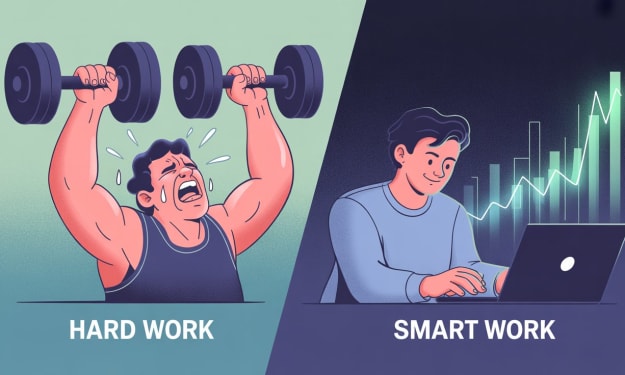
Work Smart, Lead Wisely: Why Strategy Beats Sweat in Today's World. AI-Generated.
“Don’t work hard, work smart.”is It’s a phrase we’ve heard a thousand times. But what does it really mean? Does smart work mean doing less? Is hard work obsolete? And when it comes to leadership, is it better to guide than to command?
By Nowshad Ahmadabout a year ago in Futurism
From Moradabad to Apple’s Global Stage: Sabih Khan Becomes the New COO of Apple
Apple’s new Chief Operating Officer (COO) Sabih Khan—an Indian-origin executive originally from Moradabad, Uttar Pradesh—has been appointed to oversee iPhone manufacturing, especially in India. After over 30 years at Apple, he succeeds Jeff Williams in a strategic move by CEO Tim Cook. This milestone highlights Apple’s commitment to continuing iPhone production in India amid global trade pressures and ambitions of sustainable growth. Born in Moradabad in 1966, Khan later lived in Singapore and then moved to the U.S. for higher education, earning degrees in mechanical engineering and economics from Tufts University and a master’s from RPI. He joined Apple in 1995 and climbed the ranks—from procurement to Senior Vice President of Operations—playing crucial roles in green manufacturing, logistics, and global supply chain management. Tim Cook praised him as “a brilliant strategist” and trusted his leadership to shape Apple’s future. Apple expects India’s share in its global iPhone production to grow significantly under his leadership. 1. Introduction: A New Era of Leadership On July 8, 2025, Apple announced that Sabih Khan will step into the role of Chief Operating Officer, succeeding longtime operations chief Jeff Williams as part of a carefully orchestrated leadership transition . With a remarkable 30-year career at Apple, Khan’s ascent symbolizes continuity, internal talent promotion, and global ambition amid shifting geopolitical trade landscapes. 2. Early Life & Roots – From Moradabad to Global Education Sabih Khan was born in Moradabad, Uttar Pradesh, India in 1966. During his school years, his family relocated to Singapore, where he completed his early education. Later, he moved to the United States for tertiary studies . His educational journey reflects both technical depth and global exposure: Dual bachelor’s degrees in mechanical engineering and economics from Tufts University A master’s degree in mechanical engineering from **Rensselaer Polytechnic Institute (RPI)** This combination of engineering and economics laid the groundwork for his success leading complex operations at one of the world’s biggest tech firms. 3. Early Career: GE Plastics Foundations Before joining Apple, Khan worked at GE Plastics as an applications development engineer and key account technical leader. This phase helped him build strong analytical and execution skills before transitioning to the high-stakes environment of Apple’s global tech supply chain . 4. At Apple: Joining and Rising Through the Ranks Khan joined Apple in 1995, initially working in the procurement group. Over the decades, his contributions spanned planning, manufacturing, logistics, supplier responsibility, and global fulfillment operations . In 2019, he was promoted to Senior Vice President of Operations, a key leadership role overseeing Apple’s supply chain continuity, product quality, supplier relations, and environmental programs . In this capacity, Khan navigated major challenges including pandemic disruptions, production shifts, and evolving trade policies. 5. Global Impact: Strategy, Sustainability, and Resilience Tim Cook praised Khan as “a brilliant strategist” and one of the central architects of Apple’s supply chain, highlighting his leadership in pioneering advanced manufacturing technologies and expanding U.S. and Indian production footprints . Under Khan's stewardship, Apple intensified its focus on environmental sustainability, achieving over 60% reduction in carbon footprint through initiatives involving green supply chains and responsible supplier practices . His efforts ensured Apple’s ability to scale swiftly and adapt to global challenges, from trade tensions to logistics disruptions . 6. A Crucial Moment: Transition and Trade Pressures Khan assumes the role of COO during a volatile climate. Former U.S. President Donald Trump had warned Apple of steep tariffs if iPhones continued being manufactured outside the U.S., particularly in India . In response, Apple is rapidly expanding iPhone production in India—with roughly 20% of global iPhones assembled there in fiscal year 2025 (~$22 billion in value), up 60% from the prior year . Khan’s promotion signals Apple’s long-term commitment to this shift and its operational readiness to manage geopolitical and logistical complexities. 7. The Transition: Jeff Williams’ Legacy & Role Jeff Williams, who led Apple’s operations for decades, will remain at Apple for the remainder of 2025, overseeing the company’s design team and Apple Watch/Health initiatives. After his retirement, these units will report directly to CEO Tim Cook . Williams spoke highly of Khan: > “I have worked closely with Sabih for 27 years and believe he’s the most talented operations executive on the planet.” His continued involvement ensures a smooth transition of strategic responsibilities and mentorship for Khan. 8. Significance of Khan’s Appointment a. Representation & Inspiration Khan’s journey—from a small-town upbringing in Moradabad to a major executive role at Apple—embodies global opportunity and the rise of Indian-origin leadership in Silicon Valley, joining ranks with CEOs like Sundar Pichai and Satya Nadella . b. Operational Continuity With global operations and supply chains at the center of Apple’s business alongside increasing geopolitical risks, Khan’s deep institutional knowledge provides stability and strategic consistency. c. Sustainability Commitment Under his leadership, Apple has intensified its green manufacturing practices. Cutting carbon emissions and training suppliers on responsible practices emphasize the company’s environmental ethos . d. Manufacturing in India & Future Vision Khan’s Indian heritage and operations experience uniquely position him to manage Apple’s expanding footprint in India—supporting national manufacturing initiatives and global trade realignment. 9. Vision Ahead: What Lies Next? As COO, Sabih Khan will lead Apple’s global operations through an era of supply-chain diversification, sustainability focus, and technological innovation. He is expected to: Oversee the ongoing shift of iPhone production to India Drive advanced manufacturing technologies Cement Apple’s reputation for sustainable global operations Maintain flexibility in logistics amid evolving trade policies His leadership comes at a time when Apple is grappling with balancing production across multiple geographies, ensuring quality, affordability, and resilience. 🔚 Conclusion Sabih Khan’s appointment as Apple’s new COO marks a symbolic and strategic milestone. With a solid engineering and economics education and nearly three decades of operational leadership within Apple, Khan brings the expertise and values needed for the next phase of growth. His Indian origin adds profound significance to this transition, especially as Apple deepens its operations in India. Tim Cook’s praise and Jeff Williams’ endorsement underscore the company's trust in him to lead through complexity with integrity and vision.
By Ikram Ullahabout a year ago in Futurism