astronomy
Celestial objects and the phenomena that surrounds them. What lies above the earth forever out of reach. From moons, to stars, galaxies, and beyond.
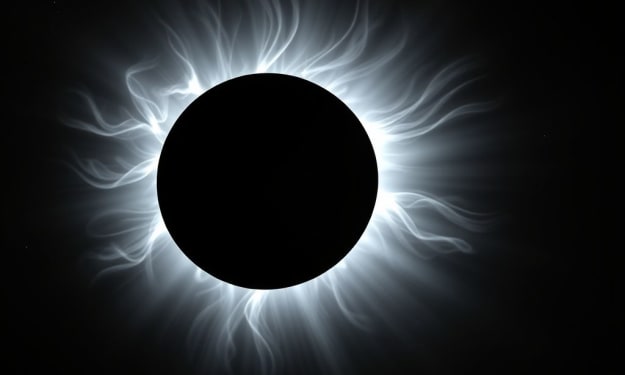
The Solar Corona: The Mysterious Fiery Crown of the Sun
The solar corona is the Sun’s outermost atmospheric layer — its most rarefied and hottest part. Although barely visible from Earth except during a total solar eclipse, the corona holds countless mysteries that scientists have been striving to unravel for decades. What makes it so unique, and why is studying it essential not only to understanding the Sun but also to predicting the space weather that impacts our planet?
By Holianyk Ihorabout a year ago in Futurism
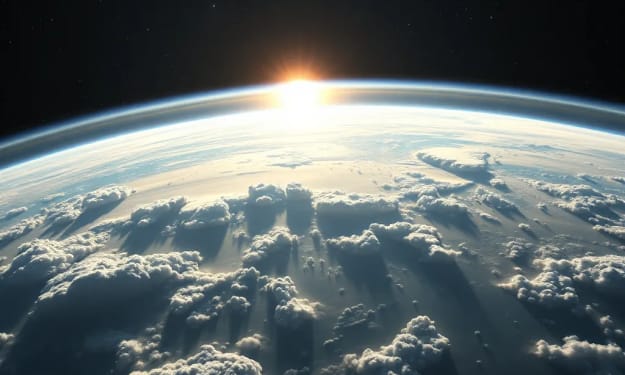
What Is the Exosphere and Why Is It Important?
When we look up at the night sky, it often feels as if space begins just beyond the clouds. However, the boundary between Earth’s atmosphere and outer space is far more complex and mysterious than it seems. The exosphere — the outermost layer of Earth’s atmosphere — stretches far into space and plays surprisingly important roles that affect not only our planet but also humanity’s ventures beyond. Let’s explore what the exosphere really is, what it’s made of, and why it matters so much.
By Holianyk Ihorabout a year ago in Futurism
How the Tiangong Space Station Works: China’s Orbital Harbor of the Future
China’s Tiangong space station is one of the most ambitious projects in modern space exploration, marking a confident leap toward autonomous presence in Earth’s orbit. The name “Tiangong” (天宫) translates to “Heavenly Palace,” and though it’s not made of gold or jade, it is a palace of cutting-edge technology, aluminum, and solar panels orbiting high above us. This station is the third long-term orbital laboratory in human history after the International Space Station (ISS) and Russia’s Mir, and notably, the first to be built solely by one country in the 21st century.
By Holianyk Ihorabout a year ago in Futurism
Astronomy for Kids: Simple Experiments and Observations to Inspire Young Minds
Astronomy is a fascinating science that can captivate children from an early age. It combines the wonder of the night sky, the mysteries of the universe, and the thrill of discovery. The key is to make it accessible and fun. In this article, we’ll explore how simple experiments and observations can ignite a child’s interest in space and science, sparking a lifelong passion for learning.
By Holianyk Ihorabout a year ago in Futurism
Awakening the Sixth Sense: Reclaiming Our Forgotten Power Part 2
The Ancient Mysteries and the Lost Language of Energy There was a time when knowledge wasn't kept in textbooks; it was encoded in temples, carved into stone, sung through chants, and passed on in sacred initiation rites. These weren't just primitive traditions of long-gone civilizations. They were powerful, intentional systems designed to awaken the human soul and reconnect it with the invisible world.
By The Secret History Of The Worldabout a year ago in Futurism
June’s Full Moon: The Enchanting Strawberry Moon of 2025
The night sky is getting ready to present stargazers with one of its most poetic displays—the Strawberry Moon—as the days grow longer and summer settles into the Northern Hemisphere. The 2025 Strawberry Moon is more than simply a celestial event; it will rise on the evening of June 10 and shine at its brightest into the early hours of June 11. People have been captivated by this combination of astronomical uniqueness, natural beauty, and culture for millennia. While the name "Strawberry Moon" may conjure images of a pink or crimson moon, the word actually refers to tradition rather than appearance. The June full moon was named for the season of wild strawberry gathering by Native American tribes, especially the Algonquin people of the northeastern United States. Following the rebirth of spring, nature started to bestow her sweet rewards during this period of warmth and plenty. The June moon is also known by comparable seasonal names in European traditions, such as the "honey Moon" or the "Honey Moon," which reflect the midsummer ritual of making honey and the prevalence of weddings during this time of year.
By Ahnaf Fardin Khanabout a year ago in Futurism
How My Love Horoscope Turned a Lazy Sunday into the Beginning of Something Beautiful. AI-Generated.
My name’s Nora, and if you told me a year ago that I’d be living my very own rom-com moment thanks to an online horoscope, I would’ve laughed so hard I’d spill my morning coffee. But here we are.
By Amber Christina Lohanabout a year ago in Futurism
The First Evidence of Extraterrestrial Life: Are We Alone No More?
For as long as humans have gazed up at the stars, we've asked a profound question: Are we alone in the universe? While the idea of life beyond Earth has long been the stuff of dreams, philosophy, and science fiction, it’s only recently that we’ve begun to gather actual scientific evidence—however tentative—that might suggest we're not the sole inhabitants of the cosmos.
By Holianyk Ihorabout a year ago in Futurism
Why Do Stars Twinkle? The Science Behind the Sparkle
Have you ever looked up at the night sky and noticed how stars seem to flicker, shimmer, or dance? Some twinkle gently, while others seem to blink rapidly as if playing a cosmic game of hide-and-seek. This beautiful celestial effect has inspired poets, dreamers, and scientists for centuries. But what really causes stars to twinkle?
By Holianyk Ihorabout a year ago in Futurism
What Is Cosmic Time and How Do We Measure It?
When we think about time, we often imagine it ticking away steadily, second by second, just like the clocks on our walls or the calendars we flip through each year. On Earth, time feels predictable and constant. But in space, time behaves in strange and fascinating ways. The deeper we explore the cosmos, the more we realize that time in space—often called cosmic time—is anything but ordinary.
By Holianyk Ihorabout a year ago in Futurism