astronomy
Celestial objects and the phenomena that surrounds them. What lies above the earth forever out of reach. From moons, to stars, galaxies, and beyond.
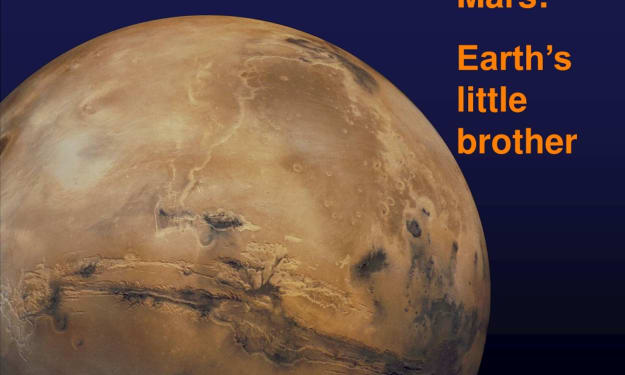
Mars: Earth’s Quiet Little Brother, and Maybe Our Second Chance
I remember the first time I saw Mars through a telescope. It looked like a rusty marble suspended in a black ocean. They call it Earth’s little brother, and honestly, that makes sense. He’s smaller, quieter, a little colder—but still part of the same family. Not as flashy, not as full of life, but somehow just as fascinating. Mars has always been there, staring back at us with a kind of silent mystery. Ancient people looked up at the red dot in the sky and imagined gods of war and fire. They saw something powerful in its blood-red glow. But truthfully, Mars doesn’t feel violent. It feels lonely. Unlike our vibrant Earth—blue with oceans, green with forests, loud with storms and full of life—Mars is dust and silence. The kind of silence that stretches for millions of years. But if you squint a little, you start to see the resemblance. Mars has seasons. Ice caps. Dust storms. Once upon a time, it had rivers. Maybe even oceans. Maybe even life. That’s the part that gets me. Scientists now believe Mars might have been warm and wet billions of years ago. Imagine that—ancient Mars, not red and dead, but blue and alive. Water flowing through valleys, lakes forming under soft skies. And then… something changed. Something massive. The planet lost its magnetic field, they say. Without it, the atmosphere peeled away under the force of solar wind. The water vanished. The warmth faded. The planet dried up and froze over, like a movie paused mid-story. If life ever did emerge there, it didn’t stand a chance. Mars became a graveyard of potential. That’s heartbreaking, in a weird way. It’s like watching your little brother grow up full of hope and promise, only to lose his way. But here’s the wild part—he’s still out there. Still waiting. Still watching. And maybe, just maybe, we’re not done with him yet. Because despite everything Mars lost, he might still have something left to give. Not to himself—but to us. This is why we keep going back. All those missions, all those rovers crawling across the dust—it’s not just science. It’s curiosity. It’s hope. We’re not just looking for signs of life. We’re looking for a new beginning. A second chance. Mars, in all his quiet, broken beauty, might be the next place we call home. Sure, it’s a long shot. Living on Mars won’t be easy. It’s cold. The air’s unbreathable. Radiation’s a problem. But none of that has stopped the dreaming. Elon Musk talks about building cities there. NASA has plans to send astronauts in the next decade. People are seriously considering how to terraform the place—bring back the warmth, thicken the air, maybe even grow green things again. It’s a crazy idea. But maybe that’s exactly what makes it feel so human. We look at a lifeless world and don’t just see rocks—we see possibility. We see home, even in the unlikeliest place. That says more about us than it does about Mars. And maybe that’s what makes Mars feel like family. He’s not just the little brother who fell behind—he’s the one who reminds us who we are. Adventurers. Fixers. Dreamers. Sometimes I catch myself daydreaming about it—waking up on Mars, brushing dust off my boots, watching the pink sky stretch out forever. Earth would just be a bright dot in that sky, far away. But not forgotten. Just… different. Maybe one day, kids will grow up on Mars and learn about Earth the way we learn about ancient lands. Maybe they’ll wonder what it was like to live on the big, blue planet before things changed. Maybe they’ll do better with their world than we did with ours. I don’t know if we’ll ever get there. But I do know this—Mars isn't just a dead rock in space. He’s a mirror. He shows us what we’ve lost, what we could lose, and what we still might find. So next time you look up and see that little red dot glowing in the night sky, think about him—not just as a planet, but as a little brother. Quiet. Watching. Waiting. And maybe, just maybe, hoping we come home.
By Mustafa Aminabout a year ago in Futurism
When the Moon Was Closer: What the Sky Looked Like Millions of Years Ago
Imagine looking up at the night sky hundreds of millions of years ago. The stars were still there, the Milky Way still stretched like a luminous river across the heavens but the Moon? It was a very different sight. Back then, it loomed much larger and brighter in the sky, dominating the night with an intensity we can barely imagine today. Its gravitational pull stirred the seas with incredible force, shaping coastlines and perhaps even influencing the origins of life itself. But how close was the Moon, and what did the world look like beneath its powerful glow?
By Holianyk Ihorabout a year ago in Futurism
What’s the Difference Between a Galaxy and a Nebula?
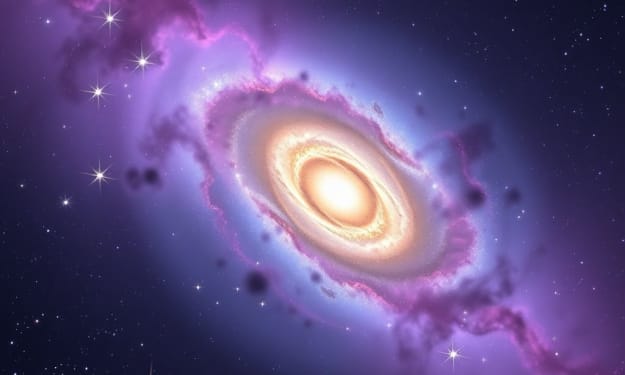
Understanding Cosmic Scale One Cloud at a Time When we gaze at the night sky or marvel at breathtaking telescope images, we often see dazzling spirals, glowing patches, or soft, misty shapes floating in the dark. Some of these spectacular sights are galaxies, while others are nebulae. At a glance, they might seem similar both beautiful, both mysterious but they’re fundamentally different in size, structure, and purpose in the grand architecture of the universe.
By Holianyk Ihorabout a year ago in Futurism
When Did the First Star Light Up the Universe?
A Journey Into the Darkness Before the Dawn When we look up at the night sky today, we're greeted by the soft shimmer of countless stars from brilliant giants to dim, fading embers. Every star we see is a blazing sphere of plasma, burning hydrogen and illuminating the cosmos. But believe it or not, there was a time when the entire Universe was completely dark. No stars, no galaxies, no light. Just vast, empty space. So, when did the very first star ignite and bring light to the cosmos?
By Holianyk Ihorabout a year ago in Futurism
The Earthquake Machine of Nikola Tesla: A Forgotten Power That Shook the World
A Genius Beyond His Time In the flickering light of a Manhattan laboratory, a peculiar man worked alone. Surrounded by coils, tubes, and devices that defied comprehension, he pursued ideas that most people couldn't even dream of. His name was Nikola Tesla.
By The Secret History Of The Worldabout a year ago in Futurism
When Did Humans First See Earth from Space?
A moment in history that forever changed our perception of the world For most of human history, our understanding of Earth was limited to what we could see from its surface. We mapped coastlines, climbed mountains, and gazed at the stars but no one truly knew what our planet looked like in its entirety. That all changed in one extraordinary moment: the day a human first looked down at Earth from the depths of space.
By Holianyk Ihorabout a year ago in Futurism
How Do Solar Sails Work?
Spacecraft Propelled by Light Imagine a spaceship gliding silently through the vast emptiness of space no engine roar, no fuel tanks, and no trail of smoke behind it. Instead of being pushed by burning fuel, it sails gracefully on beams of sunlight. This isn’t science fiction; it’s a real and promising method of space travel known as solar sailing.
By Holianyk Ihorabout a year ago in Futurism
The Mysteries of Mount Roraima: Evidence of Artificial Cuts and the echoes of an Ancient Power
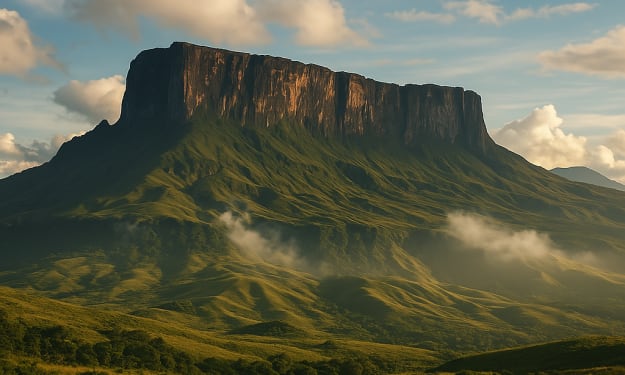
Introduction: The Lost World Above the Clouds High above the Amazon rainforest, where the borders of Venezuela, Brazil, and Guyana meet, a mountain rises like something from another world. Shrouded in mist and mystery, Mount Roraima towers over 9,000 feet, featuring vertical cliffs and a flat summit that stretches across 12 square kilometers.
By The Secret History Of The Worldabout a year ago in Futurism
Could a Planet Be Completely Transparent?
Science Fiction or Physics of the Future? Imagine a planet so clear you could see stars through it a giant glass sphere floating in the depths of space. No clouds, no crust, no shadows of mountains or valleys. Just pure transparency, as if Jupiter were made of crystal. Is this a wild flight of science fiction, or could such a world actually exist?
By Holianyk Ihorabout a year ago in Futurism
Could Earth One Day Lose Its Atmosphere?
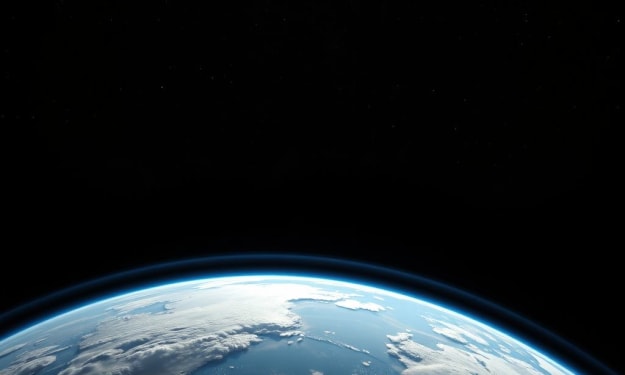
A Journey Into the Planet’s Possible Future The Earth’s atmosphere is a delicate yet vital layer of gases that wraps around our planet like a protective blanket. It gives us the oxygen we breathe, shields us from harmful solar radiation, and traps just enough heat to keep the climate livable. But is this shield eternal? Could Earth someday lose its atmosphere and turn into a barren world like Mars?
By Holianyk Ihorabout a year ago in Futurism
Who Killed the Last Giants of America?
The Giants of America: A Forgotten Chapter In the distant past, towering giants roamed the vast landscapes of North America. These beings were not mere folklore or the product of overactive imaginations; they were real, as the records suggest. From ancient newspaper articles to tribal legends, stories of giant humanoids who once walked the earth abound. Reports claim their bones were discovered in archaeological digs, and their existence intrigues and perplexes those who dare to seek the truth. One chilling question lingers in the background: Who killed the last giants of America? What forces conspired to bring an end to these colossal beings? Was it the encroachment of new civilizations, divine judgment, or something more mysterious? The answers may lie hidden within the cryptic remnants of the past, waiting for us to piece them together.
By The Secret History Of The Worldabout a year ago in Futurism