astronomy
Celestial objects and the phenomena that surrounds them. What lies above the earth forever out of reach. From moons, to stars, galaxies, and beyond.
Imitation claims levelled at 'pretenders' in orbit of Mars
Erecting a three-metre-high monolith on a soundstage in London is one thing, copying the exercise in a sandstone canyon in the Utah desert is another but when a giant plinth shows up on a Martian moon it’s hardly surprising that people start scratching their heads.
By Steve Harrisonabout a year ago in Futurism
Numerology as the Key to Breaking Life Patterns
If you’ve ever wondered why the same challenges keep repeating in your life, toxic relationships, money struggles, career blocks, you’re not alone. Most of us live in cycles, patterns that feel unshakable no matter how much willpower we throw at them. The Egyptians believed these cycles were not random. They believed numbers revealed the invisible architecture of destiny, and numerology was the key to breaking free.
By The Secret History Of The Worldabout a year ago in Futurism
The Ancient Magic of Egypt: History, Mystery & Numerology
How forgotten number magic from the Nile still shapes our lives today There are times in history when a civilization leaves behind something more than monuments, more than stone or gold. Egypt did exactly that. Everyone knows the pyramids, the hieroglyphs, the mummies wrapped in linen, and secrets. But what most people don’t realize is that beneath all of this lies a hidden system of power – the magic of numbers. And this isn’t just dusty history. This is something that can still be used today, something that can change the way you see your own life.
By The Secret History Of The Worldabout a year ago in Futurism
The Secret Language of Numbers: A Journey Through Numerology
The Secret Language of Numbers For as long as humans have looked up at the stars and wondered why we are here, numbers have been part of that search. They are everywhere, in the movements of planets, in the architecture of temples, in the codes of language, in the rhythms of music. To most people, numbers are simple tools: ways to count, to measure, to calculate. But throughout history there have always been those who believed numbers carry something far deeper, a hidden meaning that connects us to the universe itself. This is the essence of numerology: the idea that numbers are not lifeless symbols, but living archetypes with vibration and power.
By The Secret History Of The Worldabout a year ago in Futurism
VASIMR Plasma Engines: The Next Leap Toward Interplanetary Travel
For more than half a century, humanity has been dreaming of Mars. Countless films, novels, and scientific proposals picture astronauts stepping onto the Red Planet’s dusty plains. Yet despite all the excitement, one stubborn obstacle remains: getting there in a reasonable amount of time.
By Holianyk Ihorabout a year ago in Futurism
Unlocking the Hidden Codes of Life: A Deep Dive into Numerology
The Mystery of Numbers Numbers are everywhere in our lives. We see them on clocks, in dates, in addresses, and even in patterns that repeat over and over again. Most of us think of numbers as practical tools: they help us count, calculate, and organize. But for thousands of years, many cultures believed that numbers carried deeper meaning, that they were keys to understanding the structure of life itself.
By The Secret History Of The Worldabout a year ago in Futurism
Agartha: The Hidden Kingdom Beneath Our Feet
Imagine a land no map reveals, a kingdom hidden beyond mountains of stone and ice, far below the noise and light of the surface world. This is Agartha, the fabled inner world where ancient memory, wisdom, and power are said to rest in silence. For centuries seekers have pursued its traces, and skeptics have dismissed it as myth, yet its story refuses to die. Perhaps the legend endures because it reflects not only a lost realm but also a forgotten part of ourselves. The name Agartha carries weight and mystery. Some say it has roots in Sanskrit, others that it evolved from fragments of lost traditions. In esoteric writings Agartha appears as the beating heart of a hidden history, a subterranean civilization of light, advanced knowledge, and technology beyond what surface humanity remembers. Often linked with the Hollow Earth theory, Agartha is not imagined as empty space but as a thriving domain of cities, rivers, energy currents, and guardians of wisdom. According to the legend, Agartha’s civilization was founded by ancestors of immense knowledge who withdrew beneath the earth when the surface was torn apart by war, climate collapse, and natural disasters. Through labyrinthine tunnels and portals they built a world away from the ruins above. At the center of Agartha lies a radiant energy source, often described as an “inner sun.” This is no burning star but a glowing sphere of life force, a spiritual engine that provides light, warmth, and harmony to those who dwell there.
By The Secret History Of The Worldabout a year ago in Futurism
Genetic traits add substance to case for 'engineered' humans
The education system when I was in secondary school necessitated a compromise when selecting O-level subjects which meant I opted to miss out on biology despite wanting to choose it. I had no desire to study French but was “advised” to do so by everyone I consulted, including the parents, who didn’t share my enthusiasm for the only viable alternative: tech drawing. Had it been an option it would certainly have been biology... but the way the subjects were grouped ruled out that possibility.
By Steve Harrisonabout a year ago in Futurism
Earendel: The Most Distant Star Ever Detected
In the spring of 2022, astronomers spotted something extraordinary through the Hubble Space Telescope: a tiny glimmer of light from the edge of the observable universe. At first, many believed it could be a distant galaxy, or perhaps just a cluster of stars blurred together. But now, thanks to the unprecedented clarity of the James Webb Space Telescope (JWST), scientists have confirmed that this faint spark is, in fact, a single star.
By Holianyk Ihorabout a year ago in Futurism
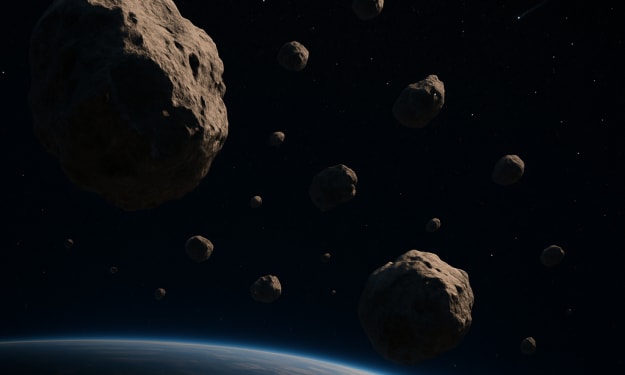
Millions of Small Bodies Threatening Earth Will Soon Be Visible — Predictions from LSST and Next-Generation Sky Surveys
For decades, the night sky has looked like a familiar canvas, dotted with stars, planets, and the occasional streak of a meteor. Yet beneath this seemingly calm picture hides a dynamic swarm of small bodies — asteroids, comets, and other fragments left over from the birth of our Solar System. Many of them cross paths with Earth, sometimes uncomfortably close. Until now, only a fraction of these objects have been cataloged. But that is about to change.
By Holianyk Ihorabout a year ago in Futurism
A World Without America: Imagining the Global Impact
A World Without America: Imagining the Global Impact** The United States of America has long held a prominent role on the world stage. As a global superpower, its influence extends across politics, economics, science, culture, and military affairs. But what would the world look like without America? This hypothetical scenario, though extreme, invites us to explore the positive and negative consequences of a world where the United States does not exist—either historically or in the present. --- Economic Impacts** **Negative Aspects:** Without the United States, the global economy would look drastically different. As the largest economy in the world for much of the 20th and 21st centuries, America's financial systems, such as Wall Street and the U.S. dollar as the world’s reserve currency, have played a stabilizing role in international trade. Many countries rely heavily on the U.S. market for exports, investments, and aid. A world without America would likely experience greater economic instability and slower technological progress due to the absence of American innovations and investments. The absence of major U.S. companies like Apple, Microsoft, Google, and Amazon would significantly alter the global business landscape. The tech industry, in particular, might have developed differently or more slowly without American leadership. Moreover, many countries that benefit from U.S. foreign aid or disaster relief would face greater challenges in crises. **Positive Aspects:** On the other hand, a world without America could lead to a more balanced distribution of economic power. Emerging markets and other developed nations might have had more room to grow without U.S. dominance. The European Union, China, and regional powers could have played more central roles earlier in history, potentially creating a more multipolar economic structure. Additionally, some critics argue that U.S. economic policies have, at times, contributed to global inequality or environmental degradation. In its absence, perhaps global systems would have evolved in a way that prioritized sustainability or social equity more effectively. --- Political and Military Dynamics** **Negative Aspects:** The United States has often acted as a global police force, intervening in international conflicts and providing military support to allies. While this role has been controversial, it has also prevented or ended conflicts, stabilized regions, and deterred authoritarian regimes. A world without America could have seen more unchecked aggression from expansionist powers like Nazi Germany, the Soviet Union, or even modern-day regimes with imperial ambitions. The post-World War II global order, including institutions like the United Nations, NATO, and the World Bank, were all heavily influenced or initiated by the U.S. Without it, these institutions might not exist in their current form—or at all. This could result in weaker international cooperation and less coordinated responses to global crises. **Positive Aspects:** Conversely, some would argue that American military interventions have often led to long-term instability, civilian casualties, or unintended consequences, such as in Iraq, Vietnam, or Afghanistan. Without U.S. involvement in these conflicts, some regions might have found more local, diplomatic solutions to their issues, or avoided certain wars altogether. Furthermore, without the U.S. as a dominant superpower, other nations might have taken on more responsibility for global leadership, possibly leading to more diverse and cooperative forms of governance. --- Scientific and Technological Development** **Negative Aspects:** The U.S. has been a hub for innovation, especially in fields like medicine, aerospace, and information technology. NASA's contributions to space exploration, American universities’ role in academic research, and Silicon Valley's impact on digital technology have all shaped the modern world. Without these, progress in science and technology could have been delayed by decades. In addition, the internet—largely developed and popularized in the U.S.—has become a backbone of modern communication, education, and commerce. Without American leadership in tech, global access to information and digital tools might be less widespread or more fragmented. **Positive Aspects:** However, in a world without America, other nations may have risen to fill the innovation gap. Countries like Germany, Japan, the UK, or even China could have led the way in scientific discovery and technological advancement. This might have resulted in different approaches to technology, perhaps more localized or culturally tailored. --- Cultural Influence** **Negative Aspects:** American culture—through music, movies, fashion, and fast food—has become nearly universal. Hollywood, for example, has played a key role in shaping global entertainment. In a world without America, this cultural cohesion might not exist. People around the world may not share the same cultural references or global icons, leading to a more fragmented global culture. Also, many social movements that gained momentum in the U.S., such as civil rights, LGBTQ+ advocacy, and feminist waves, have inspired change worldwide. Their absence might have slowed progress in human rights and social equality. **Positive Aspects:** On the other hand, some critics view American cultural dominance as a form of cultural imperialism that overshadows local traditions and values. Without it, local cultures might have flourished more freely. Languages, cuisines, art forms, and indigenous traditions might have received more attention and preservation without the overwhelming influence of American pop culture. --- Environmental Consequences** **Negative Aspects:** The U.S. is one of the world’s largest carbon emitters and has been criticized for withdrawing from global climate agreements and prioritizing economic growth over environmental concerns. Its absence might reduce global carbon emissions. **Positive Aspects:** But it’s also true that many environmental innovations—from renewable energy technologies to conservation programs—have roots in the U.S. Without these, the fight against climate change might have fewer tools and resources. Moreover, U.S. scientific institutions have played major roles in researching and communicating environmental risks. ---
By America today about a year ago in Futurism
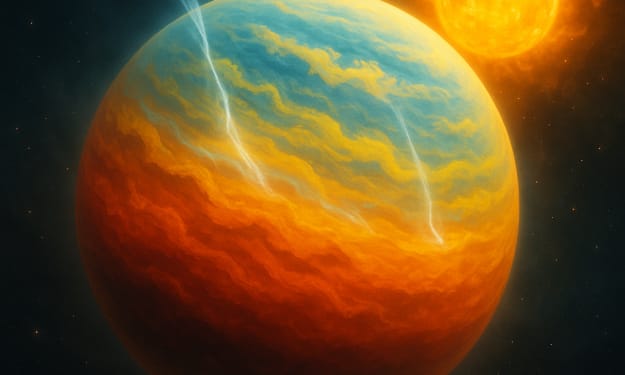
New Observations of Exoplanet WASP-52 b Reveal Helium and Water Despite Its Host Star’s Fierce Radiation
When astronomers first began discovering exoplanets in the 1990s, most of them were little more than faint dots of light in distant skies. Today, thanks to advanced telescopes and precise techniques, these alien worlds are no longer just points in the dark—they are objects we can study in detail, even down to the chemical makeup of their atmospheres. Recently, the hot Jupiter known as WASP-52 b has surprised astronomers with a remarkable discovery: signs of both helium and water vapor in its atmosphere. This is astonishing, considering the harsh radiation from its host star, which should, in theory, strip such fragile molecules away.
By Holianyk Ihorabout a year ago in Futurism