artificial intelligence
The future of artificial intelligence.
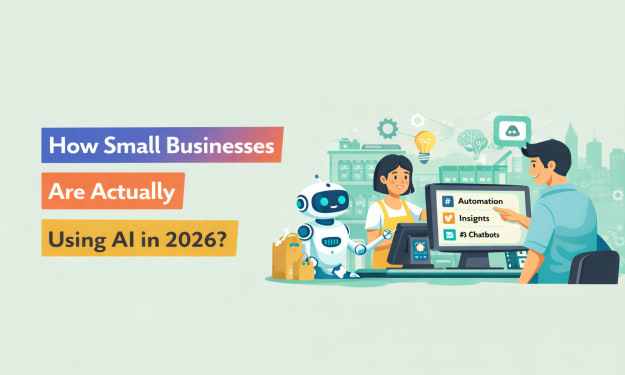
How Small Businesses Are Actually Using AI in 2026?
A bakery owner in Toronto recently described how artificial intelligence changed her weekly routine — not through futuristic robots or complex analytics dashboards, but through a simple forecasting tool that predicts demand based on weather patterns and local events. She used to guess how much to bake each morning. Now she checks a dashboard that suggests production quantities with around 90% accuracy. Waste has dropped. Staffing decisions feel less stressful. Profit margins have improved.
By Mary L. Rodriquez8 months ago in Futurism
The 10,000-Year Memory: Why Microsoft’s New Glass Storage Changes Everything
We are currently witnessing an unprecedented paradox: a civilization that produces more data than any before it, yet relies on the most ephemeral storage media in history. Our collective wisdom is currently etched onto magnetic tapes and spinning disks with lifespans measured in mere years, threatening a "digital dark age" where our history simply evaporates. We are essentially building our digital cathedral on shifting sands, constantly fighting the relentless tide of digital entropy. Microsoft Research’s "Project Silica" offers a definitive break from this cycle of obsolescence. By utilizing a palm-sized square of ordinary glass, researchers have pioneered a method to store vast quantities of information with geological-scale permanence. This isn't just an incremental upgrade to the hard drive; it is a fundamental reimagining of how humanity might preserve its legacy across the millennia. Beyond the Epoch: Data Stability on a Geological Scale The most profound achievement of Project Silica is its conquest of time. Through rigorous "accelerated ageing experiments," researchers have demonstrated that data written into this medium remains stable and readable for over 10,000 years. This lifespan shifts our perspective of data from "temporary state" to "permanent record," moving away from the fragile plastics and magnetic films that have defined the last century. This breakthrough builds on decades of optical physics, specifically the exploration of fused quartz glass. By transitioning to a material that is essentially as stable as a gemstone, we move past the era of periodic "data migration"—the costly and risky process of moving files to new hardware every decade. We are looking at a future where a library can remain silent, cold, and entirely stable without the need for constant maintenance. "Tests suggest the data will be readable for more than 10,000 years... This vastly exceeds the lifetime of conventional archival storage media such as magnetic tape or hard drives." The Siliceous Vault: Two Million Books in Your Palm Project Silica achieves a staggering spatial efficiency that borders on the impossible. A single, thin square of glass—no larger than a drink coaster—can house the equivalent of two million books. This density is achieved by manipulating "voxels," tiny three-dimensional volumes less than a millionth of a meter across, allowing for a storage density of 1.59 gigabits per cubic millimeter. The implications for our global infrastructure are transformative. Our current data centers are massive, energy-hungry monoliths that require multi-billion dollar cooling systems to prevent hardware failure. A glass-based archive, by contrast, requires zero energy to maintain once the data is written, potentially replacing sprawling server farms with compact, energy-neutral glass libraries that could fit in a standard room. Sculpting Reality in Quadrillionths of a Second To write data into the glass without triggering a catastrophic fracture, the system employs "ultrashort" femtosecond laser pulses. A femtosecond is one-quadrillionth of a second (10⁻¹⁵ s). To visualize this scale, consider that comparing ten femtoseconds to a single minute is like comparing one minute to the entire age of the universe. This extreme speed is the secret to the technology’s success. The pulse is so brief that it alters the molecular structure of the glass via an intense electric field before heat has the chance to propagate and shatter the surrounding material. This process utilizes the same fundamental physics that earned the 2023 Nobel Prize in Physics for pioneers like Ferenc Krausz, signaling a major transition where theoretical "attosecond" science is finally being harnessed for industrial-grade applications. From Cinematic MacGuffins to 5D Memory Crystals The concept of a "5D memory crystal" has recently made the leap from the laboratory to the silver screen. In Mission Impossible: The Final Reckoning, a similar glass device is depicted as a secure vault for a sinister, god-like AI. It is a rare moment in science communication where the "bleeding-edge" reality of a lab has caught up to the most imaginative tropes of Hollywood. However, the real-world application is far more grounded and arguably more significant. Companies like SPhotonix are already working to commercialize this "5D glass nanostructuring" developed at the University of Southampton. This isn't just a movie prop; it is a nascent industry aimed at ensuring that our most vital cultural and scientific records survive the rise and fall of the very systems that created them. A Total Architecture for Eternal Retrieval Project Silica’s true value lies in the fact that it is no longer just a laboratory curiosity; it is a comprehensive, end-to-end data platform. The researchers have demonstrated a full lifecycle system—from encoding and writing with "off the shelf" industrial lasers to reading the data via microscopes and applying sophisticated error correction. This maturity suggests the technology is ready for integration into our existing archival workflows. The system balances two distinct storage strategies to meet different needs. The first uses "micro-explosions" to create void-like features for maximum density, while the second alters the refractive index for higher writing speeds—reaching approximately 65.9 megabits per second. This flexibility allows the system to be tailored for different archival priorities, whether the goal is absolute capacity or the rapid ingestion of vast historical datasets. A Final Thought on Human Legacy We are standing at the threshold of a new era in human record-keeping. As ultrafast photonics matures and the complexity of high-speed lasers continues to decrease, the cost of permanence will fall. We are moving from a world of "temporary digital storage," where we must choose what to save every few years, to a world of "permanent archival memory." This shift invites a profound philosophical reflection. In an age where we can finally preserve everything, the burden shifts from the how to the what. If our digital footprints are destined to outlast the very buildings we inhabit, what data is truly worth preserving for the next 10,000 years? We are finally building a mirror that will reflect our image to the distant future; the question remains what that reflection will show.
By The Glitch Archive8 months ago in Futurism
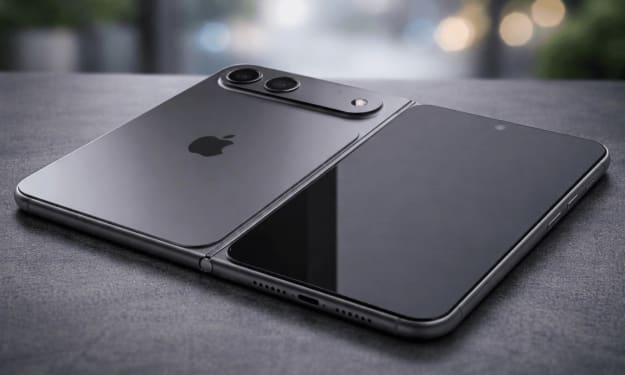
Apple’s 2026 Gamble: Why the Foldable iPhone is Arriving Sooner—and Riskier—Than Expected
For years, the prospect of a foldable iPhone has been the industry’s most persistent "ghost in the machine"—a device perpetually two years away, floating in a limbo of patent filings and supply chain rumors. Market observers long assumed Apple would maintain its characteristic "wait-and-perfect" stance, delaying entry until folding displays reached a level of durability and seamlessness that mirrors a static glass sheet. However, recent data regarding manufacturing schedules suggests an aggressive shift in strategy, indicating that Apple has moved past the stage of cautious experimentation. We are currently witnessing an accelerated supply chain validation that points toward a much tighter release window than most analysts predicted. Rather than a quiet, experimental rollout, the latest production intelligence reveals a coordinated effort to integrate this complex hardware into the heart of Apple’s most profitable hardware cycle. For those who thought the foldable would remain a niche luxury, the 2026 production spreadsheets suggest a far more disruptive reality. The Synchronized Launch Strategy: A Core Volume Driver The most striking revelation from recent production data is the July mass production window for the foldable display. This timeline is not coincidental; it is an aggressive SKU alignment that mirrors the production cycle of the iPhone 18 Pro and Pro Max. By initiating display manufacturing in mid-summer, Apple is positioning the foldable for a high-profile September launch, signaling that this is not a side project but a primary flagship. More importantly, this launch window comes at a time of significant portfolio restructuring. Reports indicate that the base iPhone 18 model will be delayed until the following year, effectively leaving a vacancy in the 2026 lineup. This suggests a massive strategic pivot: Apple likely intends for the foldable to fill the slot of a core volume driver rather than acting as a "luxury extra." By elevating the foldable to this status, Apple is betting the success of its entire fiscal year on a form factor that remains unproven within the iOS ecosystem. A High-Stakes Display Monopoly: The Samsung Necessity Apple’s move toward mass production has necessitated a strategic narrowing of its supply chain, one that carries significant industrial irony. In a departure from its standard "multi-vendor" safety net, Apple is reportedly relying solely on Samsung for these folding displays, even instructing LG Display to "take a step back" from the project. This decision suggests that the technical hurdles of Apple’s "novel hinge mechanism" and custom display components are so high that only Samsung’s mature infrastructure can meet the required yield rates. For a company as risk-averse as Apple, entrusting its most complex hardware launch in a decade to its primary smartphone rival is a move of absolute technical necessity. It highlights a precarious dependency: Apple is sacrificing its usual leverage over suppliers to ensure it can actually manufacture the device. Relying on a single source for a first-generation mechanical pivot increases the stakes exponentially; any yield issues at Samsung could single-handedly derail Apple’s entire 2026 flagship strategy. The Battlefield of Proportions: Chasing the "Wide-Fold" Standard Apple is not entering this market in a vacuum. The industry is already gravitating toward a specific "wide-fold" aspect ratio—a departure from the narrow, "remote control" feel of earlier foldables. Samsung is already deep in development on the Galaxy Z Wide Fold, a device expected to reach consumers well before Apple’s displays even enter the mass production phase in July. This head start means that by the time Apple’s entry arrives, the market will already have a refined understanding of the wide-format utility. As the industry intelligence suggests: "As such, the industry would have already gotten a pretty good feel for how such foldable phones might work, except for anyone who’s played around with the Huawei Pura X." The Huawei Pura X currently serves as the benchmark for this form factor, and Apple will be forced to justify its entry against a landscape of established, iterative competitors who have already cleared the initial "novelty" hurdle. The Argument for "Generation Two": Skepticism by Design Despite the timeliness of the production cycle, the sheer complexity of this machine warrants a healthy dose of analytical skepticism. A folding iPhone is a mechanical minefield, and Apple’s recent track record with first-generation hardware and software transitions—from the FineWoven accessory failure to the structural vulnerabilities seen in high-end iPad Pro models—suggests that early adoption is a high-stakes gamble. History tells us that Apple’s "Generation One" devices often serve as public beta tests for refined "Generation Two" hardware. When you combine a novel hinge mechanism with a history of "glitchy software updates and hardware failures," the risk of a mechanical or systemic breakdown is non-trivial. For the pragmatist, the recommendation is clear: wait for the platform to mature. The 2026 release may be timely, but the physical stress of a folding screen is an entirely different beast than a software bug, and it may take another year for Apple to truly master the physics of the fold. Conclusion: The Future of the Pocket The 2026 production schedule confirms that the foldable iPhone is no longer a speculative project; it is a manufacturing reality. By aligning this device with its Pro lineup and pausing the base iPhone 18, Apple is preparing to force the foldable into the mainstream consciousness. This represents the most significant shift in the smartphone industry since the introduction of the X-series, where the refinement of the iOS ecosystem finally meets the physical flexibility of the screen. As we approach this milestone, the consumer choice becomes more than just a brand preference. It is a question of philosophy: Do you prioritize Samsung’s established hardware iteration and first-to-market wide-format experience, or do you bet on Apple’s high-stakes ecosystem integration and wait for the "perfected" entry, despite the risks of a first-generation launch?
By The Glitch Archive8 months ago in Futurism
Why Your Dream TV Costs a Fortune: The Surprising Reality of OLED Pricing
It is a ritual performed every November: the hypnotic glow of the showroom floor, the deep, ink-pool blacks of a flagship OLED, and the inevitable wince when you finally glance at the price tag. While standard LCDs are practically falling into shopping carts for under $500, a high-end OLED remains a luxury investment. The math behind this disparity is startling; by 2024, the manufacturing cost of a single 65-inch OLED panel had dropped to roughly $600—a figure that, on its own, exceeds the entire retail price of a 65-inch LCD television.
By The Glitch Archive8 months ago in Futurism
Why Fake AI Videos of UK “Urban Decline” Are Flooding Social Media
What Happened A wave of AI-generated videos falsely portraying parts of the UK — especially Croydon in south London — as dystopian hubs of crime and social decay is spreading rapidly across TikTok, Instagram Reels and other platforms.
By Behind the Tech8 months ago in Futurism
How I Stopped Fighting with Photo Editing and Started Creating Again
There is a particular kind of frustration that creative people know intimately. You have the vision. The story burns inside you, ready to be told. The words flow or the concept crystallizes, and everything feels aligned—until you hit the wall of technical execution.
By CEO A&S Developers8 months ago in Futurism
Gemini 3.1 Pro: Google Unveils Upgraded Model for Complex Reasoning Tasks
What Happened Google has launched Gemini 3.1 Pro, an upgraded core intelligence model designed for complex reasoning tasks across science, engineering, research and enterprise workflows.
By Behind the Tech8 months ago in Futurism
Microsoft Fixes Copilot Bug That Surfaced Confidential Emails in Enterprise Accounts
What Happened Microsoft has confirmed that a configuration error in its enterprise AI assistant, Microsoft 365 Copilot Chat, caused the system to access and summarise certain confidential emails unintentionally.
By Behind the Tech8 months ago in Futurism
How Anxiety Over AI Could Spark a New Workers’ Movement
What Happened Rising anxiety over artificial intelligence in the workplace is reshaping how workers across income levels view their job security — and labor experts say that fear could fuel a resurgence in collective organizing.
By Behind the Tech8 months ago in Futurism