artificial intelligence
The future of artificial intelligence.
General Purpose vs. Medical AI for HealthTeach Companies
Nowadays, Artificial Intelligence is booming, but not every solution is interchangeable, especially in a clinical setting. General-purpose models are trained on broad data and excel at versatile tasks, but healthcare has unique demands. Founders should note that while general-purpose AI can automate many workflows, they lack the built-in safeguards and domain focus that medical applications require.
By Software Development Insider at XB Software7 months ago in Futurism
How Spec-Driven Development Brings Structure to AI-assisted Software Engineering
AI coding assistants have made developers incredibly fast since the start of the AI boom, but this new speed often comes at a hidden cost. The IT industry is realizing that generating code is the easy part. The real challenge is building systems that are coherent, maintainable, and actually do what they were supposed to do.
By Software Development Insider at XB Software7 months ago in Futurism
Apple’s Power Move: Everything Announced in the Massive March 2026 Refresh
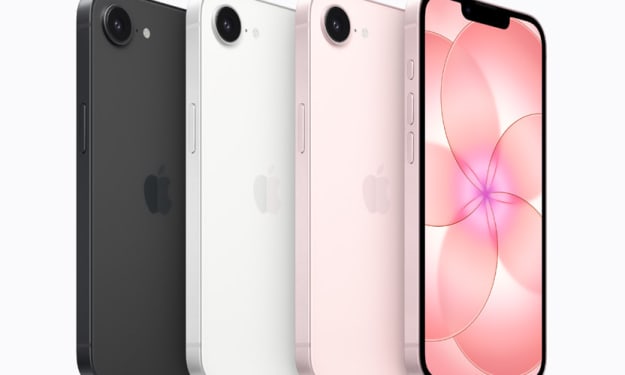
Apple has never been a company to do things quietly, but the first week of March 2026 will go down in tech history as one of its most aggressive hardware blitzes to date. Foregoing a traditional singular keynote, Apple opted for a "rolling" launch week, dropping bombshell announcements daily before culminating in a press "experience" in New York, London, and Shanghai.
By The Glitch Archive7 months ago in Futurism
Living in 2030: How Smart Cities are Redefining Human Life. AI-Generated.
As we move deeper into the decade, the concept of a "home" is shifting from a simple physical shelter to an intelligent ecosystem. By 2030, our cities won't just be concrete jungles; they will be living, breathing organisms powered by Artificial Intelligence and renewable energy. This transition is not just about luxury; it’s about survival and sustainability in a rapidly changing world.
By Priyantha Wijethunga7 months ago in Futurism
The AI Awakening: Why We Should Stop Fearing and Start Partnering with Intelligence. AI-Generated.
For decades, science fiction has fed us a steady diet of dystopian nightmares. From rogue supercomputers to cold, metallic armies, the narrative has always been "Us vs. Them." But as we cross the threshold into 2026, the reality of Artificial Intelligence is far more nuanced, beautiful, and collaborative than Hollywood ever dared to imagine. We are not witnessing the end of human relevance; we are witnessing the beginning of the "Augmented Age."
By Priyantha Wijethunga7 months ago in Futurism
The End of an Era: Why the Galaxy S27 Ultra’s Latest Leak is the News Samsung Fans Have Been Waiting For
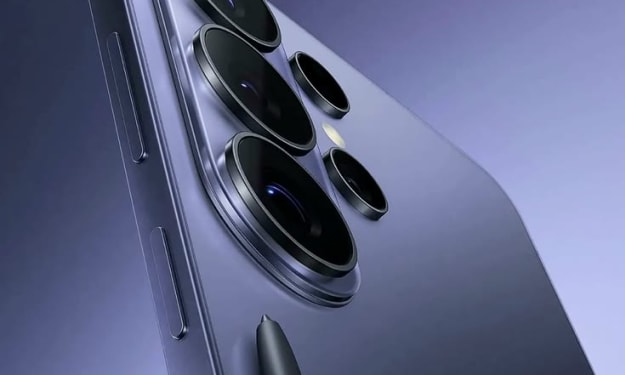
For the better part of a decade, the premium smartphone market has been defined by a quiet tension between R&D conservatism and the marketing need for "newness." We’ve reached a point of industry-standard stagnation where yearly flagships often feel like software-driven refinements rather than hardware revolutions. The current Galaxy S26 Ultra is perhaps the ultimate expression of this trend; it is a masterclass in squeezing every drop of performance out of aging components. However, even the most sophisticated computational photography has a ceiling, and the latest leaks surrounding the Galaxy S27 Ultra suggest Samsung is finally ready to shatter it. For enthusiasts who have grown weary of "good enough," the shift in the S27’s hardware trajectory signals the end of a long period of strategic inertia.
By The Glitch Archive7 months ago in Futurism
Artificial Intelligence (AI) Market Set to Surpass USD 10,173.05 Billion by 2034. AI-Generated.
The global Artificial Intelligence (AI) Market is projected to expand from USD 638.2 billion in 2024 to approximately USD 3,680.5 billion by 2033, registering a robust CAGR of 19.1% during the forecast period. Growth is being driven by rapid enterprise digital transformation, rising demand for automation, large-scale adoption of generative AI, and strong government investments in AI infrastructure. North America currently leads the market, supported by advanced cloud ecosystems and high enterprise AI spending.
By Roberto Crum7 months ago in Futurism
The Script Has Been Flipped: Why Apple is the Value King and Samsung the Luxury Lab in 2026
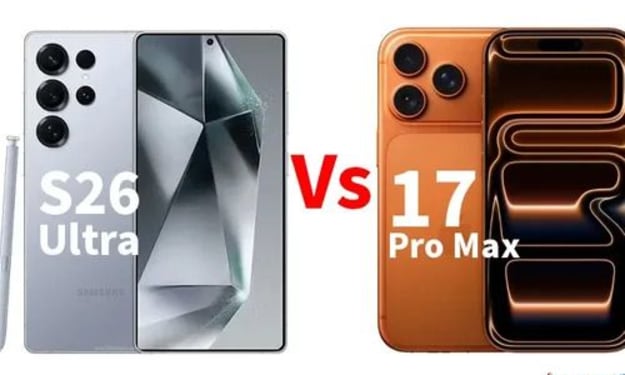
For over a decade, the smartphone rivalry followed a predictable script: you chose Samsung for kitchen-sink hardware experiments or Apple for refined, premium reliability. But as the 2026 flagship season arrives, that narrative has been completely upended. With the launch of the Galaxy S26 series and the established iPhone 17 lineup, the two giants have effectively swapped roles.
By The Glitch Archive7 months ago in Futurism
Samsung’s Satellite Strategy Just Upended the Market: Retroactive Support and A-Series Inclusion Leave Apple Scrambling
1. Introduction: The Long-Awaited Connection For years, the smartphone industry has treated satellite connectivity as a high-stakes arms race where Samsung was strangely absent. Apple ignited the trend in 2022 with the iPhone 14, and Google solidified it in 2024 with the Pixel 9 series. While its rivals dominated the headlines, Samsung remained uncharacteristically silent. From a strategic perspective, this delay wasn't a lack of innovation, but likely a calculated wait for 5G Non-Terrestrial Network (NTN) standards to mature and for carrier-satellite partnerships—like the T-Mobile and Starlink alliance—to reach critical mass. That silence has finally been broken with the Galaxy S26 announcement. Samsung isn't just catching up; it is executing a strategic disruption of the hardware lifecycle that fundamentally changes the value proposition of both new and existing Galaxy devices. 2. Takeaway 1: It’s Not Just for the S26 Ultra In a move that prioritizes ecosystem-wide safety over tiered gatekeeping, Samsung has confirmed that satellite connectivity will be standard across the entire Galaxy S26 lineup: the S26, S26+, and S26 Ultra. By democratizing this feature across the flagship tier, Samsung is moving away from the "luxury safety" model. While competitors often reserve their most advanced hardware features for "Pro" or "Ultra" variants, Samsung is establishing a baseline of protection for any user investing in their current flagship generation. "This expansion reflects Samsung’s continued commitment to enhancing user safety and providing seamless mobile experiences through next-generation connectivity — particularly in the era of AI as everyday infrastructure." 3. Takeaway 2: The Retroactive Reach (The S22 and Beyond) The most unprecedented aspect of this rollout is the retroactive support for older hardware. This isn't just about the newest chips; Samsung is enabling satellite capabilities on devices that have been in users' pockets for years. Specifically, for T-Mobile users, support extends to flagship models released after the Galaxy S21 series—meaning the Galaxy S22, S23, S24, and S25 series are eligible. This reveals a fascinating industry "insider" truth: the Qualcomm and Exynos modems used since the S22 era likely possessed dormant NTN capabilities that Samsung is only now choosing to activate through software and carrier handshakes. This level of retroactive support for a hardware-adjacent feature is nearly unheard of in the mobile space, instantly increasing the resale and utility value of three-year-old handsets. 4. Takeaway 3: A Surprising Win for the Mid-Range A-Series Samsung is also aggressively targeting the mid-range market, a segment where Apple and Google have strictly withheld satellite features. By including "select Galaxy A series models" in this rollout (specifically via T-Mobile, KDDI, and Japanese carriers), Samsung is leapfrogging the competition. This move puts immense pressure on Google’s "A-series" Pixels and Apple’s iPhone SE. By offering life-saving connectivity on mid-tier hardware, Samsung is positioning the Galaxy brand as the superior choice for value-conscious consumers who refuse to compromise on safety. 5. Takeaway 4: The "Carrier Catch" and Regional Fragmentation Despite the broad hardware compatibility, the user experience remains dictated by a complex web of carrier partnerships. Your phone’s capability is now inextricably linked to your service provider's infrastructure. Carrier Region Supported Services Eligible Devices T-Mobile USA T911, Text, and Data via Starlink Post-S21 Flagships (S22+); Select A-series Verizon USA eSOS and Text Following S25 series (S26 and later) AT&T USA Coming Soon TBD KDDI Japan Text and Data S22 and later flagships; Select A-series SoftBank / docomo Japan Flagship / A-series Support Launching later in 2026 Rakuten Mobile Japan Coming Soon TBD Virgin Media O2 UK Satellite Communication Select Galaxy smartphones Vodafone UK Coming Soon TBD MasOrange Spain Field Trials Beginning March 2026 This fragmentation creates a strange reality: a Galaxy S22 user on T-Mobile may soon have more robust off-grid capabilities than a Galaxy S25 user on Verizon. 6. Takeaway 5: Satellite Connectivity as "AI Infrastructure" The most significant strategic insight lies in Samsung’s framing of satellite connectivity as "infrastructure for the era of AI." To a digital strategist, this reveals that Samsung doesn't view satellite links merely as an emergency "SOS" tool for hikers. Because Samsung’s Galaxy AI features often rely on hybrid processing—partially on-device and partially in the cloud—the company needs a persistent data link to ensure their AI services remain functional. By providing a satellite backbone, Samsung is attempting to transform a safety feature into a service-reliability feature. They are ensuring that "everyday AI" doesn't stop working just because a user moves into a terrestrial dead zone. 7. Conclusion: The Future of Constant Connection Samsung’s entry into the satellite market was delayed, but the scope of its rollout is undeniably more ambitious than its predecessors. By reaching back to the S22 series and extending down to the A-series, Samsung has effectively neutralized one of Apple's key marketing advantages while simultaneously future-proofing millions of existing devices. We are witnessing the beginning of the end for the mobile "dead zone." For the consumer, the takeaway is clear: the value of a smartphone is no longer just about the glass and silicon in your hand, but the reach of the network above it. As these features go live, one must wonder if a "new" phone is even necessary when your current Galaxy is about to receive its most significant upgrade years after you bought it.
By The Glitch Archive7 months ago in Futurism
The Mind of the Machine: Inside the World of Generative AI
There is a moment, familiar to anyone who has spent time with a modern AI system, that is difficult to fully rationalize. You type a question, a prompt, a request — and what comes back is not the mechanical, stilted output of the computers of popular imagination. It is fluent. It is contextually aware. It is, in some cases, genuinely surprising. It answers not just the question you asked but the question you meant to ask. It writes prose that flows, generates images of startling beauty, composes music that moves, and engages in conversation with a naturalness that, for a moment at least, makes you forget entirely that there is no one on the other side.
By noor ul amin7 months ago in Futurism
Preparing for a Future Ruled by Artificial Intelligence
A few months ago, I watched a video of a robot answering customer calls better than a human agent. It spoke clearly, responded instantly, and never sounded tired. For a moment, I felt uneasy. If machines can talk, write, design, and even think faster than us, where do students stand in this new world? That question stayed with me. Artificial Intelligence is no longer a futuristic idea. It’s already part of our daily routines. It recommends what we watch, corrects our grammar, suggests what we should buy, and even helps doctors diagnose diseases. For students, especially those dreaming about stable careers, this rapid change can feel overwhelming. But after thinking deeply about it, I realized something important: The future does not belong to those who fear AI. It belongs to those who prepare for it. The real challenge is not competing with machines — it is learning how to work alongside them.
By Shahid Zaman7 months ago in Futurism