artificial intelligence
The future of artificial intelligence.
A Beginner's Guide to AI Technologies for eCommerce
Are you an eCommerce business owner looking to incorporate AI technologies into your business model? If so, you're in the right place! In this post, we'll be discussing a beginner's guide to AI technologies for eCommerce. We'll be covering topics such as what AI is, how it can help eCommerce, the benefits and challenges of using AI and eCommerce, AI technologies for eCommerce, best practices for implementing AI in eCommerce, and more. So, let's get started!
By Patrick Dihr4 years ago in Futurism
The hyperlocal ecommerce era- Symbolizing scalability for aspiring businesses and prosperity in the industry
Introduction The ecommerce industry has been growing pretty tremendously over the years. It has changed its nature over time and has traversed a variety of paths. As a matter of fact, the sudden outbreak of the pandemic of covid19 in 2020, gave no time to businesses to think about, to strategize and make plans about their modus operandi.
By Dr. Shamael Zaheer Khan4 years ago in Futurism
Microsoft AI-Powered Bing
Microsoft has been in the news lately for unveiling its new AI-powered Bing search engine. This development is a significant milestone for the company, which has been working on improving its search engine capabilities for some time. With this new release, Microsoft aims to enhance its search experience and provide users with more personalized and relevant results.
By Manikandan Raja4 years ago in Futurism
Artificial intelligence in mass surveillance
Introduction The focus of this will be a look, review and discussion of artificial intelligence been used for mass surveillance across and what could be the benefit and the disadvantages of doing so. It will investigate who is the one creating, supplying, and using this technology as well as explaining exactly what technology is. But before doing those, it will be important to first explain what artificial intelligence is and what mass surveillance is.
By Alain junior4 years ago in Futurism
The Future of Hyperlocal Ecommerce: How Software is Driving Innovation
As people embraced social distancing, the home quarantine become a new normal, they turned to online shopping more than ever before. As per the report by NielsenIQ data shows that 67% of all consumers report they have changed the way they shop due to COVID-19, and this figure is poised for further growth. Interestingly, the retailers too stepped up to the challenge, not just by supporting more online sales but by embracing the emerging technologies that created fresh connections with the post-pandemic era shoppers in order to make their shopping experiences more convenient. And this gave birth to one of the most challenging segments is e-commerce that is hyperlocal.
By Mohammad Rafe4 years ago in Futurism
What is the meaning of time? Is it a waste of life or just an illusion created by us to live better in this world?
Time is a fundamental concept that has puzzled philosophers, scientists, and thinkers for centuries. At its core, time refers to the sequence of events that occur in the physical universe, which enables us to measure the duration of events and the intervals between them. However, the meaning of time goes beyond its measurable aspects, and it has profound implications for how we understand our existence and our place in the universe. In this essay, I will explore the meaning of time and examine whether it is a waste of life or an illusion created by us to live better in this world.
By Word Weaver 4 years ago in Futurism
ChatGPT: Your Personalized Learning Assistant or a Threat to Your Job!
The potential replacement of human labor by chatbots like ChatGPT and artificial intelligence (AI) has received a lot of attention in recent years. While it's true that AI is transforming many different businesses, it's important to realize that AI may also be used as a tool to increase your personal productivity and talents.
By Rijith Rajan4 years ago in Futurism
The Benefits and Cautions of Artificial Intelligence
Artificial intelligence (AI) is a rapidly evolving field of technology that has the potential to revolutionize many aspects of our lives. AI has already been integrated into many areas of our society, such as healthcare, transportation, and entertainment, and has brought numerous benefits, including improved efficiency, accuracy, and safety. However, as AI becomes more ubiquitous, there are also concerns about its potential negative impacts, such as job displacement, bias, and privacy violations. In this essay, we will explore the benefits and cautions of artificial intelligence and what we must consider to ensure that AI continues to improve our lives in a responsible and ethical manner.
By Sebastião Kiala4 years ago in Futurism
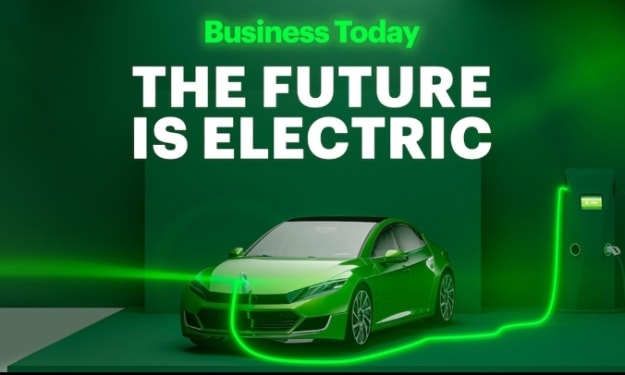
Electric vehicle
* Electric vehicles full details Electric vehicles (EVs) are automobiles that run on electric power stored in rechargeable batteries instead of gasoline or diesel fuel. The batteries power an electric motor which turns the wheels of the car. Here are some details about electric vehicles: Types of Electric Vehicles: There are mainly three types of electric vehicles: • Battery Electric Vehicles (BEVs): These vehicles run entirely on electric power and have no gasoline engine. • Plug-in Hybrid Electric Vehicles (PHEVs): These vehicles have both an electric motor and a gasoline engine. They can run on either electric power or gasoline. • Hybrid Electric Vehicles (HEVs): These vehicles have both an electric motor and a gasoline engine. However, the electric motor is only used to assist the gasoline engine and cannot power the car alone. 1.Battery: The battery is the most critical component of an electric vehicle. It stores the electric energy that powers the vehicle's electric motor. Batteries are typically made of lithium-ion cells, which are similar to the batteries used in cell phones and laptops. The battery capacity is measured in kilowatt-hours (kWh), and the higher the kWh rating, the longer the vehicle can travel on a single charge. 2.Charging: Charging an electric vehicle is different from filling a gas tank. EVs are charged by plugging them into an electric charging station. The time it takes to charge an EV depends on the size of the battery and the power of the charging station. A typical home charging station can take between 6 to 8 hours to fully charge a battery, while a fast charging station can recharge a battery to 80% in as little as 30 minutes. 3. Range: The range of an electric vehicle refers to how far the car can travel on a single charge. The range of an EV depends on the size of the battery and the driving conditions. Typically, most electric vehicles have a range of between 100-300 miles on a single charge. 4. Performance: Electric vehicles offer instant torque, which means they can accelerate quickly from a standstill. They are also quieter and smoother than gasoline-powered vehicles because they have fewer moving parts. However, electric vehicles may have a lower top speed than gasoline-powered vehicles. 5. Maintenance: Electric vehicles have fewer moving parts than gasoline-powered vehicles, so they require less maintenance. They don't need oil changes or transmission fluid replacements, and their brakes tend to last longer because of regenerative braking, which uses the electric motor to slow down the vehicle and recharge the battery. 6. Cost: Electric vehicles tend to have a higher upfront cost than gasoline-powered vehicles. However, they have lower operating costs because electricity is cheaper than gasoline, and electric vehicles require less maintenance. The cost of charging an EV varies depending on electricity rates and the size of the battery. Some countries offer tax credits and incentives for purchasing an electric vehicle, which can help offset the initial cost. Electric vehicle advantages Electric vehicles (EVs) have a number of advantages over gasoline-powered vehicles. Here are some of the main advantages: 1. Environmentally Friendly: Electric vehicles emit zero tailpipe emissions, which means they don't produce any harmful pollutants such as carbon dioxide, nitrogen oxides, or particulate matter. This makes them a more environmentally friendly option compared to gasoline-powered vehicles, which contribute to air pollution and global warming. 2. Energy Efficient: Electric vehicles are more energy-efficient than gasoline-powered vehicles. They convert over 77% of the electrical energy from the grid to power the wheels, while gasoline-powered vehicles only convert about 12-30% of the energy stored in gasoline. This means that electric vehicles are more efficient in terms of energy use and require less energy to travel the same distance. 3. Lower Operating Costs: Electric vehicles have lower operating costs compared to gasoline-powered vehicles. Electricity is cheaper than gasoline, and electric vehicles require less maintenance since they have fewer moving parts. This means that EV owners can save money on fuel and maintenance costs over the lifetime of the vehicle. 4. Quieter and Smoother Driving Experience: Electric vehicles are quieter and smoother than gasoline-powered vehicles because they have fewer moving parts. They offer a more pleasant driving experience since there's no engine noise or vibrations. 5. Better Performance: Electric vehicles have instant torque, which means they can accelerate quickly from a standstill. They also provide a smooth and linear power delivery, which can make driving more enjoyable. Additionally, electric vehicles can often achieve higher efficiency and performance compared to gasoline-powered vehicles. 6. Government Incentives: Many countries offer incentives for purchasing electric vehicles, such as tax credits, rebates, and exemptions from road taxes and congestion charges. These incentives can make electric vehicles more affordable and attractive for consumers. Overall, electric vehicles offer many advantages compared to gasoline-powered vehicles, making them a more sustainable and cost-effective option for transportation.
By VIJAYSHARMA4 years ago in Futurism