artificial intelligence
The future of artificial intelligence.
How AI is Revolutionizing Customer Service in 2025
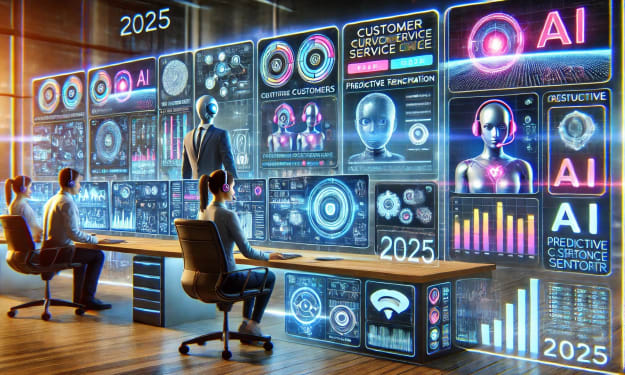
Customer service is evolving faster than ever, and artificial intelligence is at the heart of this transformation. Gone are the days of long hold times, frustrating automated menus, and inconsistent support. In 2025, AI-powered customer service solutions are making interactions faster, smarter, and more personalized than ever before. Businesses that adopt AI-driven customer service are not just keeping up with trends—they are setting new standards for customer experience.
By Jay Phoenix2 years ago in Futurism
Elon Musk 2028? What If He Ran for President – A Tech Billionaire’s Path to the White House
Elon Musk for President in 2028? Is He the Future of American Politics? Elon Musk is no stranger to disruption. From revolutionizing the auto industry with Tesla to launching rockets with SpaceX, his ability to challenge the status quo is unparalleled. But what if Musk turned his attention from Mars to Washington, D.C.?
By Diana Crooks2 years ago in Futurism
What does it mean to have Venus or Shukra in Arda Nakshatra?
Venus in Ardra Nakshatra: A Deep Analysis Introduction to Ardra Nakshatra Ardra Nakshatra, the sixth Nakshatra in Vedic astrology, is associated with transformation, turmoil, and chaotic events. The name "Ardra" translates to "moist one" or "green," symbolizing emotional intensity and change. Ruled by the fierce deity Rudra, the god of storms and destruction, this Nakshatra carries the themes of destruction and renewal. The symbol of Ardra is a teardrop, signifying both sorrow and cleansing. People with planets in Ardra often experience significant upheavals in their lives, leading to profound personal growth.
By Saartha Bhandari2 years ago in Futurism
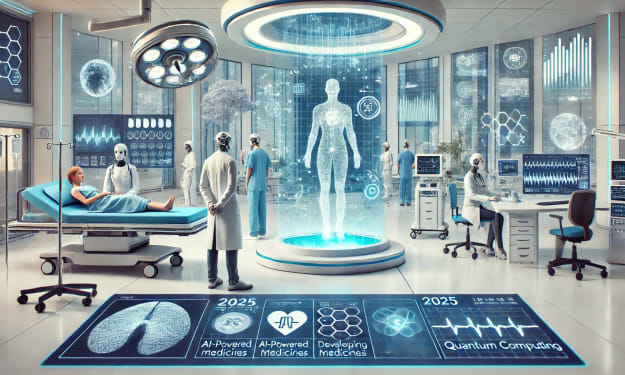
How Healthcare Will Change in 2025 Due to AI
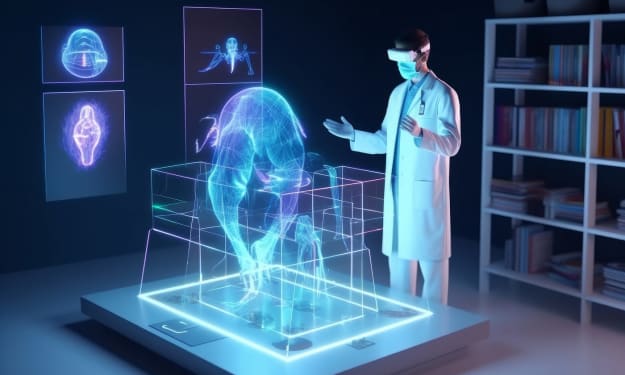
In the healthcare industry, artificial intelligence is no longer a sci-fi idea. It has here and is transforming how doctors treat patients, detect illnesses, and provide individualised care. By 2025, artificial intelligence (AI) will play a crucial role in the medical sector, simplifying processes, enhancing patient outcomes, and lowering human error. Today's developments are paving the way for a future in which healthcare is more intelligent, quicker, and available to everyone. Early disease detection is one of the most innovative uses of AI in healthcare. Conventional diagnostics can occasionally overlook important warning indicators because they mainly rely on human expertise. AI-powered systems now evaluate medical photos, test reports, and genetic data with unmatched accuracy. Even the most seasoned medical professionals may miss trends that machine learning algorithms can spot. This is especially true for cancer detection, where AI-powered imaging software has proven to be more accurate than traditional techniques in detecting malignant tumours. Early disease detection greatly increases survival rates and lessens the overall strain on healthcare systems. By customising medicines for each patient based on their genetic composition, lifestyle, and medical history, AI is also revolutionising personalised medicine. Patients are no longer given one-size-fits-all care. Rather, AI-powered algorithms examine enormous volumes of patient data to forecast which therapies will be most effective for a given person. Faster recovery times, improved therapeutic efficacy, and less adverse medication reactions are the results of this. AI is being used by pharmaceutical companies to research new drugs more quickly, which will cut down on the time and expense needed to bring life-saving drugs to market. AI-powered robotics is making surgical procedures safer and more accurate. AI-assisted robotic devices are now used by surgeons to improve accuracy, lower risks, and speed up recovery. These robots ensure that procedures are carried out as accurately as possible during minimally invasive surgery. By optimising operating room schedules and resource allocation, AI-driven predictive analytics also assist hospitals in more effectively planning procedures. Chatbots and virtual health assistants are two of the most important ways AI is changing healthcare in 2025. Patients no longer have to spend hours in packed waiting rooms or wait weeks for a doctor's visit. Chatbots and virtual assistants with AI capabilities offer immediate medical advice, respond to enquiries about health, and even identify prevalent ailments. Healthcare is becoming more accessible thanks to these instruments, particularly in impoverished and distant locations with a shortage of medical experts. Another area where artificial intelligence is having a significant impact is electronic health records. Systems with AI capabilities can evaluate and compile patient data, relieving healthcare providers of some of their administrative workload. Now, instead of concentrating on paperwork, doctors and nurses can devote more time to patient care. Predictive analytics powered by AI assists hospitals in anticipating patient needs, improving resource management, and lowering readmission rates. AI is also becoming increasingly important in the treatment of mental illness. AI-powered solutions are offering much-needed assistance in response to the growing demand for mental health care. Real-time counselling, mood monitoring, and cognitive behavioural therapy procedures are all provided via AI-powered chatbots and virtual therapists. More people will have access to mental health support when they need it thanks to these technologies, which serve as supplemental resources rather than a substitute for human therapists. The application of AI to pandemic preparedness and response is another noteworthy development. Large volumes of global health data are analysed by AI algorithms to identify possible outbreaks before they spread. By better allocating resources and putting preventive measures in place, these predictive models assist governments and healthcare institutions in planning ahead. Millions of lives could be saved if pandemics could be predicted and handled with AI-driven insights. Even with all of these developments, problems still exist. Since AI depends on enormous datasets that contain sensitive patient data, data privacy and security issues are at the forefront. It is crucial to make sure that this data is safeguarded and handled morally. Furthermore, appropriate training and cooperation between technology developers and medical practitioners are necessary for incorporating AI into healthcare systems. AI in healthcare appears to have a very bright future. AI will grow in importance as a tool for disease diagnosis, therapy customisation, and enhancing patient care as technology advances. The healthcare system is becoming more effective, accessible, and patient-responsive as a result of AI and medical professionals working together. Whether AI will revolutionise healthcare is no longer the question; rather, it is how rapidly we can adjust to this change and realise its full potential.
By Horror best kahani2 years ago in Futurism
Top 5 AI-Powered Marketing Tools You Should Try Today
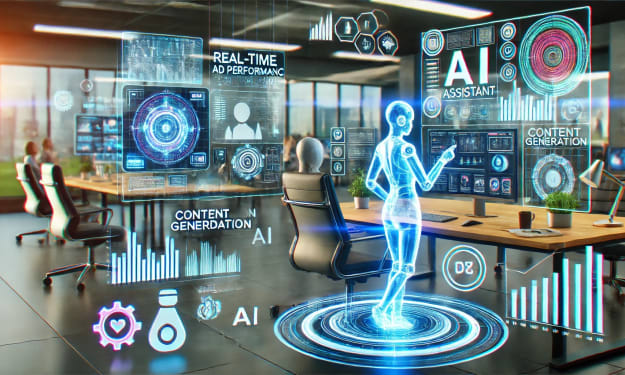
Marketing in 2025 is faster, smarter, and more data-driven than ever before. Businesses are no longer relying solely on traditional strategies. Instead, they are harnessing the power of artificial intelligence to optimize campaigns, engage customers, and generate high-quality leads. With AI, companies can predict trends, personalize content, and maximize their return on investment.
By Jay Phoenix2 years ago in Futurism
Best AI Tools for Small Businesses in 2025
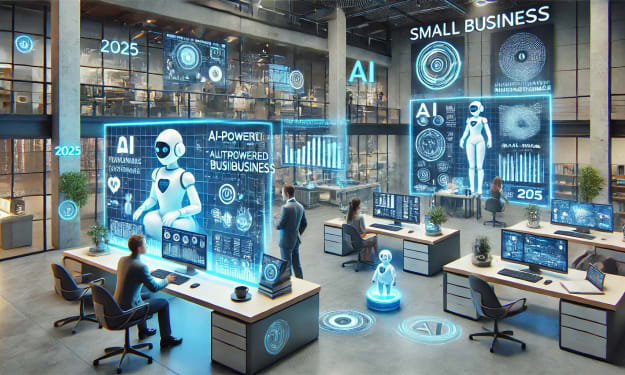
Small businesses are no longer playing catch-up in the world of artificial intelligence. In 2025, AI is not just for tech giants—it’s for entrepreneurs, startups, and mom-and-pop shops looking to compete on a global scale. AI tools are helping small businesses streamline operations, improve customer service, and increase revenue like never before.
By Jay Phoenix2 years ago in Futurism
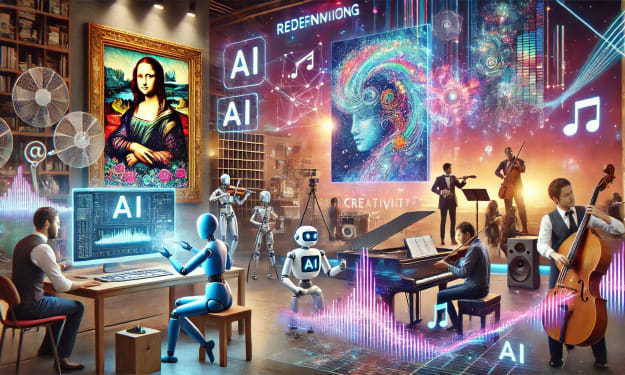
How AI is Redefining Creativity in Art and Music
For centuries, creativity has been seen as a uniquely human trait. Artists and musicians have relied on their imagination, emotions, and experiences to produce works that inspire, provoke thought, and move people. But in 2025, artificial intelligence is challenging that very notion. AI is no longer just a tool; it has become an active participant in the creative process. From composing symphonies to generating breathtaking digital paintings, AI is redefining what it means to be creative.
By Jay Phoenix2 years ago in Futurism
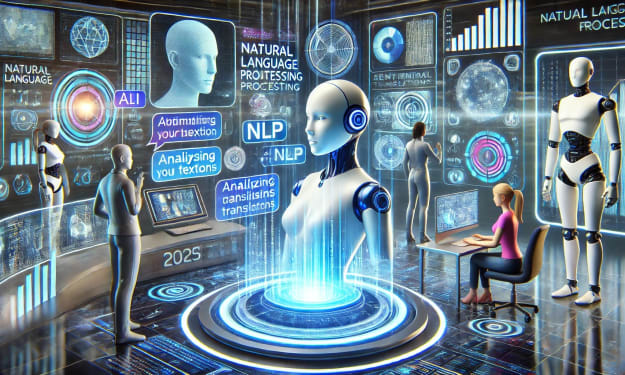
The Evolution of Natural Language Processing in 2025
Natural Language Processing has come a long way in recent years. From simple chatbots to highly advanced conversational AI, the ability of machines to understand and generate human language is now more sophisticated than ever. In 2025, NLP is no longer just a tool for automation; it is transforming industries, enhancing communication, and even reshaping how humans interact with technology. The evolution of NLP is one of the most exciting advancements in artificial intelligence, and its impact is only growing stronger.
By Jay Phoenix2 years ago in Futurism
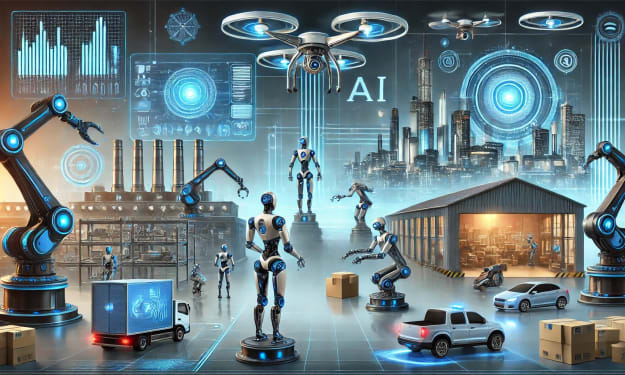
AI and Robotics: The Next Frontier in Automation
Artificial intelligence and robotics are no longer confined to science fiction. They are transforming the way we work, live, and interact with the world. Automation is no longer just about speeding up repetitive tasks—it’s about revolutionizing industries, enhancing efficiency, and even redefining the concept of human labor. The next wave of AI-powered robotics is poised to reshape entire economies, and the changes are happening faster than most people realize.
By Jay Phoenix2 years ago in Futurism
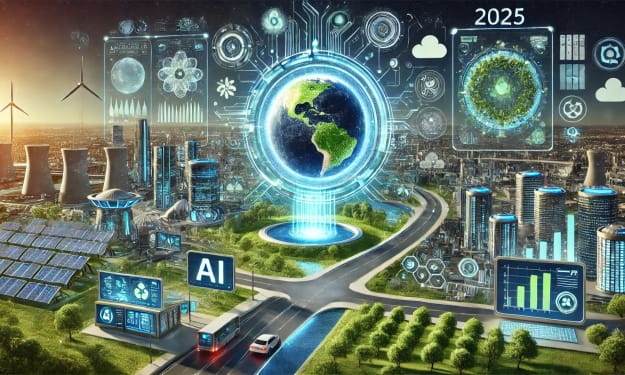
The Role of AI in Climate Change Solutions: A 2025 Perspective
Climate change is one of the most pressing challenges of our time. The effects are everywhere—rising global temperatures, extreme weather events, and biodiversity loss. Scientists, policymakers, and activists are fighting to slow its impact, but now, artificial intelligence is stepping in as a powerful ally.
By Jay Phoenix2 years ago in Futurism
How AI is Transforming Healthcare in 2025
Artificial intelligence is no longer a futuristic concept in healthcare. It is here, revolutionizing the way diseases are diagnosed, treatments are personalized, and medical professionals interact with patients. In 2025, AI is not just an assistant but an integral part of the medical industry, streamlining workflows, improving patient outcomes, and reducing human error. The advancements happening today are shaping a future where healthcare is smarter, faster, and more accessible to people worldwide.
By Jay Phoenix2 years ago in Futurism