artificial intelligence
The future of artificial intelligence.
Next-Generation AI Features in Smartphones Transforming User Experience in 2025
The landscape of AI features in smartphones has evolved dramatically in 2025, marking a transformative era in how we interact with our mobile devices. These advanced capabilities have moved far beyond simple voice commands and basic automation, entering a realm where artificial intelligence seamlessly integrates into every aspect of our daily smartphone use.
By Nicole Wills2 years ago in Futurism
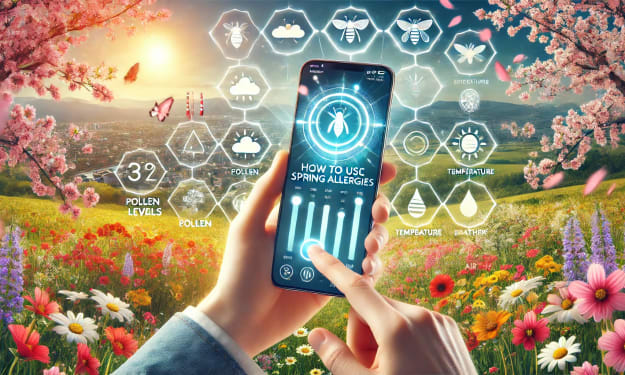
How to Use Apps to Track Spring Allergies and Weather Changes
Spring is a season of renewal, but for many people, it also marks the return of sneezing, itchy eyes, and runny noses. As flowers bloom and trees release pollen, allergy sufferers brace themselves for months of discomfort. Thankfully, technology has made it easier to track allergens and weather changes with the help of apps. These digital tools help users plan their outdoor activities, manage symptoms, and even receive alerts when pollen levels spike. Let’s explore how these apps work, real-life examples of their effectiveness, and the best ones to download this spring. Understanding Spring Allergies and Weather Changes Spring allergies, also known as seasonal allergic rhinitis (hay fever), are triggered by airborne pollen from trees, grasses, and weeds. The most common culprits include: Tree pollen (oak, birch, cedar) – Common in early spring Grass pollen (Bermuda, ryegrass) – Peaks in late spring and early summer Mold spores – Thrive in damp conditions, especially after rain Weather plays a significant role in allergy severity. Windy days spread pollen over long distances, while rainy days temporarily wash it away but increase mold growth later. Warm temperatures speed up pollen release, making some days worse than others. For those with allergies, staying informed about pollen and weather conditions can make all the difference. That’s where apps come in. How Allergy and Weather Apps Can Help Allergy and weather tracking apps use real-time data, AI predictions, and user reports to help individuals manage their symptoms effectively. These apps provide: Daily pollen forecasts based on geographic location Air quality reports to assess pollution and allergen levels Weather updates to predict pollen dispersal Symptom tracking to identify patterns over time Alerts and notifications when conditions worsen Let’s look at some real-life scenarios where these apps have been game-changers. Real-Life Examples of Allergy Apps in Action/
By Pure Crown2 years ago in Futurism
Spring Tech Trends: What’s Blooming in the Digital World
Spring is a season of renewal, and the tech world is no exception. As flowers bloom and the days grow longer, new trends emerge, shaping the way we interact with technology. From AI advancements to eco-friendly innovations, this season brings fresh ideas and digital transformations. Let’s explore the top tech trends making waves this spring. 1. AI-Driven Personalization: Smarter and More Intuitive Artificial Intelligence (AI) continues to evolve, offering more personalized experiences than ever. This spring, AI-driven recommendations are enhancing everything from shopping and entertainment to health and wellness. Smart Shopping: Online retailers are leveraging AI to provide tailored product suggestions based on browsing habits, purchase history, and even seasonal preferences. Entertainment & Streaming: Platforms like Netflix, Spotify, and YouTube are refining their algorithms to better understand user moods and seasonal interests.
By Pure Crown2 years ago in Futurism
The Mars Vision of Elon Musk: Humanity's Most Ambitious Journey
Elon Musk has a plan for Mars—a vision so bold it could become the most ambitious journey humanity has ever embarked upon. The work to turn this dream into reality has already begun. Some view it as a utopia, others as a dystopian nightmare, but what we are truly witnessing is the future according to Elon Musk.
By Lisa Ann Bastiaan2 years ago in Futurism
Revealing New Evidence from the Lost Civilization of Atlantis. Content Warning. AI-Generated.
Revealing New Evidence from the Lost Civilization of Atlantis The so-called legend of Atlantis has intrigued historians, archeologists , and explorers for decades. The Atlantis civilization, first reported by Plato in 360 BCE as a technologically sophisticated society that lost the favor of the gods and ultimately unsubscribed into the ocean, has long been the vessel of theories and disagreement. But recent findings and technological developments have breathed new life into the notion that Atlantis could indeed have been a real place, not just a fairy tale. They still don’t know where Atlantis is, but it was about 10,000 B.C. when the lost civilization was, until now. The Lost Civilization of Atlantis: New Evidence
By kalu ram meena2 years ago in Futurism
Quantum Consistency Condition and Closed Timelike Curves: An Examination of Deutsch’s Proposal
The possibility of closed timelike curves (CTCs) arises from the equations of general relativity. As a result of certain solutions, a particle may traverse a path that loops back to its past. One can observe that such phenomena bring about questions regarding causality and time. The means in which quantum mechanics addresses these issues is of considerable interest. This article examines the proposal put forward by David Deutsch, an Oxford physicist, who posited a self-consistency condition for particles on CTCs.
By Abigail Goldwater (Guldvatten)2 years ago in Futurism
Can You Run a Successful Ad Campaign Without Meta or Google?
Is there a probability for success without the major players of digital marketing? Marketers have depended on Meta and Google as the main platforms for online advertising for quite a while now. They’re considered irreplaceable by many companies because of their widespread customer base, refined targeting, and in-depth statistics. However, with increasing expenses, competitions, and stricter confidentiality laws, some companies are discovering other ad platforms.
By Strique GCC2 years ago in Futurism
The Quantum Paradox: How Future Technology Will Redefine Human Existence. Content Warning. AI-Generated.
The Quantum Paradox: How Future Technology Will Redefine Human Existence In the year 2045, humanity stood on the brink of a new epoch, one that promised to redefine existence itself. Quantum technology has progressed beyond the theoretical into the realm of the practical, reshaping the very fabric of reality. In this brave new world, the boundaries between life and machine, consciousness and code, were dissolving into a vast, interconnected web of possibilities.
By kalu ram meena2 years ago in Futurism
Elon Musk-Led Group Proposes Buying OpenAI for $97 Billion, Sam Altman Declines
In a bold and unexpected move, billionaire entrepreneur Elon Musk and a group of investors have reportedly proposed acquiring OpenAI, the artificial intelligence research and development firm, for a staggering $97 billion. However, OpenAI's CEO, Sam Altman, has firmly rejected the offer, signaling the company's intent to remain independent and focused on its long-term mission. This development has sparked widespread discussion in the tech industry about the future of AI, corporate control, and Musk’s ongoing influence in the sector.
By Delta Roblox Executor Download APK 2026 latest New Update2 years ago in Futurism