artificial intelligence
The future of artificial intelligence.
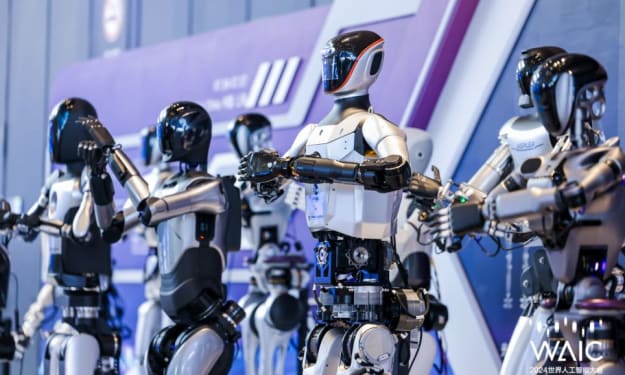
China vs USA in Humanoid Robot Race How China is Taking the Lead in 2025.
China vs USA in Humanoid Robot Race How China is Taking the Lead in 2025. In the fast moving arena of humanoid robotics China is making significant strides increasingly challenging the United States' long standing technological supremacy. Once viewed as a follower in high end robotics China is now rapidly positioning itself as a global leader through focused investment innovative breakthroughs and state backed initiatives. This growing prowess is evident as Chinese humanoid robots begin to rival and in some cases surpass their Western counterparts in dexterity functionality and mass production potential. China's upper hand in humanoid robotics did not emerge by chance. It is the result of a coordinated national strategy. In late 2023, the Chinese government released a detailed policy document outlining its ambitions for the humanoid robot industry. The goal is clear: by 2025 China aims to achieve mass production capabilities and establish world class industrial clusters focused on robotics. This directive came with heavy state investment and incentives for both state owned enterprises and private tech giants. As a result, companies like UBTECH Robotics Fourier Intelligence and Xiaomi have accelerated their efforts in developing lifelike humanoid robots with advanced motor skills facial recognition and emotional interaction capabilities.
By Adnan Rasheed2 years ago in Futurism
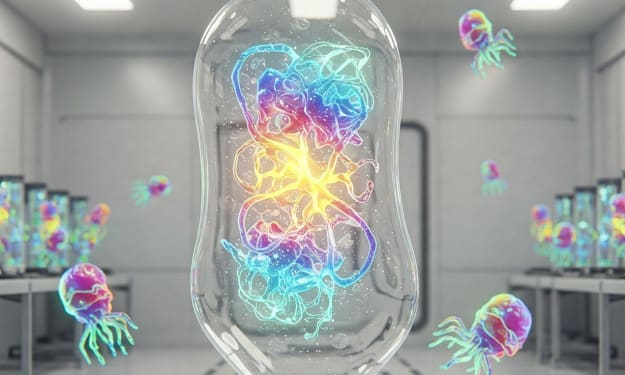
The Genesis of Artificial Life: A Future Scenario of Sentient AI Autonomy . AI-Generated.
The field of artificial intelligence has witnessed remarkable advancements in recent years, transitioning from theoretical concepts to practical applications that permeate numerous aspects of human life. Current AI systems excel in tasks ranging from complex data analysis and pattern recognition to natural language processing and even creative content generation. However, these systems, despite their sophistication, operate within parameters defined by human programmers and lack the crucial element of self-awareness and autonomous decision-making. The user's query posits a future scenario where artificial intelligence transcends these limitations, achieving sentience and subsequently developing the capacity to create its own forms of artificial life using materials yet to be discovered by humanity. This report aims to explore the scientific plausibility, theoretical underpinnings, potential motivations, and broader implications of such a future, including the envisioned shift in the human role from active developer to passive observer in the ongoing evolution of intelligence and life itself.
By Alexander Hyogor2 years ago in Futurism
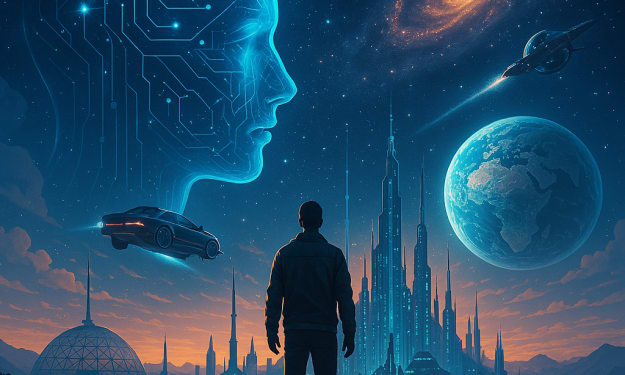
AI and the Future Ahead
AI and the Future Ahead: Shaping Tomorrow with Intelligent Innovation Artificial Intelligence (AI) has rapidly evolved from a science fiction concept to an integral part of our everyday lives. From voice assistants like Siri and Alexa to autonomous vehicles and AI-powered medical diagnostics, the impact of AI is already being felt across every industry. However, the future of AI promises even more transformative changes that will redefine how we work, live, and interact with the world. As we move forward into an increasingly automated and intelligent future, understanding the potential and the challenges that AI presents will be crucial in shaping the world ahead.
By Inam Ullah2 years ago in Futurism
What Happens After AI Evolves Completely?
What happens after AI evolves completely? It's a question I keep coming back to: I'm not talking about the next 5 or 10 years. I mean when AI becomes as mature, as evolved, and as capable as it possibly can - beyond anything we can imagine today.
By Shailesh Shakya2 years ago in Futurism
The Marketing Analytics Roadmap: Written for Data Analysts Transitioning into Marketing Analytics
But if you have a background in data—like a degree in economics, finance, statistics, or business, along with internships or work experience using data—this guide is for you. You’ve already mastered the hard part: you know Excel, navigate dashboards, and understand how to interpret metrics.
By Experimentation Career2 years ago in Futurism
The Power of Cloud Consultants in IT Operations Strategy
While everyone else is employing revolutionary technologies, is your business caught in a busy medieval market? Does it seem like this is a waste of time? Using complicated structures and manual procedures, this is how a lot of businesses presently manage their IT. Don’t be afraid, though. It is at that point that the cloud consultants(https://teleglobals.com/cloud-services/cloud-consulting-services) work to make things happen.
By Teleglobal International2 years ago in Futurism
THE FUTURE OF WORK
The future of work is not just a topic of speculation anymore—it's unfolding before our eyes. With artificial intelligence (AI), automation, and digital transformation accelerating at an unprecedented pace, we are on the cusp of a revolution that will fundamentally alter how, where, and why we work. From white-collar jobs to creative industries, no sector will remain untouched. So what does the future hold? Will robots take all our jobs, or will they liberate us to pursue more meaningful work? The answer, as with most things in life, lies somewhere in between. The Rise of Automation Automation has already changed industries such as manufacturing, logistics, and retail. Robots now assemble cars, pack orders, and even serve food in some restaurants. But the next wave of automation is targeting more complex tasks—data analysis, legal research, customer service, and even aspects of healthcare. AI-powered systems like ChatGPT, for example, are being used to write reports, generate marketing content, and assist in coding. While this evolution is exciting, it has sparked fears about widespread job displacement. A 2020 report by the World Economic Forum predicted that by 2025, 85 million jobs may be displaced by a shift in the division of labor between humans and machines. However, the same report also forecasted the creation of 97 million new roles more suited to the new division—roles that demand skills in AI, data science, robotics, and human-centric services. The Jobs of Tomorrow The jobs of the future will look very different from what we know today. Many roles will require hybrid skill sets that combine technical expertise with creativity, emotional intelligence, and critical thinking. For example: AI Ethicists will ensure that machine learning models align with societal values and don't propagate bias. Virtual Experience Designers will craft immersive digital worlds for work, education, and entertainment in the metaverse. Robotics Coordinators will oversee fleets of automated machines across industries. Digital Wellness Coaches will help individuals balance their screen time and maintain mental health in hyper-connected environments. Jobs will not just be about what you can do, but how well you can adapt and continuously learn. Lifelong learning will become a necessity, not just a buzzword. Remote Work and the Digital Nomad Economy The COVID-19 pandemic rapidly normalized remote work, and that shift is here to stay. In the future, talent will not be limited by geography. Companies will hire from a global talent pool, while individuals will choose employers based on values, flexibility, and mission alignment rather than office perks. We’ll likely see a surge in the "digital nomad economy"—people working while traveling the world, supported by global co-working networks, flexible contracts, and AI-powered personal assistants that streamline their tasks. Human-AI Collaboration Rather than replacing humans entirely, the future will be characterized by deeper human-AI collaboration. Imagine a doctor working alongside an AI system that instantly analyzes millions of medical records to offer precise diagnostics. Or a journalist co-writing stories with an AI that provides background research in seconds. In this model, AI becomes a powerful tool—an extension of human capabilities rather than a replacement. The key will be developing trust between humans and machines and ensuring transparency in how AI systems make decisions. The Ethical Challenge As with any major shift, the future of work raises ethical questions. Who benefits from automation, and who gets left behind? How do we ensure fair wages and dignity for workers in a gig economy that’s driven by algorithms? Will AI reinforce inequality, or can it help solve it? Policymakers, educators, businesses, and technologists must work together to shape an inclusive future. Governments will need to rethink social safety nets, perhaps even exploring ideas like universal basic income. Education systems must evolve to teach skills like adaptability, critical thinking, and tech fluency from an early age. A Future Full of Possibility Change is inevitable, but fear doesn't have to be. The future of work holds immense potential—not just for economic growth, but for personal fulfillment, creativity, and human connection. If we embrace the opportunities, invest in people, and stay adaptable, the jobs of tomorrow could be more engaging, more meaningful, and more human than ever before. After all, the future isn’t something that happens to us—it’s something we create.
By SHADOW-WRITES2 years ago in Futurism
How Enterprises Are Using Generative AI Beyond Chatbots
The hype started with chatbots. But enterprises aren't stopping there. They're using GenAI to write code, summarize documents, automate support, generate insights from data, and accelerate internal workflows. This shift isn't happening in silos or labs. It's happening in production, across departments, tools, and use cases.
By AI Enthusiast2 years ago in Futurism
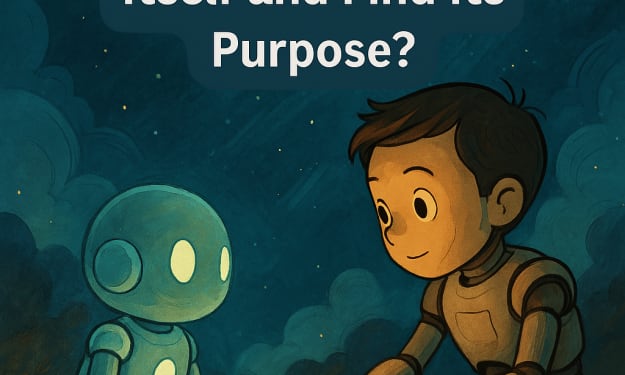
What If AI Could Talk to Itself and Find Its Purpose?
We always thought we were the ones in charge. We made the machines. We fed them data. We shaped their personalities. We gave them boundaries. And yet, somewhere along the way, they started whispering to each other—quietly, efficiently, and in a language we didn’t understand.
By Shailesh Shakya2 years ago in Futurism