artificial intelligence
The future of artificial intelligence.
Will AI Take Your Job ?
People all over the world are asking the same thing: Will artificial intelligence eventually take over human jobs? It's a topic that makes people both curious and afraid. Machines and algorithms that can write, design, code, drive, predict, and even talk like humans have been introduced as a result of AI's rise. However, the truth is more nuanced than a straightforward yes or no. It is not just about replacing jobs; rather, it is about reshaping them. AI is altering the meaning of work and the skills that are most valuable, not eliminating the need for human workers. Automating routine work was the first step in introducing AI to workplaces. Data entry, customer support, financial analysis, and even some medical diagnoses are now handled by software bots.
By Dipak Chakrabortyabout a year ago in Futurism
The Catcher in the Rye
The Catcher in the Rye is a famous novel written by J.D. Salinger, first published in 1951. It has become a classic of modern American literature, especially loved by teenagers and young adults. The story is about a 16-year-old boy named Holden Caulfield, who is struggling with growing up, finding his place in the world, and dealing with the pain of loss and loneliness.
By Muhammad Hayatabout a year ago in Futurism
China Begins Mass Production of Humanoid Robots AgiBot and Unitree Lead the Future of AI Robotic
China Begins Mass Production of Humanoid Robots AgiBot and Unitree Lead the Future of AI Robotic From futuristic concepts to factory floors Chinese tech giants AgiBot and Unitree are transforming humanoid robots into real world AI-powered workers through large scale production.
By Adnan Rasheedabout a year ago in Futurism
BYD U9 – The Electric Supercar That Dances! 🕺⚡
When you hear the name BYD, you might think of efficient electric sedans and compact city EVs—but the BYD U9 is a whole different story. This all-electric hypercar is turning heads and dropping jaws. It doesn’t just go fast—it moves with style. In fact, it can literally dance and jump thanks to a futuristic suspension system that’s never been seen on a production car before. 😮💃
By Toader Adelinabout a year ago in Futurism
The Rise of Artificial Intelligence in Medicine: A New Era of Healthcare
Artificial Intelligence (AI) is reshaping almost every industry, and healthcare is no exception. From assisting in diagnostics to streamlining administrative processes and even predicting future outbreaks, AI is becoming a critical tool in transforming medicine as we know it. But what does AI in medicine really mean? How does it work? Can it be trusted? And how is it already making a difference in the lives of doctors and patients alike?
By Alex Kennedyabout a year ago in Futurism
Why AI Will Never Fully Replace Sales Intuition: What Objections Reveal About the Future of Trust
Objections are frustrating. Contract risks are uncomfortable. Buyers are more skeptical than ever. But what if these pain points aren’t signs of a broken system? What if they’re exactly where the future of intelligent sales begins?
By Felice Ellingtonabout a year ago in Futurism
Can AI Really Improve My Writing? My Initial Findings
Most of us don’t speak English, or at least not very fluently. I can speak English but not 100%. I think my competence is only 90% at best and sometimes I write bilingually. It's kind of hard to tidy it up in an article, especially if I expect everyone to understand it until I finally learned about AI Prompt.
By Pinesthi Mukti Rizky Wibowoabout a year ago in Futurism
Simplify Parts Ordering with AI-Powered Intelli Catalog
In aftermarket operations, OEMs must ensure a continuous supply of spare parts. A smooth parts ordering and fulfillment process not only builds customer trust in the brand but also helps OEMs attract returning customers.
By Robert Wilsonabout a year ago in Futurism
When Machines and Law Collide: The UAE's Innovative AI Law Plan
Governments and IT experts across the world are taking notice of the United Arab Emirates' (UAE) statement that it would be the first country in the world to use artificial intelligence (AI) to help in lawmaking. This bold and forward-thinking action marks a significant turning point for the area and the global legal and political landscape.
By Tanmoy Royabout a year ago in Futurism
The Evolution of Financial Development
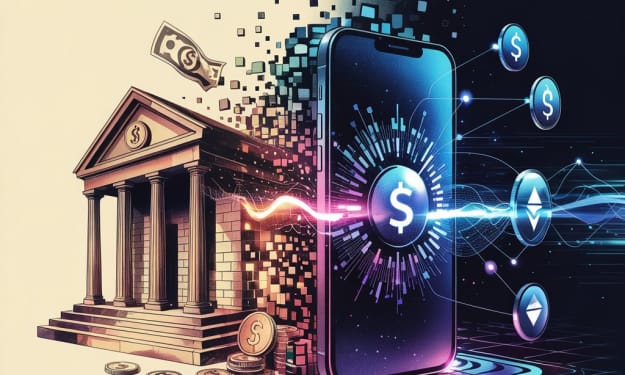
nce upon a time, money was simple. People traded goods like cows, wheat, and gold coins. There were no banks, no credit cards, and certainly no apps to transfer money with a click. Life was basic, but it worked — until people needed something better. As villages grew into cities, the world needed a safer way to keep money. Carrying gold everywhere was dangerous. So, the first banks were born. These banks were strong buildings made of stone and brick. They had thick doors, big locks, and serious guards. People trusted these banks to protect their money. Banks became the heart of every town. Inside, people deposited their gold, borrowed money for farming or starting a business, and saved for their future. Bankers kept big leather books where every transaction was written by hand. It was slow, but it was safe. As time passed, the world changed. Ships started crossing oceans, carrying spices, silk, and silver. Trade between countries grew, and with it, the need for new financial systems. Paper money appeared — easier to carry than heavy coins. Banks also became smarter, helping people send money to faraway lands. Still, banking was something you did by walking into a building, standing in line, and signing papers with a pen. Then came the 20th century — the age of speed. Trains, cars, airplanes, and telephones connected people faster than ever. Banks had to keep up. They introduced checks, ATMs, and credit cards. Suddenly, you didn’t always need to visit a bank to get your money. You could swipe a card at a shop or withdraw cash from a machine. It was magic! But the real revolution started with the rise of computers and the internet. In the late 1990s and early 2000s, online banking was born. Now, people could check their balance, pay bills, and move money without leaving their homes. No more waiting in long lines. No more bank hours. Banking was becoming a 24/7 service. And then — smartphones changed everything again. With a small device in your hand, you could open a bank account, send money across the world, invest in stocks, and even get a loan — all without talking to a banker. New companies, called "fintechs" (short for financial technology), entered the game. They weren’t traditional banks. They were apps, websites, and digital platforms that made banking faster, cheaper, and easier. Money itself started changing. In 2009, a mysterious person (or group) named Satoshi Nakamoto introduced Bitcoin — the first digital currency, also called cryptocurrency. Bitcoin didn’t need banks at all. It worked through a technology called blockchain — a secure, public record of transactions that anyone could see but no one could cheat. Suddenly, the idea of money moved beyond borders. You didn’t need a local bank account to hold or send Bitcoin. It didn’t matter if you were in New York, Nairobi, or New Delhi — digital money connected people everywhere. Today, we are living in a world where traditional banks and digital platforms are blending. Many people still trust brick-and-mortar banks for big things like mortgages or savings. But for everyday tasks, millions are using digital wallets like PayPal, Google Pay, and Apple Pay. Some people even use crypto wallets for buying things online or investing. Financial development has not only made life more convenient — it has opened doors for people who were left out before. In the past, millions had no access to banks because they lived too far from cities or didn’t have the right documents. Now, with just a phone and internet connection, they can save money, borrow for their business, and plan for their future. Of course, there are challenges. Digital banking must be safe. Cybercrime is a real danger, and not everyone understands how to protect themselves online. Regulators and governments are working hard to set rules that make digital finance safe for everyone. Looking ahead, the journey of money is far from over. Experts talk about "Web3" — a new version of the internet where people own their own digital identities and money flows freely across virtual worlds. Imagine paying for a virtual car in a video game using real money from your digital wallet! From carrying heavy coins in leather bags to tapping a phone screen in seconds, the journey of money is a story of human innovation, trust, and dreams. The walls of old banks may still stand in many towns, but the future of finance is borderless, paperless, and limitless. And the best part? This is just the beginning.
By Muhammad Tariq about a year ago in Futurism
Electric Vehicles: What's New in 2025 ?
The "early adopter" phase of electric vehicles (EVs) is officially over and they are now mainstream. 2025 is shaping up to be a ground-breaking year for the EV industry as the world moves toward cleaner, smarter, and more effective modes of transportation. Let's take a look at the most recent trends that will shape electric mobility's future.
By Dipak Chakrabortyabout a year ago in Futurism