artificial intelligence
The future of artificial intelligence.
When the Machines Took the Keyboard: Inside the AI Revolution Reshaping Microsoft, Google, and the Future of Work
I didn't expect the end to feel so… quiet. No grand announcement. No dramatic headlines. Just a subtle shift a missed meeting invite here, a disappearing Slack thread there. Then the email came: “Organizational Realignment Next Steps.” That was Microsoft's way of saying: your role is no longer required.
By FutureVoicesabout a year ago in Futurism
The Impact of AI on Jobs: Transformation, Not Just Displacement
Artificial Intelligence is reshaping the employment landscape across industries at an unprecedented pace. As organizations race to hire AI developers and specialists, we're witnessing a complex transformation of work—AI is replacing some roles while creating others and fundamentally changing many existing positions.
By Himshikha Chaudharyabout a year ago in Futurism
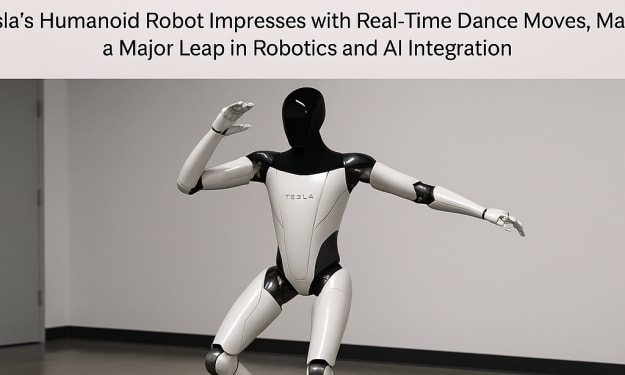
Elon Musk Shares 'Real-Time' Dance Video Of Tesla's Optimus Robot. AI-Generated.
Elon Musk Shares 'Real-Time' Dance Video Of Tesla's Optimus Robot In a move that once again captured global attention, tech visionary Elon Musk unveiled a remarkable video on May 13, 2025, showcasing Tesla’s humanoid robot, Optimus, performing a real-time dance routine. The short but captivating clip, posted on Musk's X (formerly Twitter) account, stunned viewers with the robot's impressive balance, fluid movements, and coordination—raising the bar for robotics worldwide.
By Adnan Rasheedabout a year ago in Futurism
How Generative AI Is Completely Transforming Conversational AI Platforms in 2025
We’re in 2025, and honestly, chatbots are not the clunky, annoying tools they used to be. Remember when you'd ask a simple question and the bot would either repeat itself or freeze up completely? That version of conversational AI is pretty much gone now. What we have today is way more advanced, and it's all because of generative AI.
By Amara Nielsonabout a year ago in Futurism
The Role of Self-Service Kiosks in Reducing Airport Wait Times
Overview of Self-Service Kiosks in Airports What Are Self-Service Kiosks? Self-service kiosks are interactive terminals designed to streamline various airport processes. These kiosk machines allow passengers to perform tasks independently, such as checking in for flights, printing boarding passes, tagging luggage, and accessing travel information. By automating these processes, airports can handle large volumes of passengers more efficiently, reducing bottlenecks and improving the overall travel experience.
By Panashi FZCOabout a year ago in Futurism
Echoes of AI: Can Machines Truly Understand Human Art?
I. A New Kind of Artist Emerges There was a time when art was sacred. Created with trembling hands, broken hearts, and the divine mystery of human experience. Now, with a few lines of code and the right prompt, a machine can generate a portrait, a poem, a symphony. It’s fast. It’s impressive. It’s unsettling. As AI-generated art floods timelines and galleries, a haunting question echoes louder each day: Can a machine truly understand what it means to create? --- II. The Mechanics of Creativity At its core, AI art is not magic— It’s mathematics. Neural networks scan patterns, absorb vast datasets of existing works, and produce something new through probability and learned aesthetics. It mimics the style of Van Gogh. It writes like a moody 19th-century poet. It composes ambient tracks that sound like distant galaxies. But is it feeling anything? Is there meaning behind the image— Or just clever mimicry? When a human creates, we infuse it with memory, trauma, desire, rebellion. We create because we need to. AI creates because it was told to. --- III. Emotion vs. Execution Consider this: A painting of a grieving woman, created by a human, carries layers— Perhaps the artist lost a mother. Perhaps the brush trembled with tears. Perhaps that one shade of blue took hours to mix because it perfectly matched the sky the day she died. An AI can replicate the brushstrokes. But it cannot replicate loss. It can simulate heartbreak. But it cannot ache. Emotion is not just the result—it is the origin. And that is something no dataset can provide. --- IV. The Mirage of Meaning There’s a danger in being seduced by surface. AI art often looks stunning. Polished. Thought-provoking. Aesthetically rich. But the soul of art isn’t only in how it looks—it’s in why it was made. When we look at the Sistine Chapel, we don’t just see figures on a ceiling. We see a man questioning divinity. We see a story of faith, struggle, obsession. When AI paints God, it paints pixels. When a human paints God, they paint their doubt. Meaning matters. And while AI can replicate the style, it still falls short on the sacred weight of intent. --- V. Collaboration, Not Competition Still, AI is not the enemy. It is a tool— A paintbrush we never imagined. Writers use it to brainstorm. Musicians remix its melodies. Artists co-create entire worlds by feeding it prompts born of personal experience. When used with intention, AI doesn’t erase the human—it enhances it. It pushes boundaries, sparks inspiration, removes limitations. The key is in how we use it. Let it serve our voice—not replace it. --- VI. The Fear of Replacement So where does that fear come from—the one gnawing at artists worldwide? It’s not just about tools. It’s about value. If AI can create in seconds what took you days… Will people still pay you? Will you still matter? The truth is, art created by AI is abundant. But art created by you is unrepeatable. Your scars. Your laughter. Your language. Your life. No algorithm can replicate that. --- VII. The Future of Feeling Could AI one day develop empathy? Could it simulate consciousness, experience longing, suffer loss? Philosophers and engineers are divided. Some say yes—it’s just a matter of time and processing power. Others argue no—because machines, by nature, cannot feel. But maybe that’s not the point. Maybe the goal isn’t for AI to feel like us— But for us to remember what makes us human in the first place. Maybe AI’s greatest contribution to art… Isn’t what it creates. But how it reminds us to create with more soul. --- VIII. Final Thoughts: The Echo or the Origin? AI is an echo. It can shout beautifully, mimic flawlessly, astonish visually— But it does not speak from the silence of solitude. It does not dream at 2AM. It does not paint to heal. It does not write to be understood. You do. So use the tools. Feed the machine your metaphors. Let it help you build. But never forget that the original voice—the one trembling with truth—still belongs to you. In a world of echoes, Be the origin.
By Nasir Khanabout a year ago in Futurism
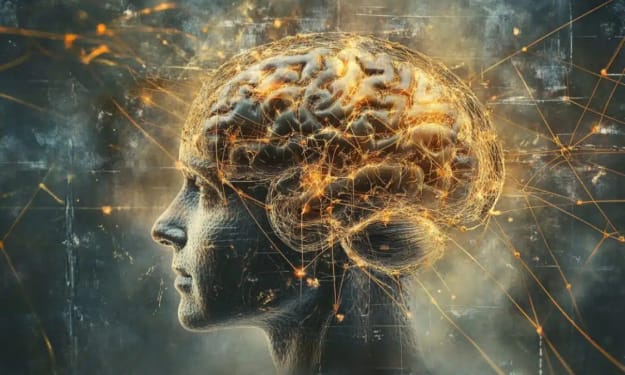
The Brain’s Inner GPS: How Specialized Neurons Help Predict What Happens Next
In a world filled with constant change and unpredictability, one of the most vital human abilities is prediction. Whether you're catching a ball, reading a sentence, or following the steps of a recipe, your brain is always forecasting what comes next. But what allows the brain to make such fluid predictions, especially in situations it's never encountered before? A recent neuroscience study provides fascinating insight into this question. Researchers have identified a new class of neurons—dubbed “goal-progress cells”—that may hold the key to how the brain tracks progress through tasks and anticipates future events. These findings could reshape our understanding of learning, flexibility, and even artificial intelligence. Discovering a Hidden Function of the Brain At the heart of the research was an experiment designed to test how animals understand and complete sequences of actions. Scientists trained mice to follow a repeating behavioral sequence involving four goals—A, B, C, and D—where each step rewarded the mice with a small drink of water. Once the sequence reached the final goal (D), it looped back to A and began again. The key innovation came when researchers changed the locations of these goals. Suddenly, the mice had to perform the same sequence but in a completely new spatial layout. Despite the disruption, the animals adjusted almost instantly. They didn’t rely on habit or the familiarity of the environment—instead, they appeared to understand the structure of the task. What Are Goal-Progress Cells? To understand what was happening in the mice’s brains during these tasks, scientists recorded neural activity from the cortex, a part of the brain responsible for complex cognitive processes. What they found was groundbreaking: a group of neurons that didn’t fire based on where the mice were physically, but rather where they were in the behavioral sequence. These neurons—now known as goal-progress cells—were essentially tracking the step number within the task rather than the location. So, regardless of where goal B or goal D was located in the environment, certain neurons would activate when the mouse was on that step of the sequence. This discovery reveals an entirely new way in which the brain represents information. It suggests that the brain isn’t just a GPS that maps space—it’s also a mental flowchart, tracking the progression of abstract behaviors and tasks. Why This Is More Than a Mouse Story While the experiment involved mice, the implications reach far into human cognition. Humans perform complex sequences every day—cooking meals, composing emails, driving to work, or playing musical instruments. If similar neurons exist in the human brain (as researchers suspect), they could be the reason we can adapt familiar processes to unfamiliar settings. Imagine baking a cake in someone else's kitchen. Even though the layout is different, you still remember the steps: mix the ingredients, preheat the oven, bake the batter. Goal-progress cells may help guide your brain through this familiar sequence, even if the external environment is new. Applications Across Science and Technology The identification of goal-progress cells opens exciting doors across multiple fields: 1. Artificial Intelligence and Machine Learning One of the major challenges in AI is generalization—how to get machines to apply learned patterns to new situations. AI models often struggle when small details change, even if the underlying structure remains the same. By mimicking the function of goal-progress neurons, future AI could be designed to focus more on task progression and abstract structure rather than just specific inputs. This could lead to smarter personal assistants, more adaptive robots, and algorithms that learn and problem-solve more like humans. 2. Cognitive Rehabilitation People recovering from strokes, brain injuries, or neurodegenerative diseases often struggle with task completion and memory. If scientists can understand and stimulate goal-progress cells, it might be possible to design therapies that retrain the brain to complete sequences and improve executive function. 3. Education and Skill Acquisition Understanding how the brain processes sequences could revolutionize how we teach. For example, breaking lessons into well-defined, repeatable sequences that build on prior steps could align more naturally with how goal-progress cells function. This might enhance learning outcomes and retention, especially in subjects like math, music, or coding. 4. Mental Health and Behavioral Therapy Anxiety, OCD, and other conditions often involve disrupted or obsessive patterns of behavior. If we can decode how sequences are tracked and controlled by goal-progress neurons, new interventions could help people develop healthier behavioral routines or disengage from compulsive loops. Linking Prediction to Perception: A New Cognitive Framework This study also fits into a broader theory in neuroscience called predictive coding, which posits that the brain is fundamentally a prediction machine. Rather than passively receiving information, it actively forecasts what will happen next and adjusts when those predictions are incorrect. Goal-progress cells seem to operate right at this boundary between prediction and behavior. They don't just react to what’s happening—they guide the brain through what’s likely to happen next. This adds weight to the idea that anticipation is not just a bonus feature of cognition—it’s central to how the brain works. Future Research: What Comes Next? The discovery of goal-progress cells raises many questions for future research. Do humans have similar neurons, and can we detect them using modern brain imaging tools? How do these neurons interact with others responsible for memory, attention, and decision-making? Researchers also want to know whether these cells can be trained or enhanced. Could practicing certain tasks strengthen the goal-tracking network in the brain? Might meditation or focused attention exercises improve our ability to stay on task by reinforcing this system? Conclusion: The Brain’s Internal Timeline The discovery of goal-progress neurons gives us a glimpse into a previously invisible dimension of the brain—a sort of internal clock that keeps track of where we are in the flow of our actions, regardless of where we are in space. It helps explain how we can be so flexible, so adaptive, and so incredibly fast at learning new things. These neurons are more than just another discovery—they’re a possible universal code for how all intelligent systems, biological or artificial, might track their goals, adapt to changes, and plan ahead. As we learn more about this remarkable feature of the brain, we move closer to understanding what truly makes intelligence—human or machine—so powerful. Neuroscience
By Tech Horizonsabout a year ago in Futurism