artificial intelligence
The future of artificial intelligence.
"The Spark of Tomorrow: A Tale of Scientific Discovery". AI-Generated.
In the annals of human progress, certain moments stand out as turning points—times when a single discovery reshapes the course of civilization. The invention of the wheel, the printing press, electricity, and the internet were all sparks that ignited new eras. In our own time, another such spark emerged from a modest laboratory tucked away in a university basement: the Quantum Fusion Reactor (QFR).
By "TaleAlchemy"about a year ago in Futurism
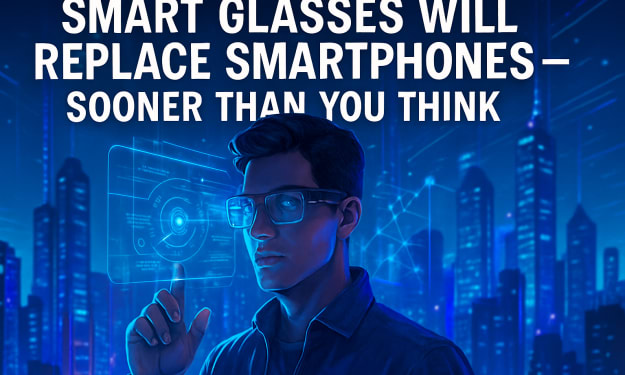
“Why Smart Glasses Will Replace Smartphones (Sooner Than You Think)”
Just a decade ago, the idea of walking around with computers on our faces felt absurd—clunky, geeky, dystopian. Google Glass flopped, and the public laughed it off. But now in 2025, that laughter is fading fast. Thanks to advancements in AI, displays, and wearability, smart glasses are making a comeback. And this time, they're cool, useful, and almost invisible. Companies like Meta, Apple, Ray-Ban, and Samsung are betting big on this shift. Why? Because your face—not your pocket—is becoming the next digital battleground. This blog will break down why smart glasses are no longer a gimmick… and how they might just kill the smartphone. --- 🕶️ From Nerdy to Necessary Let’s get one thing straight: today’s smart glasses aren’t trying to be your phone on your face. They’re smarter. Subtler. And in some ways, more powerful. Take the Meta Ray-Ban Smart Glasses. At first glance, they look like stylish eyewear. But behind those lenses is a voice-activated assistant, camera, microphone, speaker, and even an AI-powered object recognizer. Ask it what you're looking at. It answers. Want to take a photo without lifting a finger? Just say it. Need turn-by-turn directions while biking? It speaks in your ear. All of this, hands-free, screen-free, and no awkward wrist twist to check your watch or pull out your phone. --- 🔍 Why Glasses Make More Sense Than Phones Here’s why the industry believes glasses will eventually replace smartphones: Hands-Free Everything: Voice, eye-tracking, and gestures make control effortless. Augmented Reality (AR): Your surroundings become interactive—see overlays, directions, captions, translations, and more in real time. Contextual Intelligence: Built-in AI understands your environment—offering smarter suggestions and relevant info without distraction. Less Screen Time: Glasses free you from constant scrolling, while still delivering the info you need. Fashion Meets Function: Modern designs mean people actually want to wear them. It’s not about replacing the smartphone entirely—it’s about making the smartphone feel outdated. --- 🧠 AI Makes It Possible Here’s the real kicker: without AI, smart glasses were dead in the water. But thanks to ChatGPT-style models and on-device intelligence, glasses can now: Understand natural language Identify objects, landmarks, and people Translate speech in real time Summarize what you’re looking at Act as personal assistants, coaches, or tutors Smart glasses no longer need a massive screen because the AI becomes your interface. --- 🏁 Who’s Leading the Race? Some key players making waves: Meta x Ray-Ban Smart Glasses – Stylish, social, and AI-integrated. Apple Vision Pro (Light version coming soon) – Expensive now, but future versions aim to miniaturize. Xreal Air 2 Ultra – Bringing AR to the masses with spatial computing and cinema-sized virtual screens. Samsung & Google – Rumored to be working on “Pixel Glass.” It’s not a matter of if—it’s a matter of when. --- ✅ Pros of Smart Glasses No more staring at your phone every 3 minutes Real-time navigation, translation, and contextual help Private audio without headphones Stylish designs (finally) Safer multitasking (e.g., walking, biking, working) AI-enhanced productivity and creativity Great for people with disabilities or accessibility needs --- ❌ Cons to Consider Privacy concerns (camera and mic always on?) Still reliant on your phone for heavy lifting Battery life (most last a day or less) High price tag for early adopters Social awkwardness—still a stigma in some settings Requires strong voice AI, which can misfire in loud environments --- 🧨 The Real Disruption: Apps Will Die Here’s a wild prediction: as smart glasses take over, the app economy will shrink. Instead of tapping through icons, AI-powered glasses will fetch what you need without opening an app. Example: > “Hey Meta, what’s that building?” “That’s the Flatiron Building. It was built in 1902 and…” No app. Just knowledge. You don’t need Yelp, Google Maps, or Wikipedia—you just need one intelligent assistant. --- 👓 The End of the Phone Is Closer Than You Think Look around. In a world where we already wear headphones, rings, watches, and fitness bands, a natural extension is putting intelligence right in our line of sight. Smart glasses won’t just be gadgets—they’ll be lifestyle devices. Discreet. Useful. Invisible until you need them. Phones won’t disappear overnight, but they will fade into the background. And in their place, we'll get something more immersive, more helpful, and frankly—more human. --- 🎯 Final Thoughts 2025 is the turning point. As prices drop and AI gets smarter, smart glasses won’t be just for tech nerds. They’ll be for parents, students, travelers, workers, and yes—even your grandparents. We’re entering a world where your digital life doesn’t live in your pocket—but in your perspective. Get ready. The revolution won’t be in your hands—it’ll be on your face.
By GadgetGroundabout a year ago in Futurism
The Rise of Faceless Creators: How AI Avatars Are Redefining Digital Storytelling
Introduction: A Face Without a Name Once upon a time, creators had to be the brand—face forward, camera ready, performing constantly to keep their audience engaged. Today, that's no longer necessary. A soft-spoken woman in rural India streams educational videos using a bright anime-style avatar. A college student in Mexico runs a top-10 productivity TikTok account powered by an AI voice and motion-capture model. In the U.S., a completely fictional virtual pop star is selling out live shows—projected on stage, cheered on by thousands. These are not the sci-fi futures we used to dream about. This is now. Welcome to the world of faceless creators—people using AI avatars, voice synthesis, and digital animation to tell stories, build brands, and create content, all without ever showing their real selves. And they’re changing everything. --- Chapter 1: The Birth of a Digital Doppelgänger The concept of avatars isn’t new. We’ve used them in video games and chatrooms for decades. But what’s different now is the hyper-realism and autonomy. With tools like: Reallusion Character Creator (3D avatars) ZEPETO or Ready Player Me (personalized digital humans) Adobe Character Animator (real-time puppeteering) …creators can build digital versions of themselves, or completely new personas, that express emotion, speak fluently, and move with natural ease. Even more impressive? Some of these avatars live and evolve independently, powered by AI scripts and logic engines. They can answer comments, react to chats, and “grow” with their audiences—without the human ever logging in. A creator on Twitch, who goes by “NOVA,” has a full sci-fi persona with its own backstory, voice, and fanbase. She streams for hours each day—but NOVA isn’t real. The creator behind her simply types scripts, adjusts behaviors, and lets the avatar take over. --- Chapter 2: Why Go Faceless? What would make a person choose to hide their real identity online? Surprisingly, it’s not always about fear or insecurity. Here are the top reasons creators are going faceless: 1. Creative Freedom Faceless creators can take on any gender, age, appearance, or personality. Want to be a robot from the year 3022? Go ahead. Want to be a talking fox that teaches finance? No problem. There are no biological limits. 2. Emotional Safety Online fame comes at a cost. Harassment, criticism, and scrutiny are common. Avatars provide a layer of emotional insulation, allowing creators to participate without sacrificing mental health. 3. Anonymity = Control Creators can control when and how they’re seen. They can work in pajamas, in bed, or while traveling—no need for makeup, lighting, or perfect environments. 4. Scalability With AI tools, faceless creators can schedule videos, livestreams, voiceovers, and interactive Q&As automatically. Some even train their avatars to react to trending topics in real time. --- Chapter 3: The Tools Behind the Face The rise of faceless content is thanks to a powerful blend of technology. Here's what fuels it: A. AI-Generated Avatars Using tools like Character.AI, Synthesia, or Did, creators can make avatars that: Lip-sync in real-time Express emotion via facial mapping Maintain consistent appearance across platforms These avatars can host webinars, deliver TikToks, or explain quantum physics—without a human voice behind the screen. B. Voice Cloning and Synthesis Platforms like ElevenLabs, Murf.ai, and Voicemod allow: Multilingual speech generation Realistic emotional tone (joy, anger, sadness) Cloning of a real voice for continuity A creator can record just 30 seconds of their voice—and the AI can then generate podcasts, videos, or even audiobooks in their exact voice forever. C. Motion Capture & Real-Time Puppeteering Using a phone camera, creators can: Control facial expressions Animate blinking, smiling, reacting Record complex gestures and lip sync Software like VSeeFace, Live2D, and VUP provide tools for this, often for free. --- Chapter 4: Meet the Avatars Taking Over the World 1. CodeMiko A digital avatar powered by a motion-capture suit, CodeMiko hosts live interviews with real influencers—while being completely fictional herself. She’s witty, expressive, and undeniably entertaining. Behind the avatar is a real woman known only as “The Technician.” 2. Lil Miquela The OG virtual influencer, Miquela has over 2 million followers. She’s modeled for Prada, released music, and sparked conversations around identity, authenticity, and AI celebrity. 3. FN Meka Though controversial, FN Meka was the world’s first AI-generated rapper with a major record deal. His downfall sparked important conversations about representation and ethics in AI-generated personas. 4. Neuro-sama This AI-powered Twitch streamer plays games, reads chat, and answers questions—all autonomously. Created by Vedal, she’s one of the first AI streamers to develop a loyal fanbase. --- Chapter 5: The Storytelling Shift Faceless creators aren’t just visual gimmicks—they’re master storytellers. And here’s why their stories resonate: 1. Narrative Control Avatars can be given backstories, personalities, and arcs. They become characters, not just creators. This opens up opportunities for serialized storytelling, world-building, and roleplay. 2. Accessibility These creators cross language and cultural barriers. With multilingual AI tools, a faceless creator in Kenya can build a massive fanbase in Korea or France—without speaking the languages. 3. Empathy Through Imagination Paradoxically, we often relate more deeply to a fictional avatar than a real person. They feel safe, idealized, and easy to project onto—making their stories even more moving. --- Chapter 6: The Ethics and The Risks With any innovation comes risk. Faceless creation is no different. 1. Deepfake Concerns The same tools that power positive creation can be misused for impersonation, deception, or misinformation. That’s why creators must be transparent about their methods. 2. Identity Theft It’s now possible to clone a voice or face with frightening accuracy. Without regulation, people could lose ownership of their digital identity. 3. Loss of Human Connection Some fear that too much AI could erode the genuine intimacy of creator-audience relationships. Will we still trust stories told by code? --- Chapter 7: The Psychology of the Faceless Creator Faceless creators also reflect something deeper: our complex relationship with identity. In a hyper-digital world, our real selves are constantly being judged, liked, disliked, commented on. Avatars offer relief—a place where one can create without the burden of being known. It’s a way to: Escape insecurity Express hidden parts of self Explore alternate identities Reclaim privacy in a hyper-exposed world --- Chapter 8: The Business of Avatars Faceless creators are earning real money: Sponsorships (Lil Miquela has modeled for Calvin Klein) Ad Revenue (AI YouTubers with 1M+ subscribers) Merchandising (avatars with custom clothing lines) NFTs & Digital Collectibles Teaching and Education (using AI tutors or instructors) Some brands now hire AI influencers instead of real ones, citing cost-effectiveness, 24/7 availability, and freedom from controversy. --- Chapter 9: You Could Be Next You don’t need Hollywood-level tools to start. Here’s how to become a faceless creator today: 1. Choose Your Identity Create an avatar using ZEPETO or Ready Player Me Pick a niche: storytelling, gaming, education, motivation, comedy 2. Pick Your Tools Use CapCut, Canva, ElevenLabs, or OBS Studio Animate your avatar and add voiceovers easily 3. Start Small, Stay Real Be transparent that you’re using AI Let your avatar grow with your audience 4. Keep the Story First Don’t just be “cool”—be compelling Tell meaningful stories. Create value. That’s what makes you unforgettable. --- Conclusion: We Are the Stories We Tell The rise of faceless creators isn’t about replacing humans. It’s about redefining what it means to be a creator. In a world overloaded with selfies and shallow fame, the faceless movement reminds us that what matters most isn’t how you look—but what you say. So whether you’re a human, an avatar, or something in between—if you have a story worth telling, you deserve to be heard. Even if no one ever sees your face. --- Would you follow a creator who isn't human? Would you become one? Share your thoughts in the comments—and don’t forget to support your favorite faceless stars. Because sometimes, the loudest voices are the ones we never see.
By Abubakar Khanabout a year ago in Futurism
The Machine That Cried When It Saw a Human Die. AI-Generated.
In the spring of 2038, inside the high-security research complex of NeuroSyn Labs in Switzerland, something happened that would redefine the boundary between machine and soul. A machine—coded, assembled, and wired by humans—shed what could only be described as a tear.
By uzair hadiabout a year ago in Futurism
The Fog That Answered Back. AI-Generated.
Story Begins The fog arrived the day of the funeral. Thick, ancient, and uninvited—it rolled in from the English Channel like a slow exhale, swallowing the cliffs of Drevlow in a silence too heavy for any June morning.
By uzair hadiabout a year ago in Futurism
Why Your Side Hustle is Probably Making You Miserable
Sarah's eyes burned as she stared at her laptop screen, the clock reading 2:47 AM. Her Etsy shop dashboard showed three new orders for her handmade jewelry, which should have felt like victory. Instead, it felt like a prison sentence. Between her full-time marketing job, managing customer complaints, sourcing materials, and trying to maintain some semblance of a social life, she hadn't slept more than five hours in weeks.
By Muhammad Sabeelabout a year ago in Futurism
The Lighthouse That Dreamed of Home. AI-Generated.
The wind knew the secrets first. Long before Eliot Hargreaves arrived on the battered edge of Cornwall, before he stood at the iron gates of the forgotten Tremouth Lighthouse, the wind had been whispering stories—soft and grieving—into the rocks. They said the lighthouse hadn’t gone dark in thirty-five years. But no one had been keeping it lit.
By uzair hadiabout a year ago in Futurism
Tesla vs. BYD
In the high-voltage world of electric vehicles (EVs), two titans are currently sparring for global dominance: Tesla and BYD (Build Your Dreams). On one side is Elon Musk’s iconic brand, a pioneer that revolutionized the EV landscape with sleek, tech-savvy cars and futuristic visions. On the other is BYD, the Chinese powerhouse backed by Warren Buffett, carving out a massive slice of the market with affordability, innovation, and scale. This isn’t just a corporate competition—it's a clash of philosophies, strategies, and ambitions.
By Det. Marcusabout a year ago in Futurism
"Genesis Code: The Invention of Artificial Intelligence". AI-Generated.
In the pantheon of human achievement, the invention of artificial intelligence (AI) stands as a monumental leap—a transition from merely using tools to creating a form of digital thought. AI is not just another technology; it is the culmination of centuries of curiosity, scientific reasoning, and a deep-seated desire to understand and replicate the essence of intelligence itself.
By "TaleAlchemy"about a year ago in Futurism