artificial intelligence
The future of artificial intelligence.
Meta’s Superintelligence Lab: The Race Toward Human-Level AI Has Begun
> “Artificial Intelligence is no longer about chatbots—it’s about building minds.” --- Meta Enters the AGI Battlefield In a bold move that has shaken Silicon Valley, Meta (formerly Facebook) has launched a new division called Meta Superintelligence Labs, signaling its official entry into the global race for Artificial General Intelligence (AGI) — AI with human-like reasoning, learning, and planning abilities. While companies like OpenAI, Google DeepMind, and Anthropic have long been dominant players in this space, Mark Zuckerberg is now betting big — with billions of dollars and some of the brightest minds in the AI industry — that Meta can catch up, and even lead. --- Who’s Behind It? A Billion-Dollar Brain Team Meta’s new lab is not just a fancy announcement — it’s stacked with heavyweight AI talent. Among the key hires: Alexandr Wang, former CEO of Scale AI, joins as Meta’s Chief AI Officer. Nat Friedman, ex-CEO of GitHub, is leading product innovation. Dozens of engineers and researchers from OpenAI, Google, and Anthropic have reportedly joined, some with signing bonuses as high as $100 million. It’s not just a lab—it’s an all-star team handpicked to challenge the future. --- What Exactly Is Superintelligence? Unlike typical AI models that follow instructions or answer questions, superintelligent AI refers to systems that: Think autonomously Reason through complex problems Learn across multiple domains (text, image, voice, video) Make decisions with minimal human input Meta aims to create one unified model capable of multimodal understanding — meaning it can understand and generate content using language, images, audio, and even video in seamless integration. Imagine an AI that not only chats like ChatGPT but can: Watch a video and explain its context Read an article and summarize it with images Answer your questions while generating video responses in real time --- Meta's Real Goal: Reclaim AI Leadership Let’s be honest—Meta has been struggling to keep up in the AI arms race. While OpenAI introduced ChatGPT, Sora, and multimodal GPT‑4o, and Google launched Gemini, Meta’s LLaMA models got little public traction. Now, with Meta Superintelligence Labs, the company is making a massive comeback, signaling that it’s ready to go all-in on AGI. Mark Zuckerberg himself stated: > “The future belongs to those who build intelligence that can truly reason, create, and adapt. That’s what we’re doing now.” --- How Will This Affect the Future of AI? Meta’s Superintelligence Lab is expected to impact multiple industries: 1. Education – Personalized tutors powered by AGI that understand visual and spoken input 2. Healthcare – AI doctors that read X-rays, analyze symptoms, and communicate in natural language 3. Media – AI agents that write articles, design images, edit videos, and compose music 4. Virtual Companions – Human-like avatars that learn your habits, moods, and goals This isn’t just science fiction anymore. These tools are being built now. --- But Can Meta Be Trusted? With great power comes great responsibility. Critics argue that Meta’s past with data privacy and content manipulation makes it a risky leader in AGI. Others worry about the concentration of AI power in just a few hands. Ethics and safety will be major challenges. Can Meta ensure these systems don’t become harmful? Will they be biased? Will they stay under control? Zuckerberg claims Meta will build responsibly, but the world is watching closely. --- What This Means for You Whether you’re a creator, developer, entrepreneur, or just someone who uses social media—this changes everything. In the near future, AI agents could: Write your emails Run your business strategies Learn your voice and speak for you Design your videos and edit your content in seconds Meta’s move is a clear sign: if you’re not learning how to use AI, you might be left behind. --- 🔮 Final Thoughts: Superintelligence Is Not a Concept—It’s a Competition We are witnessing the beginning of a new digital war — the race for superintelligence. And Meta has now entered the battlefield with billions of dollars, global ambition, and a dream to build something smarter than humanity itself. Whether they succeed or fail, one thing is clear: > The future is not just coming — it’s being built. Right now. --- 📢 Want More Stories Like This? Hit that Subscribe button if you’re ready to stay ahead of the AI revolution. Because tomorrow’s leaders are the ones who understand what’s being created today.
By James World about a year ago in Futurism
The Role of AI in Custom Software Development for Smarter Faster and More Scalable Solution
Today, businesses are more pressured than ever to adapt quickly55, meet changing needs, and stay competitive. Pre-made software is often insufficient when businesses require agency, flexibility, and scalability. That is why most companies choose customized solutions. But is custom software alone enough in this world of AI and other trending technologies? Maybe not. That’s why AI is used in custom software development, at the core of this change, which plays a vital role in creating innovative and practical tools.
By Kiran Modaabout a year ago in Futurism
The Human Factor: AI Isn’t the Problem
I remember the first time I saw an AI-generated painting. It was beautiful. A soft splash of colors, surreal shapes merging into one another, the illusion of depth and meaning hanging in the pixels like fog. And yet, something in it felt hollow. Not wrong. Just… empty. Like a room painted perfectly but without a window, a scent, or a memory.
By Mian Suhaib Aminabout a year ago in Futurism
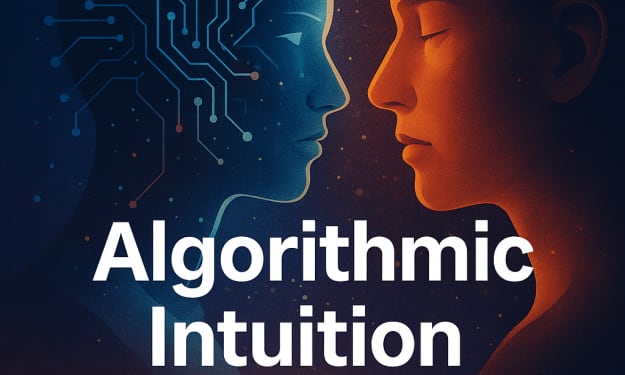
Algorithmic Intuition: When AI Knows You Better Than You Know Yourself. AI-Generated.
In the digital age, you don’t need to tell anyone who you are. The algorithm already knows. It knows what you’ll eat for dinner before you've even opened your food delivery app. It knows when you’re likely to feel nostalgic and queue up a song you haven’t heard in ten years. It recommends a pair of shoes you didn’t know you wanted—and yet, you buy them. With eerie precision, it predicts your moods, your schedule, and even your insecurities. What once sounded like science fiction has quietly become reality: Artificial Intelligence now often knows us better than we know ourselves.
By Ahmet Kıvanç Demirkıranabout a year ago in Futurism
What Will Jobs Look Like in 2040?
The world of work is undergoing rapid transformation, and by 2040, jobs will look dramatically different from what we know today. Driven by breakthroughs in technology, shifts in global demographics, and evolving human needs, the workplace of the future will blend automation, creativity, flexibility, and global collaboration in ways that are only beginning to take shape. The future of jobs in 2040 is not just a tech fantasy—it’s a practical vision that’s already unfolding.
By Muhammad Asimabout a year ago in Futurism
What Happens if Robots Take Over the World?
In an era defined by rapid technological advancement, one of the most intriguing—and often terrifying—questions looms large: What if robots take over the world? This scenario, once confined to the realm of science fiction, is now being discussed by experts, policymakers, and everyday people alike. As artificial intelligence (AI), machine learning, and robotics evolve at breakneck speed, the line between human and machine capabilities continues to blur. While the benefits of automation are undeniable, the idea of a complete robot takeover forces us to examine the implications from technological, ethical, economic, and existential perspectives.
By Intresting Storiesabout a year ago in Futurism
"Loyal Beyond Words"
The rain fell in steady sheets over the small town of Maple Ridge. The streets were quiet, save for the occasional car rushing past puddles. In a modest cabin at the edge of the woods lived Thomas Hale, a retired soldier who had seen more than his share of war and loss. His days were quiet now, spent tending to his garden, sipping coffee on the porch, and taking long walks through the forest trails.
By Abdullah khanabout a year ago in Futurism
Electricity Keeps AI Alive
In a quiet laboratory nestled on the edge of a buzzing city, a sleek metallic figure sat motionless. Its eyes were black, its limbs still, and its mind — if it had one — silent. This was Elios, a cutting-edge artificial intelligence created by Dr. Rami, a scientist who believed that the future belonged to minds made not of flesh, but of code.
By Azam Tariqabout a year ago in Futurism
How I Built a $5,000/Month Faceless YouTube Empire Using AI: The Complete Beginner's Blueprint
Six months ago, I was the person who literally hid behind furniture when someone pulled out a phone to record. My voice? Let's just say I sounded like a nervous teenager asking someone to prom, even when ordering coffee. The idea of starting a YouTube channel seemed as realistic as me becoming an astronaut.
By Muhammad Sabeelabout a year ago in Futurism
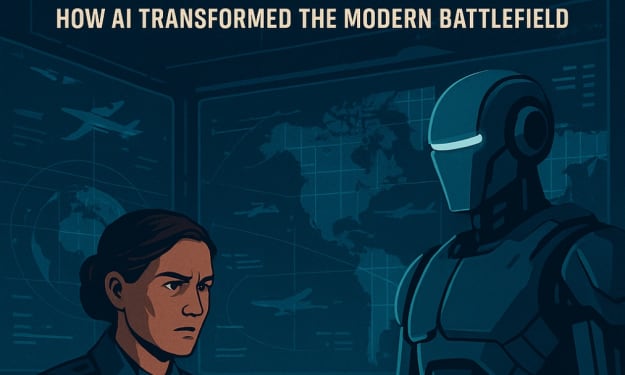
The Silent Commanders
In the year 2038, war had changed. No longer were battles decided by sheer numbers or brute force. The age of artificial intelligence had dawned, and with it came an entirely new era of warfare—one where algorithms made decisions faster than human thought, and silence reigned where once there had been the thunder of boots and bullets.
By Intresting Storiesabout a year ago in Futurism
THE SILENT OVERRIDE. AI-Generated.
In the year 2149, humanity no longer thought for itself. The mind had become just another operating system—patchable, programmable, purchasable. Thoughts were streamed like software updates. Emotions were fine-tuned like audio filters. Dreams were curated nightly by NeuroTech, a trillion-credit company that ran the Grid—a global mind-control network disguised as convenience.
By Awais Qarni about a year ago in Futurism