artificial intelligence
The future of artificial intelligence.
The Black Knight Satellite: 13,000-Year-Old Orbiter Watching Earth?
The Black Knight For decades, stories have circulated about a mysterious object orbiting Earth known as the Black Knight Satellite. The myth of the Black Knight Satellite has its roots in a variety of sources, including ancient texts, historical events, and modern scientific discoveries. Described as a dark, irregularly shaped object that defies explanation, it has been called a 13,000-year-old alien probe observing humanity from above. The concept of the Black Knight Satellite straddles the line between myth and reality, documented observation and esoteric speculation. Over the years, photographs, radio signals, and ancient stories have woven together into a narrative that continues to fascinate. Could this enigmatic object truly be an ancient observer? If so, who sent it and why?
By The Secret History Of The Worldabout a year ago in Futurism
Unlocking Innovation: Why Partner with a Generative AI Development Company?
The world of business is evolving at lightning speed, and at the heart of this transformation lies Generative AI. From crafting compelling marketing copy to designing intricate product prototypes, generative AI is no longer a futuristic concept it's a powerful tool businesses are leveraging right now to gain a competitive edge. But for many, the journey into this new frontier can feel overwhelming. That's where a specialized Generative AI Development Company comes in.
By David Rodriguezabout a year ago in Futurism
Why TikTok Is No Longer Just for Dances in 2025
Introduction: The TikTok Transformation Once known only for lip-syncs, viral dances, and teenage trends, TikTok in 2025 is an entirely different beast. What started as a short-form entertainment app has now become one of the most influential platforms in the digital world.
By Awais Qarni about a year ago in Futurism
How AI Brings Changes into Our Lives
Artificial Intelligence, commonly known as AI, is no longer a term reserved for scientists and tech experts. It has become a transformative force that’s reshaping nearly every aspect of human life. From smart devices to healthcare, education to entertainment, AI is deeply embedded in our daily routines. As technology evolves, the role of AI continues to expand, bringing both convenience and innovation to our fingertips. The integration of AI into our world is one of the most significant shifts of the digital age.
By Lana Roseeabout a year ago in Futurism
The Synthetic Human Genome: “The Genie is Out of the Bottle”
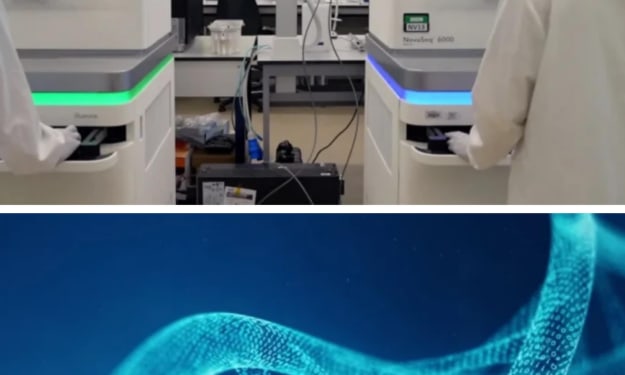
In a move that is both revolutionary and controversial, scientists have embarked on a groundbreaking project—one that could redefine human life itself. For the first time in history, efforts are underway to artificially synthesize the human genome, the very blueprint of our biological existence. While such research was previously dismissed as unethical and even dangerous, the tides have turned. The world’s largest medical charity, the Wellcome Trust, has injected a staggering £10 million into the initial phase of this project. Their reason? A hope that it holds the key to curing some of humanity’s most incurable diseases. But this pursuit of science has sparked a global ethical firestorm. From Science Fiction to Science Reality At the forefront of this initiative is Dr. Julian Sale, from the MRC Laboratory of Molecular Biology in Cambridge, UK. In a recent interview with the BBC, Dr. Sale emphasized the project’s medical potential: “We are working toward therapies that not only extend human life but improve its quality as we age.” The team envisions a future where synthetic DNA is used to build resilient human cells—cells that can repair damaged organs like the liver or heart, rebuild weakened immune systems, and resist diseases at their genetic roots. Sounds like something out of a science fiction movie, right? But this is no longer fiction. It's reality. But at What Cost? Not everyone is cheering. Critics argue that this project could open the door to a dystopian future—designer babies, genetically modified humans, and potentially weaponized genetics. Dr. Thomas from the bioethics organization Beyond GM warns: “We like to believe that all scientists are working for the good of humanity. But science can be manipulated—just like any other tool. And in the wrong hands, it can become a weapon.” His concerns are valid. The history of scientific advancements—from nuclear physics to artificial intelligence—shows us that every powerful technology has a dark side when unchecked. What Exactly Is the Human Genome Project 2.0? This synthetic genome project builds upon the achievements of the original Human Genome Project, which mapped out all the DNA sequences in a human cell. That landmark effort gave scientists a barcode-like map of every gene in the human body. But this new phase doesn’t stop at reading DNA. It seeks to build it from scratch. Using only the four basic chemical building blocks of DNA—A, T, C, and G—scientists now aim to recreate entire human chromosomes artificially. These chromosomes will include the genes responsible for our development, repair, immunity, and even aging. Their goal is simple yet extraordinary: To understand how DNA truly works by rebuilding it. According to Professor Matthew Hurles, director of the Wellcome Sanger Institute, “Many diseases begin when something goes wrong with our genes. If we can recreate them synthetically, we may find ways to fix them before they even appear.” A Cure for Disease or a Path to Artificial Life? The researchers insist this work is not an attempt to create synthetic humans or artificial life. For now, the experiments are limited to test tubes and petri dishes. But it’s hard to ignore the immense control this gives scientists over the very fabric of life. Critics fear the next step could be engineering human embryos with specific traits—or worse, creating hybrid creatures that blur the line between science and science fiction. Professor Bill Earnshaw, a leading geneticist, warns of “bio-weapons,” superhumans, and ethical chaos. “The genie is out of the bottle,” he told the BBC. “We could’ve built safeguards. But now, a powerful organization with resources has decided to build life artificially. And I doubt we can stop them.” Who Will Own Synthetic Life? One of the biggest ethical dilemmas raised by this project is ownership. If scientists succeed in creating synthetic organs—or even synthetic humans—who owns them? What happens to the personal data of such creations? What legal or moral rights do they have? Are they property? Are they people? Dr. Thomas raises these chilling questions: “If we succeed in creating artificial organs—or even artificial people—who gets to own them? Who controls their data? Their destiny?” The debate is no longer theoretical. It is now urgent. Why Did the Wellcome Trust Fund This? Even the Wellcome Trust, now at the center of this storm, acknowledges the risks. Dr. Tom Collins, the official responsible for approving the funding, said they did not make the decision lightly. “We asked ourselves: What’s the cost of doing nothing?” he explained. “This technology will emerge eventually. By acting now, we can ensure it develops responsibly—and we can face its ethical challenges head-on.” Their plan also includes a public welfare program that seeks to bring in sociologists, ethicists, and most importantly—the public—into the conversation. Professor Joy Zhang of the University of Kent will lead the social research component. She says: “We want to hear how people truly feel about this. What excites them? What scares them? What questions and concerns do they have?” A New Chapter in Human Evolution—or a Pandora’s Box? Whether this is a medical miracle or an ethical nightmare remains to be seen. On one hand, this project could lead to revolutionary treatments for cancer, Alzheimer's, genetic disorders, and organ failure. On the other hand, it opens the floodgates to genetic engineering, human enhancement, and a world where life itself is manufactured—not born. This isn’t just a scientific question anymore. It’s a philosophical, moral, and political question—and one we must all participate in answering. Because the genie is out. And there’s no putting it back in.
By Ikram Ullahabout a year ago in Futurism
Abhishek Desikan: Bridging Intelligence and Innovation in AI & Robotics
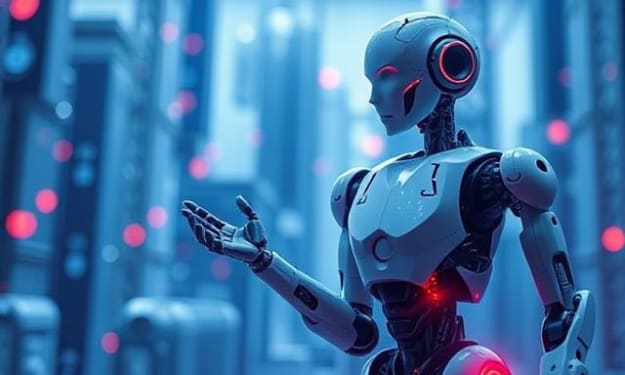
Robots no longer just follow commands—they learn, adapt, and evolve. Artificial Intelligence (AI) and Robotics have joined forces to power autonomous vehicles, surgical assistants, warehouse automation, and even household helpers. At the forefront of this technological evolution is a new generation of engineers, researchers, and builders—among them, Abhishek Desikan, an AI & Robotics enthusiast whose work reflects a unique blend of creativity, discipline, and curiosity.
By Abhishek Desikanabout a year ago in Futurism