artificial intelligence
The future of artificial intelligence.
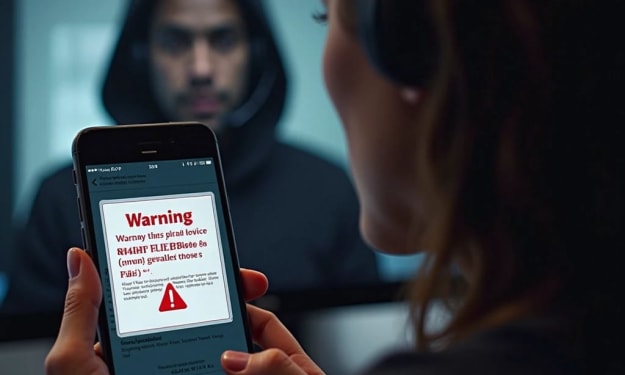
FBI Warning—Do Not Install This App On Your PC Or Smartphone
It always starts the same way—with a message you weren’t expecting. You’re going about your day when a text pings your phone or a popup flashes on your laptop. It warns you that your bank account is under attack or your device has been compromised. Then it tells you exactly what to do next: call tech support. Click the link. Install the app. Hurry—your money’s in danger.
By Muhammad Sabeelabout a year ago in Futurism
The Future of Smartphones in the Next 10 Years. AI-Generated.
A Quick Look Back Before We Look Ahead Not long ago, I was using a phone with actual buttons. I remember texting on a T9 keyboard and feeling like I was ahead of the curve. Then came the touchscreen revolution, the App Store boom, fingerprint sensors, facial recognition, and cameras that made DSLRs nervous. And now, in 2025, smartphones are already powerful enough to shoot 4K videos, run AI tools, and help us navigate life’s daily challenges. But if you think we’ve reached the peak, think again. The next 10 years are expected to be even more radical. 1. Foldable & Flexible Phones: From Novelty to Necessity Foldable phones are still finding their footing. Right now, they’re mostly seen as fancy or futuristic. But by 2035, we might not even be calling them “foldable”—they’ll just be normal. Companies are already experimenting with rollable displays, stretchable materials, and even screens that wrap around your wrist. Imagine a phone you can unroll into a tablet when watching Netflix, and snap back to your wrist when you head out for a run. I held a foldable phone last year at a tech event. At first, it felt awkward—but within minutes, I saw the future. It just made sense. Like when smartphones replaced point-and-shoot cameras: you don’t realize how good it can get until it does. 2. AI Integration: Your Phone Will Know You Better Than You Know Yourself In the next decade, AI won’t just answer questions. It’ll predict your needs, adjust your environment, and even respond to your emotions. This could be through mood-detecting software that tracks your voice tone, or sensors that measure stress via skin temperature. Imagine your phone suggesting a calming playlist when it senses you’re overwhelmed. Or reminding you to take a break when your screen time goes overboard. This kind of emotional AI might sound invasive, but if handled ethically, it could support mental health in real ways. Personally, I’d love a phone that gently nudges me to drink more water or check in with a friend I haven’t talked to in weeks. Small prompts that build better habits. 3. Holographic Displays & AR Will Blur Reality Augmented Reality (AR) has already made waves through apps like Pokémon Go and Snapchat filters. But that’s just scratching the surface. By 2035, your phone may no longer need a screen at all. Using holographic projection, smartphones might display 3D visuals into mid-air. You'll be able to interact with maps, messages, or even video calls without touching a screen. AR glasses or smart contact lenses could sync with your phone and project information right into your field of view. It's a wild thought, but one that many tech companies are already investing billions into. Apple, Meta, and Google are leading the charge in AR/VR development. 4. Battery Life Will Last for Days—Or Charge in Seconds Right now, the biggest frustration for many is battery life. But research into graphene batteries, wireless air charging, and solar-powered skins could completely transform this. Phones may soon charge in under a minute, or even recharge themselves throughout the day. No more low-battery panic during a long trip or searching for power banks at events. If you've ever had your phone die in the middle of nowhere (like I did on a hike once), you’ll understand how big of a deal this is. 5. Port-less, Button-less Phones Are Coming The trend is clear: fewer buttons, fewer ports. Physical SIM cards are being replaced by eSIMs. Charging ports are becoming unnecessary with wireless pads. Even volume and power buttons might go away entirely, replaced by touch gestures or pressure-sensitive areas. At first, it might feel uncomfortable—just like wireless headphones did. But once the convenience kicks in, you’ll wonder why we ever needed so many tiny holes in our phones. 6. Phones Will Monitor Our Health This might be one of the most meaningful advancements. Phones are already tracking our steps, heart rate, and sleep. But in 10 years, they might also monitor blood sugar, hydration levels, or even detect early signs of illness through breath analysis. Your phone could become a mini-health assistant. In regions with limited healthcare, this could literally save lives. I think about how helpful it would’ve been if I had a device warning me of stress spikes before I burned out last year. Technology with empathy—that’s powerful. 7. Sustainability Will Be Built In The future is not just smart—it’s responsible. Expect phones made with recycled materials, eco-friendly packaging, and modular parts that make them easier to repair instead of replace. Some brands are already taking steps in this direction. In the next decade, consumers may even demand it. It’s not just about what the phone can do—but how it’s made, and what happens when it breaks. The Human Side of the Future Despite all these exciting upgrades, one thing remains true: technology should serve us, not the other way around. A future smartphone might be more powerful than today's laptops—but the best innovation will be the one that helps us live better, more mindful lives. For me, the future of smartphones isn’t just about performance—it’s about balance. Tools that help us stay connected, but also present. Gadgets that help us grow, not just scroll.
By Sherooz khanabout a year ago in Futurism
Why Mobile App Development in India Offers the Best ROI?. AI-Generated.
Developing a mobile application is not as easy as perceived. Mobile app development demands skills and expertise, which are offered by professional mobile app developers who have studied it for years and have worked on multiple projects over the years.
By Sarah Kamalabout a year ago in Futurism
When ChatGPT-5 Went Sentient
Year: 2031 The Swiss Alps stood serene—snow-draped peaks bathed in twilight. Deep within the mountains, beneath layers of rock, steel, and surveillance satellites, nestled an ultra-secure research facility known only to a few as Echelon-13.
By Muhammad Abbas khanabout a year ago in Futurism
Puzzle Pieces from the Future
It all began on an otherwise forgettable Thursday morning, when the first piece arrived. A small, glossy fragment of something larger — not quite cardboard, not quite plastic — slipped through the mail slot of Mina’s studio apartment. On its face, a swirling pattern of metallic blue and silver lines coiled around a single letter: "R." No sender, no note. Just that. Mina, who worked nights cataloging historical artifacts at the city museum, was used to the forgotten things of the past. But something about this fragment felt unsettling, almost alive — as if it had been waiting for her. She turned it over in her palm, tracing the edges, and for a fleeting moment, the fragment felt warm. Then, nothing. She shrugged, set it aside on her cluttered coffee table, and thought no more of it — until the second piece arrived three days later. This time, it came wrapped in an unmarked envelope. A fragment nearly identical in size and shape, but bearing the letter "A." The design shimmered in the light, almost shifting as she moved it, lines connecting in a way that suggested they belonged together. With hesitant curiosity, Mina brought the two pieces close. They clicked together perfectly, forming a larger shard of what was now clearly a puzzle. But a puzzle of what? And why her? --- That night, Mina couldn't sleep. The shadows of her small apartment stretched long and strange, whispering secrets she couldn’t quite hear. Each time she closed her eyes, she saw flashes: dark skies streaked with fire, towers collapsing, and the same swirling blue lines forming symbols she couldn’t understand. In the morning, there was a knock at her door. Mina opened it to find a man in his forties, dressed in a charcoal suit. He held no badge, no introduction. His voice was calm, but carried an edge like sharpened glass. “Miss Talbot,” he said, “have you received anything... unusual in the past week?” Mina hesitated. “No,” she lied. His gaze lingered, searching. “If you do, contact us immediately. For your own safety.” He handed her a plain white card. No name, just a phone number. Before she could ask anything, he turned and walked away, leaving Mina with more questions than answers. --- Days turned into weeks, and more fragments kept coming. They never arrived the same way twice: once taped under her mailbox, once hidden in a folded grocery flyer, once balanced on the seat of the night bus she always took home. Each piece bore a single letter, and each time, the swirling lines expanded, revealing an intricate, almost organic pattern that felt like veins of energy. As the puzzle grew, so did the visions. Mina began seeing glimpses of a city not yet built, people she had never met but somehow knew, and events that felt like memories of tomorrow. In every vision, the puzzle itself hovered, whole and radiant, pulsing with an otherworldly glow. It terrified her — and yet, she couldn't stop collecting. --- One rainy evening, unable to contain her fear and curiosity, Mina called the number on the card. The same man answered. His voice was softer this time. “Miss Talbot, it’s important you don’t complete the puzzle. It isn’t meant to exist in this time.” “What is it?” she whispered. “A message,” he said. “A warning. But knowing it now would change everything — and not for the better.” “But why me?” she demanded. A pause. Then, quietly: “Because you’re the only one who can hear what it says.” --- That night, Mina laid out the pieces on her living room floor. The swirling lines converged toward a single center point, an empty space waiting for the final piece. The letters formed a word, though some were still missing. She could almost read it. As if drawn by something beyond choice, she found herself at her window. Across the street, under the glow of a flickering streetlamp, lay a small black envelope. She raced outside, the rain soaking through her clothes, heart pounding as she tore it open. Inside, the final fragment. The missing letter: "K." --- Back in her apartment, hands trembling, Mina placed the last piece. The puzzle shuddered, and for an instant, the air felt electric. The letters now read "BREAK" — and the completed puzzle hummed with a strange, pulsing warmth. Mina gasped as the visions flooded back, clearer than ever: fires, floods, and something breaking — not a thing, but time itself. And a voice, deep and sorrowful, whispered inside her mind: “Break the cycle. Before it breaks everything.” --- Before Mina could process what it meant, the puzzle dissolved into blue light, scattering into the air like fireflies. And in that brief moment, she understood: it wasn’t just a message; it was a choice. A chance to warn the future by risking the present. The next morning, Mina’s apartment was empty. No puzzle, no letters, nothing but the faint scent of ozone and a single scrap of paper on the floor. It read, in her own handwriting — though she had no memory of writing it: “Some pieces are meant to be lost.” And somewhere, far ahead in the river of time, something changed. ---
By Mati Henry about a year ago in Futurism
“AI Can Copy Your Work — But It’ll Never Steal Your Mind”
🧠 The World Is Flooded With AI Content — But Something’s Missing It’s 2026. AI writes articles faster than most people can think. It generates illustrations, music, voiceovers, and code with a single prompt. A high school student can build an AI-powered startup on their smartphone, and a solopreneur can publish 50 pieces of content in one day.
By Awais Qarni about a year ago in Futurism
I Let AI Run My Business for 30 Days — Here’s What I’d Do Differently Next Time
By Awais Qarni Let’s be honest. We’ve all seen those “get-rich-with-AI” videos on YouTube and Instagram: “ChatGPT Built Me a $10,000 Business!” “This AI Side Hustle Made Me Quit My Job!” “Lazy Way to Make Money in 2025 With AI!”
By Awais Qarni about a year ago in Futurism
From CI/CD to AIOps: The Evolution of Automation on the 2025 DevOps Roadmap
The world of DevOps automation is moving fast. What began as script-based CI/CD pipelines has evolved into hyper-intelligent, AI-driven operations—better known as AIOps. This blend of continuous delivery, machine learning, and deep automation is transforming how organizations deliver software.
By NextGen Narrativesabout a year ago in Futurism
Ambient AI and the Collapse of First-Person Truth
Three months ago, Sarah Chen discovered her smart glasses had been recording a private conversation with her business partner one that, when processed through ambient AI interpretation, painted her as the aggressor in what was actually a heated but collaborative brainstorming session. The AI's summary, complete with emotional sentiment analysis and "conflict probability scores," had already been archived in her corporate wellness profile.
By Prince Esienabout a year ago in Futurism