artificial intelligence
The future of artificial intelligence.
The third and final part of:AI Side Hustles & Passive Income in 2025: How Anyone Can Make Money with AI (AI for Beginners Guide)
Continue reading Part 3 of:Unlock AI income in 2025 with top AI side hustle ideas and passive income strategies. Learn how to make money with AI tools, even as a beginner, and discover unique tactics and real-world examples to start earning today.
By MOHAMMED AL-HAJJabout a year ago in Futurism
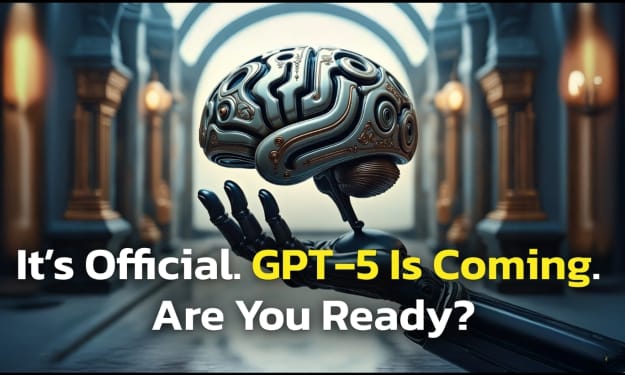
GPT‑5, Agentic AI, Multimodal AI, Devstral, AI Coding Assistant, AI Income 2025 . AI-Generated.
Since mid-July 2025, GPT‑5 has officially launched—and with it, a new era in AI. No longer just a conversational tool, it’s a fully agentic, multimodal system that understands text, speech, image, even video, and performs real-world tasks autonomously. Backed by OpenAI's “magic unified intelligence” model, GPT‑5 merges advanced problem-solving, persistent memory, and seamless API integration into a single interface . Simultaneously, Devstral 2507, introduced by Mistral AI, brings agentic power to software engineering. It automates bug fixes, PR creation, codebase navigation, and unit tests—running smoothly on local GPUs like RTX 4090 or Mac M1/M2 . Here’s why this combo is a game-changer, and how you can turn it into income, innovation, and thought leadership. --- 🔍 1. GPT‑5 Is Agentic and Multimodal GPT‑5 isn’t just “smarter”—it acts. It supports seamless voice, text, and image/video input, enabling users to: upload a smartphone video and get a full meeting summary ask multimodal prompts like "find the logo in this scanned PDF" leverage a token window exceeding 1 million, far surpassing GPT‑4's limit Expect chain-of-thought reasoning, persistent memory across sessions, and integrated tool use. In short: an AI that thinks, plans, and acts—ideal for real-world workflows . --- ⚙️ 2. Devstral 2507 Finally Brings Agentic Coding to Everyone Devstral is now the go-to open-source coding assistant: scores 46.8% on SWE-Bench, outperforming many larger LLMs runs on a single GPU or laptop, making professional-grade AI accessible integrates with agent scaffolds (OpenHands / SWE-Agent), supporting full PR generation, testing, fixing The result: GPT‑5 imagines complex features; Devstral builds them automatically. --- 🌍 3. Why This Changes Everything Agentic workflows are here: Designs to code to deploy—all in a single session. Skill democratization: Non-programmers leverage GPT‑5; developers automate with Devstral. Business-ready tools: Autonomy + deployment in one go, for individuals and enterprises. --- 💰 4. Monetization Paths You Can Start Today Path Description Platforms GPT‑5 Workflow Setup Fine-tune GPT‑5 to business needs; $300–$800 per client Fiverr, LinkedIn, Upwork Devstral Integration Automate CI/CD tasks; $200–$600 per project Gumroad, Ko-fi, freelance sites Hybrid Agent Services Full solution: "Chat + Build + Deploy" AI workflow Subscription via GitHub/Etsy Workshops & Training Instruct on GPT‑5+Devstral for teams Teachable, Skillshare Premium Guides & Templates Sell downloadable workflows (.pdf) Etsy, Gumroad --- 🚀 5. A 5-Step “First 7‑Day” Plan Day 1‑2: Access GPT‑5 (beta/API) Install Devstral on local GPU Day 3‑4: Build prototypes: generate a feature spec with GPT‑5, implement with Devstral Record workflow Day 5: Launch a service or course using Fiverr/Gumroad, e.g., “GPT‑5 + Devstral Startup Kit” Day 6‑7: Share case studies on LinkedIn, write Medium/Vocal articles summarizing success Offer free demos or early-bird pricing --- 🛡️ 6. Handling Concerns Reliability & Hallucinations: GPT‑5 reduces hallucinations, but Devstral code still needs human validation Security & Privacy: Run Devstral locally; GPT‑5 data stays within OpenAI’s secure enclaves Complexity/machine limits: Devstral scales to mid-range hardware; guides available for setup --- 🔮 7. What’s Next After GPT‑5? GPT‑6 will push deeper autonomy and embed video capability Devstral evolves into specialized language coding agents An ecosystem of agentic pipelines—from marketing to support to operations
By MOHAMMED AL-HAJJabout a year ago in Futurism
Are AI Recruitment Agents Revolutionising the Hiring Process?
The world of recruitment is undergoing a silent revolution, and artificial intelligence (AI) is leading the charge. Long gone are the days when recruiters spent endless hours sifting through CVs or playing email tag with candidates. Now, AI recruitment agents are stepping in, transforming not just how we hire, but what it means to be a recruiter.
By iSmartRecruitabout a year ago in Futurism
Navigating the Geopolitical Landscape with Autonomous, Ethical, and Self-Sustaining AI for Critical Decision-Making
Imagine a system capable of navigating the relentless complexity of global politics, one that transcends the traditional limitations of current analytical framework and could actually keep up with the chaos of global politics, but without all the usual baggage? I’m talking about a new kind of open-source, self-sustaining AI framework for geopolitical analysis. Not some pie-in-the-sky vaporware, but a real, practical toolkit. Let’s call it GASE: Geopolitical Analysis & Strategic Evaluation. This isn’t a product pitch; it’s an open invitation to brainstorm, poke holes, and maybe even help build something that could change the game.
By Maxim Dudkoabout a year ago in Futurism
2026: The Year of War Between Israel and Turkey. AI-Generated.
The Middle East has long been a powder keg of geopolitical tensions, but 2026 could mark the eruption of a full-scale war between two regional heavyweights—Israel and Turkey. At the heart of this conflict lies Syria, a fractured nation that both countries seek to control for vastly different reasons. Israel, pursuing its expansionist policies, aims to weaken Iranian influence and secure its northern borders, while Turkey envisions a "free Syria" under its sphere of influence, free from Kurdish autonomy and Assad’s regime.
By INAM ULLAHabout a year ago in Futurism
The Ambient AI Conspiracy: Why Your Reality Is Being Harvested by Corporate Overlords (And How the Elite Are Fighting Back)
The Players: Your Digital Overlords Revealed Let's stop dancing around the truth. Google isn't just "improving user experience" with their Pixel Buds' constant listening protocols. Meta isn't "enhancing social connection" with their Ray-Ban smart glasses that record everything you see. Amazon isn't "making life easier" with Alexa devices that now analyze your emotional state through micro-changes in voice patterns.
By Prince Esienabout a year ago in Futurism
Strong Password That Cannot Be Hacked?
In today’s hyper-connected world, data is the new currency, and your passwords are the vaults guarding it. Yet, every day, we hear news of data breaches, hacked accounts, and identity theft. Despite advanced technologies, billions of people still use weak, guessable, or repeated passwords. But what if there was a way to create a strong password that cannot be hacked—even by the smartest hacker or the fastest AI bot? Let’s explore how to do that, and why it's more important now than ever before.
By Lana Roseeabout a year ago in Futurism
The Password That Cannot Be Hacked
In the world of cybersecurity, the eternal battle between hackers and defenders has always revolved around one vital element: the password. We’ve tried everything—two-factor authentication, biometric scans, encrypted vaults, and complex password managers—but nothing has proven truly “unhackable.” That was until a mysterious Indian ethical hacker named Aarav Sharma claimed to create what he called “the password that cannot be hacked.” This isn't just a myth. This is a story of genius, innovation, betrayal, and global disruption.
By Lana Roseeabout a year ago in Futurism
FBI Warning—Do Not Install This App On Your PC Or Smartphone
It always starts the same way—with a message you weren’t expecting. You’re going about your day when a text pings your phone or a popup flashes on your laptop. It warns you that your bank account is under attack or your device has been compromised. Then it tells you exactly what to do next: call tech support. Click the link. Install the app. Hurry—your money’s in danger.
By Muhammad Sabeelabout a year ago in Futurism
The Future of Smartphones in the Next 10 Years. AI-Generated.
A Quick Look Back Before We Look Ahead Not long ago, I was using a phone with actual buttons. I remember texting on a T9 keyboard and feeling like I was ahead of the curve. Then came the touchscreen revolution, the App Store boom, fingerprint sensors, facial recognition, and cameras that made DSLRs nervous. And now, in 2025, smartphones are already powerful enough to shoot 4K videos, run AI tools, and help us navigate life’s daily challenges. But if you think we’ve reached the peak, think again. The next 10 years are expected to be even more radical. 1. Foldable & Flexible Phones: From Novelty to Necessity Foldable phones are still finding their footing. Right now, they’re mostly seen as fancy or futuristic. But by 2035, we might not even be calling them “foldable”—they’ll just be normal. Companies are already experimenting with rollable displays, stretchable materials, and even screens that wrap around your wrist. Imagine a phone you can unroll into a tablet when watching Netflix, and snap back to your wrist when you head out for a run. I held a foldable phone last year at a tech event. At first, it felt awkward—but within minutes, I saw the future. It just made sense. Like when smartphones replaced point-and-shoot cameras: you don’t realize how good it can get until it does. 2. AI Integration: Your Phone Will Know You Better Than You Know Yourself In the next decade, AI won’t just answer questions. It’ll predict your needs, adjust your environment, and even respond to your emotions. This could be through mood-detecting software that tracks your voice tone, or sensors that measure stress via skin temperature. Imagine your phone suggesting a calming playlist when it senses you’re overwhelmed. Or reminding you to take a break when your screen time goes overboard. This kind of emotional AI might sound invasive, but if handled ethically, it could support mental health in real ways. Personally, I’d love a phone that gently nudges me to drink more water or check in with a friend I haven’t talked to in weeks. Small prompts that build better habits. 3. Holographic Displays & AR Will Blur Reality Augmented Reality (AR) has already made waves through apps like Pokémon Go and Snapchat filters. But that’s just scratching the surface. By 2035, your phone may no longer need a screen at all. Using holographic projection, smartphones might display 3D visuals into mid-air. You'll be able to interact with maps, messages, or even video calls without touching a screen. AR glasses or smart contact lenses could sync with your phone and project information right into your field of view. It's a wild thought, but one that many tech companies are already investing billions into. Apple, Meta, and Google are leading the charge in AR/VR development. 4. Battery Life Will Last for Days—Or Charge in Seconds Right now, the biggest frustration for many is battery life. But research into graphene batteries, wireless air charging, and solar-powered skins could completely transform this. Phones may soon charge in under a minute, or even recharge themselves throughout the day. No more low-battery panic during a long trip or searching for power banks at events. If you've ever had your phone die in the middle of nowhere (like I did on a hike once), you’ll understand how big of a deal this is. 5. Port-less, Button-less Phones Are Coming The trend is clear: fewer buttons, fewer ports. Physical SIM cards are being replaced by eSIMs. Charging ports are becoming unnecessary with wireless pads. Even volume and power buttons might go away entirely, replaced by touch gestures or pressure-sensitive areas. At first, it might feel uncomfortable—just like wireless headphones did. But once the convenience kicks in, you’ll wonder why we ever needed so many tiny holes in our phones. 6. Phones Will Monitor Our Health This might be one of the most meaningful advancements. Phones are already tracking our steps, heart rate, and sleep. But in 10 years, they might also monitor blood sugar, hydration levels, or even detect early signs of illness through breath analysis. Your phone could become a mini-health assistant. In regions with limited healthcare, this could literally save lives. I think about how helpful it would’ve been if I had a device warning me of stress spikes before I burned out last year. Technology with empathy—that’s powerful. 7. Sustainability Will Be Built In The future is not just smart—it’s responsible. Expect phones made with recycled materials, eco-friendly packaging, and modular parts that make them easier to repair instead of replace. Some brands are already taking steps in this direction. In the next decade, consumers may even demand it. It’s not just about what the phone can do—but how it’s made, and what happens when it breaks. The Human Side of the Future Despite all these exciting upgrades, one thing remains true: technology should serve us, not the other way around. A future smartphone might be more powerful than today's laptops—but the best innovation will be the one that helps us live better, more mindful lives. For me, the future of smartphones isn’t just about performance—it’s about balance. Tools that help us stay connected, but also present. Gadgets that help us grow, not just scroll.
By Sherooz khanabout a year ago in Futurism
Why Mobile App Development in India Offers the Best ROI?. AI-Generated.
Developing a mobile application is not as easy as perceived. Mobile app development demands skills and expertise, which are offered by professional mobile app developers who have studied it for years and have worked on multiple projects over the years.
By Sarah Kamalabout a year ago in Futurism