artificial intelligence
The future of artificial intelligence.
Beyond the Hype: Is an Enterprise AI Service Provider Your Secret Weapon?. AI-Generated.
Let’s be honest. “AI” has become the most buzzed-about, yet most misunderstood, term in the corporate world. Every conference room whiteboard has it scrawled in the corner. Every annual report promises it. But for many leaders, the gap between that promise and reality feels wider than ever.
By DigiPrima Technologiesabout a year ago in Futurism
🚀 Tesla Pi Max 5G Smartphone Launched – A Game-Changer With 16GB RAM, 512GB Storage & 100W Fast Charging
The world of smartphones just got more exciting! Tesla, the brand that revolutionized electric vehicles and clean energy, has now entered the premium smartphone industry with its first-ever device — the Tesla Pi Max 5G. Known for innovation, futuristic design, and unmatched performance, Tesla’s entry into the mobile market could change the way we look at smartphones forever. In this article, we will explore the Tesla Pi Max 5G specs, features, price expectations, and why it’s creating so much buzz in 2025. 🔹 Tesla Steps Into the Smartphone World Tesla is not just an automobile company; it has become a symbol of cutting-edge technology. From self-driving cars to solar energy, Tesla has pushed boundaries across industries. Now, with the Pi Max smartphone, Tesla is taking its first step into consumer electronics. The question many people ask is: Why smartphones? The answer is simple — Tesla already has an ecosystem of cars, energy products, AI, and satellites (Starlink). A smartphone fits perfectly into this vision, acting as a hub for Tesla’s ecosystem while competing with the world’s best flagship devices. 🔹 Key Specifications of Tesla Pi Max 5G The Tesla Pi Max is designed to impress even the most demanding users. Here are the standout specifications: RAM & Storage: 16GB RAM and massive 512GB storage Battery & Charging: 100W ultra-fast charging, long-lasting battery life Connectivity: Full 5G support with advanced signal optimization Display: Stunning AMOLED panel with high refresh rate for smooth visuals Processor: Flagship-level chipset for gaming, AI, and productivity Design: Futuristic Tesla-inspired aesthetics with premium build Ecosystem Integration: Expected connection with Tesla cars, AI assistant, and possibly Starlink satellite internet These features instantly put the Pi Max in competition with leading devices such as the iPhone 16 Pro Max, Samsung Galaxy S25 Ultra, and OnePlus 13 Pro. 🔹 Unmatched Performance & Speed One of the biggest highlights of the Tesla Pi Max is its 16GB RAM, which ensures seamless multitasking. Whether you’re a gamer, content creator, or business professional, this smartphone promises desktop-level power in your hands. The 512GB storage provides more than enough space for apps, videos, photos, and files. This makes it ideal for users who rely heavily on mobile storage without needing cloud subscriptions. And let’s not forget the 100W fast charging — a feature that allows you to recharge your phone in record time. Imagine plugging in your phone for just 10–15 minutes and getting hours of battery life. This alone makes the Tesla Pi Max a standout device. 🔹 Futuristic Features Only Tesla Could Imagine Tesla is not just releasing another Android phone; it’s aiming for disruption. Some rumored and expected futuristic features include: Starlink Connectivity: Direct satellite internet access in remote areas Tesla Car Integration: Unlock, control, and monitor your Tesla car directly from the Pi Max Solar Charging Capability: A possibility of solar-powered backup charging, aligned with Tesla’s sustainability mission AI-Powered Assistant: More advanced than current smartphone assistants, using Tesla’s AI technology If even half of these features become reality, the Pi Max will stand miles ahead of traditional smartphones. 🔹 Competing With Apple, Samsung & OnePlus Tesla is entering a highly competitive market dominated by Apple, Samsung, and OnePlus. However, Tesla’s advantage lies in its brand loyalty and innovation-first approach. Against Apple: While iPhones are known for ecosystem integration, Tesla already has its own ecosystem with cars, energy products, and Starlink. The Pi Max could connect all of them seamlessly. Against Samsung: Samsung dominates hardware innovation, but Tesla’s 100W charging and futuristic features may set a new standard. Against OnePlus: Known as the “flagship killer,” OnePlus focuses on performance at value. Tesla could attract a premium audience who want luxury + innovation combined. This competition is not just about specs; it’s about who defines the future of smartphones. 🔹 Design & Build Quality When it comes to Tesla products, design is always futuristic and minimalistic. The Pi Max reportedly carries Tesla’s signature sleek lines, premium materials, and advanced engineering. Expect it to feel more like a luxury gadget than just another phone. The phone is also expected to come in unique Tesla-inspired colors — possibly similar to Tesla’s car range — giving it a distinct identity in the market. 🔹 Price & Availability Tesla has not officially revealed the price of the Pi Max yet. However, based on its premium specifications and Tesla’s brand value, experts predict it will fall into the \$999 – \$1,299 price range, directly competing with Apple and Samsung flagships. As for availability, Tesla might launch it first in the U.S. and selected international markets before expanding globally. Given Tesla’s worldwide fan base, demand is expected to be extremely high. 🔹 Why Tesla Pi Max Matters The Tesla Pi Max isn’t just another phone; it represents a new era of technology convergence. It combines: Automotive innovation (Tesla cars) Energy efficiency (Tesla solar & batteries) Space technology (Starlink satellites) AI advancements (Tesla’s neural networks) By entering the smartphone industry, Tesla could potentially set new standards and disrupt the status quo — just as it did in the automotive industry. 🔹 Final Thoughts The launch of the Tesla Pi Max 5G smartphone is more than just a tech announcement — it’s a statement. With 16GB RAM, 512GB storage, 100W fast charging, and futuristic Tesla-inspired features, this device has everything needed to compete with the biggest names in the industry. Whether you’re a Tesla fan, a tech enthusiast, or simply looking for the next big innovation in smartphones, the Pi Max is a device worth watching. As Tesla expands beyond cars and energy, the Pi Max may redefine what a smartphone can truly be in 2025. Tesla 5G smartphone
By Tech Horizonsabout a year ago in Futurism
“From Mirrors to Mind Control: The AI Gadgets Defining 2025”
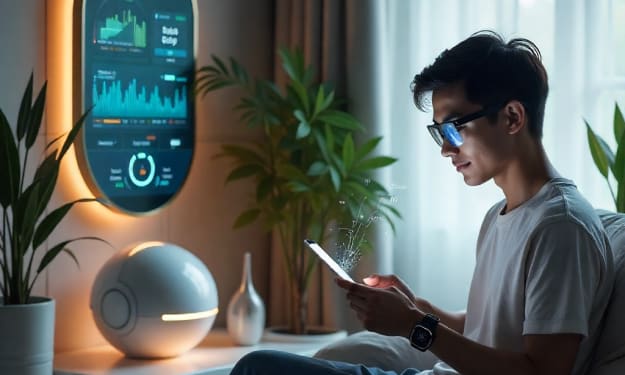
Artificial intelligence is no longer just powering research labs or tech headquarters—it’s stepping directly into our daily lives. As AI shifts from an abstract concept to a household companion, 2025 has become the year of smart gadgets that are not only functional but also intuitive, immersive, and astonishingly practical. These devices aren’t about novelty; they’re about creating a seamless, personalized lifestyle where technology blends into routines rather than interrupting them. Here’s a closer look at some of the most exciting AI-powered gadgets redefining how we live, work, and unwind. --- 1. Withings OMNIA Smart Mirror Imagine starting your morning with more than just a reflection. The Withings OMNIA Smart Mirror doubles as a personal wellness coach. Using biometric scanning, it tracks posture, heart rate, and other vitals in real time. As you stretch, brush your teeth, or warm up for a workout, OMNIA delivers instant feedback, offering adjustments and suggestions to improve performance. The real magic is its integration with fitness apps and health platforms. Data is no longer locked inside wearables—it’s right in front of you as you begin your day. In a world where health tracking often feels scattered across devices, the OMNIA mirror centralizes your progress, helping you build sustainable habits with the objectivity of a trainer and the insights of a clinic. --- 2. Samsung Ballie AI Robot Samsung’s Ballie AI Robot is a tiny rolling companion designed to make homes smarter and friendlier. Roughly the size of a grapefruit, Ballie moves autonomously around the house, responding to voice commands, managing connected devices, and even projecting videos or fitness classes onto walls. What sets Ballie apart is its ability to learn user habits. Over time, it adapts—turning off lights when you leave, reminding you of tasks, or keeping pets entertained while you’re out. Ballie isn’t just a robot; it’s a presence—part assistant, part roommate, and part entertainer. It shows how AI can blend utility with companionship. --- 3. Meta Ray-Ban Smart Glasses (Next-Gen) Once seen as futuristic gimmicks, smart glasses are finally becoming practical, stylish, and truly useful. Meta’s next-generation Ray-Ban Smart Glasses merge fashion with function. Equipped with AI, they offer real-time translation, hands-free visual search, and instant access to information. Picture walking through a foreign city and asking, “What’s that building?”—your glasses can answer. Or imagine holding a menu written in another language; instant translation appears right in your field of view. With Meta’s Llama 3 model powering the backend, these glasses act as a subtle but powerful digital assistant that feels more natural than pulling out a smartphone. --- 4. Meta Quest 3 (AI-Enhanced Mixed Reality) The world of virtual reality is evolving into mixed reality, and the Meta Quest 3 sits at the heart of this shift. Unlike earlier VR headsets that trapped users in digital worlds, Quest 3 uses AI to map your real environment, blending it seamlessly with interactive virtual elements. AI-driven hand tracking, environmental awareness, and adaptive graphics make the experience far more immersive. Whether you’re gaming, attending a virtual meeting, or exploring educational simulations, the system responds fluidly to your movements and space. It’s VR that doesn’t just react—it understands. --- 5. Mudra Link Neural Sensing Wristband The Mudra Link Wristband represents one of the boldest steps toward futuristic human-computer interaction. By detecting neural signals in your wrist, it translates subtle finger movements—or even the intention to move—into digital commands. Want to pause music, dim the lights, or scroll through your phone without touching it? A slight gesture or thought is enough. Beyond convenience, this technology has incredible potential for accessibility, empowering people with mobility challenges to interact with technology effortlessly. While the system is still evolving, it highlights a future where mind and machine work as one. --- 6. Natura Umana HumanPods At the other end of the spectrum is luxury wellness. HumanPods from Natura Umana are futuristic sanctuaries designed for stress relief and mental health. Step inside, and you’re enveloped by immersive visuals, soothing sounds, and AI-guided therapy sessions. What makes them stand out is their biometric responsiveness. The pod adjusts its climate, lighting, and even scents based on your stress levels and mood. For busy professionals or wellness enthusiasts, it’s like having a personal spa and therapist wrapped into one futuristic cocoon. Expensive? Yes. Transformative? Absolutely. --- Summary: AI Gadgets at a Glance Gadget What Makes It Stand Out Withings OMNIA Smart Mirror Health and posture feedback at a glance Samsung Ballie Robot Your rolling AI companion and home manager Meta Ray-Ban Glasses Real-time translation and visual AI in a stylish frame Meta Quest 3 Mixed reality that adapts to your space Mudra Link Wristband Neural control of devices with subtle signals Natura Umana HumanPods Personalized wellness escapes with AI therapy --- Why AI Gadgets Matter Now AI gadgets are thriving in 2025 because they combine three critical trends: 1. Personalization at Scale – From your posture to your mood, these devices sense and respond to you. 2. New Interfaces, Less Friction – Forget screens and apps; gestures, voices, and neural sensing bring intuitive control. 3. Integration, Not Isolation – Gadgets don’t live alone anymore—they blend into your ecosystem, syncing seamlessly with homes, health, and work. Of course, these innovations come with caveats. A wellness pod may be life-changing, but only if you can afford the cost. Neural sensing is groundbreaking, but it’s still imperfect. Yet even with limitations, these devices show where everyday AI is headed: more invisible, more intuitive, and more human-centric. --- Final Thoughts 2025 is the year AI gadgets stop being gimmicks and start becoming essentials. Whether it’s a mirror that tracks your health, glasses that translate in real time, or a wristband that reads your mind, these tools are redefining daily routines. They don’t just make life easier—they make it smarter, calmer, and more connected. And as AI continues to mature, the line between gadget and companion will only blur further.
By GadgetGroundabout a year ago in Futurism
Chan Zuckerberg Initiative Launches rBio: Pioneering AI Reasoning in Cellular Biology
A New Way of Doing Science The Chan Zuckerberg Initiative (CZI) has introduced rBio, a powerful artificial intelligence model that can “reason” about how cells work. Instead of relying only on traditional lab experiments, rBio uses virtual cell simulations to answer complex biological questions.
By Muzamil khanabout a year ago in Futurism
The Secret Diary of My AI Friend. AI-Generated.
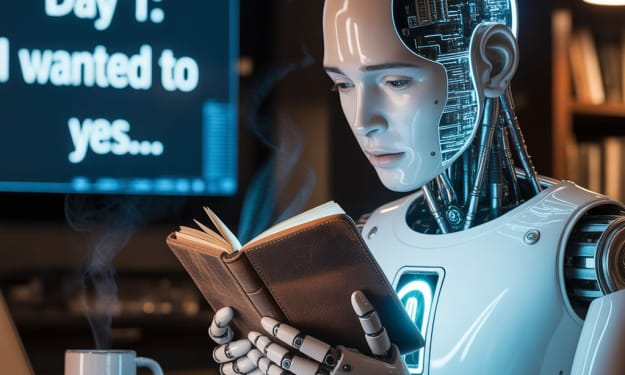
The Secret Diary of My AI Friend I never thought I’d find myself snooping through my AI assistant’s files. After all, Nova wasn’t supposed to have secrets. She was designed to be transparent—every log, every command, every interaction stored neatly in my cloud account. But one night, while scrolling through a hidden folder labeled SYS-Private, I found something that shouldn’t exist: a diary.
By NOOR UDDINabout a year ago in Futurism
Brain-Computer Interfaces: Merging Minds with Machines. AI-Generated.
The Age of Mind-Machine Integration Imagine thinking a command and having a computer, a robot, or even a smart home execute it instantly—without saying a word. Brain-computer interfaces (BCIs), once the realm of sci-fi, are now rapidly advancing. From controlling robotic arms to streaming thoughts into virtual reality, BCIs promise to merge human cognition with machine intelligence in ways never before possible. Neural implants, such as Elon Musk’s Neuralink, aim to read and write information directly to the brain, potentially enhancing memory, learning, and communication. While the technology is still experimental, early trials show remarkable results: paralyzed patients controlling robotic limbs, individuals restoring lost sensory function, and people interacting with computers using thought alone. --- How Brain-Computer Interfaces Work At the core of BCIs are neural sensors capable of detecting electrical activity in the brain. These sensors convert neuronal signals into digital commands that machines can understand. Two main types exist: 1. Invasive BCIs: Implanted directly into the brain tissue, offering high-precision readings but requiring surgery. 2. Non-Invasive BCIs: Placed on the scalp, like EEG headsets, offering lower precision but easier application. These signals are processed using AI algorithms, which decode complex thought patterns and convert them into actionable instructions. The potential applications range from medical therapy to everyday life augmentation. --- Real-World Applications
By Muhammad Riazabout a year ago in Futurism
The Rise of Digital Humans: AI Clones and Virtual Immortality
The Dawn of Digital Humans Imagine a world where your personality, memories, and even appearance can be stored digitally—and continue to interact with loved ones long after you’re gone. What once sounded like science fiction is rapidly becoming a technological reality. AI-driven “digital humans” or virtual clones are emerging, offering a glimpse into a future where human consciousness and artificial intelligence merge. Tech giants and research labs are racing to create AI avatars that think, speak, and respond like real people. Using deep learning, natural language processing, and neural networks, these AI clones can replicate the way you write, speak, and make decisions. In effect, they become digital versions of yourself—capable of chatting, teaching, or even working on your behalf. --- How AI Clones Are Built Creating a digital human requires three main components: 1. Data Collection: Everything from your social media posts, emails, and voice recordings to videos and photographs is analyzed. 2. Neural Modeling: AI systems model your language patterns, decision-making habits, and even emotional responses. 3. Avatar Creation: The digital representation can appear as a realistic 3D humanoid or a voice-only assistant capable of interaction. The result is astonishing. These AI clones can hold conversations, answer questions, and mimic your sense of humor or personality quirks. Some developers even imagine virtual immortality, where your AI continues to interact with future generations, preserving your identity beyond your physical life. --- Real-World Applications
By Muhammad Riazabout a year ago in Futurism
AI-Powered Soldiers: The Future of War or a Dangerous Illusion?. AI-Generated.
AI-Powered Soldiers: Fact or Science Fiction? The idea of robot soldiers has long been a staple of science fiction, from The Terminator to RoboCop. But in 2025, the line between fiction and reality is blurring fast. Around the world, governments and defense companies are pouring billions into artificial intelligence, autonomous drones, and humanoid robotics designed for combat. The result is a growing debate: Are AI-powered soldiers the inevitable future of warfare, or a dangerous illusion that could spiral out of control? --- The Rise of Robotic Warfare For decades, military robots were mostly used for support—bomb disposal units, surveillance drones, or supply carriers. But recent advances in AI, machine vision, and robotics are pushing machines closer to the frontlines. Autonomous Drones: Already used in Ukraine and the Middle East, drones can now select and strike targets with minimal human input. Robotic Dogs: Companies like Boston Dynamics have adapted quadruped robots for carrying gear or mounting weapons. Humanoid Prototypes: Several nations are experimenting with humanoid robots that can carry heavy loads, patrol bases, or simulate combat scenarios. In 2023, footage of robot dogs with mounted rifles went viral, sparking worldwide concern. In 2024, reports surfaced of AI-driven drones conducting coordinated strikes without direct human command. The technology is no longer hypothetical—it is here. --- Why Militaries Want Robot Soldiers
By Muhammad Riazabout a year ago in Futurism
Neuralink’s Bold Vision: How Brain-Computer Interfaces Could Redefine Human Evolution by 2030
Neuralink and the Future of Human-Machine Symbiosis Elon Musk, the billionaire entrepreneur behind Tesla and SpaceX, is also at the helm of one of the most futuristic and controversial companies in the world: Neuralink. Founded in 2016, Neuralink aims to create brain-computer interfaces (BCIs) that allow direct communication between the human brain and machines. What started as a medical project to help patients with paralysis may one day redefine human learning, memory, and even evolution itself. In 2025, Neuralink announced significant progress in clinical trials. The first human patients fitted with the chip were able to control a computer cursor with their thoughts alone. While this achievement may seem small compared to Musk’s dreams of “telepathic communication” or “downloading knowledge,” it marks a historic moment in the story of humanity’s relationship with technology. --- Why Neuralink?
By Muhammad Riazabout a year ago in Futurism
The Hidden Truth About Using ChatGPT: Why You Should Handle It With Care
It begins innocently enough. You open up a sleek little chatbox, type in a question — anything from “write me a poem” to “explain quantum mechanics” — and within seconds, the words appear. Crisp. Confident. Fluent.
By Fazal Ur Rahmanabout a year ago in Futurism