
Proposed "mirrors in the sky" would use reflected sunlight to brighten gloomy nights, causing great indignation.
Sunlight is reflected by sky mirrors.

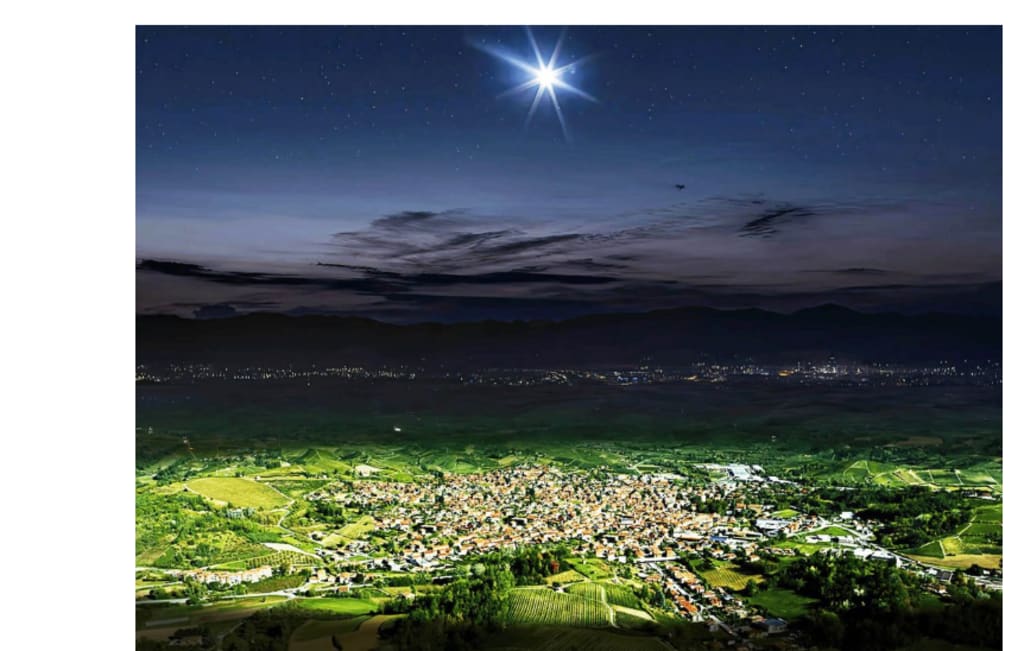
If a new space project proceeds according to plan, the night sky might no longer be solely the domain of darkness. After sunset, the developers hope to employ sky mirrors to reflect sunlight back onto Earth. The plan puts one of the planet's longest common resources in jeopardy while simultaneously promising more light for cities and energy facilities.
Reflect Orbital, a California business, has proposed to launch 4,000 massive sky mirrors into orbit to reflect sunlight onto certain regions of Earth after dark. Reliable darkness is necessary for night sky observation, and even slight variations might obscure dim objects or interfere with time-sensitive measurements.
Alejandro S. Borlaff, Ph.D., of NASA's Ames Research Center, oversaw the project. His work focuses on how massive satellite constellations might increase background glare for telescopes and streak photographs.
Sunlight is reflected by sky mirrors.
Reflect Orbital created a scheme to use mirrors up to 180 feet (55 meters) wide to send sunlight to Earth at night. Incoming sunlight is redirected by each reflector, allowing extra light to reach a selected solar site when panels would otherwise be idle.
The reflected beam spreads out due to the Sun's actual width in the sky, which limits brightness and concentrates power poorly. In order to maintain a constant local solar clock, engineers want the sky mirrors to travel in a sun-synchronous orbit.
The mirror plan can still receive sunlight while objects on Earth are already in the dark since that path stays close to the day-night boundary. Bright reflectors are also positioned close to dawn and sunset, when many animals and observatories remain active, thanks to the same geometry.
Testing the initial sky mirror
Earendil-1, the first sky mirror satellite, has a licence request with the Federal Communications Commission (FCC) and is scheduled to launch in early April 2026. It is anticipated that viewers from authorised test sites will see the reflection as a brilliant object travelling across the sky during the scheduled 2026 demonstration. According to the business, the sky mirror will tilt away from Earth after a pass, lowering stray brightness and exposure duration.
Mirrors in the sky that like stars
Because surrounding sky are brightened by atmospheric scattering, which is caused by air molecules and particles dispersing light laterally, reflected light might extend beyond the target.
The direct beam may appear four times brighter than the full moon and be visible from 60 miles (96 km) away, according to some scientists. These shifting highlights can sweep across telescopes and ecosystems even with precise targeting, making quick tests into broad issues.
The issue of space trash
Nowadays, a large number of operational spacecraft as well as space debris remaining man-made pieces racing about Earth—are housed in low Earth orbit, and NASA personnel continuously monitor the traffic. Even a little piece can poke holes or shatter systems upon impact since objects collide at speeds of many miles per second.
Increasing the number of reflecting satellites increases the likelihood of collisions and near misses, and once debris spreads, there are few choices for cleanup.
Telescopes and sky mirrors
According to an estimate for 2025, images captured by orbiting telescopes designed to avoid city lights may be tainted by satellite traces. Dr. Borlaff noted, "Our results show that light contamination is an increasing threat for space telescope operations."
The number of satellites increased from roughly 2,000 in 2019 to 15,000 in 2025 and is expected to reach 560,000 by 2040, impacting one-third of Hubble photos. In many locations, the brightness of the night sky increases by roughly 10% annually, resulting in skyglow, a diffuse light haze that obscures faint stars.
Moving light sources are added by mirror reflections, and each additional streak increases background noise in photos, obscuring faint galaxies or asteroids. Researchers may lose data where a trail crosses the objective even if software eliminates it, which restricts what lengthy surveys can find.
Darkness is essential to wildlife.
The circadian rhythm, the body clock that regulates hormones and sleep, is used by many species to synchronise eating, hunting, and migration. By altering hormone release, artificial illumination can reset that clock, and bright skies also mask natural indicators such Nocturnal animals and migratory birds may experience stress during times when they typically rest if the mirror plan produces frequent brilliant passes.
disturbing people's sleep
The brain receives light signals from human eyes, and bright nights can inhibit melatonin, a hormone that promotes and maintains sleep. Later bedtimes may follow, and frequent disruptions can deteriorate mood and focus, particularly when light unexpectedly enters from outside.
Because residents are powerless to decide whether a satellite will fly over their homes on a particular night, communities may also be concerned about equity.
Laws don't keep up with launches
Before permitting big installations, U.S. regulators may request an environmental impact assessment, which is a formal study of potential effects. Although brightness, debris risk, and ecological sensitivity are taken into consideration during this process, sunlight reflection is nevertheless treated as a novel instance under space law.
The sky mirror idea may advance more quickly than common standards can develop if decisions remain dispersed among organisations and countries.
Who is the sky's owner?
Every orbit is crossed by satellites, therefore decisions about brightness and direction have an impact on those who never purchase the service. Designers might disclose timetables for avoidance planning, and international coordination could establish limits on apparent magnitude, a scale used by astronomers to rank brightness.
Without those safeguards, brilliant mirrors run the risk of becoming commonplace, and future businesses might steal the concept for other industries.
Sky mirrors' future
By using batteries, demand response, and transmission, grid managers already increase solar value while meeting peaks and maintaining darker night skies. The fundamental laws of physics remain on the ground, where they are more obvious, and those instruments store energy rather than adding light.
Public discussion should weigh the advantages of the mirror plan against long-term effects on sleep, wildlife, and astronomy. Small design decisions could have an impact on science and environment, and Reflect Orbital's mirror idea connects energy ambition to the sky itself.
Even as the space industry expands, shared tracking, public scrutiny, and clear boundaries may determine whether night remains dark in most locations.
About the Creator
Enjoyed the story? Support the Creator.
Subscribe for free to receive all their stories in your feed.
Comments
There are no comments for this story
Be the first to respond and start the conversation.